
Sommaire
| Key Points | Details to Remember |
|---|---|
| ✂️ Definition | Function of each tool for appropriate cuts |
| 🔍 Usage | Scenarios: diameter, accessibility, frequency |
| 💪 Ergonomics | Comfort and effort required depending on the tool |
| 📏 Diameter | Maximum thickness each tool allows |
| 💡 Maintenance | Cleaning, sharpening, and lubrication |
| 💰 Budget | Average cost to expect at purchase |
Pruning an apple tree, cherry tree, or fig tree requires the right instrument. Often, one hesitates between the pruner, the lopper, and the garden saw: each stands out by its handling, range of action, and maintenance. So, how to identify the tool best suited to your needs, the tree’s vigor, or your physical build? Follow the guide, we compare in detail the strengths and limitations of these three gardener essentials, with tips to refine your choice.
The Advantages and Limitations of the Pruner
Main Function and Design
The pruner proves ideal for clean cuts on thin twigs, generally up to 25 mm in diameter. Compact and lightweight, it rests in the palm, offering excellent precision. On a medium-sized apple tree branch, the pruner’s precision allows cutting close to the bud, without leaving unsightly splinters.
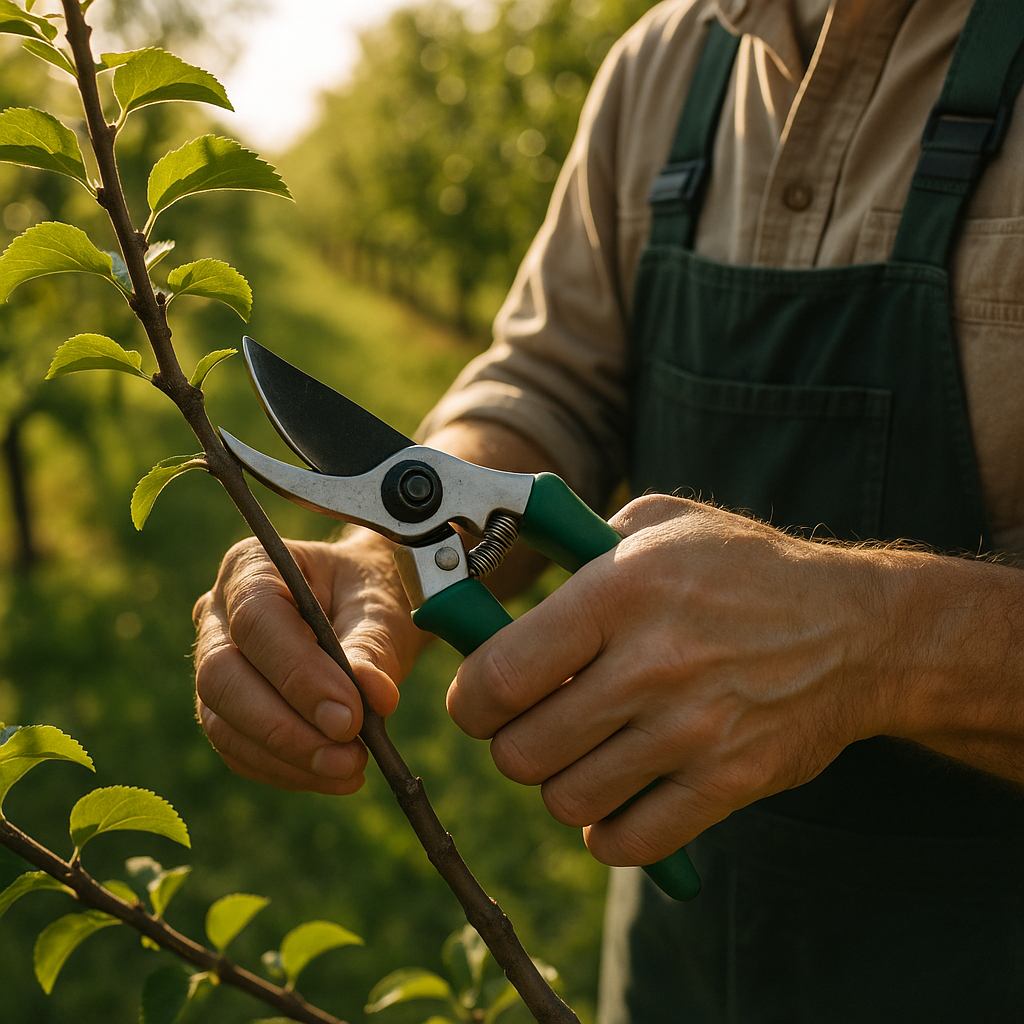
However, if the wood becomes denser and too thick, the small blade quickly reaches its limits. Moreover, after a few hours of pruning, hand fatigue sets in: models without a shock-absorbing spring can become painful to handle.
Maintenance and Durability
A well-maintained pruner will last for years. Simply clean the blade regularly, disinfect it (a simple alcohol solution or diluted bleach water), and grease the mechanism. Semi-annual sharpening ensures effortless cutting: ideally using a fine whetstone or an appropriate small file.
The Lopper for Intermediate Cuts
Operating Principle
The lopper, sometimes called branch cutter, operates with two long handles and a more robust blade. This mechanical lever multiplies the effort, making it possible to cut wood with a diameter up to 40 or 50 mm. Designed to reach slightly higher areas, it proves practical as soon as twigs exceed the limit of a traditional pruner.
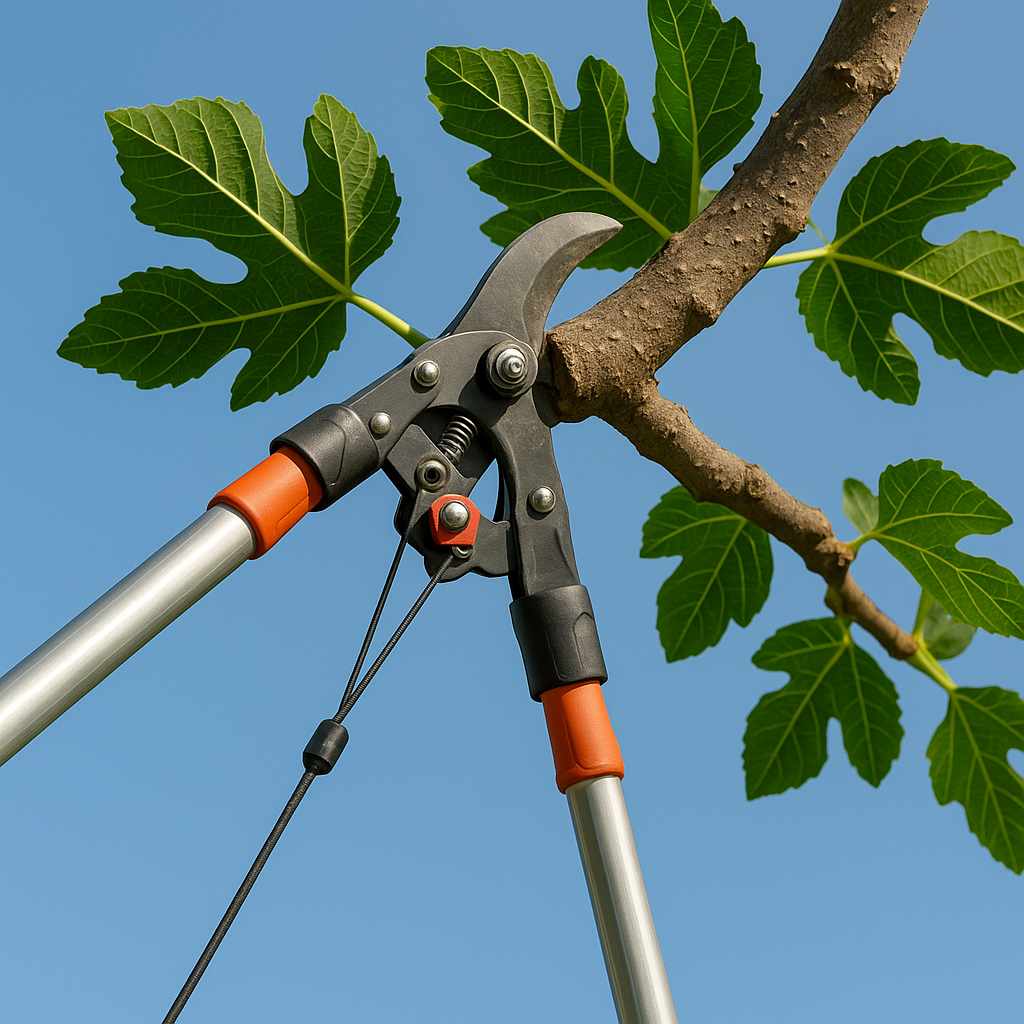
The downside lies in maneuverability: the tool, heavier, requires good space to operate, and the force to apply remains significant. If the tree is dense, the blade can slip on dry wood, which requires maintaining a constant angle and choosing a quality blade.
Specific Maintenance and Blade Choices
It is crucial to check blade alignment before each season. A poorly adjusted blade loses efficiency and can damage the wood, increasing the risk of diseases. Replacing springs and rubber stops, often sold in kits, extends the lopper’s life without increasing the cost significantly.
The Garden Saw for Heavy Cuts
When to Use the Saw?
More cumbersome, the saw is intended for branches over 50 mm in diameter. Whether to remove obstructive main branches or clear dead wood, it guarantees a clean cut without overstraining the wrists. The long handle also allows reaching heights without needing a ladder.
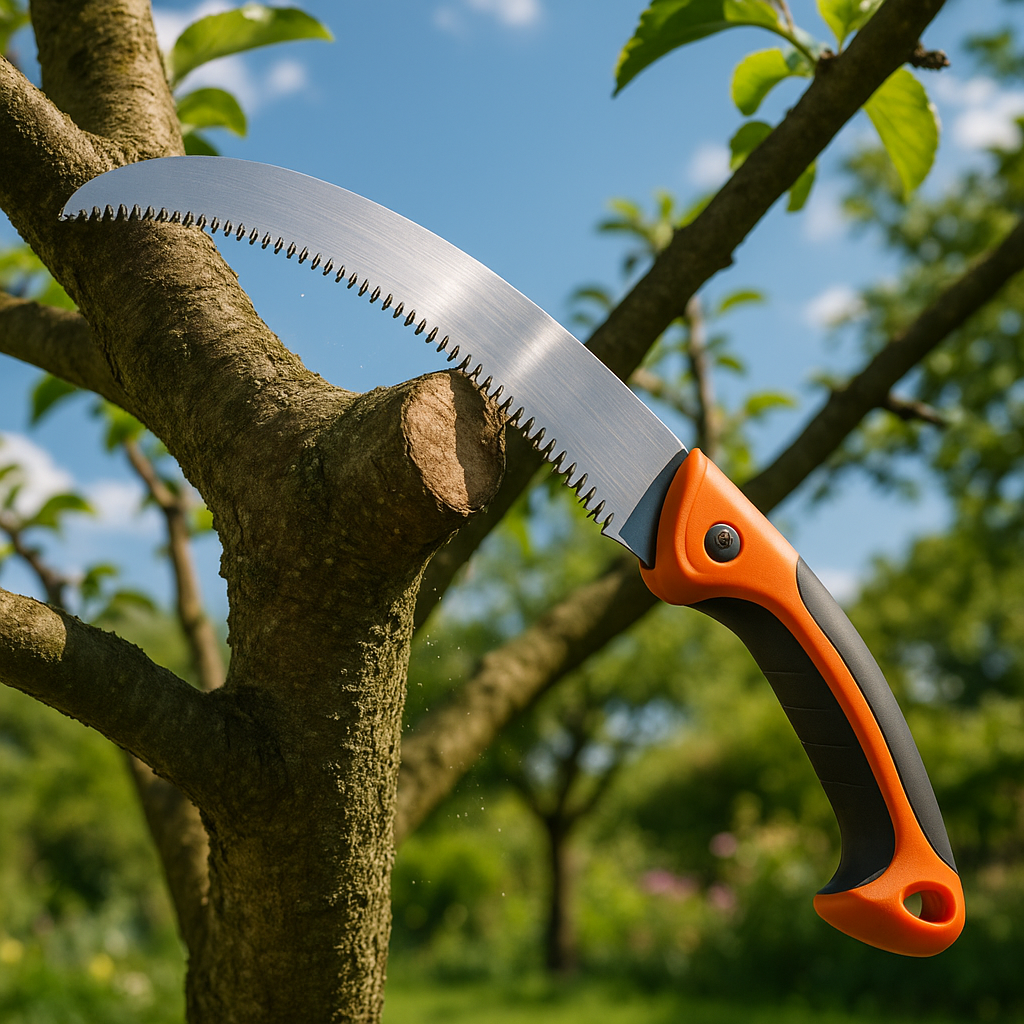
On an old cherry tree, for example, venturing beyond 60 mm without a saw considerably increases effort and the risk of irregular cuts. The fine teeth, often laser-hardened steel, make the difference: they cut in one direction without forcing, reducing the risk of bark splinters.
Sharpening and Usage Precautions
Harder to sharpen than a pruner blade, the saw requires a set of specific triangular files. Each tooth must be straightened and carefully calibrated to maintain a consistent pitch. In windy conditions or on a high branch, always attach a safety carabiner to the handle: in case of loss of balance, the saw remains attached to the wrist.
Criteria for Choosing Your Tool
- Branch diameter: under 25 mm, opt for a pruner; between 25 and 50 mm, the lopper gains power; beyond that, the saw becomes essential.
- Height and accessibility: a telescopic handle (lopper) or a long-handled saw facilitates cutting without climbing.
- Frequency of use: for regular maintenance, a well-sharpened pruner saves time; for heavy annual pruning, plan to invest in a good saw.
- Budget and maintenance: a quality pruner starts around €30, while a high-performance saw can reach €80; the lopper is mid-range at €50–60.
- Ergonomics: always test the grip, handle stroke, and weight; a shock-absorbed model extends sessions without excessive fatigue.
FAQ
- Can you prune large twigs with an anvil pruner?
- Anvil or micrometer, an anvil pruner compresses rather than slices: it is less suited to the flexible twigs of fruit trees, which are often brittle. It is better to prefer a well-sharpened bypass pruner.
- Should you disinfect after each cut?
- To limit the spread of fungal diseases, wiping with 70% alcohol or a diluted bleach solution after each pruning is recommended.
- How to know if my blade is sharp enough?
- The blade glides without slipping or tearing the wood. A test on a small twig should produce a smooth cut without excessive effort.
- Can you use a saw on green wood?
- Yes, but it should be cleaned more frequently: sap can clog the teeth and reduce cutting performance.