
Sommaire
| 📅 Planning | Choose the optimal period for each species |
| ✂️ Pruning methods | Apply the right technique (training, fruiting, maintenance) |
| 🌱 Growth | Understand the effect of pruning on vegetative development |
| 🚫 Common mistakes | Avoid scars, over-pruning and hormonal shocks |
| 🍎 Yield | Stimulate fruiting without compromising vigor |
| 🛠️ Tools | Maintain and sharpen to ensure clean cuts |
Mastering the pruning of fruit trees is a bit like conducting a botanical ballet. Each species has its own rhythm, precise gestures and a schedule to respect. Whether you are a beginner or already familiar with the pruners, this guide aims to demystify the practice. Seasonal calendar, proven methods, faults to avoid… the goal is simple: promote both health and yield. Put on your gloves — we’re setting out on a step-by-step exploration, full of practical advice and illustrated examples.
Choosing the right time to prune
Seasons and their specifics
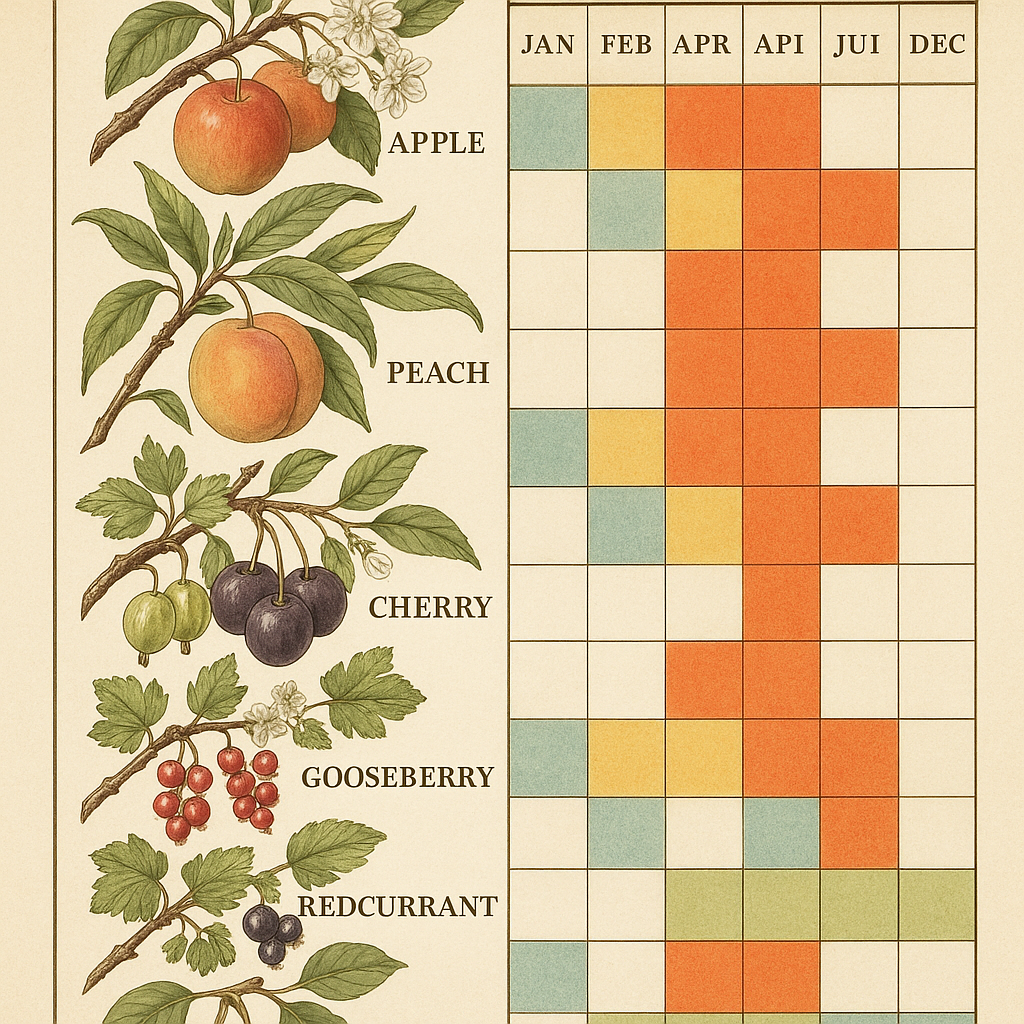
The pruning window varies by species but also by local climate. In winter, during dormancy, structural pruning is mainly carried out. Buds are asleep, which limits stress and the risk of infection. In spring, by contrast, lighter cuts are preferred, aimed at thinning the foliage and promoting aeration. In summer, pruning can correct overly vigorous growth, reduce shade cast by the foliage and steer production toward younger shoots.
Calendar by species
| Species | Recommended period |
|---|---|
| Apple tree | February–March (dormancy) and June (after flowering) |
| Pear tree | February–March (structure) and July–August (regulation) |
| Plum tree | Late November–early December (just before frost) |
| Wild cherry | Early winter, avoiding severe cold |
| Cherry tree | Late winter, avoiding prolonged humidity |
Appropriate pruning techniques
Formative pruning
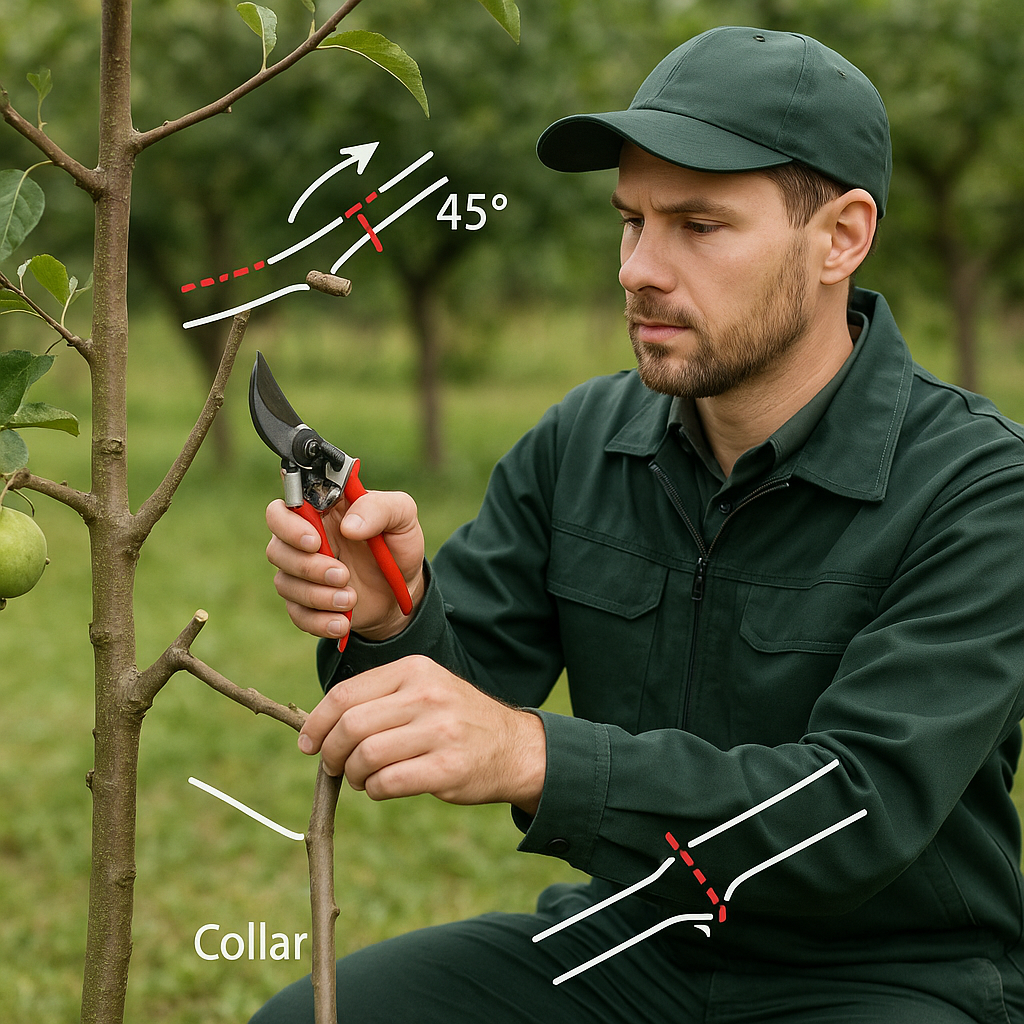
During the first years, the aim is to establish a strong framework. The principle is simple: keep three to five well-spaced scaffold branches around the trunk. Each cut should be made just above an outward-facing bud, in order to guide growth away from the center and ensure good ventilation. This structuring serves as a foundation to prevent crowding and limit competition between shoots.
Maintenance and fruiting pruning
Once the tree is mature, the goal shifts to fruit production. You should then remove dead branches, cut back vigorous suckers, and thin out overly crowded shoots. Angles of insertion greater than 45° are preferred to ensure fruit placement and reduce breakage. Beyond productivity, well-executed pruning also promotes light penetration, which improves coloring and ripening.
Mistakes to avoid
Excessive pruning and hormonal shock
Suddenly removing more than 30 % of the foliage can cause a hormonal imbalance. Result: explosive vegetative growth, fragile branches, or even partial death of the tree. Severe cuts in winter also leave poorly healed wounds that can attract fungi and bacteria. Therefore, always adjust the intensity of cuts according to the age and vigor of each tree.
Inappropriate or poorly sharpened tools
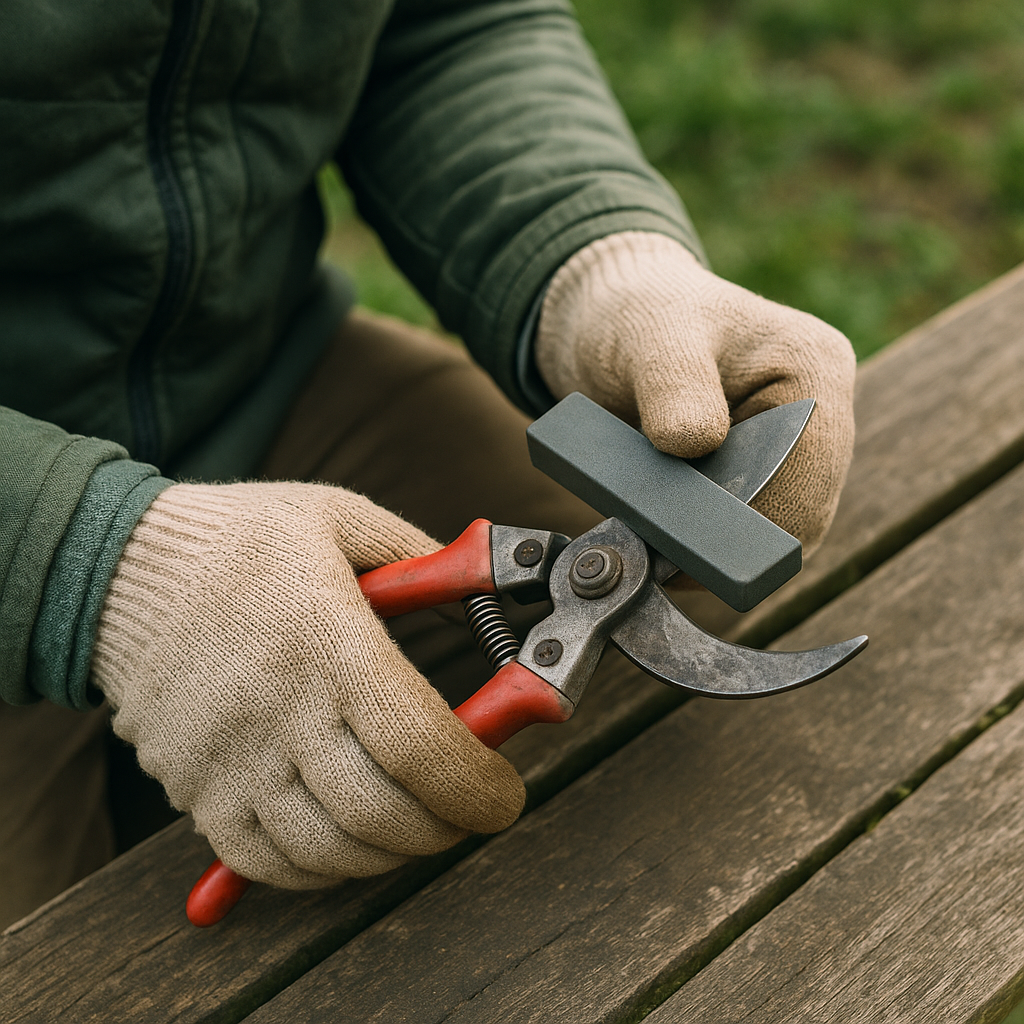
Blunt secateurs cause tearing, slow healing and promote pathogen entry. Likewise, a saw that is too wide risks leaving ragged wounds. It is better to opt for thin, slightly long blades and regular sharpening. The maintenance of your equipment often proves more decisive than the cutting technique itself.
Tool maintenance and safety
- Clean blades with alcohol to prevent disease transmission.
- Regularly check the tightening mechanisms and lubricate the joints.
- Wear thick gloves, safety goggles and, when working at height, an appropriate harness.
- Store tools in a dry place to prevent corrosion.
FAQ
When should pruning wounds be treated ?
In most cases, chemical wound dressings are avoided. Sap and the tree’s natural tissues are sufficient to close the wound if the cut is clean and made outside freezing periods. In humid conditions, a natural dressing based on horsetail can limit infection.
Can pruning be done in autumn ?
Autumn pruning is generally discouraged, because the tree enters dormancy without being able to heal effectively. The risk of rot increases as soon as humidity sets in.
What is the best age for the first pruning ?
Pruning starts as early as the second year after planting, to control the framework. Waiting three or four years risks delaying production and complicating the structuring.