
Sommaire
| Key points | Details to remember |
|---|---|
| 🍄 Identification | Funnel-shaped cap vs convex cap |
| 🌟 Morphology | Folds on the chanterelle vs gills on the milkcap |
| 📍 Habitat | Mixed forests vs spruce forests |
| ⏰ Season | Summer and early autumn vs autumn |
| 🍹 Edibility | Delicate taste vs spicy flavor |
| ⚠️ Precautions | Possible confusions with toxic species |
Among twigs and moss in the undergrowth, it is not uncommon to come across a carpet of small orange caps that whet the gatherer’s appetite. Yet behind this warm hue hide two species both friendly and deceptive: the chanterelle and the orange milkcap. At first glance, one might think there is hardly any difference, but every detail matters when you want to bring back a safe and tasty basket.
Who are the chanterelle and the orange milkcap?
The chanterelle (Cantharellus cibarius) in brief
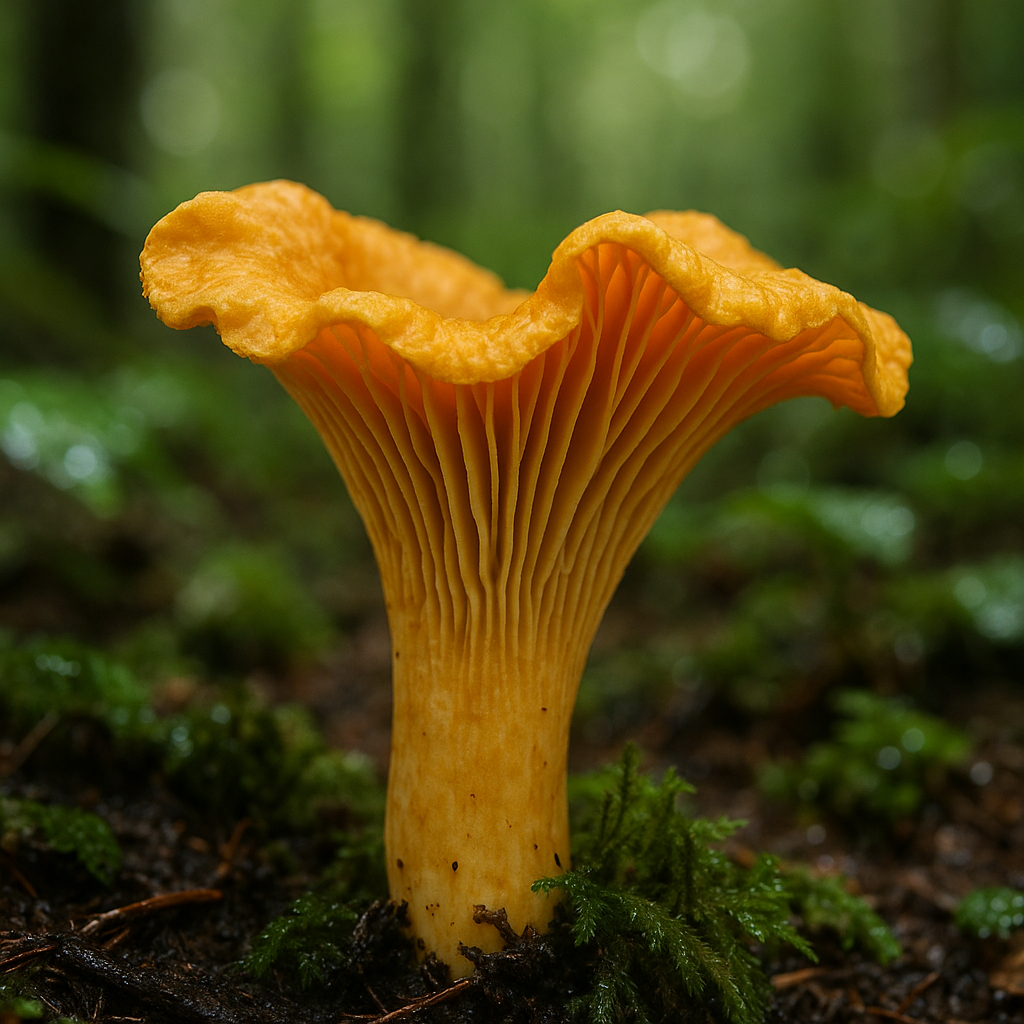
Recognizable by its funnel-shaped silhouette, the chanterelle displays folds rather than gills. These folds, branched and shallow, often blend into the stem, as if the whole formed a small golden wave. The aroma is delicate, evoking a mix of hazelnut and orange blossom, and its flesh remains firm to the touch. It is mainly found at the edge of deciduous or coniferous forests from June to October, in well-drained and sometimes mossy soil.
The orange milkcap (Lactarius deterrimus) in a few traits
The orange milkcap is identified by its convex cap, often slightly shell-shaped, and its true gills, tight and fragile. Its flesh releases a milky latex, yellowish, when exposed to air. This characteristic “milk” contrasts with that of other milkcaps, which is less colored. Although edible after cooking, it delivers a stronger taste, sometimes slightly peppery, which divides gourmets. It favors spruce forests and appears mainly at the end of summer and in autumn.
How to visually distinguish these two orange mushrooms?
Cap shape and color
On the chanterelle, the cap unfolds an irregular, almost scalloped edge, while on the orange milkcap, the outline is rounder and more regular. The chanterelle’s color ranges from golden yellow to very pale orange, rarely bright. In comparison, the milkcap shows a deeper hue, almost crimson on older specimens, sometimes with a darker center.
Gills vs folds and texture
The chanterelle’s folds, often faint, form an irregular network under the cap. Conversely, the milkcap has stiff, well-cut gills that run down the stem or stop sharply. To the touch, the chanterelle’s flesh feels softer and more supple, almost moist when fresh, whereas the milkcap’s flesh shows a firmer, almost brittle density.
Latex exudation
The decisive gesture? A slight cut on a gill or in the flesh. If a milky liquid appears and quickly turns pale yellow, you have a typical visual marker of the orange milkcap. The chanterelle releases no milky exudate, making this a simple criterion to clear doubt.
Habitat and harvesting period
Forests, soils and associations
The chanterelle willingly settles under oaks, beeches or hornbeams, sometimes in mixed stands where mushrooms and roots weave a mycorrhizal network. It prefers acidic to slightly neutral, well-drained but humus-rich soils. The orange milkcap, for its part, associates almost exclusively with spruces. You will often find its orange showers in spruce forests, on more acidic soil covered with firs.
Seasonality: spring or autumn?
Contrary to popular belief, the chanterelle can appear as early as late spring, especially during a wet summer. Heat breaks slow its growth until the arrival of more regular rains. The orange milkcap starts rather in September and continues fruiting until the first frosts. Harvesting its caps before this cooling avoids overripe, more bitter specimens.
Edibility and culinary use
Aromas and textures in cooking
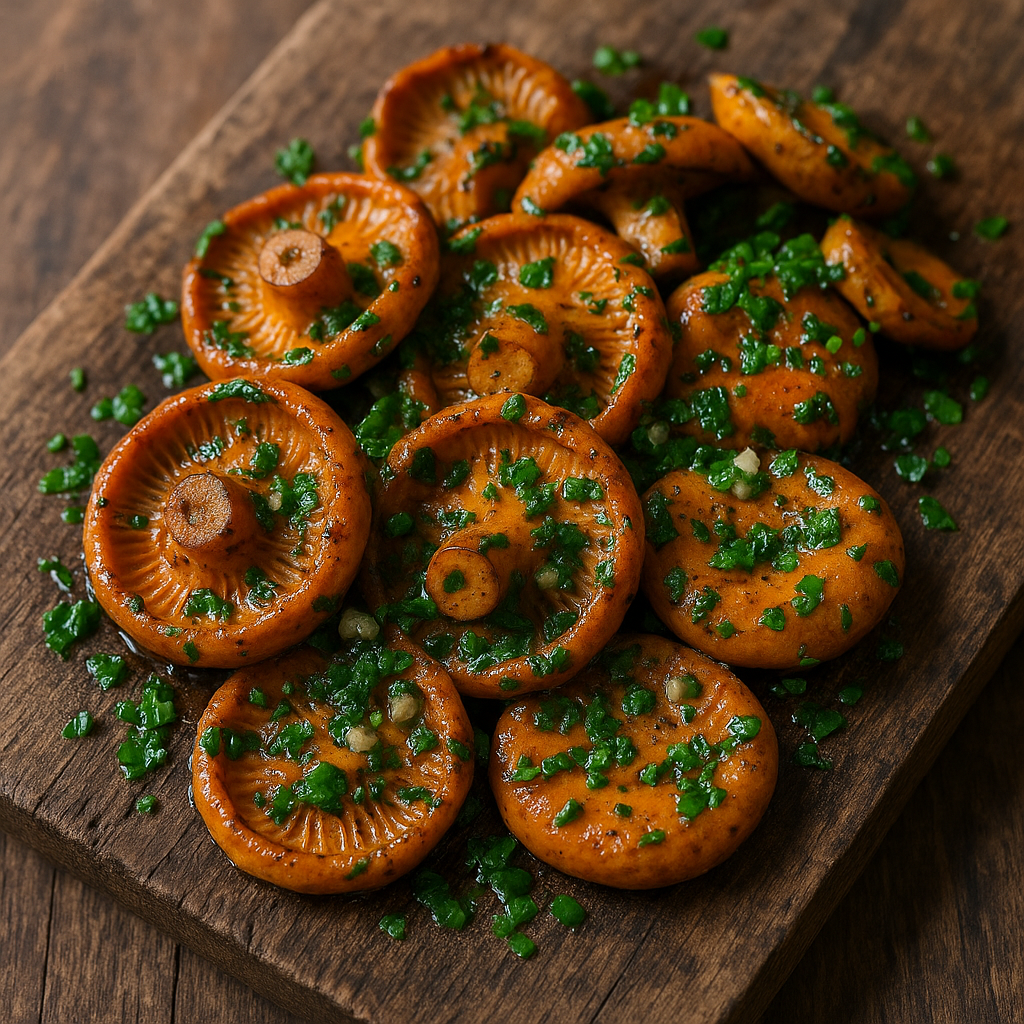
The chanterelle lends itself to multiple preparations: simply sautéed in olive oil, it remains shiny and keeps a silky texture. Its light neutrality pairs well with white fish, poultry or omelets. The orange milkcap, meanwhile, develops a strong taste: it is often reserved for a skillet spiced with garlic and parsley, or a creamy game sauce, where its peppery notes fully express themselves.
Precautions and risks
While the chanterelle has no known toxicity, the orange milkcap requires thorough cooking: its latex can slightly irritate the stomach if the flesh remains raw. It is also sometimes confused with more dangerous species, such as some orange russulas. Respecting the edibility guidelines, drying the gills to inspect the milk color change, and consuming only young and firm specimens are common-sense measures.
Myths and frequent confusions
It is sometimes said that any orange hue signals a dangerous milkcap. In reality, several chanterelles (gray chanterelle, Pacific chanterelle) share this color without danger. Conversely, a completely orange mushroom is not always edible: some waxcaps or small clitocybes use this camouflage to deceive the gatherer. The smaller the size, the more likely the error.
Practical tips for harvesting
- Carry your mushrooms in a ventilated basket to avoid damaging them.
- Avoid plastic bags that promote condensation and deterioration.
- Always cut at the base of the stem, without pulling, to preserve the mycelium.
- Note the location to return if the growth was generous.
- Keep some whole specimens for later expert identification.
FAQ
- How to spot an immature chanterelle? Its folds are faint and the cap is lighter colored, almost cream.
- Can the orange milkcap be confused with other milkcaps? Yes, Lactarius deliciosus has a brighter greenish milk, more fluid than that of L. deterrimus.
- How much to harvest without harming the forest? Limit to a maximum of 1 kilo per adult and consider restricting picking in fragile areas.
- Does freezing alter the flavor? The chanterelle freezes very well after a brief sauté, the milkcap may lose some crunchiness.