
Sommaire
| Key points | Details to remember |
|---|---|
| 🔧 Definition of adjustment | Understand the hinge adjustment and its impact on the proper functioning of the door |
| 💰 Locksmith cost | Estimate the hourly rate and travel fees |
| 🎥 YouTube tutorial | Check the reliability and accuracy of the videos |
| 🛠️ Required tools | List the essential equipment to act safely |
| ⚠️ Potential risks | Anticipate the consequences of poor adjustment or poorly mastered installation |
| ⏱️ Duration of intervention | Compare the time needed for DIY versus a professional |
| 🔍 Selection criteria | Define your level of confidence, budget and availability |
A poorly adjusted hinge, and here is your door rubbing, squeaking or no longer closing properly. On YouTube, thousands of DIYers praise the home solution: goodbye bill, hello tutorial. Yet, faced with the range of videos, one wonders if the financial gain is really worth it. Alternatively, calling a locksmith guarantees a turnkey result but weighs on the budget. In this article, we scrutinize the two approaches: we detail the risks, costs and skills required to help you decide between resourcefulness and paid expertise.
Why do hinges loosen?
Wear and friction
Each opening and closing stresses the hinge pin. Over the years, the metal wears down, the pivot can ovalize the fixing hole, and play sets in. Result: the door tilts, scrapes the floor or jams. Before any intervention, carefully examine the upper and lower hinges to spot signs of excessive friction, metal wear or oxidation marks.
Humidity and expansion
Wood and metal react to ambient humidity: the frame expands, the hinges become misaligned. An old home without reliable insulation often undergoes these variations, which accelerate loosening. Tracking the origin of the problem also involves observing the condition of the frame, the wall-door junction, even the threshold. This preliminary diagnosis allows you to determine if simple tightening is enough or if a more thorough adjustment is necessary.
Adjusting your hinges yourself: YouTube tutorial
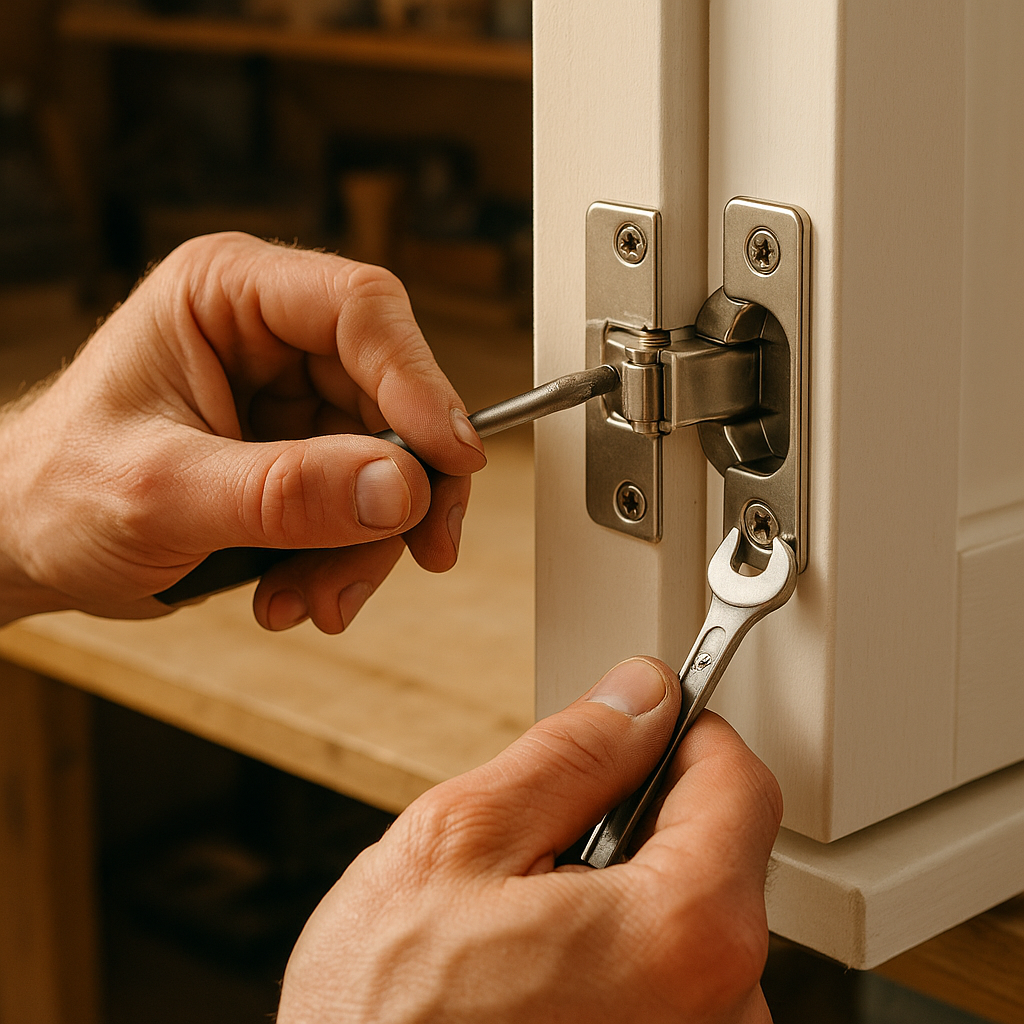
Tutorial evaluation
On YouTube, tutorials abound, but their quality is uneven. Some creators detail each step, list the tools, show the precise movement to reposition a hinge. Others settle for blurry images and brief explanations. Before starting, take the time to:
- Compare several videos and note the duration of the intervention.
- Check comments to spot any negative feedback.
- Ensure the creator clearly mentions difficulty levels.
A poorly chosen tutorial can turn a simple adjustment into a headache, or even irreversible damage.
Necessary tools and skills
A good DIYer knows that without appropriate tools, the operation falls short. To adjust hinges, you will need at least:
- An adjustable wrench or a flat wrench to loosen the nuts.
- A sturdy screwdriver or a pin punch to push back the pin.
- A spirit level to check the door’s horizontality.
- A rubber mallet to realign without damaging parts.
Beyond equipment, you need some patience, sharp observation skills, and above all the ability to anticipate the unexpected. Without these qualities, you risk forcing, bending the hinge or damaging the door’s finish.
Calling a locksmith: pros and cons
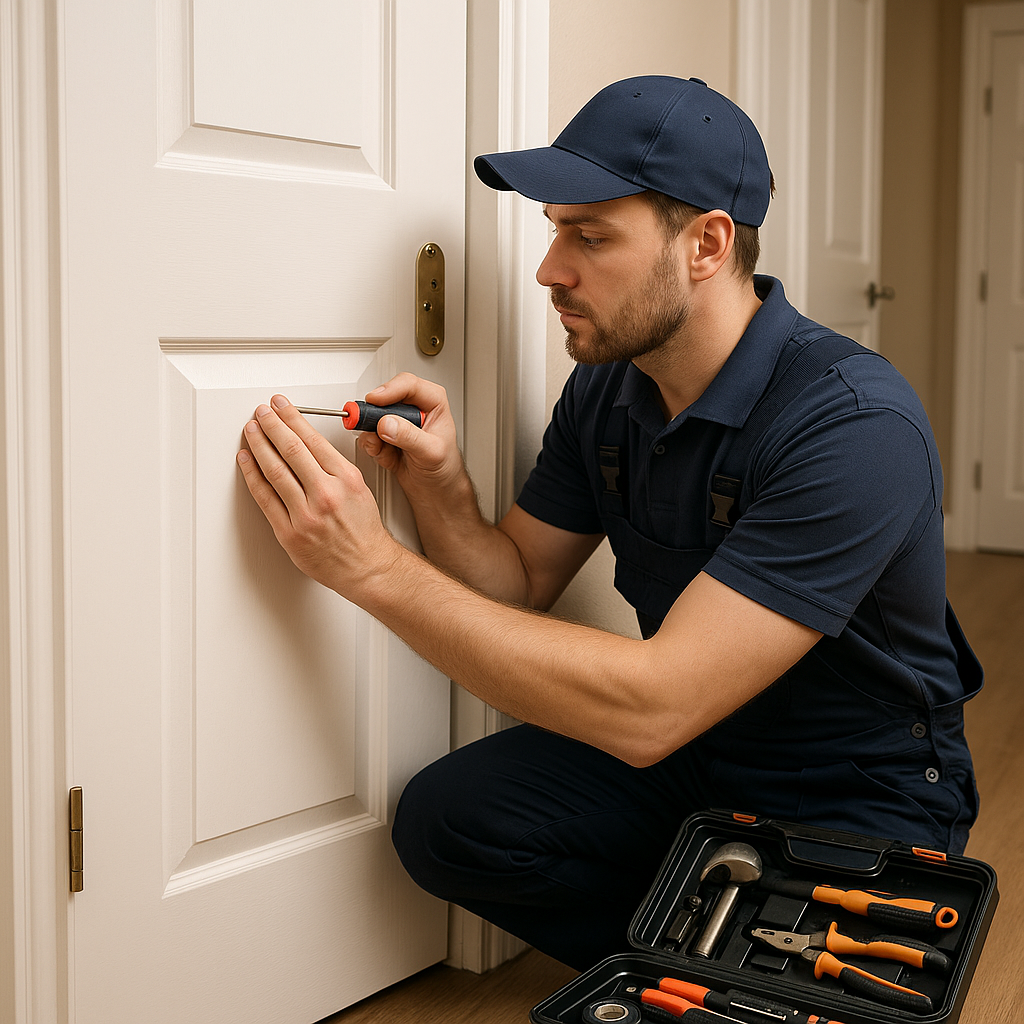
Advantages of professional intervention
An experienced locksmith acts in a few minutes, with a reliable diagnosis. They identify the exact cause of misalignment (wear, expansion, loose screws) and propose the most suitable solution: hinge replacement, frame reinforcement or simple tightening. You benefit from:
- A guarantee on the intervention and installed parts.
- A clean result without risk of damaging the structure.
- Fast execution without long trial-and-error sessions.
Disadvantages and rates
The main obstacle remains the cost. Depending on the region, a locksmith generally charges between €60 and €120 per hour, plus travel fees. A simple hinge repair can represent a budget between €80 and €150. For a few minutes of labor “you don’t pay by the minute, but for travel and expertise.” It is especially justified when the operation reveals a more serious problem, such as a cracked hinge or weakened frame.
Comparison of costs, time and quality
| Criteria | YouTube tutorial | Professional locksmith |
|---|---|---|
| Cost | About €20 for tools (if not owned) | €80 to €150 for the intervention |
| Duration | 1 to 2 hours depending on experience | 30 min to 1 hour |
| Quality of result | Variable, depends on care taken | Professional guarantee, durable |
| Risks | Structural or aesthetic damage | Almost none, insured |
Advice for making the right choice
Before deciding, ask yourself these questions: what is your level of confidence in DIY? Otherwise, are you ready to invest in a complicated tool, such as a pin punch or rubber mallet? Count the time you have and assess the value of your door (old woodwork, armored door). If you hesitate between two options, request a quote online or by phone from a locksmith and compare with your personal work time. Finally, a good compromise may be to temporarily rent the appropriate tools and test on a less visible hinge before fully committing.
FAQ
Can you really succeed in adjusting it yourself?
Yes, if you have the right tools and a clear tutorial. The operation remains simple: loosen, reposition and retighten the pin. However, without experience, you risk a more serious misalignment.
What budget should be planned for a locksmith?
Count between €80 and €150, travel included. Rates vary depending on the complexity of the operation and your location.
What tools are essential for doing it yourself?
An adjustable wrench or a set of flat wrenches, a sturdy screwdriver, a rubber mallet and a spirit level.
When should you absolutely call a professional?
If you observe advanced oxidation, a cracked hinge or a deteriorated frame. Also, if you lack time or confidence in your movements.
How long does the intervention take?
For a professional, 30 to 60 minutes is enough. For DIY, plan 1 to 2 hours, especially if it is the first attempt.