
Sommaire
| Key points | Details to remember |
|---|---|
| 🌼 | Definition of flowering trees and their interest in temperate zones |
| 🌷 | Selection of resistant and floriferous species |
| 🌮️ | Adaptation to French climatic and soil constraints |
| 🛠️ | Techniques for planting and pruning to promote flowering |
| 🛏 | Maintenance: watering, mulching and frost protection |
| 📊 | Comparison of the ten species with strengths and limits |
Choosing a flowering tree for your garden can sometimes be a headache: between climate variations, soil characteristics and the time available for maintenance, it’s easy to feel overwhelmed. Here, I have gathered ten species known for their robustness and spectacular flowering, with a precise comparison and expert advice so that all you have to do is plant, admire, and enjoy.
Selection criteria for a successful flowering tree
Before giving in to a visual crush, several parameters must be evaluated. First, the exposure: full sun or partial shade? Then, the soil type – calcareous, clayey, light – and its pH. The adult size and growth rate also influence the choice of the right location. I often mention the importance of a non-invasive root structure, especially in small urban spaces. Finally, resistance to diseases, late frosts or intense heat is a guarantee of longevity and regular flowering.
Top 10 easy-to-grow flowering trees
Below, discover this clear comparison between our ten essentials, ideal for spotting the variety of flowering trees that will suit your garden and your pace.
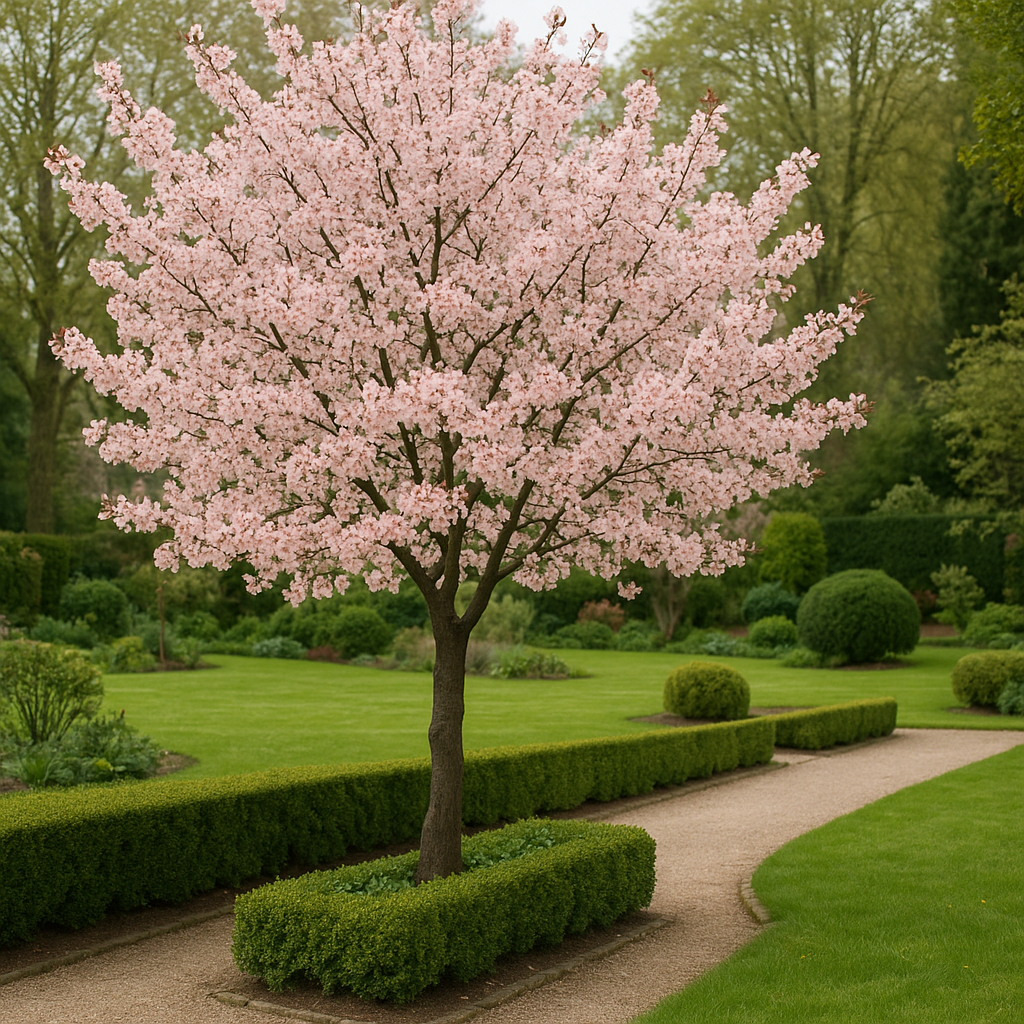
1. Prunus cerasifera (Myrobalan plum)
Compact and quick to flower, the myrobalan plum shows a soft pink flowering from the end of winter. Adapted to well-drained soils, it tolerates both partial shade and full sun. Its round silhouette is easy to prune and lends itself to a free hedge or a solitary planting, for an effortless “love at first sight” effect.
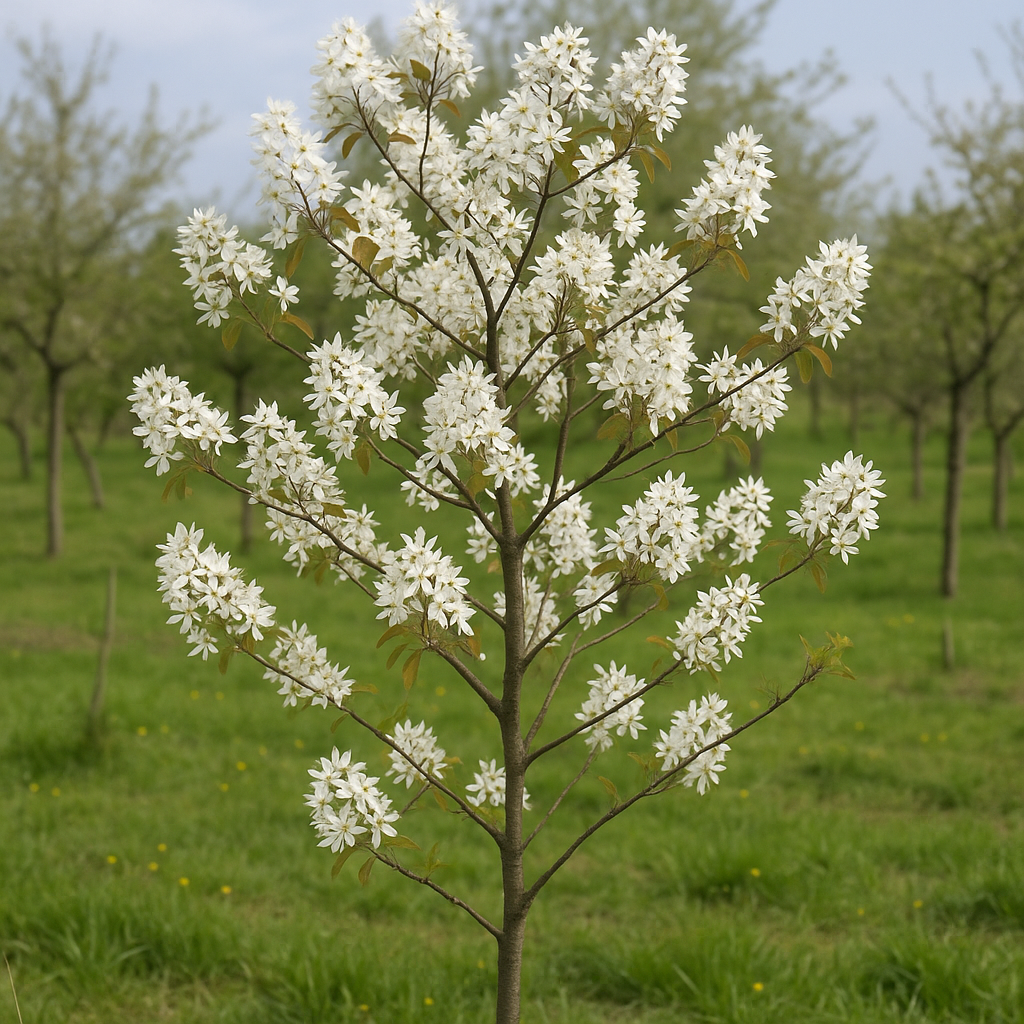
2. Amelanchier lamarckii (Canadian serviceberry)
Recognizable by its clusters of small white flowers in spring, the serviceberry combines aesthetics and hardiness. It thrives in ordinary soil, even slightly calcareous, and withstands fairly harsh winter cold. In autumn, its foliage turns orange, offering a dual seasonal interest.
3. Cercis siliquastrum (Judas tree)
The Cercis, or Judas tree, stands out with its fuchsia pink flowers directly attached to bare branches. Native to the Mediterranean basin, it appreciates mild winters but generally resists down to –15 °C. A flamboyant choice for those with a sunny garden.
4. Cornus florida (Flowering dogwood)
Beyond its large white or pink bracts, the dogwood offers an elegant shape and red autumn foliage. A cool, well-drained soil, partial shade exposure, and you benefit from a renewed spectacle each year, without special treatments.
5. Malus toringo (Wild apple)
Less demanding than its fruit-bearing cousin, this ornamental apple is adorned with white-pink flowers before producing small decorative apples. Very hardy, it can be planted both solitary or in rows in ornamental orchards.
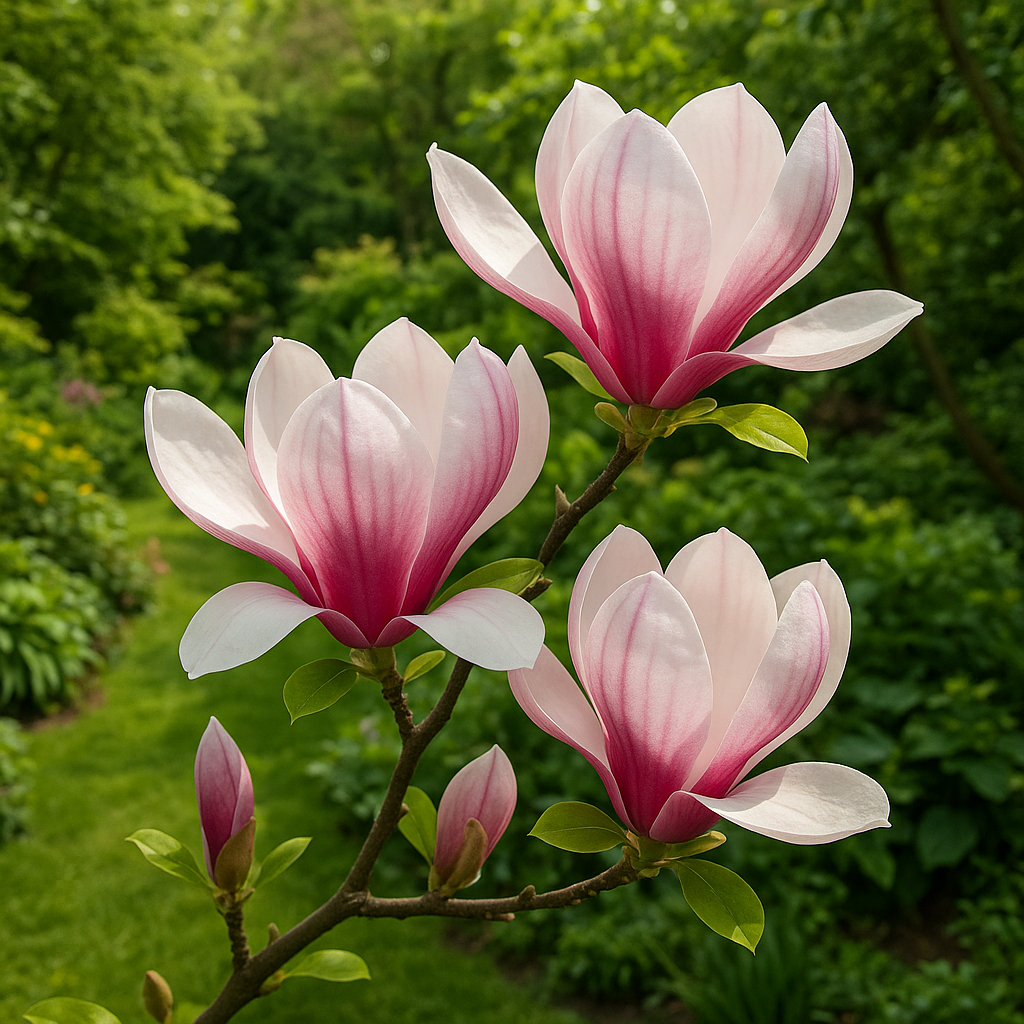
6. Magnolia soulangeana (Saucer magnolia)
Featured in many parks, the saucer magnolia forms a pink and white flowering dome from March. It seeks a location sheltered from cold winds and a deep, humus-rich soil. Once well established, its needs are limited.
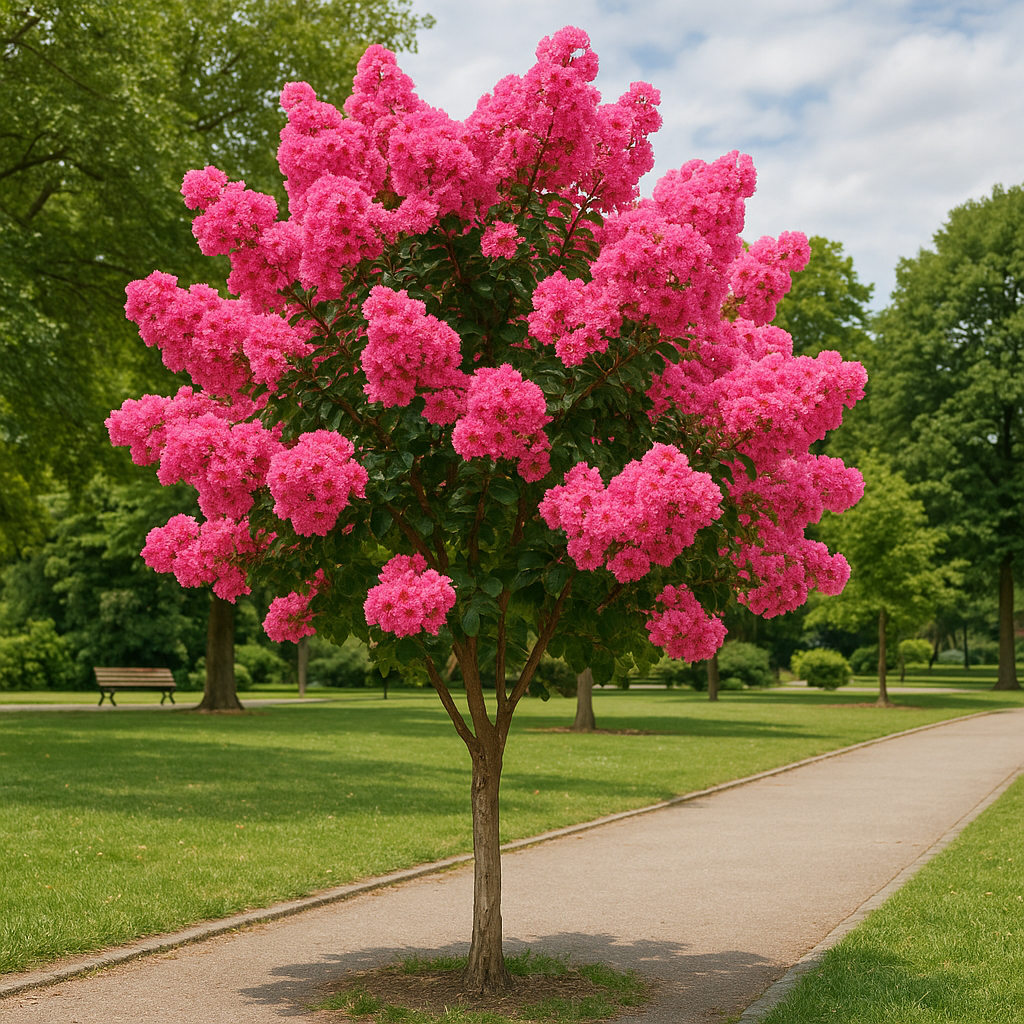
7. Lagerstroemia indica (Crape myrtle)
To bring an exotic touch, the crape myrtle covers itself with pink or purple panicles in summer, when most other trees are in floral rest. It appreciates a light soil, even somewhat dry, and maximum sunlight. The only constraint: protect it from intense frost.
8. Koelreuteria paniculata (Golden rain tree)
Its yellow clusters followed by decorative lantern-shaped capsules make it an original ornament each season. Tolerating heat and dry soils, it only requires light pruning after flowering to maintain an airy shape.
9. Chitalpa tashkentensis
Resulting from a cross between catalpa and bignonia, the chitalpa offers beautiful pink and white cymes in summer. Its rapid growth and low water needs make it a choice ally in Mediterranean or warm continental gardens.
10. Cercis canadensis (American Judas tree)
Less hardy than the Mediterranean Cercis, it nevertheless shines in regions with mild climates. Its purplish pink flowering, naturally rounded shape, and variegated foliage according to varieties complete this list of favorites.
Comparison of the 10 flowering trees
| Species | Height | Exposure | Flowering | Maintenance |
|---|---|---|---|---|
| Prunus cerasifera | 4–6 m | Full sun to partial shade | February–March | Light pruning |
| Amelanchier lamarckii | 5–7 m | Partial shade | April–May | Undemanding |
| Cercis siliquastrum | 6–8 m | Full sun | April | Occasional pruning |
| Cornus florida | 4–6 m | Partial shade | April–May | Cool soil |
| Malus toringo | 4–5 m | Full sun | April–May | Light pruning |
| Magnolia soulangeana | 5–8 m | Sheltered full sun | March–April | Winter protection |
| Lagerstroemia indica | 3–6 m | Full sun | July–August | Winter shelter |
| Koelreuteria paniculata | 6–10 m | Full sun | Summer | Low water |
| Chitalpa tashkentensis | 5–7 m | Full sun | Summer | Moderate watering |
| Cercis canadensis | 4–6 m | Full sun | April | Mild climate |
Practical advice for planting and maintenance
- Ideal period: autumn or late winter, to promote rooting before flowering.
- Soil preparation: loosen to 40 cm, incorporate compost or potting soil to ensure good drainage.
- Planting: dig a hole twice as wide as the root ball, position the tree straight and lightly tamp down.
- Mulching: apply an organic layer to retain moisture and limit weed competition.
- Pruning: remove only dead wood and suckers; flowering mainly occurs on last year’s wood.
- Watering: regular during the first year, then more spaced depending on local rainfall.
- Winter protection: fabric or insulation at the base for the most fragile specimens (magnolia, crape myrtle).
Frequently Asked Questions
Which tree flowers earliest in spring?
Prunus cerasifera and Magnolia soulangeana are among the first to flower from February/March, offering an early bloom that breaks the winter greyness.
How to preserve the flowering of a Cercis siliquastrum?
Simply limit pruning to broken branches and ensure well-drained soil; the Cercis develops its flowers directly on old wood.
Can these trees be planted in open ground throughout France?
Most tolerate a temperate or continental climate. However, magnolias and crape myrtles prefer regions with mild and dry winters.
What is the average lifespan of these trees?
Expect between 30 and 60 years depending on the species and care provided. Good maintenance promotes increased longevity and regular flowering.