
Moving a tree is a delicate operation but entirely possible if well planned. Whether for aesthetic reasons, practical purposes, or because it is growing too close to a building, transplantation allows saving the tree and integrating it into a new space. This guide explains step by step how to successfully carry out this operation.
Sommaire
1. Why transplant a tree
Transplanting a tree is not a whim: it often responds to concrete needs. A tree may obstruct the construction of a terrace, deprive a vegetable garden of sunlight, or risk damaging the foundations of a house. In other cases, one simply wants to reorganize the green space. Transplanting means giving a second life to a tree while preserving the biodiversity of your garden.
2. When to transplant?
The ideal time to move a tree is during its dormant period, that is from November to March, excluding frost periods. Deciduous trees can be transplanted in autumn or early spring, while conifers tolerate transplantation better in autumn.
Absolutely avoid summer, when sap flows strongly and roots struggle to adapt. Autumn remains the best period: the soil is still warm, which promotes the growth of new fine roots.
3. Key transplantation steps
3.1 Prepare the tree (root pruning)
Root pruning consists of cutting the roots around the perimeter of the future root ball, 6 months to 1 year before transplantation. This allows the tree to produce secondary roots near the trunk, which will follow the tree during the move.
3.2 Prepare the new hole
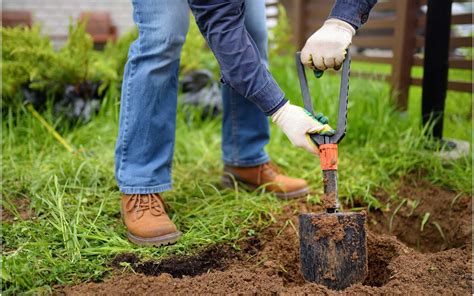
The hole must be 2 to 3 times wider than the root ball. Loosen the bottom, add mature compost and sand to improve drainage. The better the soil is prepared, the more likely the tree will take root.
3.3 Uproot the tree
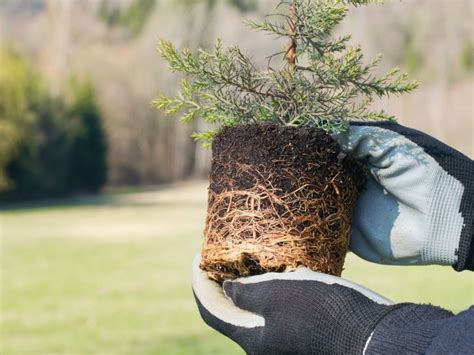
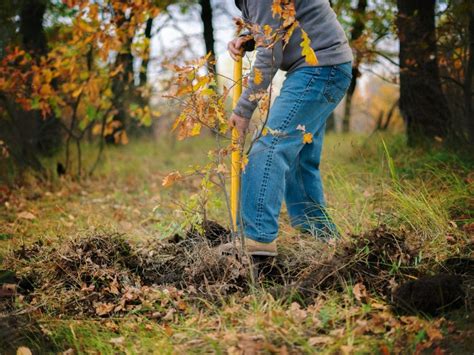
Free the root ball while preserving as many fine roots as possible. For a small tree, a spade is sufficient. For a large specimen, the help of a winch or mechanical equipment is essential.
3.4 Transport and replant
Place the tree in the center of the hole, with the collar (area between trunk and roots) at ground level. Remove the protections from the root ball (burlap, wire mesh). Refill with the extracted soil, tamping lightly.
3.5 Watering and staking
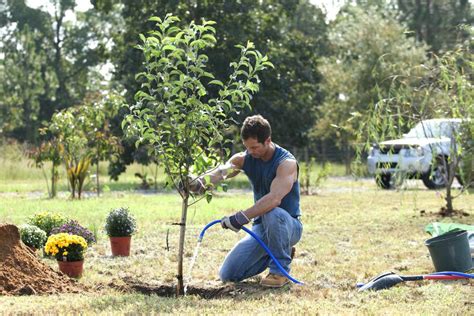
Water abundantly to eliminate air pockets. Install a sturdy stake to stabilize the tree, especially in windy areas.
4. Care after replanting
- Water regularly during the first year, especially in summer (20 L every 10 days).
- Apply organic mulch to retain moisture.
- Avoid applying nitrogen fertilizer immediately after planting.
- Monitor regrowth the following spring (buds, new leaves).
5. Mistakes to avoid
- Transplanting in the heat of summer.
- Neglecting watering after replanting.
- Cutting too many fine roots, which are essential for regrowth.
- Burying the collar too deeply.
- Forgetting staking, risking the tree tipping over.
6. FAQ
Can a large tree really be moved?
Yes, but it requires professional equipment and sometimes the involvement of specialized companies. Trees over 20 years old are particularly sensitive.
How much does transplantation by a professional cost?
The price ranges from €200 to €2000 depending on the size of the tree, the difficulty of access, and the equipment needed.
Can a fruit tree be transplanted?
Yes, but wait for the dormant period and be sure to protect the fine roots. Regrowth may affect production for 1 to 2 seasons.
How long before the tree regrows?
Regrowth is usually visible the following spring, but full stabilization takes 2 to 3 years.
7. Conclusion
Transplanting a tree is a demanding but rewarding operation. It helps preserve plant life, intelligently redesign your garden, and avoid cutting down trees. With proper preparation (pruning, root ball, appropriate hole), regular watering, and suitable care, your tree will take root and continue to thrive in its new location.