Sommaire
The gabion wall is increasingly popular in gardens, along terraces, or to retain a slope. Made of metal cages and stones, this structure appeals for its robustness and natural charm. From choosing materials, preparing the ground, to assembly techniques, this practical guide supports you from A to Z to build a wall that is both strong and harmonious.
In Brief
🛠️ Careful preparation: selecting galvanized mesh, stable foundation, and level adjustment are prerequisites for a durable wall.
📐 Custom design: thickness, height, and shape adapt to the use (earth retention, decoration, fencing) for a personalized result.
⛰️ Smart filling: alternating sizes and shades of stones optimizes the stability and aesthetics of the gabion.
🔍 Light maintenance: removing vegetation between the meshes and checking fasteners ensures flawless longevity.
1. Understanding the Gabion Principle
A gabion generally consists of galvanized steel mesh forming a box. It is assembled by interlocking or using spirals, then filled with raw stones. This method, formerly used to protect riverbanks, has become popular in landscaping and slope retaining thanks to its high permeability and ability to absorb soil pressure while offering a raw and authentic appearance.
2. Choice of Materials and Preparation
2.1 Selection of Mesh and Spirals
Choose a thick mesh (2.7 mm or more) coated with zinc and aluminum to prevent corrosion, especially in humid areas. Connection spirals, essential for linking panels, should be stainless steel or galvanized. Ensure the mesh measures between 8 × 10 cm and 9 × 11 cm: this size effectively holds stones while facilitating filling.
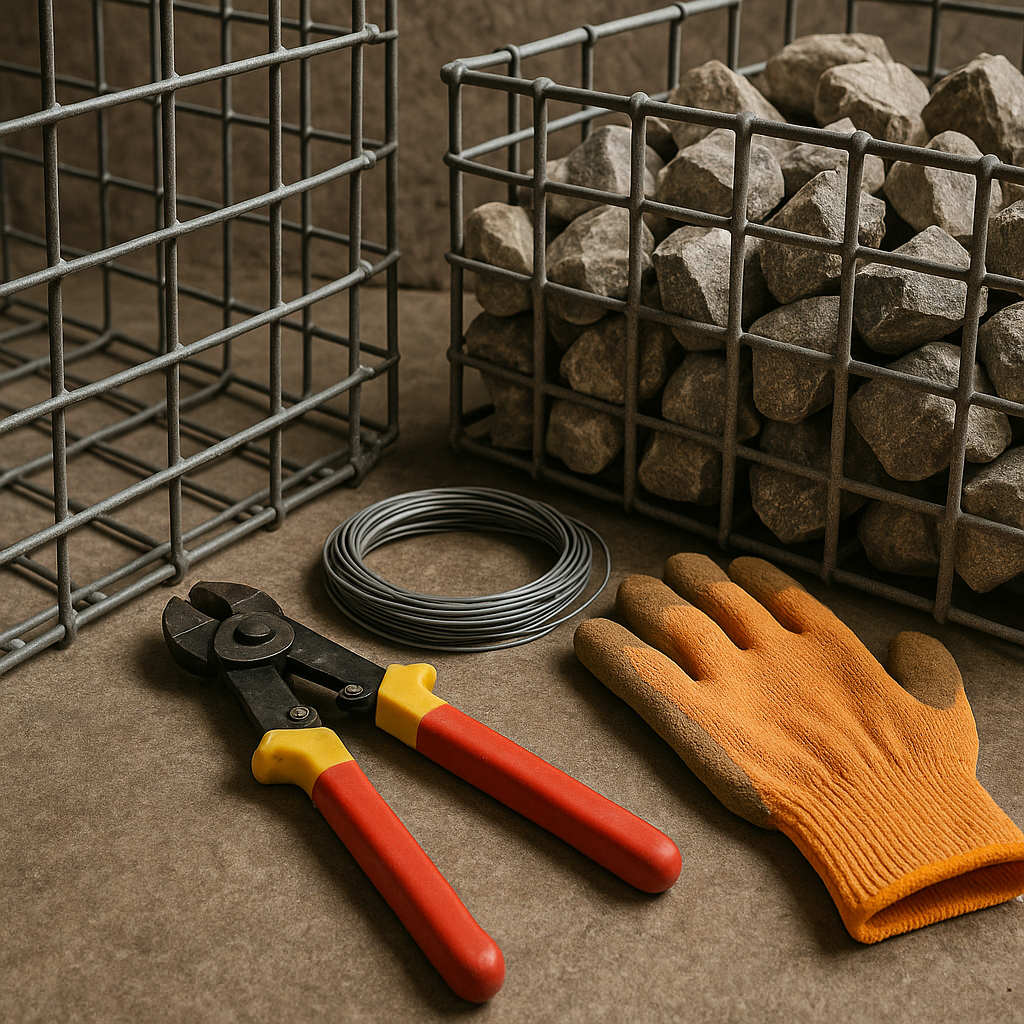
Basic tools: spirit level, plumb line, shovel, gloves, and mesh stapler.
2.2 Preparing the Ground and Foundations
The wall’s stability mainly depends on its foundation. Dig a trench about 20 cm deep and 40 cm wide, according to the gabion’s thickness. A bed of 0/20 gravel compacted with a mechanical tamper limits settlement risks. Check the horizontality at each layer, without which your wall may lean over time.
3. Assembly of Metal Cages
3.1 Assembly of the Panels
There are two main methods: assembly using spirals or specific clips. Thread the spirals through the pre-drilled holes of adjacent panels, then twist them until locked. The alignment must be perfect: a misalignment of a few millimeters can cause gaps during filling.
3.2 Internal Reinforcement
For walls over one meter high, provide steel wire spacers to prevent bulging of the front and back faces. These intermediate reinforcements, spaced 1 meter apart, strengthen the structure by breaking the lateral pressure exerted by the stone.
4. Filling the Gabions
The choice of stones affects both performance and aesthetics. Prefer pebbles or frost-resistant rubble stones, with diameters ranging from 50 to 120 mm.
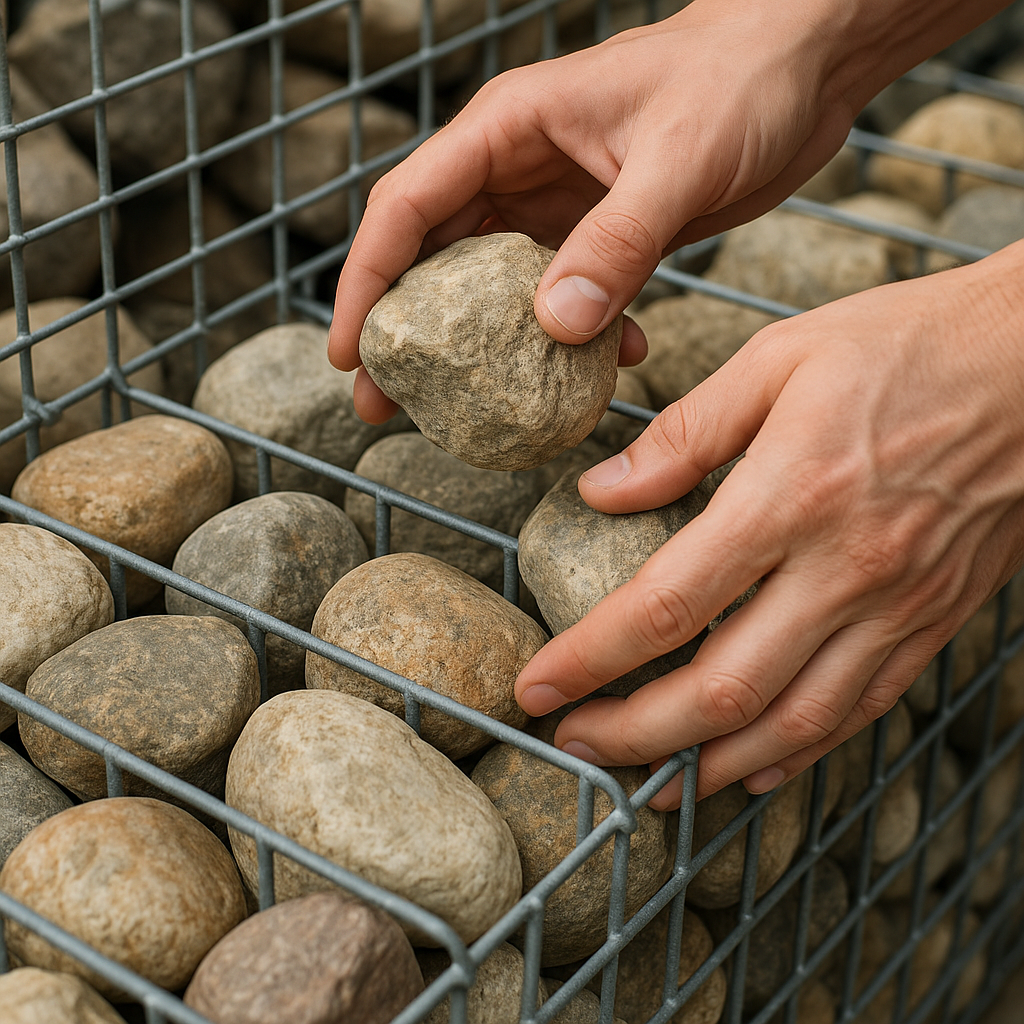
Expert tip: start by placing the most beautiful elements on the facade, facing the viewer, and fill the back with more irregular fragments. Alternate colors to enliven the overall tone. Once the basket is half-filled, tamp the stones by hand or with a small tamper to avoid empty pockets.
5. Drainage and Finishing
5.1 Rainwater Management
The natural permeability of the gabion is often sufficient to evacuate water, but in the case of a retaining wall, install a drain at the base of the wall. A perforated pipe wrapped in geotextile limits clogging by fines and ensures continuous drainage.
5.2 Aesthetic Treatment and Vegetation
To soften the appearance, you can slip groundcover plants (sedum, heuchera) between the meshes. Be sure to choose species that will not exert excessive pressure on the structure. A weed control fabric under the gabion will reduce unwanted growth.
6. Costs, Duration, and Additional Tips
The budget for a gabion wall generally ranges between €80 and €150 per square meter, depending on the quality of the stones and the thickness of the mesh. Expect about two days of work for a wall 5 meters long and 1 meter high with two people. Some advice:
- Prefer buying in bulk directly from the quarry to reduce the stone bill.
- Reuse stone offcuts to create an adjacent flowerbed or paving.
- Anticipate terrain changes, especially if you are retaining significant earth pressure.
FAQ
1. What type of stone should be chosen for a gabion wall?
Non-frost limestone pebbles or granite offer an excellent compromise between durability and aesthetics. Avoid very fine gravel that may shift.
2. Is a building permit required for a gabion wall?
Below 2 meters in height, no formalities are usually required in most municipalities. Beyond that, check with your town hall for a permit or prior declaration.
3. How to extend the lifespan of a gabion?
Regularly inspect the fastenings, clean vegetation, and reinforce galvanized steel spirals if necessary. A simple brush stroke prevents moss formation and preserves the metal’s appearance.