
Sommaire
Thermodynamic water heaters have revolutionized the way domestic hot water is produced: they extract heat from the air to heat a tank, often with an efficiency of several times the energy consumed. But between the technologies (monobloc, split), capacities, advertised performances, and installation conditions, it becomes difficult to differentiate the offers. This comparison breaks down the essential criteria, puts key figures into perspective, and helps you identify what will really make a difference in your home.
In brief
🔋 Efficiency (COP): most thermodynamic water heaters display a COP between 2.5 and 4 under favorable conditions — this is the key parameter to estimate your real savings.
🏠 Types: the monobloc system is simpler to install, the split is quieter and offers more flexibility for placement.
💶 Total cost: purchase price + installation + possible air extraction work — expect a typical range of €2,500 to €6,000 depending on capacity and installation complexity.
🔧 Maintenance & constraints: air filtration, defrosting, and refrigerant fluid check — these operations condition durability and COP maintenance.
How does a thermodynamic water heater work?
The principle is simple at first glance: a compressor, an evaporator, and a condenser form a refrigeration cycle that extracts heat from the ambient (or outside) air to transfer it to the tank water. One might think this device replaces a boiler; in reality, it is a concentrated thermodynamics system adapted to domestic hot water. The COP (Coefficient of Performance) reflects efficiency: a COP of 3 means that for 1 kWh of electricity consumed, 3 kWh of thermal energy are produced. But beware, this figure strongly depends on the temperature of the air drawn in, the water outlet temperature, and the test protocol used.
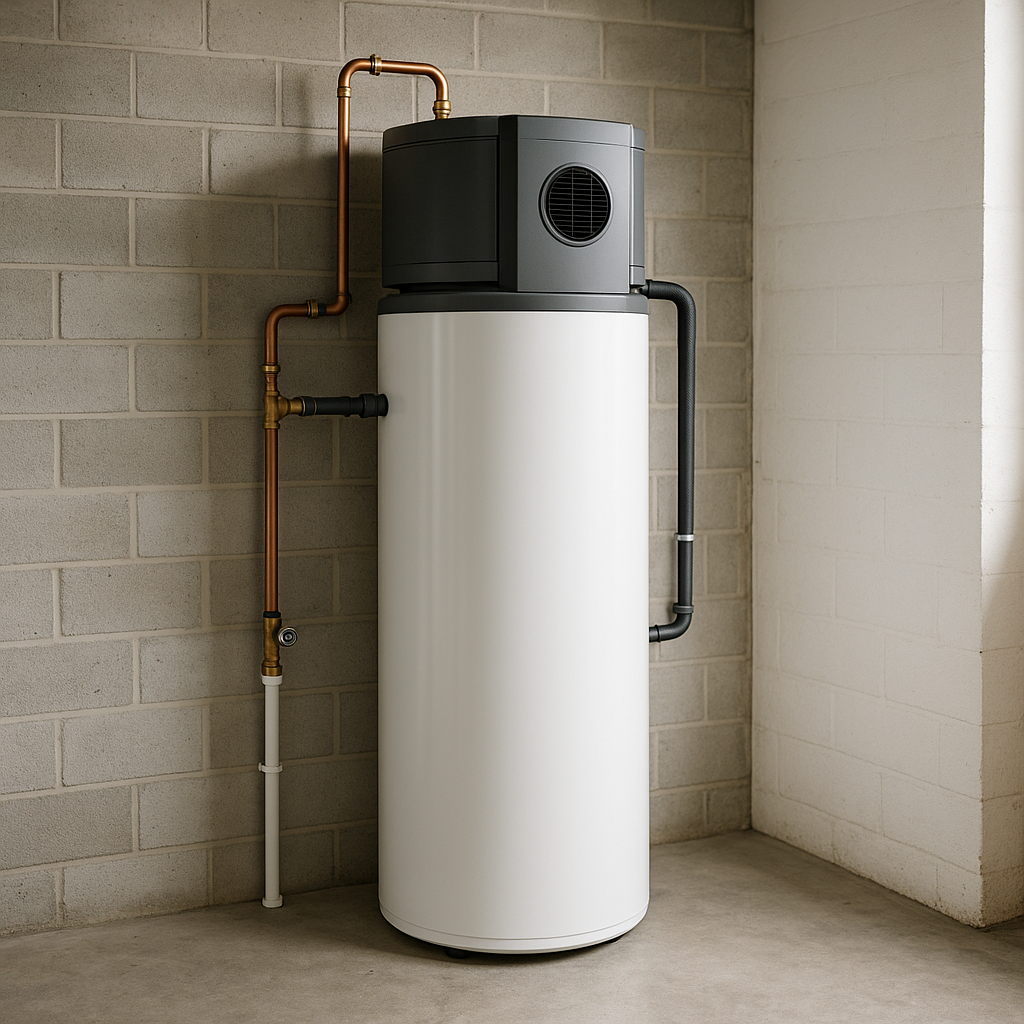
Types of thermodynamic water heaters: advantages and limits
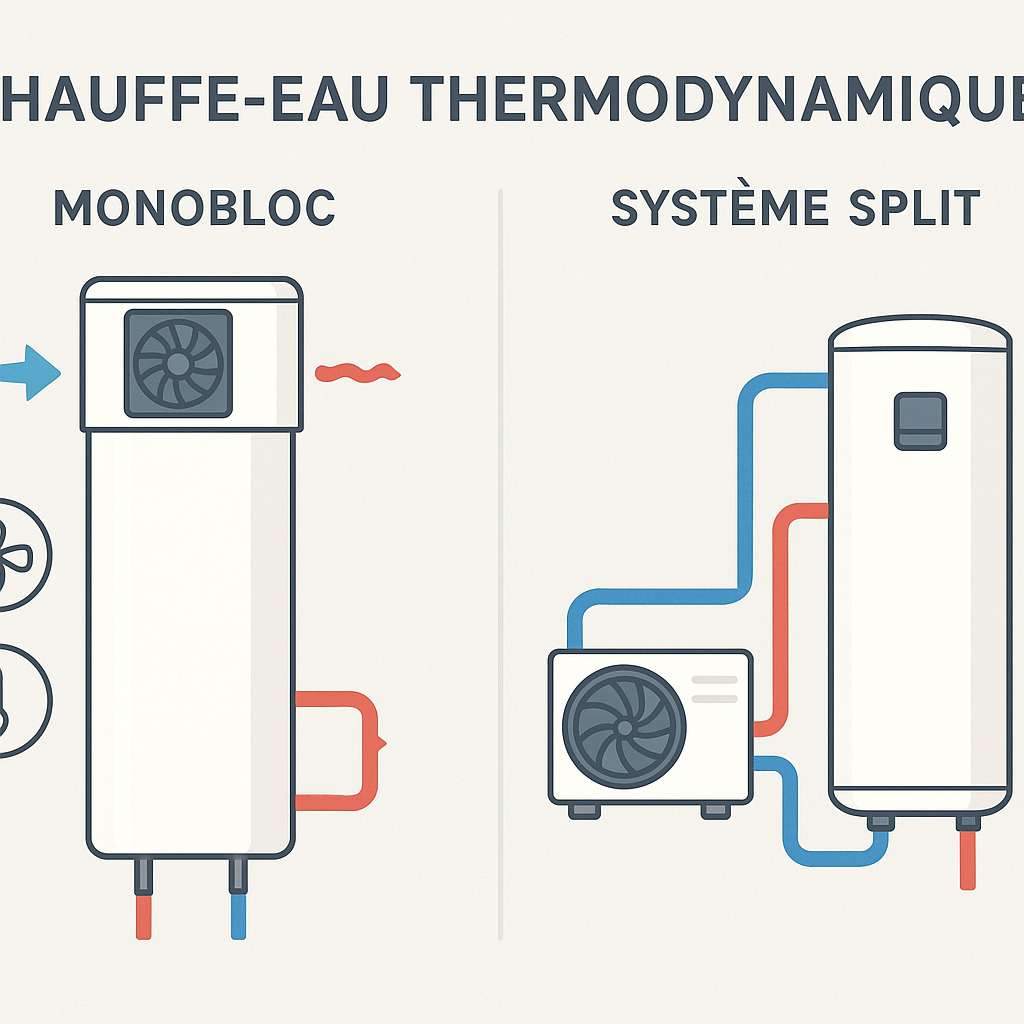
Monobloc: simplicity and contained price
The monobloc combines all components on the tank. Its main advantage is quick installation: the unit is installed on or next to the tank and the water is connected. It is often the least expensive and most compact solution. However, the unit draws ambient air from the room: if your room is small or poorly ventilated, efficiency drops and air inlet or extraction solutions become necessary. Noise can also be a drawback if the device is close to a living space.
Split: silence and flexibility
The split separates the outdoor unit (heat exchanger and fan) and the indoor unit (tank + condenser), connected by a refrigerant line. This architecture offers two immediate benefits: better acoustic integration (the noisy unit is placed away from the rooms), and better frost protection for the outdoor heat exchanger if properly sized. The drawbacks: higher installation cost and the need for a refrigeration technician for the connection. The split excels in homes where minimizing noise disturbances is desired.
Ambient air vs outdoor air
Some models draw air from the technical room (ambient air), others use outdoor air via an air intake or duct. Devices taking outdoor air avoid unnecessarily cooling the house, but they may require ducts, traps, and frost protection. Conversely, by drawing air from a heated room, the water heater can benefit from a favorable temperature difference — but at the cost of indirect heat loss if the extracted heat would have contributed to the home’s comfort.
Practical comparison criteria
To compare products, you need to move beyond marketing arguments and look at concrete indicators: useful tank capacity, COP under real conditions, noise level, defrost equipment, regulation mode, compatibility with electric backup, and ease of maintenance.
Capacity and consumption profile
A household of 2 people will typically require a tank of 150 to 200 liters, while a family of 4 will often opt for 200 to 300 liters. A tank that is too large results in short cycles and thermal losses; a tank that is too small will make you dependent on electric backup. Consider the consumption profile: successive showers, occasional bathtub use — these usages guide the choice of capacity and type of tank stratification.
Real performance: how to read the COP
Laboratories provide COPs measured according to standards (EN 16147, for example). But in practice, the COP fluctuates: outdoor temperature, setpoint temperature (45 °C vs 55 °C), cycle frequencies. From field experience, compare COPs at temperatures close to your local conditions and ask for user feedback in a similar climate. A device advertised at COP 3.8 can drop to 2.5 in winter if the intake air is cold and humid.
Comparison table — criteria and typical values
| Criterion | Monobloc | Split | Remarks |
|---|---|---|---|
| Purchase price | €2,000 – €3,500 | €2,800 – €5,500 | Indicative ranges; depends on capacity |
| Average COP | 2.5 – 3.5 | 3.0 – 4.0 | Values under optimal conditions |
| Noise level | 45 – 55 dB (room) | 30 – 45 dB (indoor) | Split reduces disturbances in living spaces |
| Installation | Simple | More technical | Split requires refrigeration technician for the connection |
| Maintenance | Filter + defrost control | Same + refrigerant line control | Annual maintenance recommended |
Actual cost and return on investment
The calculation of ROI depends on the current hot water consumption, the cost of electricity, and especially the actual COP. For a gas-heated house, the gain is different than for an electrically heated house. In practice, a payback period of 4 to 8 years is often estimated depending on available aids (subsidies, energy bonus) and the quality of the installation. To be nuanced: if the device is poorly placed or poorly sized, the COP decreases and the ROI lengthens.
Points of caution during installation
- Check the availability of a sufficiently ventilated room for a monobloc unit.
- Assess noise nuisances: place the unit away from bedrooms if possible.
- Prefer a tank with good insulation to limit losses.
- Plan for electrical connection and space for maintenance (filter, defrosting).
- Entrust the installation to a qualified installer and request precise sizing.
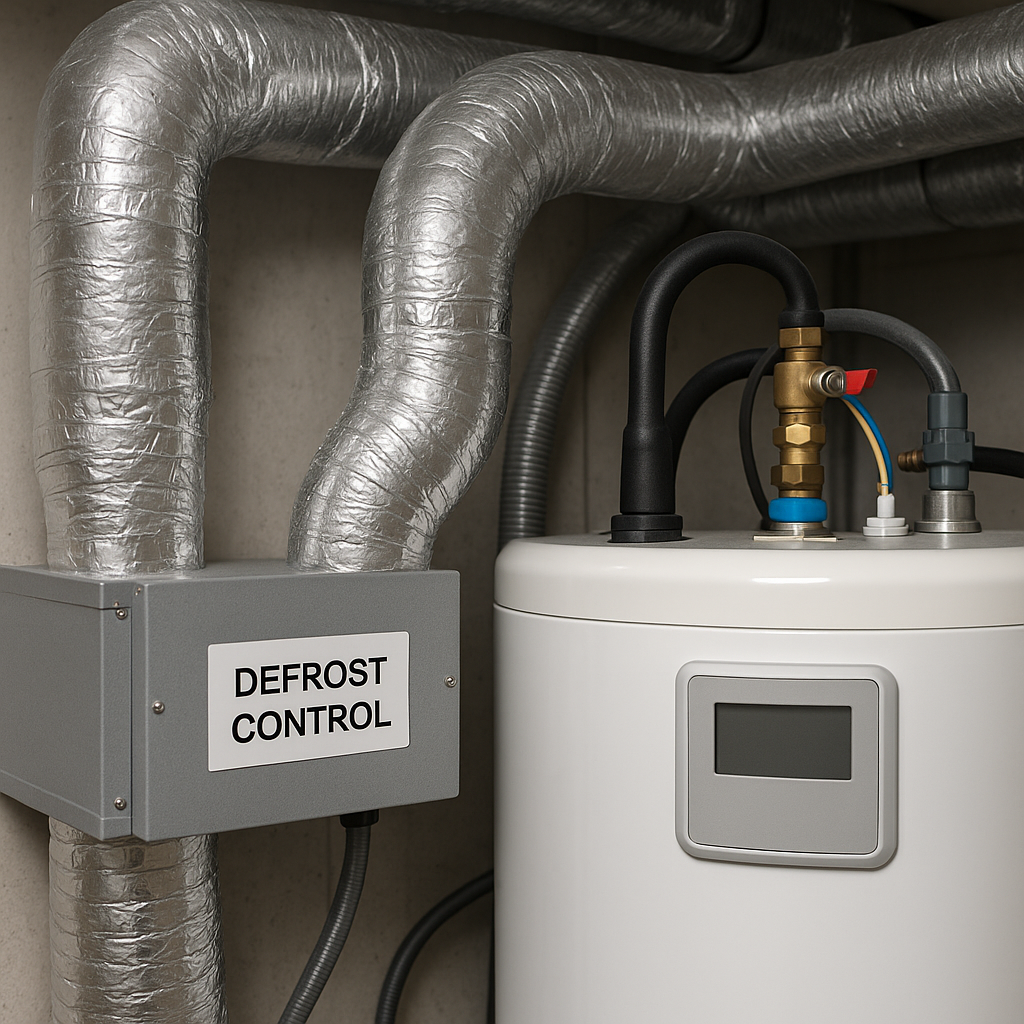
Maintenance and longevity
Annual maintenance is recommended: cleaning the filter, inspecting defrosting systems, checking the operation of the compressor and electrical safety devices. Typical lifespans vary between 10 and 15 years, but this strongly depends on the environment (corrosive air, heavy soiling) and the quality of the initial installation. Replacing a compressor remains a costly item, so prioritize brands offering a reliable after-sales network and available parts.
Practical cases — which water heater for which dwelling?
- Apartment without a technical room: often a compact monobloc installed in a laundry room or technical closet will do, checking the noise level.
- House with garden and acoustic constraints: the split unit installed on the exterior side reduces nuisances and offers a good COP.
- Intensive use (large family or frequent bathtub use): opt for a large capacity tank and intelligent regulation to optimize stratification.
FAQ
Does the thermodynamic water heater work in winter?
Yes, but with reduced performance if the intake air is very cold. Models with effective defrosting and those in split version, better exposed, maintain a higher COP at low temperatures.
Is it noisy?
The noise depends on the type: a monobloc located in a technical room can generate 45–55 dB, noticeable if near a living room. The split reduces this problem by placing the unit far from the tank.
Is an electric backup necessary?
Yes: most installations include an electric backup to ensure temperature during consumption peaks or in case of insufficient COP. Modern regulation often manages the backup to limit unnecessary consumption.
What are the signs of poor sizing?
Very frequent heating cycles, lukewarm water despite settings, high electrical consumption — all signs of a poorly sized tank or a poorly placed device.
{
“@context”: “https://schema.org”,
“@type”: “FAQPage”,
“mainEntity”: [
{
“@type”: “Question”,
“name”: “Does the thermodynamic water heater work in winter?”,
“acceptedAnswer”: {
“@type”: “Answer”,
“text”: “Yes, but performance decreases if the air drawn in is very cold. Models with effective defrosting and split systems ensure more stable operation at low temperatures.”
}
},
{
“@type”: “Question”,
“name”: “Is it noisy?”,
“acceptedAnswer”: {
“@type”: “Answer”,
“text”: “The noise level varies: a monobloc can reach 45–55 dB indoors, while a split, with the noisy unit outside, significantly reduces perceived disturbance.”
}
},
{
“@type”: “Question”,
“name”: “Is an electric backup necessary?”,
“acceptedAnswer”: {
“@type”: “Answer”,
“text”: “Yes, most installations include an electric backup to cover consumption peaks and periods when the COP is insufficient.”
}
}
]
}
{
“@context”: “https://schema.org”,
“@type”: “WebPage”,
“about”: {
“@type”: “Thing”,
“name”: “Thermodynamic Water Heater Comparison”
},
“keywords”: [“thermodynamic water heater”, “COP”, “split”, “monobloc”, “installation”]
}