
Sommaire
Thermal solar panels convert sunlight into useful heat for heating water and the home. Easier to imagine than to install correctly, a high-performance system relies on precise technical choices: type of collector, fluid circuit, storage, and integration with your existing installation. This article explains step-by-step how it works, compares technologies, and gives you concrete benchmarks to evaluate a project.
In brief
☀️ Principle: the collectors capture solar energy and transfer it to a fluid to heat a tank or supply underfloor heating. It is a direct conversion light → heat, with controlled losses if the installation is done carefully.
🧩 Key types: there are flat plate collectors (affordable, versatile) and vacuum tube collectors (better performance in winter). The choice depends on climate, usage, and budget.
⚖️ Efficiency & sizing: generally count on **300 to 700 kWh/m².year** depending on sunlight and orientation. Realistic sizing takes into account needs, available surface, and complementarity with other sources.
🔧 Maintenance: longevity is good (20 to 30 years) if the fluid is maintained, tightness checked, and the tank protected. Actual savings vary depending on hot water usage and climate.
How do thermal solar panels work?
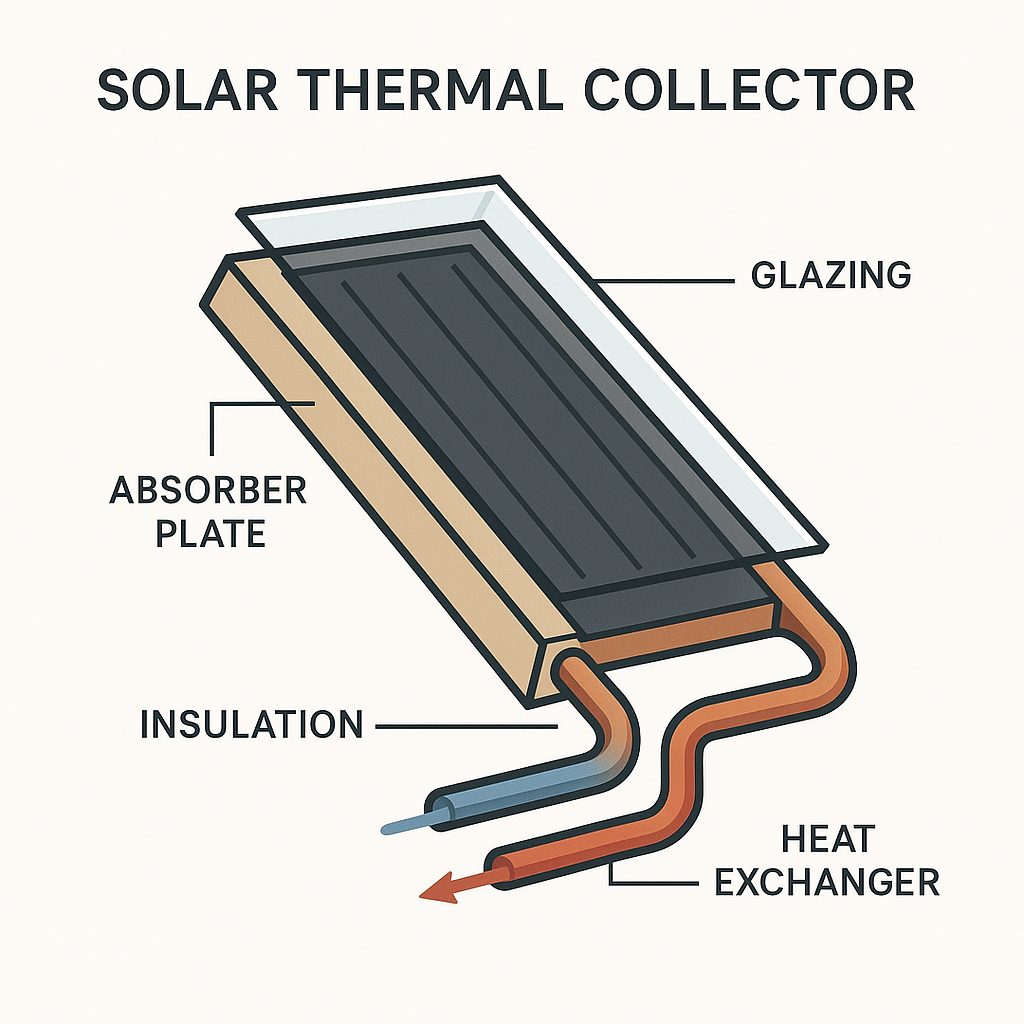
The core of the system is simple: a collector receives solar radiation and raises the temperature of a heat transfer fluid. This fluid then circulates to a heat exchanger where it transfers its heat to domestic hot water or a heating circuit. Control of circulation, insulation, and storage determines the actual efficiency. Rather than imagining an isolated panel, the system should be seen as a chain where each link influences performance.
Basic schematic
A collector heats a fluid (glycol or water), which passes through a circulator to a heat exchanger in a tank. A controller commands the circulator based on the temperature difference between collector and tank: if the collector is hotter, it pumps; otherwise, it stops. This simple control avoids unnecessary losses and maximizes recovery of available energy.
Essential components
- Collectors: capture radiation, can be flat or vacuum tube.
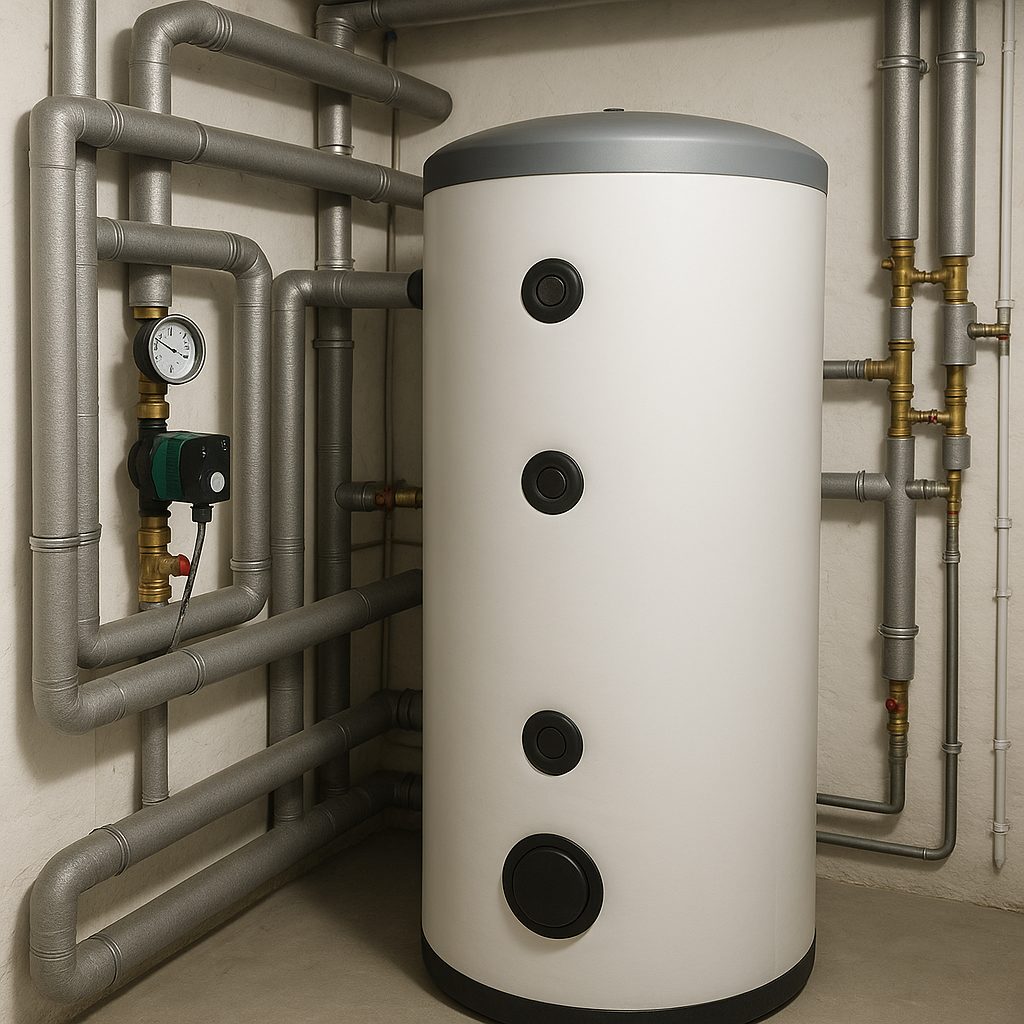
- Storage tank: stores hot water and smooths the variable solar production.
- Heat transfer fluid: thermal transfer, often antifreeze if exposed to frost.
- Circulator and control: ensure transfer happens at the right time.
- Heat exchanger: transfers heat from the fluid to the domestic hot water or heating circuit.
Types of Sensors and Their Uses
The choice of sensor determines the range of use and seasonal efficiency. Each technology has measurable advantages and practical limitations.
Glazed Flat Plate Collectors
Flat plate collectors consist of an absorbing plate protected by a glass cover. They offer a good cost/performance ratio for domestic hot water production and heating support. Their strong point: simplicity and durability. Their efficiency drops when the temperature difference between the collector and ambient air is high.
Vacuum Tube Collectors
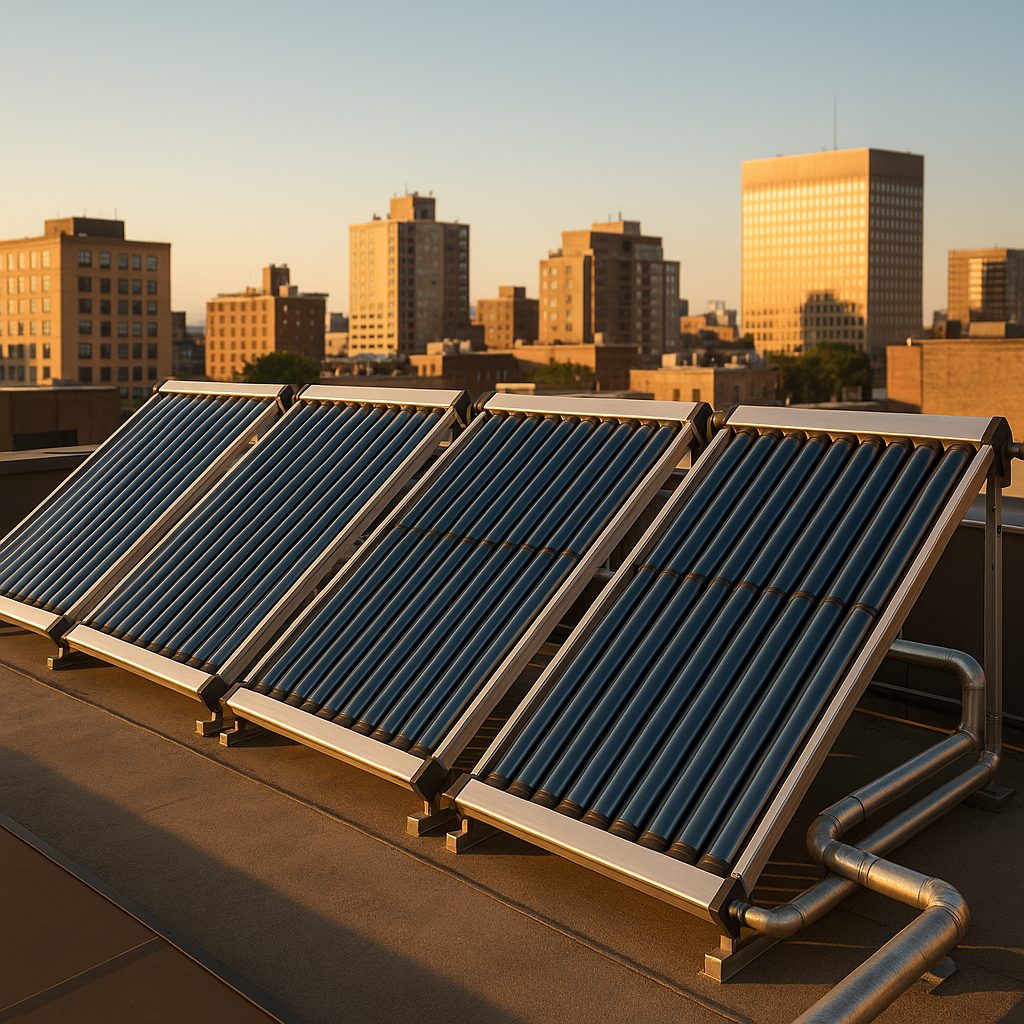
Composed of double-walled vacuum tubes, these collectors limit thermal losses. They perform better in cold and diffuse weather, making them suitable for regions with harsh winters or for very hot water needs. The cost is higher, but the improved efficiency can justify the investment depending on the use.
Air Collectors
Less common for domestic hot water, air collectors directly heat the air of a room. Useful in industrial installations or for drying, they are not the default choice for typical housing.
Actual Efficiency and Influencing Factors
The stated efficiency of a collector is one thing; what you get at home is another. Orientation, tilt, shading, quality of installation, network insulation, and storage losses reduce useful energy. Seasonal variability must also be taken into account: in summer, overproduction is frequent; in winter, energy availability drops. Smart systems consider these cycles to maximize self-consumption.
Reference Figures
In a temperate climate, it is common to observe 300 to 700 kWh thermal per m² per year. This wide range reflects the influence of location, orientation, and type of collector. For an average family, 2 to 4 m² of collectors may be sufficient to cover a significant portion of hot water needs.
Sizing: How to Calculate Your Needs
To size a system, always start with actual thermal needs: hot water consumption, heating supplement, number of occupants. Then estimate solar production based on available surface area and local irradiation. Avoid two common mistakes: oversizing to “cover everything” (high cost and risk of summer overheating) or undersizing (too long return on investment).
| Use | Recommended Surface | Type of Collector | Remarks |
|---|---|---|---|
| Domestic hot water (1-3 people) | 2–4 m² | Flat or tube | 150–200 L tank recommended |
| DHW + heating support (house) | 6–12 m² | Vacuum tubes or efficient flat plates | Integration with boiler necessary |
| Industrial use / drying | Variable | Custom-made | Often air collectors or large thermal fields |
Installation and Integration into Your Building
The ideal location is a well-oriented roof, without shade, tilted according to latitude. Aesthetic or heritage constraints may lead to remote integration (ground mounts). The key point remains minimizing losses between collector and tank: network routing, pipe insulation, and storage location greatly influence performance.
Safety and Prevention
- Frost and overheating protection: thermostats, valves, bypass circuits.
- Avoid boiling in the collectors: installation of a purge circuit and an expansion vessel.
- Comply with local standards for installation and service pressure.
Costs, Savings, and Return on Investment
The initial cost varies depending on the chosen technology, the installed surface area, and the complexity of the setup. Flat plate collectors remain the cheapest to purchase; vacuum tube collectors cost more but recover energy better at low temperatures. Annual savings directly depend on the usage rate: a household that consumes a lot of hot water will see a shorter ROI. Financial aid and tax credits can significantly improve profitability.
Maintenance and Longevity
A well-maintained system lasts 20 to 30 years for the collectors, and the tank may require attention every 10–15 years. Checking the fluid, air purges, tightness, and replacing wear parts (circulator, exchanger) are the most common operations. An annual maintenance contract is often cost-effective to ensure performance and safety.
FAQ
Q: Can thermal panels be used all year round?
A: Yes, but production varies greatly: high in summer, reduced in winter. Storage and proper sizing reduce the impact of seasonal variations.
Q: Is a dedicated water heater necessary?
A: The most common is a dedicated solar tank or a combined tank with an exchanger. The system can also be coupled with a boiler for backup.
Q: What is the difference between thermal and photovoltaic solar?
A: Thermal converts radiation into direct heat; photovoltaic converts it into electricity. Both can be complementary depending on needs.
Practical Tips Before Investing
- Precisely estimate your hot water needs.
- Prioritize installation quality and compatibility with storage.
- Consider maintenance from the design stage (roof access, purging).
- Compare offers taking into account warranties and actual on-site performance.
{
“@context”: “https://schema.org”,
“@type”: “WebPage”,
“about”: {
“@type”: “Thing”,
“name”: “Thermal solar panels”
},
“keywords”: [“thermal solar panels”, “solar collectors”, “vacuum tube collector”, “solar efficiency”, “thermal tank”]
}