
Sommaire
A saltwater pool often simplifies the life of owners — the water is softer, disinfection is done by electrolysis, and the chlorine smell is less present — but it is not “maintenance-free.” Between pH checks, salinity management, and electrolyzer upkeep, there are specific actions to know to keep water clear and the system durable. This practical guide gives you the benchmarks, routines, and solutions to the most common problems, without unnecessary jargon.
In Brief
🔧 Regular checks: check the pH and salinity at least once a week; maintain the pH around 7.2–7.6 and the salinity according to your electrolyzer’s recommendation.
🧽 Simple but essential cleaning: brushing the walls, vacuuming, and cleaning the skimmer basket prolong water clarity and reduce the load on the electrolyzer.
⚙️ Technical maintenance: monitor the condition of the electrolysis cell, descale if needed, and perform an annual check of the electronic box to avoid costly breakdowns.
Why Choose a Saltwater Pool?
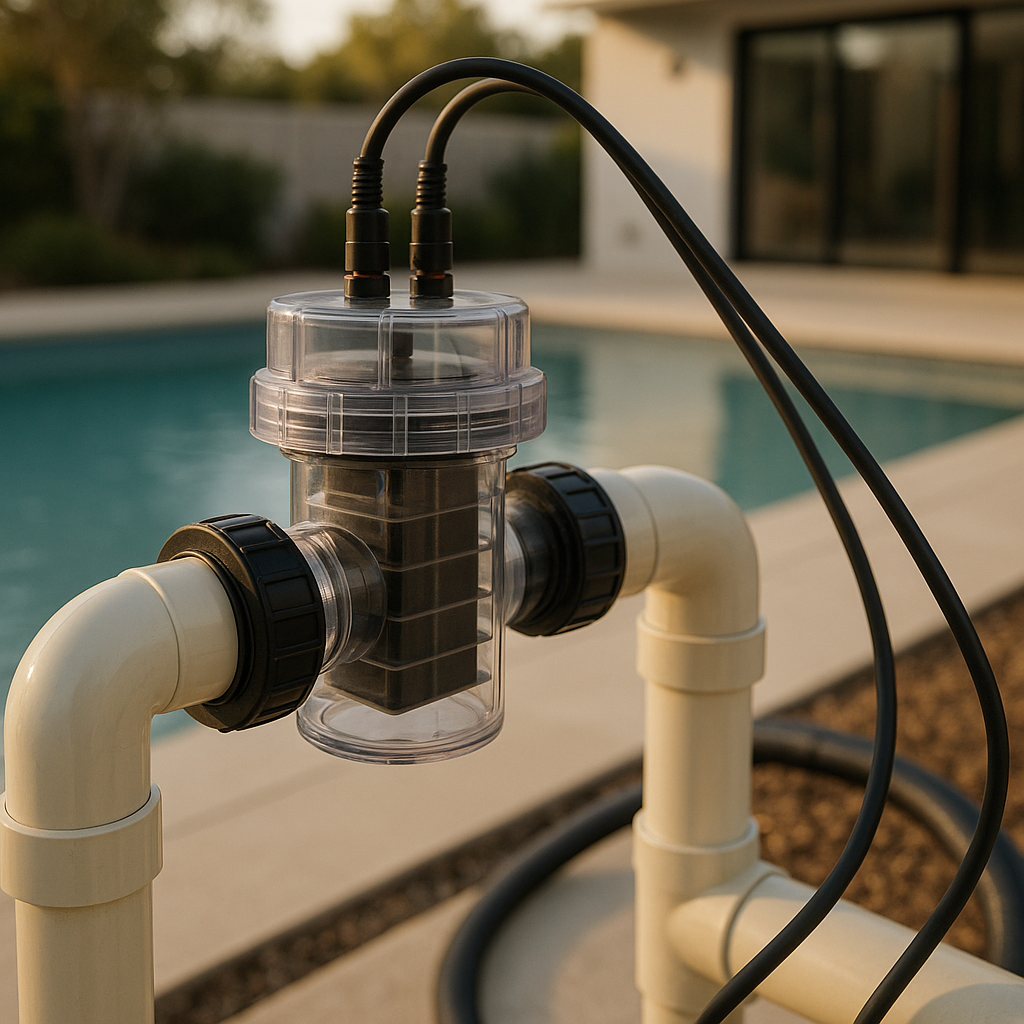
The saltwater pool is based on a simple principle: an electrolyzer transforms salt ions into active chlorine that disinfects the water. The result: water perceived as less harsh on skin and eyes, reduced chlorine odor, and often less frequent chemical maintenance. However, this choice changes the nature of interventions — you monitor salinity as much as pH, and add maintenance of an electrical device sensitive to scale.
Daily Checks and Actions
The daily routine is quick but crucial: pick up leaves, visually check water clarity, empty skimmer and pump baskets. These small actions limit organic matter and prevent overconsumption of chlorine by the electrolyzer.
- Empty skimmer and pump baskets every 2-3 days during intensive use periods.
- Remove debris and oil from the surface with a fine net.
- Keep an eye on the water’s color and smell: any rapid change signals a problem.
Weekly Checks: What to Measure and Why
Each week, take the time to measure several parameters. These guarantee healthy water and protect the electrolyzer:
- pH: target 7.2–7.6. A pH that is too high reduces the effectiveness of chlorine; too low damages equipment and skin.
- Redox / ORP (if you have a sensor): indicates the efficiency of disinfection.
- Salinity: most electrolyzers require between 3 and 5 g/L (depending on the model).
- Stabilizer (cyanuric acid) if used: check that it remains within recommended limits so as not to “mask” a failing disinfection.
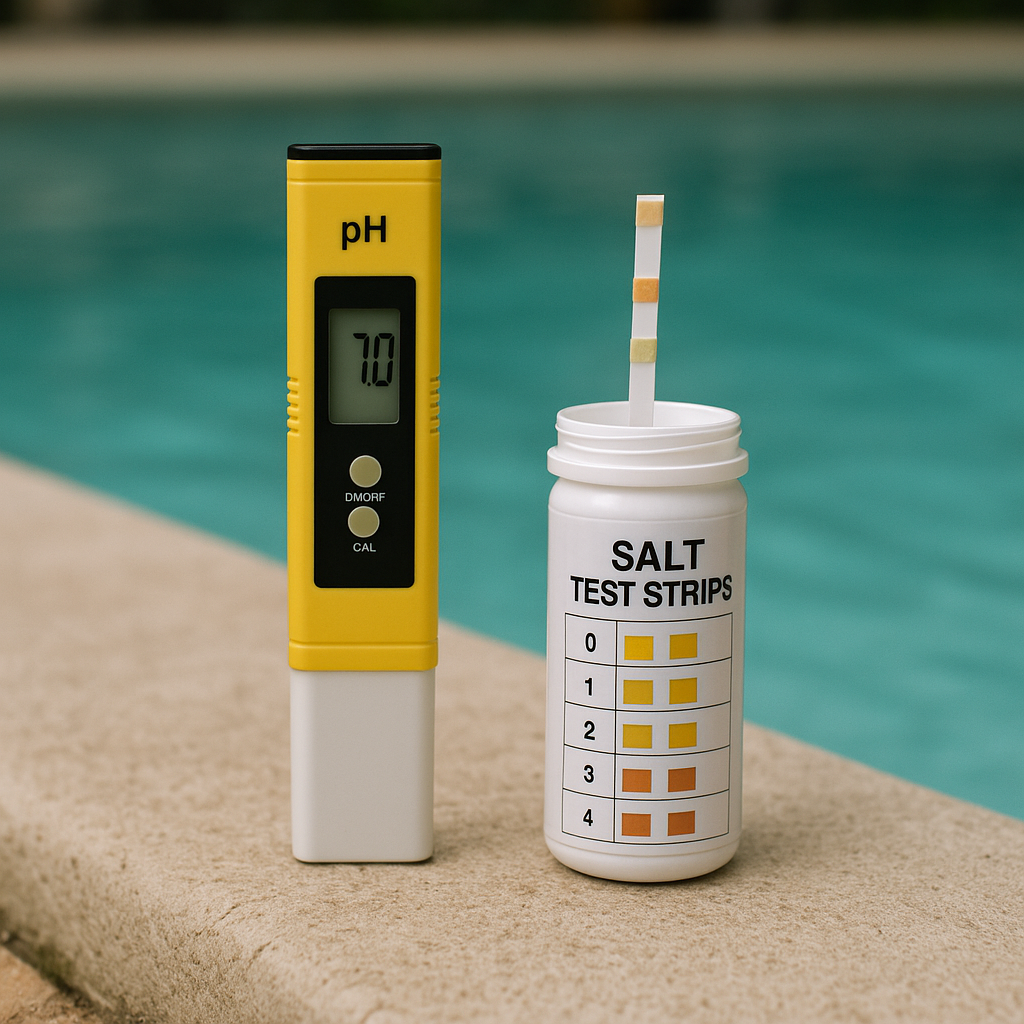
Table: target parameters
| Parameter | Recommended value | Why it is important |
|---|---|---|
| pH | 7.2 – 7.6 | Maximizes chlorine effectiveness and prevents irritation |
| Salinity | 3.0 – 5.0 g/L (depending on the electrolyzer) | Allows chlorine production by electrolysis |
| Temperature | 15 – 30 °C | Affects chemical reactivity and microbial growth |
| Stabilizer (CYA) | 30 – 50 mg/L | Protects chlorine from UV without neutralizing it |
Treating common problems
Here are the most frequent scenarios and the simple steps to follow for each.
Green or cloudy water
If the water turns green, it is generally due to an algae bloom caused by a lack of disinfection or improperly adjusted pH. Temporarily increase the electrolyzer’s production, check the salinity, brush and vacuum, then perform a shock treatment if necessary. A chlorine shock can be mechanically done with granular chlorine suitable for salt pools — the salt itself does not prevent the occasional need for added chlorine.
Chlorine production failure
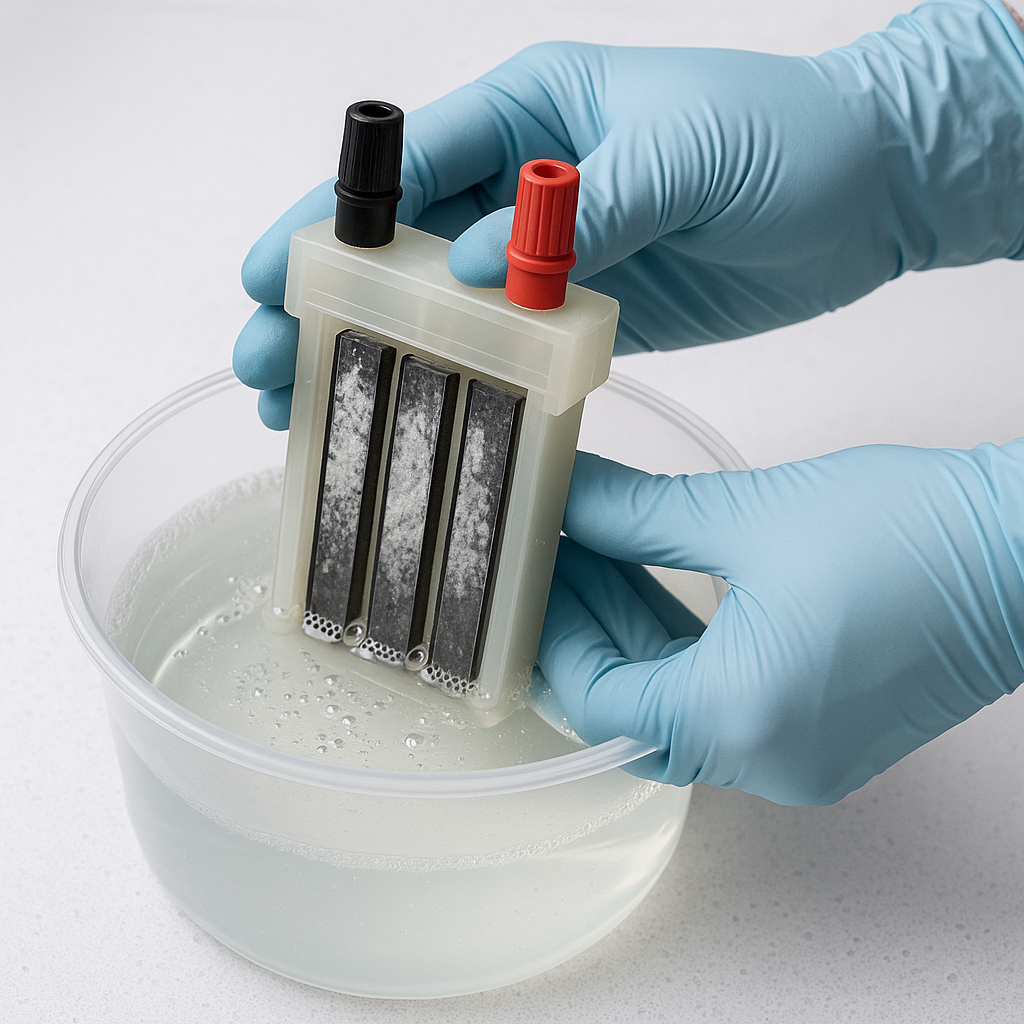
When the electrolyzer produces less, start by measuring the salinity and pH. Cell fouling (lime deposits) is common, especially in hard water — a mild descaling with diluted citric acid is often sufficient. If the problem persists, check the pump flow and sensor condition; sometimes a scaled probe distorts regulation.
Electrolyzer maintenance
The electrolyzer is the heart of the salt pool: protect it to extend its lifespan. Schedule a quarterly visual inspection and an annual technical check. Key points:
- Clean the cell according to the frequency recommended by the manufacturer (often every 3 to 6 months).
- Check electrical connections and the enclosure’s watertightness.
- Monitor the wear indicator of the plates; some cells have a lifespan indicated in hours.
- Avoid excessively long cycles of maximum production without breaks; the electrolyzer appreciates moderate management.
Useful products and accessories
For effective maintenance, equip yourself with the right tools: digital pH and salinity testers, strip kits for quick checks, brush suitable for the coating, manual vacuum or robot, and a mild descaling kit. A redox reader is a plus if you want to fine-tune automatic regulation.
Winterizing and Restarting
During the cold season, saltwater pools require special attention: partial draining or active winterizing depending on the climate. If you completely cut off the power supply, drain and store the electrolyzer in a sheltered place, clean the cell, and protect the pipes from freezing. For restarting, check salinity and pH before restarting production and let the electrolyzer gradually adjust its operation.
Costs and Longevity: What to Expect
A salt system can reduce spending on chlorinated products, but it adds equipment costs and maintenance (cell replacement, descaling). In practice, the lifespan of a cell varies from 3 to 7 years depending on usage and water quality. Calculate the return on investment based on your frequency of use, electricity price, and cost of spare parts.
Practical Checklist
- Daily: pick up debris, visually check the water.
- Weekly: measure pH, salinity, empty baskets.
- Monthly: clean the cell if the water is hard, check flow and pressures.
- Annually: technical inspection of the electrolyzer and complete equipment check.
FAQ
Can liquid chlorine be added to a saltwater pool?
Yes, in case of occasional need (shock, heavy contamination), you can add chlorine or use compatible granular chlorine. These are supplementary solutions; the idea is to return to regulation by electrolysis afterwards.
How do I know if my salinity is too low or too high?
A digital tester or specific strips indicate the concentration in g/L. If the value is outside the range recommended by the manufacturer, adjust by adding pure salt to increase it or by partially renewing the water to decrease it.
Does a saltwater pool damage equipment and coping stones?
Salt can be corrosive in the presence of concentrated splashes and unprotected metal surfaces. Rinse the coping stones after saltwater splashes, prefer suitable stainless steel parts, and avoid the accumulation of salty puddles on untreated concrete.
How often should the cell be descaled?
There is no universal rule: in hard water, count every 3 to 6 months; in soft water, once or twice a year. Visually inspect the cell to detect deposits and follow the manufacturer’s instructions.
{
“@context”: “https://schema.org”,
“@type”: “WebPage”,
“about”: {
“@type”: “Thing”,
“name”: “Saltwater Pool Maintenance”
},
“keywords”: [“saltwater pool”, “electrolyzer”, “pH”, “salinity”, “pool maintenance”]
}