
Sommaire
| Key Points | Details to Remember |
|---|---|
| 🍉 Definition | Fruits whose name starts with the letter T |
| 🌱 Variety and Origin | Geographical diversity: tropics, temperate zones |
| 👀 Recognition | Shape, color, texture, and labeling |
| 🍵 Uses | Salads, desserts, drinks, and preserves |
| 🧧 Health Benefits | Vitamins, fibers, and antioxidants |
| 🌟 Seasonality | Harvest periods: spring, summer, autumn |
Browsing the market is a bit like flipping through a catalog of natural curiosities. When you come across a stall where all the fruits start with the same letter, it’s an opportunity to test your observational skills. Fruits starting with T form a category that is both original and rich in flavors: from juicy tomatoes to sweet citrus fruits and rare berries, each tells a story. Here, I offer you an overview of the 12 most common or surprising fruits starting with T, with keys to spot them without mistake when you get to the checkout.
What is a “fruit starting with T”?
Origin of the term and classification
We speak of a “fruit starting with T” as soon as its French name begins with the letter T. This classification does not correspond to a single botanical family: it includes solanaceae (tomatoes), rutaceae (citrus), euphorbiaceae (tamarind), or even rosaceae (blackberries). The interest lies less in genetics than in curiosity: to see if this alphabetical intrigue hides gustatory or visual common points.
Common characteristics
Despite their varied botanical roots, most fruits starting with T share some practical traits for the consumer:
- A generally compact size, ideal for immediate consumption.
- Sometimes colorful and vivid skins that catch the eye on the stalls.
- Harvest seasons often in summer but some species extend into autumn.
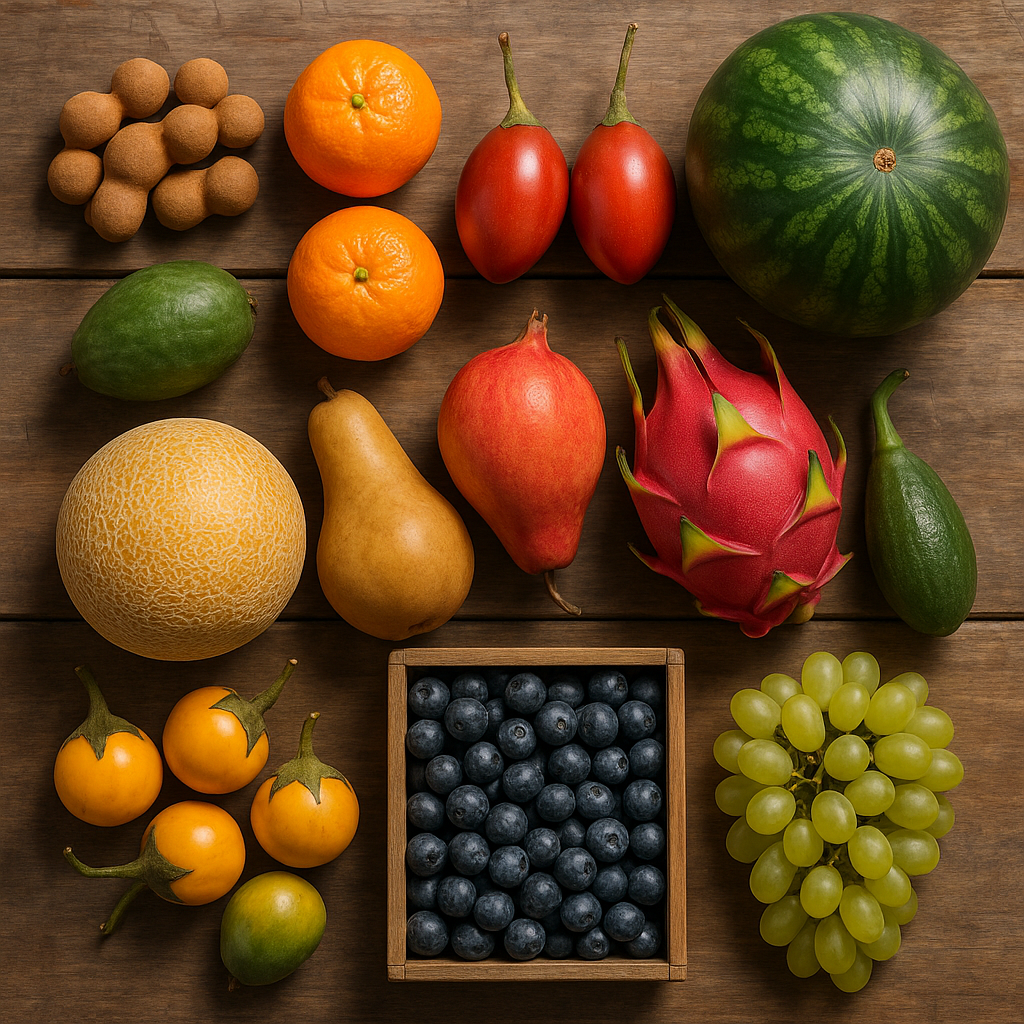
Top 12 fruits starting with T and how to identify them
1. Tomato
The tomato comes in an infinite variety: round, elongated, ribbed, or even beefsteak. To choose it well at the market, prefer a smooth skin, without brown spots, and a slight sweet scent at the stem. The color can vary from bright red to orange-yellow, but firmness remains the best indicator of ripeness.
2. Cherry Tomato
Smaller and often sweeter than its larger sister, the cherry tomato is recognized by its shiny and compact skin. Select clusters where all the berries are uniform: if some have scars, the ambient humidity at the stall may accelerate their mold growth.
3. Tomatillo
Originating from Mexico, the tomatillo has a beige to green paper husk. Gently detach it to check that the berry is firm and juicy. Under the shell, the flesh has a pronounced green color, often more acidic than a regular tomato.
4. Tamarillo (tree tomato)
This South American cousin of the tomato is distinguished by its oval shape and smooth skin, often dark red or yellow. When buying, press lightly: a slightly soft fruit means creamy flesh, ideal in salads or chutneys.
5. Tamarind
The tamarind comes in a brown, wrinkled pod. Break the shell to access the sticky, dark pulp. At the market, choose heavy pods, which guarantees well-hydrated pulp. The taste oscillates between acidity and sweetness, perfect for sauces and sweets.
6. Tangerine
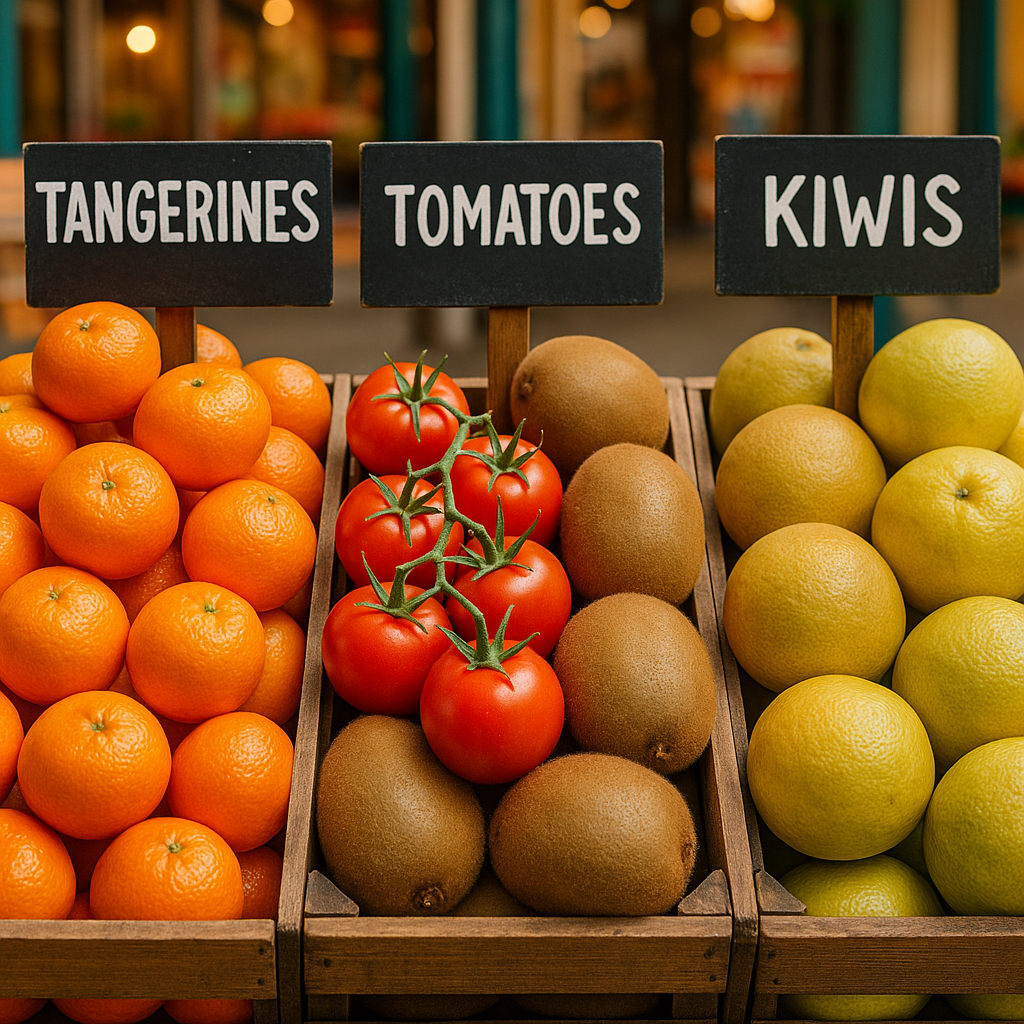
Smaller than the mandarin, the tangerine fits comfortably in the hand thanks to its thin and fragrant peel. A slight roughness and a sweet citrus scent are signs of optimal ripeness. Beware of fruits that are too hard: they often lack juice.
7. Tangor
A natural hybrid of mandarin and orange, the tangor has a thick orange peel, sometimes pointed at the top. To recognize it, observe the cut: the juicy pulp is low in fibers and very sweet, without the characteristic bitterness of a classic orange.
8. Tangelo
Resulting from a cross between grapefruit and tangerine, the tangelo has a bumpy and colorful skin. To the touch, it yields slightly under pressure. Its aroma is sweeter than grapefruit, with moderate acidity, making it easy to segment and peel.
9. Minneola Tangelo
This variety of tangelo is revealed by its characteristic collar at the base. Labeled Minneola, it differs by having softer pulp and a very balanced taste between sweetness and acidity. A presentation without bruises is a sign of freshness.
10. Tayberry
Resulting from a cross between blackberry and raspberry, the tayberry has a dark burgundy color and a very fragrant flavor. At the market, look for firm and intact berries, without traces of dried juice underneath: they do not tolerate transport well.
11. Thimbleberry
Similar to the blackberry but softer, the thimbleberry is recognized by its soft tips and deep red hue. Choose it picked at maturity because, unlike the raspberry, it does not ripen after harvest.
12. Tuna (prickly pear)
This oblong-shaped cactus fruit is covered with small spiny areoles. At the market, prefer well-colored tunas (pink or yellow depending on the variety) and ask the vendor to remove the spines to avoid any risk.
How to make the most of your fruits starting with T?
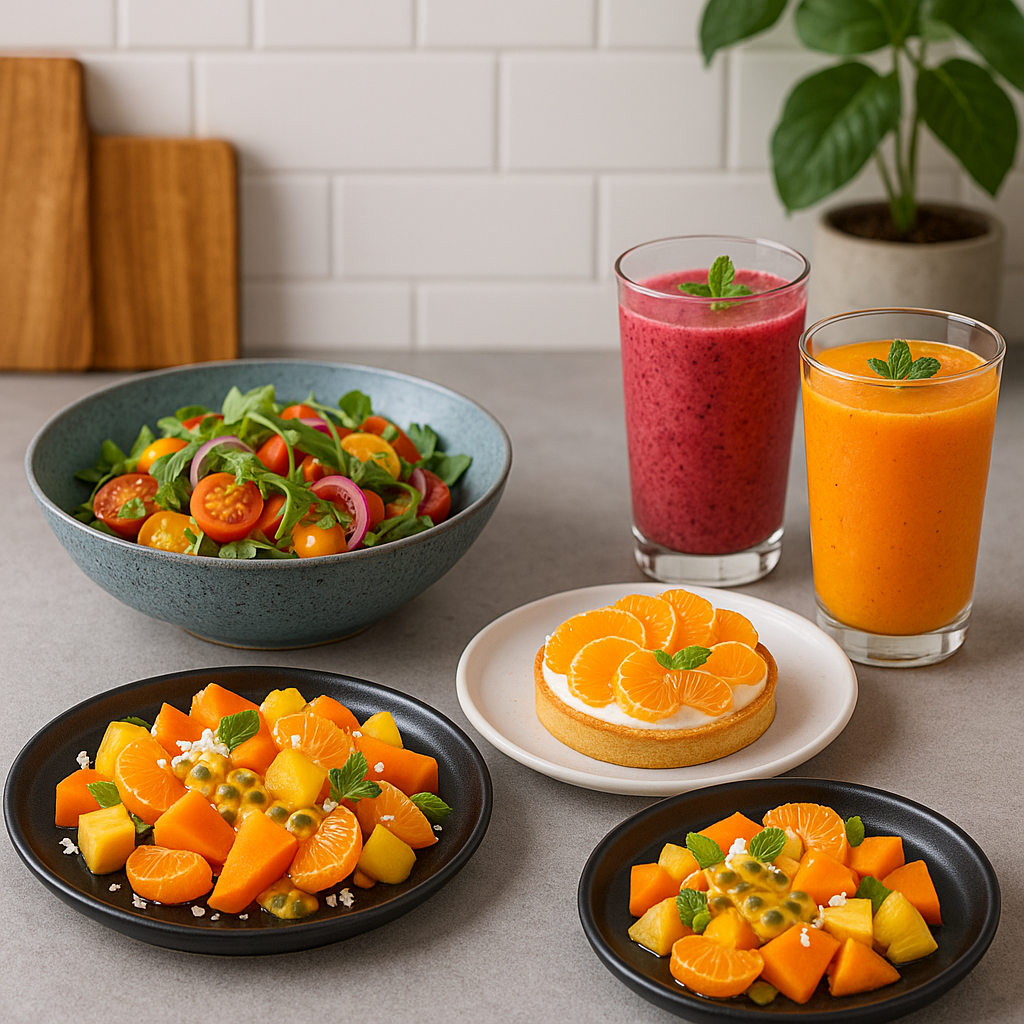
In salads, jams, juices, or simply eaten by hand, fruits starting with T easily integrate into your menus. The tomato lends itself to all sauces, while tamarind spices up a chutney. Citrus fruits (tangerine, tangelo, tangor) transform into coulis, and berries (tayberry, thimbleberry) add a tangy note to a crumble.
FAQ
- How do I store my tomatoes so they keep their flavor?
- Store them at room temperature, away from sunlight. Refrigeration makes the flesh mealy.
- What is the best ripeness indicator for a tangerine?
- A slight roughness of the skin, an even color, and a pronounced citrus scent.
- Can the husk of the tomatillo be eaten?
- No, it is fibrous and bitter; the membrane must be removed before cooking.
- Does tamarind keep for a long time?
- Yes, in its shell, tamarind can be kept for several months in a cool, dry place.