Sommaire
Choosing external thermal insulation (ETI) represents much more than a simple facade refresh: it is a true metamorphosis of your building envelope. By wrapping the building with high-performance materials, energy leaks are corrected, the structure is protected, and comfort is improved, both summer and winter.
🏠 Optimized comfort: ETI eliminates temperature fluctuations and strengthens the wall’s thermal inertia, for a more stable interior.
💡 Reduced thermal bridges: by continuing the insulating layer around the entire perimeter, traditionally critical loss zones are eliminated.
📉 Energy savings up to 30% on your heating and air conditioning bill, thanks to better airtightness and increased inertia.
🎨 Aesthetics and value: a wide range of finishes restores charm to the building and can boost its resale price.
Why choose external thermal insulation?
Unlike internal insulation, which takes up a few centimeters inside the living space, ETI is installed on the facade without encroaching on living space. Furthermore, it acts as a true shield against humidity and climatic aggressions. Walls stay warm in winter and cooler in summer, the temperature becomes more homogeneous, and comfort is immediately noticeable.
Reduction of thermal bridges
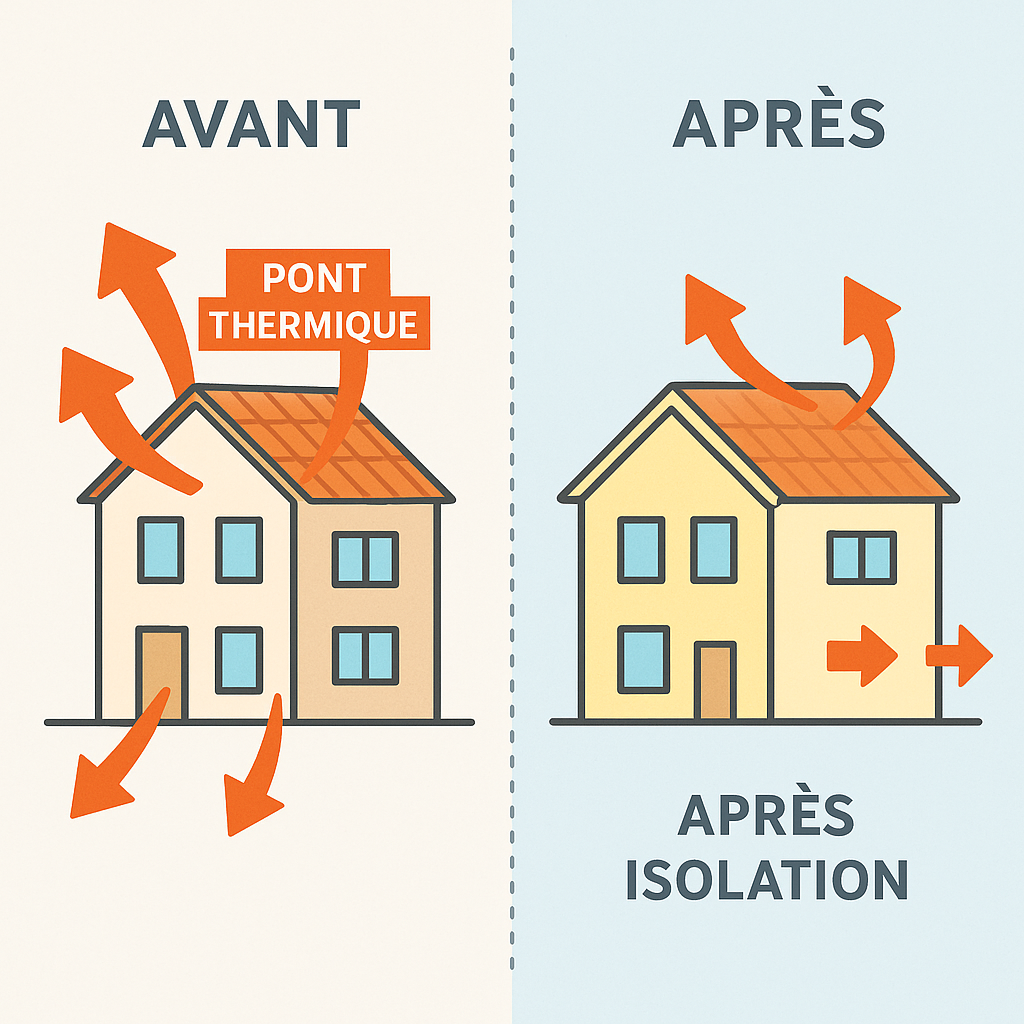
Thermal bridges appear at wall-roof, wall-floor junctions or around openings. With ETI, the insulating layer covers the entire surface uninterrupted, filling performance breaks. Result: cold spots disappear, condensation has no hold, and the risk of mold collapses.
Protection of the structure
In a changing climate, the facade undergoes alternating rain-freeze-sun cycles. ETI, combined with a breathable coating, forms a protective barrier. Walls stay dry, masonry retains all its robustness, and the building’s longevity is immediately impacted.
Concrete benefits on comfort and bills
More than a simple thermal gadget, ETI results in reinforced inertia: heating hours decrease and internal temperature is maintained longer. Life is better, with variations limited to less than 2 °C between daily highs and lows.
- Enhanced thermal inertia for a softer feeling of warmth.
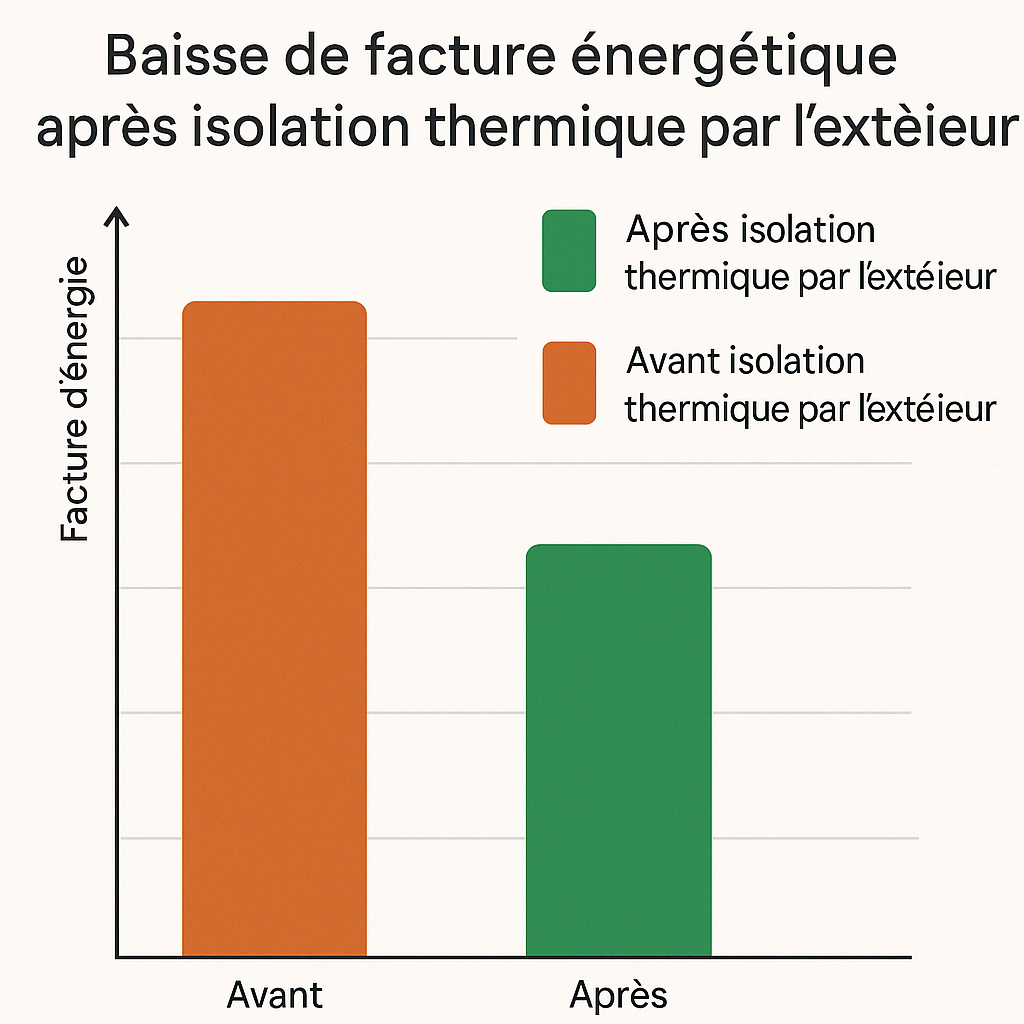
- Reduction of consumption by 30% on average.
- Noise reduction thanks to the insulating thickness.
- Less interior maintenance: the exterior coating acts as a barrier against dirt.
Quantified energy savings
An energy report carried out before/after installation often highlights a decrease of 20 to 35% in heating needs. Depending on the climate zone and the type of wall, this range can even rise up to 40% in new buildings or 15% in the renovation of a poorly insulated wall.
| Type of building | Average savings | Return on investment |
|---|---|---|
| Detached house | 25% | 7–10 years |
| Apartment building | 30% | 5–8 years |
| New construction | 15–40% | 4–6 years |
Aesthetics and heritage value
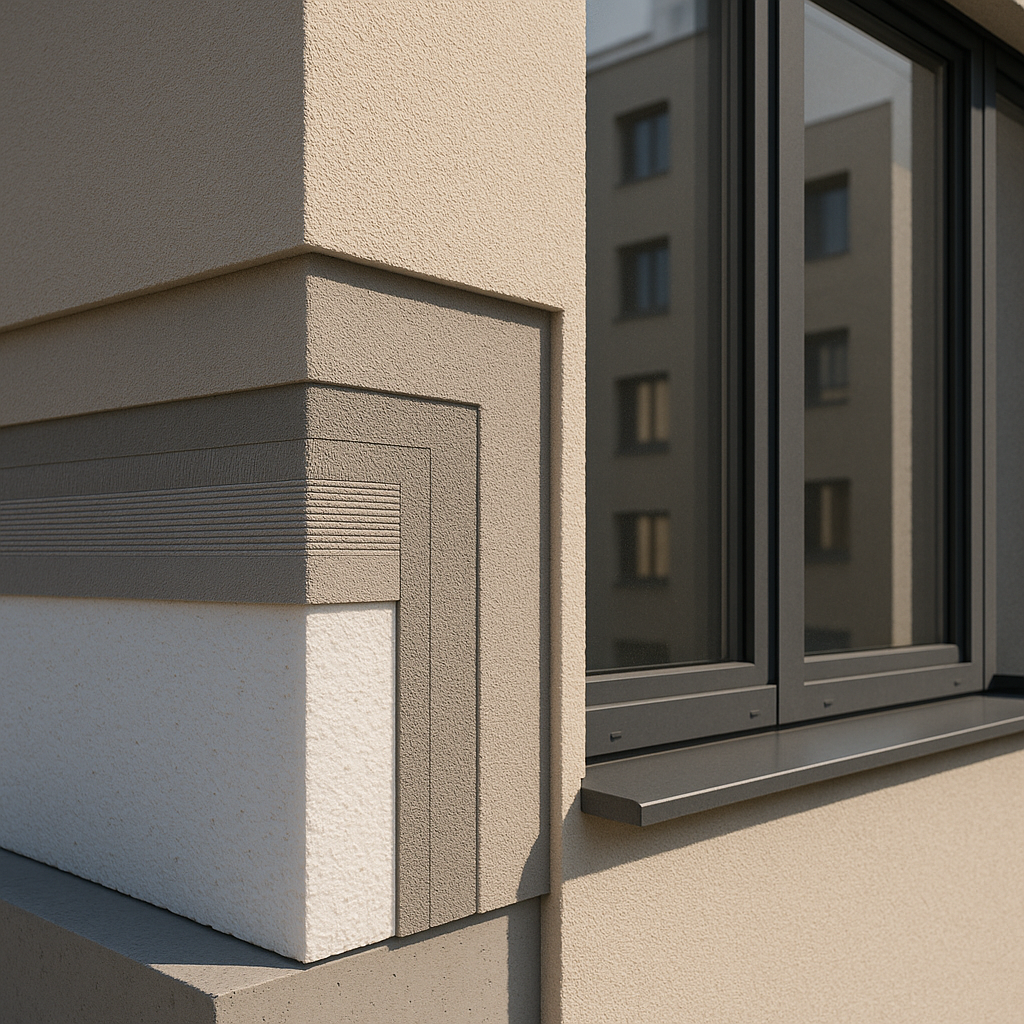
Beyond performance, external thermal insulation (ETI) offers a boost of modernity: colored coatings, natural or composite claddings, decorative reliefs… the range of finishes allows for imagining a stylistic renovation, while increasing the market value by 5 to 10% according to real estate experts.
Wide choice of finishes
From pastel shades to natural stone appearance, from smooth render to openwork shingles, each option allows integrating ETI into the original spirit of the building or giving it a completely new identity.
Real estate appreciation
Energy performance diagnostics (EPD) influence purchase decisions. Moving from a D label to B, or even A, is a strong argument for future buyers and can even reduce loan rates in some banking offers.
Installation and maintenance
The ETI worksite is organized in several steps: fixing insulating panels, laying a fiberglass mesh, applying a base coat, then finishing. Depending on the size of the facade, a 100 m² building can be covered in one to two weeks. Regarding lifespan, a well-maintained coating lasts more than 30 years.
Prefer an RGE (Recognized Guarantor of the Environment) craftsman to secure your eligibility for public aid and guarantee installation according to standards.
FAQ
What thickness of insulation should be chosen for ETI?
The thickness varies from 10 to 20 cm depending on the targeted performance and the type of material (polystyrene, rock wool, facade EPS). A thermal engineering office helps to size it as accurately as possible.
What costs should be expected for external insulation?
On average, count on 100 to 200 €/m² installed, materials included. Aids such as MaPrimeRénov’ or energy saving certificates (CEE) can cover up to 50% of the pre-tax amount.
Is a building permit required?
A simple prior declaration of work is sufficient in most cases. In classified or protected areas, check with the town hall before any procedure.