Sommaire
| Key points | Details to remember |
|---|---|
| ✂️ Definition | Pruning shears, loppers, and saws are used for pruning, but each has its niche. |
| 🌳 Recommended use | Pruning shears for small branches (up to 2 cm). |
| 🔧 Cutting capacity | The loppers handle twigs up to 4 cm thick. |
| 🛠️ Heavy tool | The saw tackles large sections (greater than 4 cm). |
| 📏 Ergonomics | Weight, grip, and durability influence ease of use. |
| 🎯 Practical advice | Regular cleaning and sharpening extend the tool’s life. |
Each branch of your apple or cherry tree requires a precise gesture, a suitable tool, and some know-how to avoid compromising the tree’s balance. The choice between pruning shears, loppers, and saws is not limited to the simple thickness of the wood: it also takes into account your comfort, frequency of use, and even the season. Let’s explore the strengths and limitations of each so you can make the best choice according to your needs.
Why choose your pruning tool carefully?
Pruning fruit trees is not just about cutting here and there: it is a delicate operation that helps stimulate flowering, aerate the framework, and prevent diseases. Using an unsuitable tool risks causing bark tears, damaging tissues, or unnecessarily tiring your arms. Conversely, a well-fitted tool preserves the tree’s structure and improves your efficiency.
Moreover, each season dictates a different type of pruning: generally, light pruning is favored in summer to promote fruiting, followed by stronger cuts in winter to remove dead wood. If you want to refine your interventions, consult the calendar and techniques detailing ideal periods and mistakes to avoid.
Pruning shears: handy and precise
Different blade types
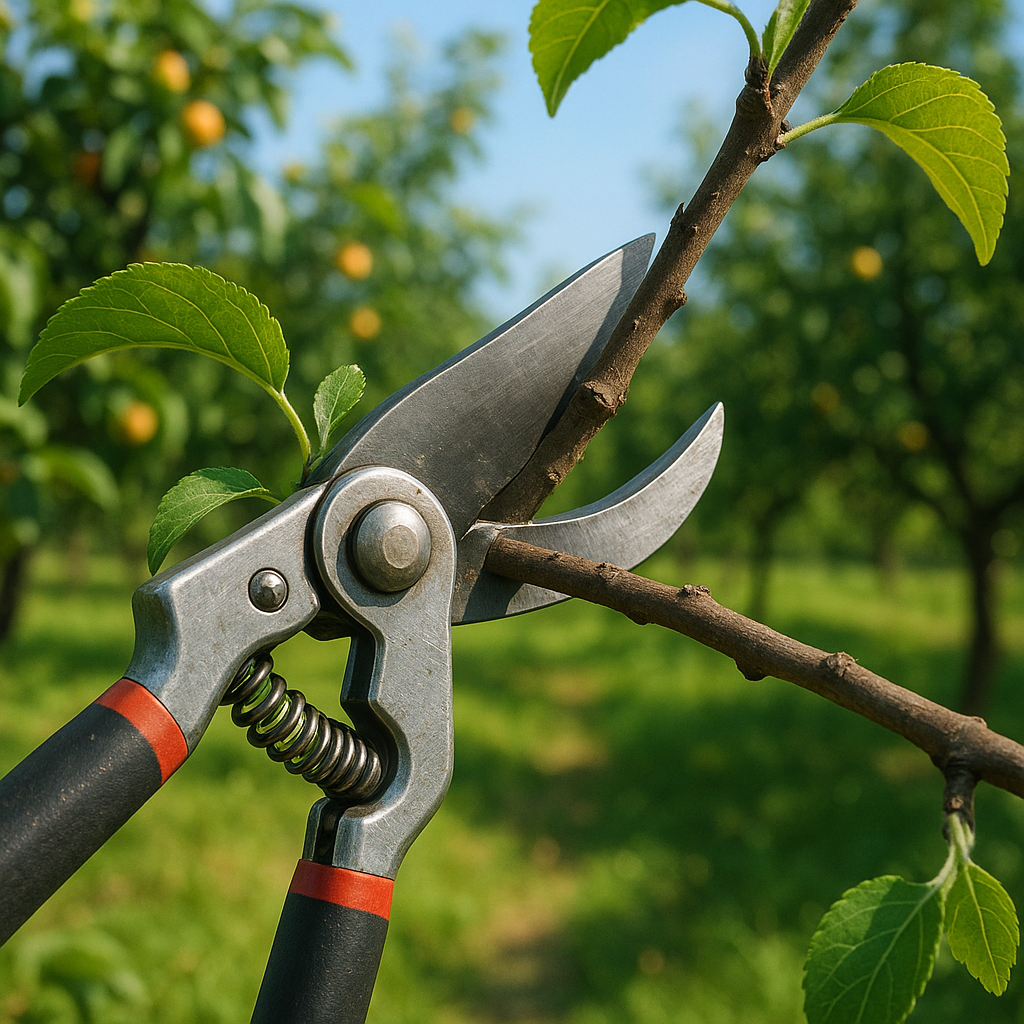
Between the Anvil pruning shears and the bypass pruning shears, opinions often differ. The anvil crushes the branch against a flat surface, suitable for dry and hard wood, but it can crush living tissues on tender branches. The bypass model, on the other hand, makes a clean cut, ideal for green twigs and still supple buds.
Strengths and limits
With quality pruning shears, you can cut up to 2 cm thick without forcing. Beyond that, the blade struggles, the cut becomes irregular, and you risk damaging the tool. Additionally, an ergonomic model with spring handles would protect your wrist and reduce pain during prolonged sessions.
When to use?
- Thin out young twigs to promote foliage aeration.
- Remove suckers or water sprouts at the base of the tree.
- Perform fine formative pruning in spring and summer.
To go further on pruning tools in professional or amateur contexts, you will find a rich and well-argued overview.
Loppers: the compromise for medium wood
Operating principle
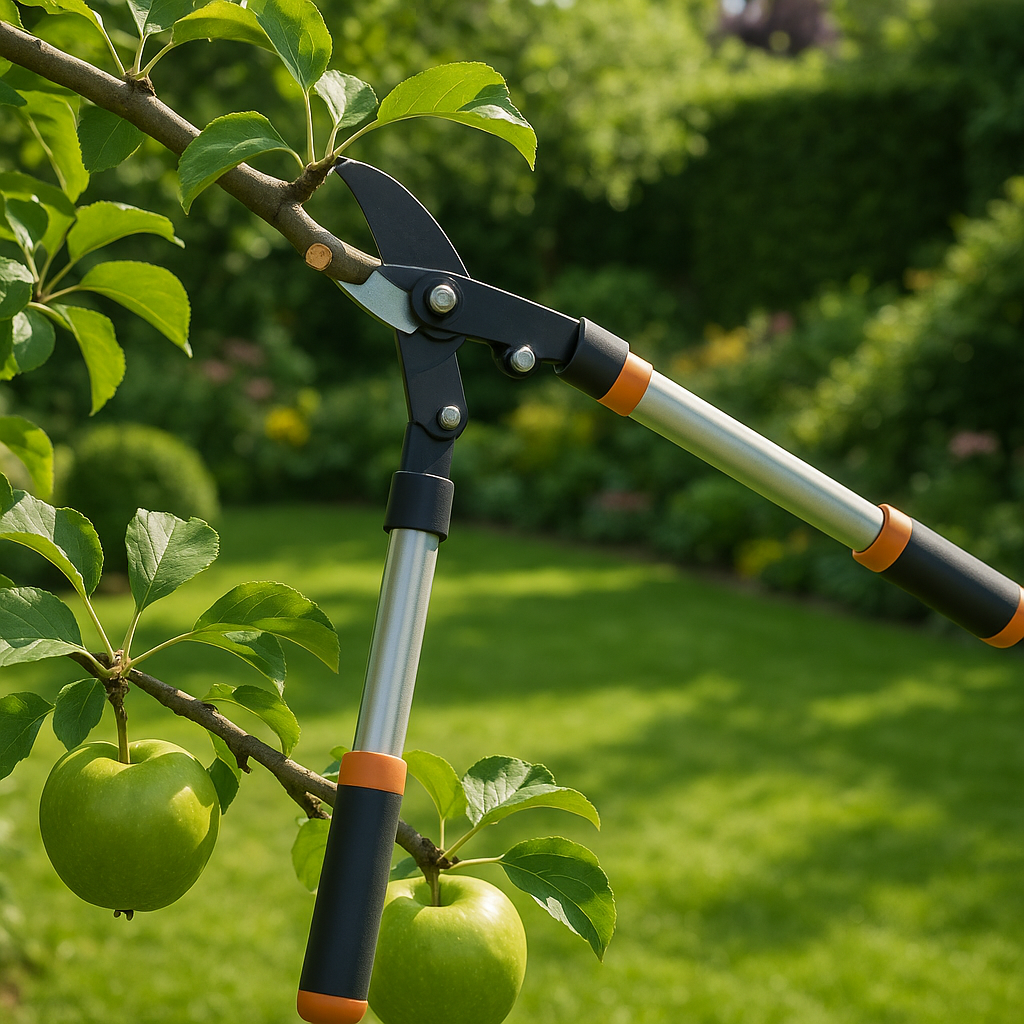
Loppers present as long-handled pruning shears, sometimes telescopic, offering enhanced leverage. Their handles, farther from the blade, allow effortless cutting of branches up to 4 cm in diameter, while remaining accessible from the ground.
Advantages and constraints
- Increased reach: practical for high branches without a ladder.
- Effort saving thanks to a force multiplication system.
- Can be bulky and heavier, requiring some physical conditioning.
Typical use cases
When twigs thicken and you want to avoid the saw at all costs, loppers are perfectly justified. To maintain an airy framework or eliminate intermediate pruning cuts, it is often the preferred tool.
Garden saw: power and autonomy
Types of suitable saws
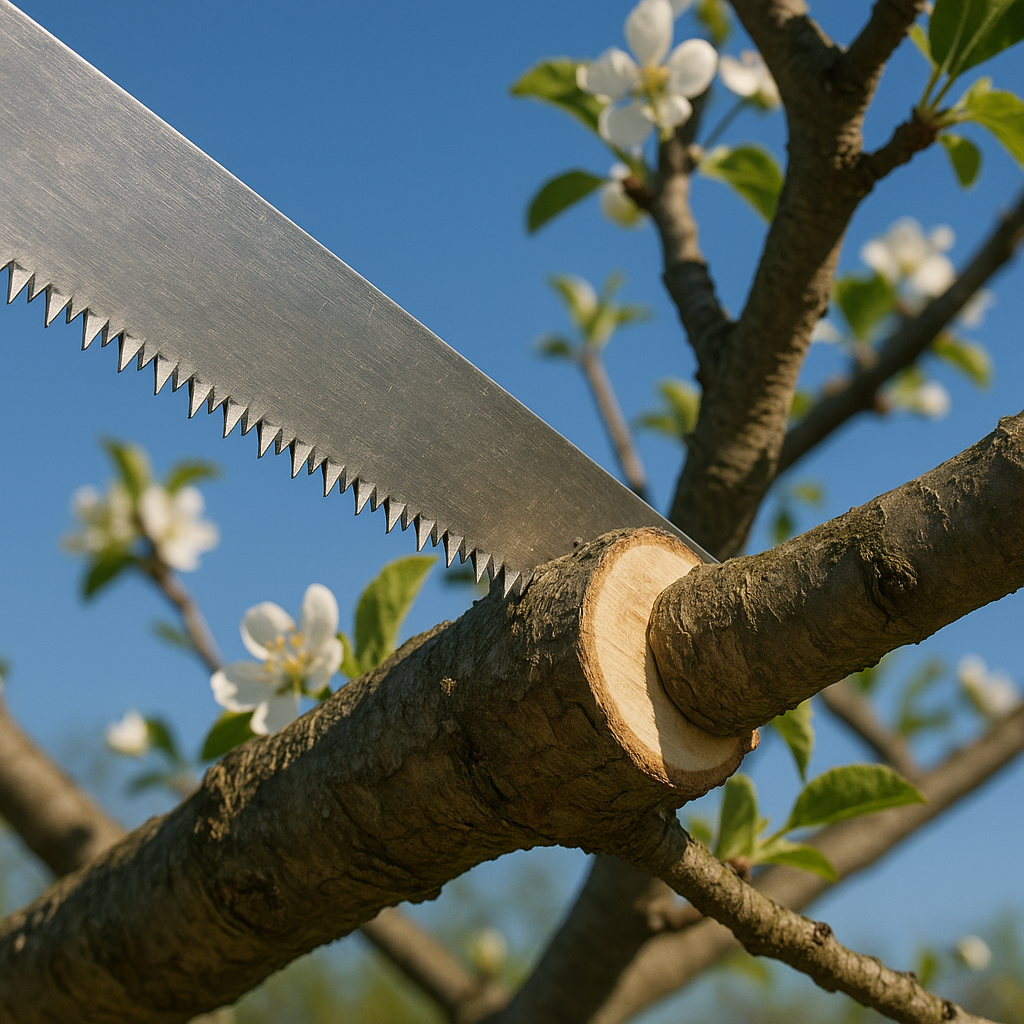
There are mainly the pruning saw, bow saw, and folding saw. The pruning saw, with its rigid blade, offers quick cuts on large branches. The folding saw, compact, fits easily in the apron pocket and unfolds in seconds for occasional cuts.
Why adopt it?
Beyond 4 cm thickness, neither pruning shears nor loppers compete with the saw. Its specific teeth ensure a clean cut, without clogging with sawdust, and reduce fatigue thanks to the natural sawing rhythm. A lightweight model with a Japanese blade stands out for its speed and precision.
Disadvantages to know
- Less handy for fine cuts.
- Risk of slipping if the blade is not regularly lubricated.
- Requires sometimes uncomfortable positions to reach certain branches.
Comparison table of tools
| Criterion | Pruning shears | Loppers | Saw |
|---|---|---|---|
| Maximum thickness | 2 cm | 4 cm | > 4 cm |
| Average weight | 200–300 g | 600–900 g | 300–500 g |
| Reach | Arm raised | Up to 2 m (telescopic) | Depends on blade size |
| Ergonomics | Very good for finishing | Good for intermediate cuts | Variable depending on handle |
| Average price | 15–40 € | 40–80 € | 20–60 € |
Tool maintenance and safety
A neglected tool quickly loses efficiency, exposes the user to accidents, and can become a vector for diseases through the transmission of contaminated sap. Here are some simple steps:
- Clean with 70% alcohol after each session.
- Regularly sharpen blades with a fine file.
- Check for play or cracks on the handles.
- Store away from moisture to prevent corrosion.
- Wear gloves and protective glasses during major cuts.
FAQ
What is the best tool for spring pruning?
In spring, the bypass pruning shears are favored to prune young shoots and promote sap circulation. For thicker branches, loppers then take over without risking too much damage to the tree.
Can I prune without a ladder with these tools?
Telescopic loppers often compensate for the absence of a ladder for branches up to 2 m high. Beyond that, it is better to secure a platform or install a sturdy ladder to access safely.
How to recognize a well-sharpened blade?
A well-sharpened blade cuts the wood fibers leaving a smooth surface without tearing. If you notice streaks or an irregular cut, it is time to sharpen.
Is it useful to have several models of pruning shears?
Yes, a lightweight model for fine cuts and a reinforced one for harder twigs help preserve the main blade and optimize your interventions.