
In the digital age, losing a child in a crowd or seeing your pet run away is a nightmare for all parents. GPS trackers and location devices offer a modern and reassuring security solution to keep a constant eye on your children and pets. From GPS watches to smart collars, including discreet Bluetooth trackers, this article guides you through the different available technologies, their respective advantages, and how to choose them according to your specific needs. Whether you want to complement your digital security strategy or simply add a layer of physical protection, discover how GPS trackers transform the peace of mind of modern families.
Sommaire
🎯 What is a GPS tracker and how does it work?
A GPS tracker (or GPS locator) is a small electronic device that uses the Global Positioning System (GPS) to detect and transmit its location in real time. Unlike traditional software applications, a GPS tracker is a physical object that you wear, attach to clothing, a backpack, a pet collar, or keep in your pocket.
Modern GPS trackers operate on a relatively simple but effective principle:
- Signal capture: The tracker receives signals from GPS satellites orbiting the Earth
- Position calculation: The device determines its precise position by analyzing these signals
- Data transmission: The location is sent via a mobile connection (4G, 3G) or Bluetooth
- Real-time display: Parents receive the position on their smartphone via a dedicated app
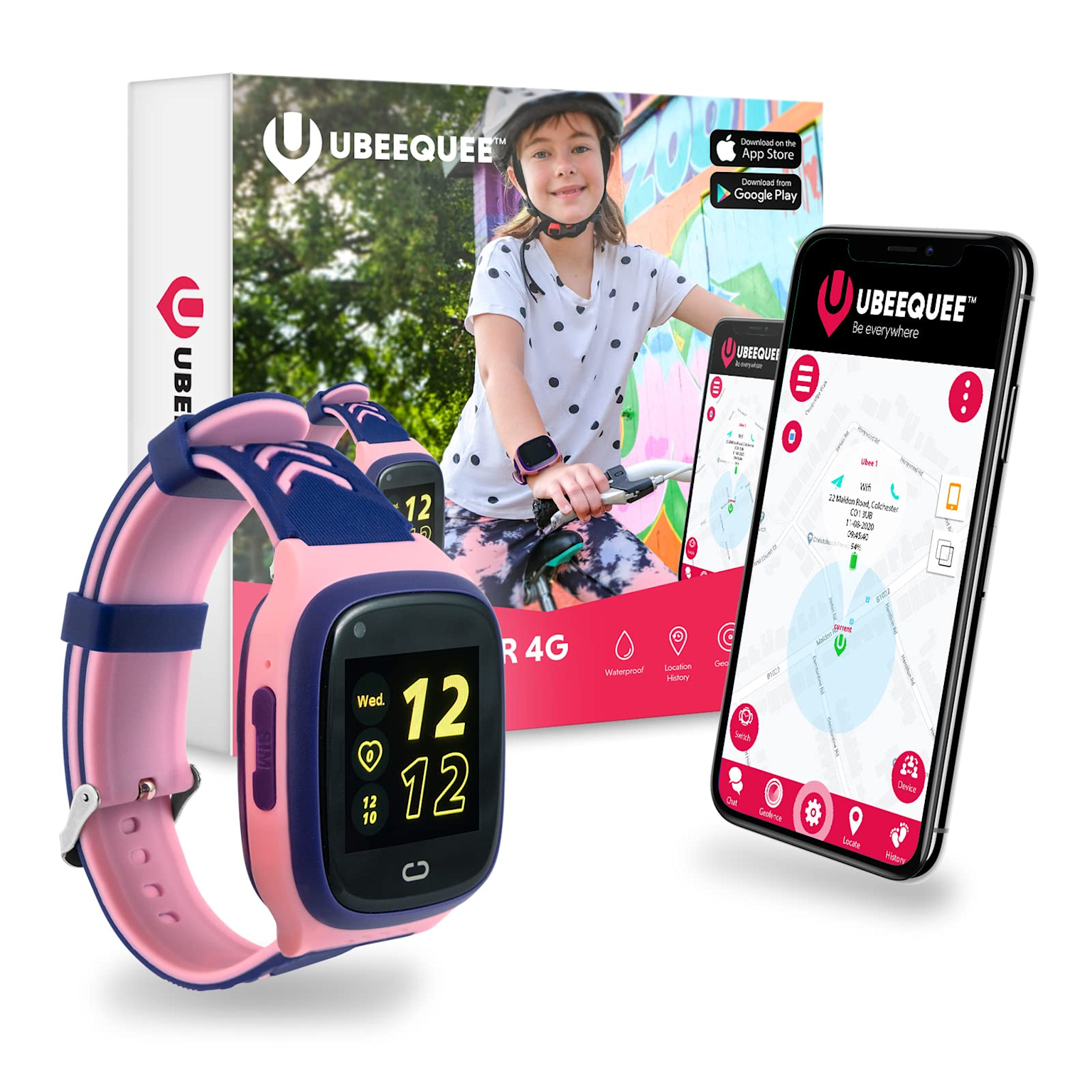
Modern GPS watches for children combine location security and two-way communication. © Public collections.
🔄 Different tracking technologies: GPS, Bluetooth, and hybrids
There are mainly three technologies used for trackers and location devices, each with its advantages and disadvantages:
1. Traditional GPS (with 4G/3G SIM card)
- Operation: Uses GPS satellites + 4G/3G mobile connection
- Accuracy: Very accurate (5 to 10 meters precision)
- Range: Unlimited (works anywhere with mobile coverage)
- Advantages: Reliable real-time tracking, trip history, virtual fences (geofencing)
- Disadvantages: Limited battery life (2-5 days), monthly subscription required, more expensive
- Best for: Children needing constant supervision, urban and rural areas
2. Bluetooth (AirTag, Tile, etc.)
- Operation: Works via Bluetooth technology and a community network of devices
- Accuracy: Low to medium (a few dozen meters when other devices are nearby)
- Range: Limited (works better in densely populated areas)
- Advantages: No subscription, long battery life (up to 1 year), very discreet and lightweight
- Disadvantages: Dependent on proximity to other devices, unreliable in rural areas
- Best for: Children’s personal items, local and discreet tracking
3. Hybrid (GPS + Bluetooth + WiFi)
- Operation: Combines satellite GPS, Bluetooth, and WiFi location
- Accuracy: Very accurate in urban and dense coverage areas
- Range: Global for GPS, local for Bluetooth
- Advantages: Best compromise between accuracy and battery life
- Disadvantages: More expensive, may consume more energy
- Best for: Active children requiring reliable monitoring in all environments
📋 Types of GPS trackers: from keychains to smartwatches
GPS watches for children
GPS smartwatches are the most popular choice among parents. They combine location, communication, and fun features. Your child naturally wears them, impossible to forget or lose.
- Advantages: Visible screen, integrated SOS button, two-way calls, real-time tracking
- Disadvantages: Visible to everyone, some children refuse to wear them
- Battery life: 24-72 hours on average
- Price range: €30 to €120 depending on features
Discreet GPS trackers
Compact trackers easily slip into a schoolbag, backpack, or pocket. It’s invisible monitoring – the child even forgets they are wearing them.
- Advantages: Very discreet, excellent battery life (5-7 days), robust
- Disadvantages: No interaction screen, no visible SOS button
- Battery life: 5 to 7 days (or more depending on model)
- Price range: €40 to €100
Bluetooth trackers (AirTag, Tile, etc.)
Bluetooth keychains are the cheapest and lightest solution. Attach them to keys, backpack, or pet collar.
- Advantages: Very affordable (€20-40), no subscription, 1-year battery, lightweight
- Disadvantages: Reliable mainly in dense urban areas, risk of false alerts
- Battery life: About 1 year
- Price range: €20 to €40
GPS collars for pets
Specifically designed for dogs, cats, and other companions, GPS collars for pets offer a robust and waterproof solution.
- Advantages: Waterproof, comfortable for animals, real-time tracking
- Disadvantages: Requires subscription (pets), can be bulky
- Battery life: 2-5 days depending on model
- Price range: €40 to €150 for hardware + €5-15/month subscription

Comparison of different tracking solutions: from AirTag to GPS smartwatch and discreet trackers. © Public collections.
📱 Installation and configuration of GPS trackers
Step 1: Choose and buy the right device
Check our complete comparison of Bluetooth and GPS trackers 2025 to explore all the options available on the market in detail and find the model best suited to your situation.
Step 2: Create an account with the manufacturer
Create an account on the manufacturer’s website or app. You will need an email address and an Internet connection to initialize the device.
Step 3: Download the mobile app
Download the manufacturer’s tracking app on your smartphone and/or tablet. Most apps are available on iOS and Android.
Step 4: Pair the device with your account
• Insert the provided or separately purchased SIM card
• Turn on the device by pressing the power button
• Connect it to the app via Bluetooth or QR code
• Wait 2-5 minutes for the first location to establish
• Hold the button to activate tracking
• Keep it close to your smartphone
• Follow the app instructions to pair
• The device will then be visible on the community map
Step 5: Configure security settings
Once the device is paired, configure:
- Safety zones (Geofencing): Define areas where your child or pet can move without alert
- Alerts: Receive notifications when the zone is exceeded
- Emergency contacts: Register numbers of people to contact in case of SOS alert
- Location frequency: Set how often the position should be updated
🛡️ Essential features to know
Real-time location
Real-time location displays the exact position of your child or pet on a map. You can zoom in, see street details, and have a precise history of traveled routes.
Virtual fences (Geofencing)
Draw a safety zone around the school, home, or usual park. You receive an instant notification if your child or pet leaves this defined area.
SOS button
A critical feature: by pressing the SOS button (available on most GPS watches), your child sends an immediate emergency alert with their location to all registered contacts.
Trip history
Consult the complete history of movements over the last 7 to 365 days depending on the model. Useful to understand habits and identify anomalies.
Two-way calls and messages
Some GPS watches allow video calls and text messages between parent and child, strengthening the communication line in case of problems.
🐾 GPS trackers for pets: specific case
Why use a GPS tracker for a pet?
Pets – especially dogs and cats – can escape, get lost, or be stolen. A GPS tracker offers real protection and significantly increases the chances of finding them.
GPS collars for dogs
- Advantages: Robust, waterproof, 3-10 day battery, precise tracking
- Disadvantages: Bulky, subscription required (€5-15/month)
- Best for: Active dogs or those prone to running away
- Recommended brands: Tractive, Weenect, PAJ
Lightweight solutions for cats
- Advantages: Light, discreet, less stressful for the animal
- Disadvantages: Reduced battery life, less accuracy indoors
- Best for: Indoor-outdoor cats, curious kittens
- Alternatives: AirTag in an anti-loss collar, lightweight Bluetooth trackers
⚠️ Limitations and legal considerations
Before installing a GPS tracker on a child, some important points:
| Aspect | Consideration |
|---|---|
| Network dependency | GPS requires a mobile or Internet connection. In dead zones, location may be delayed or inaccurate |
| Battery life | Even the best batteries run out. A discharged device cannot be located |
| Accuracy | GPS trackers have an error margin of 5-15 meters under normal conditions. Indoors, accuracy decreases |
| Right to privacy | From age 13, inform your child about monitoring. Maintain honest and respectful communication |
| Educational aspect | A GPS tracker does not educate. It should complement an open discussion about safety |
🎓 Best usage practices
1. Transparency with your child
Explain why you are installing a GPS tracker. Not in secret, but with honor. “It’s to make sure you’re safe, not to spy on you.”
2. Establish clear rules
Define together the allowed zones, curfew hours, and what triggers an alert. Involvement creates adherence.
3. Start gradually
If your child has never worn a GPS watch, start with short trips (school-home) before allowing more independence.
4. Combine with active supervision
A GPS tracker does not replace communication. Talk regularly about what your child does online and offline.
5. Regularly review settings
As your child grows, gradually expand their safety zones. At 13-14 years old, a transition to more autonomy is healthy.
💰 Comparative cost analysis
| Solution type | Hardware cost | Monthly cost | Best value |
|---|---|---|---|
| 4G GPS watch | €60-120 | €5-10 | Good for active children |
| Discreet GPS tracker | €40-100 | €3-8 | Excellent for discretion |
| AirTag/Bluetooth | €20-40 | €0 | Best initial price |
| Pet GPS collar | €50-150 | €5-15 | Good for roaming dogs |
❓ Frequently Asked Questions (FAQ)
A: With GPS watches, the child can remove them. Trackers in backpacks are harder to discover. The best way to prevent tampering is open communication about the reasons for tracking.
A: Yes, no GPS tracker has less than 24 hours battery life. Most last 2-5 days. Recharging every 2-3 days is standard practice.
A: Pure GPS works poorly indoors. Hybrid solutions use WiFi. Bluetooth trackers remain reliable if other devices are nearby. GPS subscription guarantees approximate location even indoors.
A: Yes! Bluetooth trackers (AirTag, Tile) work without subscription. For traditional GPS, you will need a 4G/3G plan (usually €3-10/month).
A: Location data is sensitive. Choose recognized brands with strong encryption. Avoid unknown or suspicious GPS tracker apps. Google, Apple, and major brands (Weenect, Tractive) have robust privacy policies.
A: Yes, most apps allow adding multiple guardians/supervisors. Each person can see real-time location based on defined permissions.
🔗 Complete solution for digital and physical security
For a comprehensive approach, consider that GPS trackers and apps like Google Family Link are complementary, not interchangeable:
- GPS trackers: Monitor physical location
- Google Family Link: Manages screen time, apps, and digital content
- Open communication: The foundation of any security strategy
Conclusion: A balance between protection and freedom
GPS trackers offer unparalleled peace of mind for modern parents. They allow your children to enjoy greater independence – going to school alone, exploring the neighborhood – while maintaining protective and caring supervision.
The choice between a GPS watch, a discreet tracker, or a Bluetooth solution will depend on your context: the child’s age, geography (urban vs rural), your budget, and above all, the type of trust relationship you want to establish.
Remember: the best GPS tracker is the one that reassures parents without humiliating the child. Combine technological monitoring and constant dialogue to create a healthy and secure family environment. 🏠
• Google Family Link: Complete guide to monitoring your children with peace of mind – Perfect digital complement
• Complete comparison of Bluetooth and GPS trackers 2025 – To explore all market models
• Check local laws regarding geolocation of minors