Sommaire
Growing aromatic plants indoors transforms an ordinary window into a living garden: immediate scents, freshly cut leaves, and cooking that gains character. It is often thought that growing herbs indoors is complicated, but with a few simple rules — light, suitable pot, well-draining substrate — the most commonly used herbs thrive perfectly in an apartment. This article presents the most reliable varieties, their real needs, and practical tips to harvest all year round.
In brief
🌷 Basil, mint, parsley, coriander, thyme are the easiest to grow indoors, each with different light requirements: basil likes full sun, mint tolerates some shade.
💧 Watering and drainage make the difference: water less than outdoors and prefer a light potting mix with clay pellets at the bottom of the pot to avoid rot.
🤴 Repotting and regular pruning stimulate growth and prevent premature flowering; weekly trimming for basil and progressive harvesting for coriander yield the best results.
🔅 3 to 6 hours of direct light is sufficient for most; for dark corners, a small horticultural LED light makes all the difference.
Why grow aromatic plants indoors?
Proximity is the main advantage: you pick when the aroma is at its peak, enhancing a salad, a sauced dish, or a cocktail. Growing indoors avoids pesticides, reduces waste (you take only what you need), and offers daily satisfaction. It is also economical: a well-maintained plant replaces often less fresh spice bunches. Finally, aromatic plants decorate the space — green, scent, and sometimes flowers — without needing an outdoor garden.
Top 6 aromatic plants for indoors
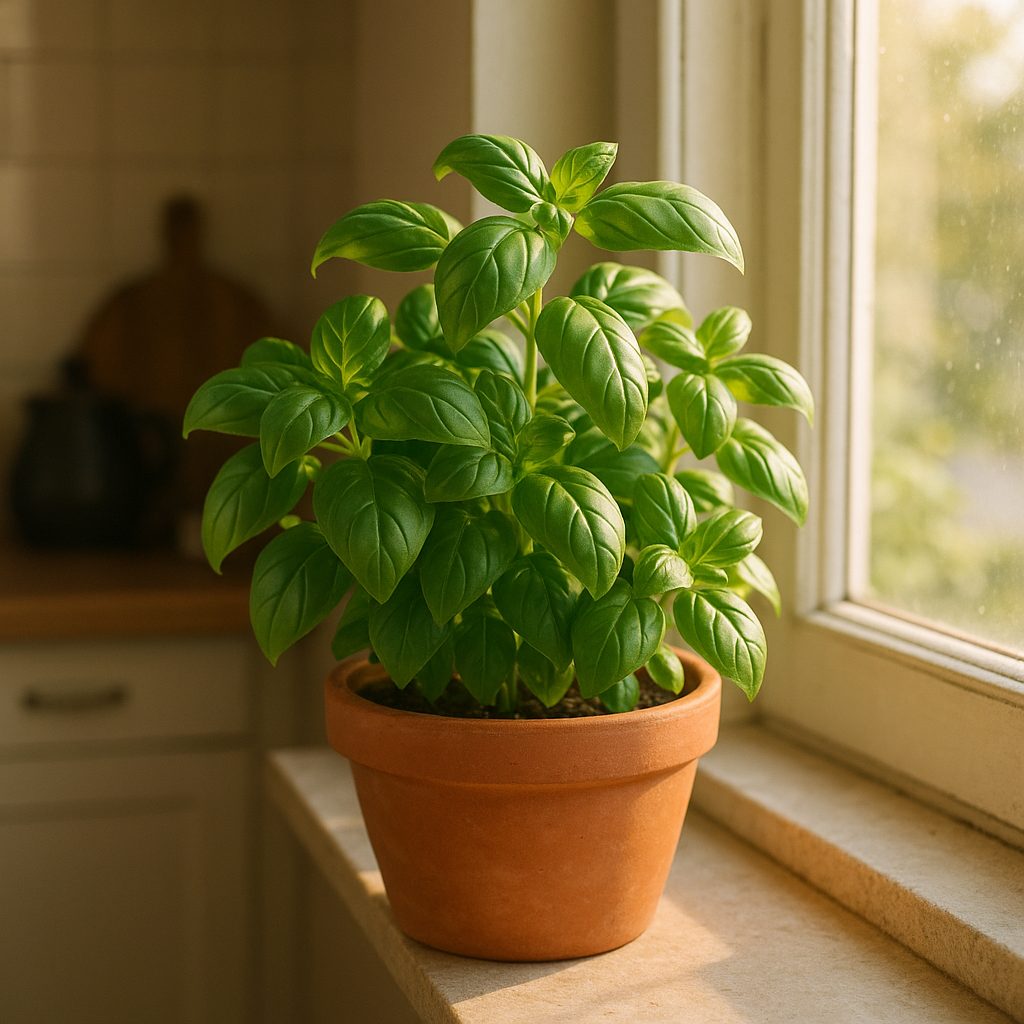
1. Basil (Ocimum basilicum)
Basil is a classic that responds quickly to care: warmth, light, and regular watering. It likes a south or west exposure and a substrate that dries slightly between waterings. Avoid cold water on the leaves and regularly pinch the top to encourage branching. In cooking, whole or chopped leaves enhance tomatoes, pasta, and pesto.
2. Mint (Mentha sp.)
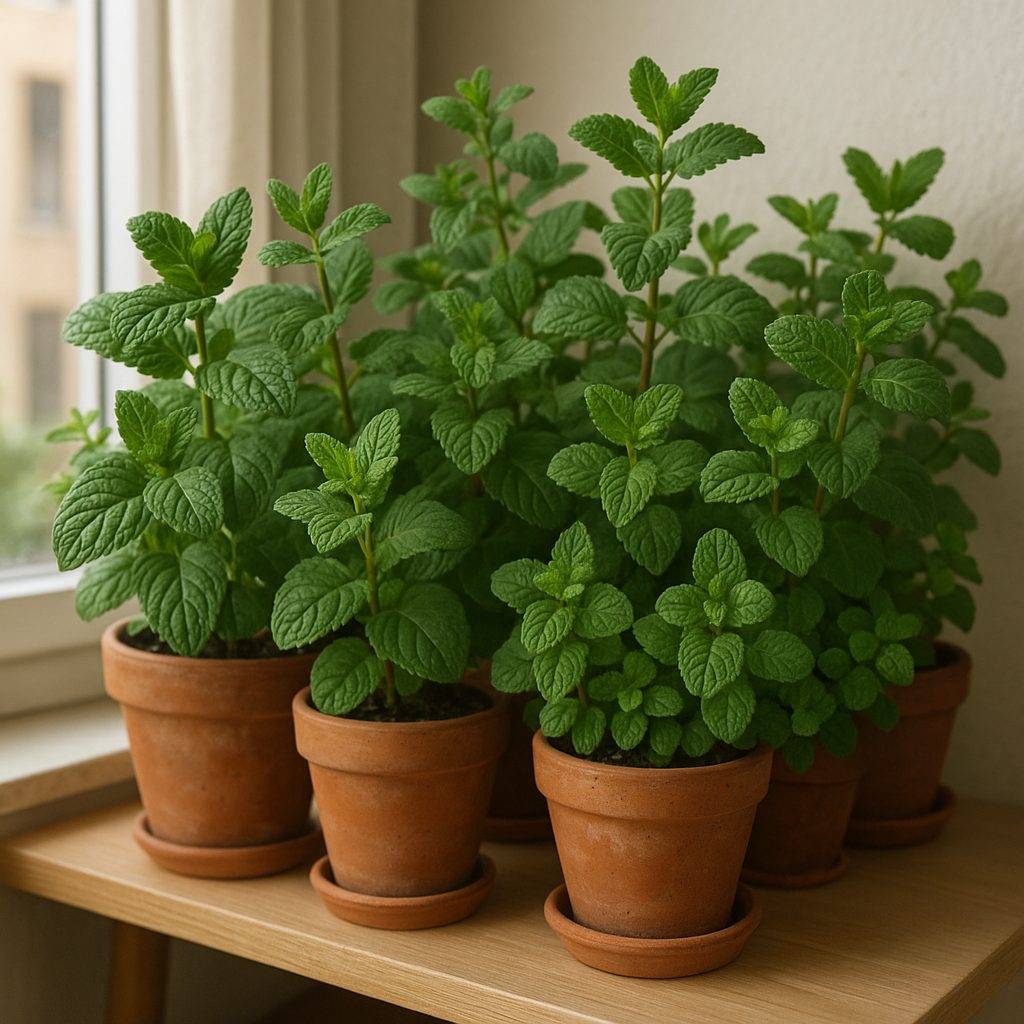
Mint is very forgiving: it tolerates partial shade and grows vigorously, sometimes too much — hence the interest in individual pots to avoid invasion. Regular watering but no water stagnation. Varieties like peppermint and spearmint have distinct aromatic profiles; try them in drinks, sauces, and salads. Beware of spontaneous rooting: the stem multiplies easily in water.
3. Parsley (Petroselinum crispum)
Biennial plant that prefers indirect light and soil rich in humus. Germination is slower than basil, but once established, parsley is generous. Prune to harvest the outer leaves and let the heart regenerate. Flat-leaf parsley has more flavor than curly parsley for cooking.
4. Coriander (Coriandrum sativum)
Capricious indoors, coriander tends to bolt if it lacks light or suffers thermal stress. Prefer a deep pot so the root can properly pivot and harvest leaves and seeds (coriander) as you go. Used fresh in Mediterranean, South American, or Asian cuisines, it adds a bright and lemony note.
5. Thyme (Thymus vulgaris)
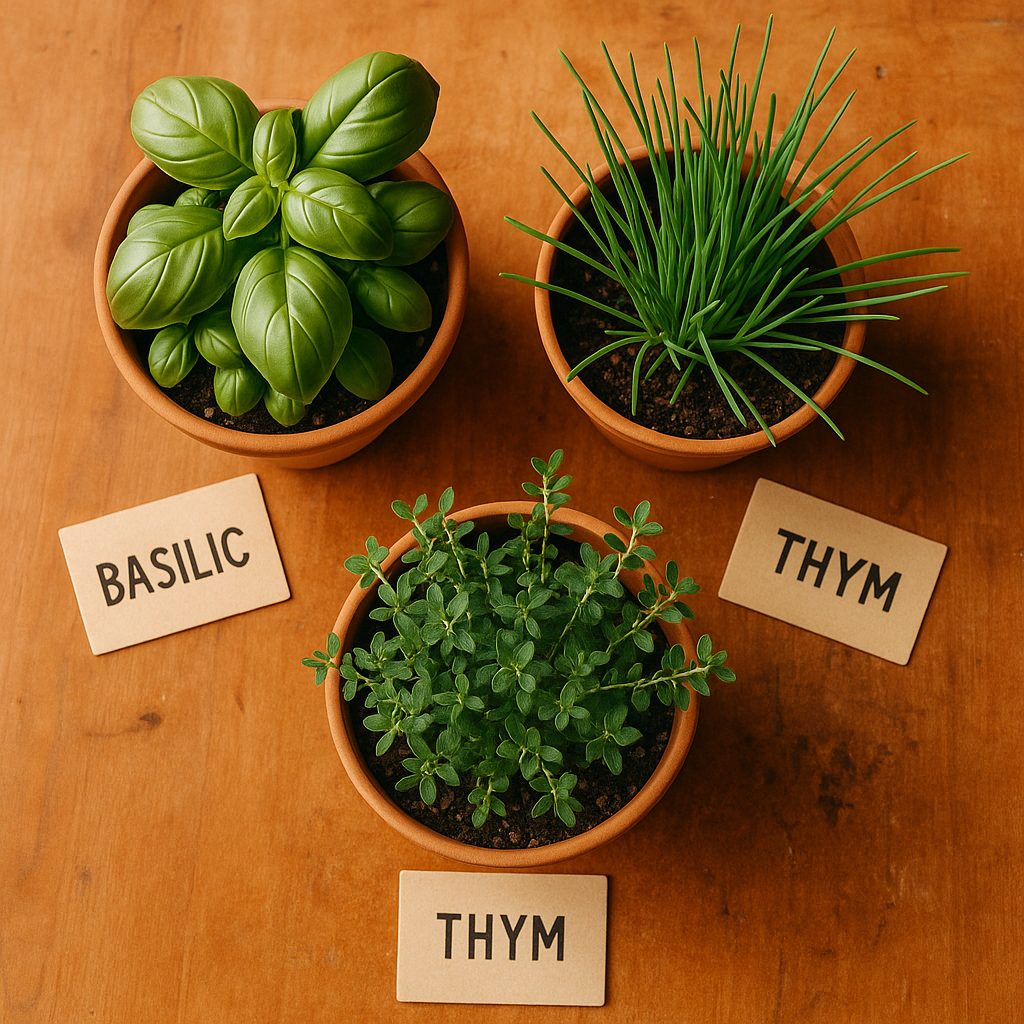
Classic Mediterranean plant: sun, well-drained soil, and sparing watering. Thyme does not like excess moisture; a terracotta pot promotes evaporation. It tolerates cooler temperatures than basil and retains its concentrated flavor even when dry. Ideal for stews and infusions.
6. Chives (Allium schoenoprasum)
Practical and discreet, chives take up little space. They grow well in pots, tolerate light shade, and withstand frequent cutting — perfect for garnishing dishes. The flowering is edible and adds extra aesthetics to the pot.
Comparison Table: Essential Needs
| Plant | Light | Watering | Substrate | Level |
|---|---|---|---|---|
| Basil | 4–6 h direct | Regular, surface dry in between | Light, well-draining soil | Beginner-intermediate |
| Mint | 2–4 h indirect | Moderate, likes humidity | Rich substrate, good drainage | Beginner |
| Parsley | 3–5 h indirect | Regular but light | Rich in humus | Intermediate |
| Coriander | 4–6 h | Moderate, avoid stress | Deep, draining | Intermediate |
| Thyme | 6+ h direct | Rare, let dry | Rocky, poor | Beginner |
| Chives | 3–5 h | Moderate | Universal soil | Beginner |
Practical Tips for Success
- Lighting: a well-oriented window remains the simplest solution. If light is lacking, supplement with full-spectrum horticultural LED lamps for about 4 to 6 hours per day.
- Watering: check the top of the pot with your finger; it is better to under-water than to flood. Signs of excess are soft yellow leaves and the smell of wet earth.
- Drainage: always a hole and a layer of clay pellets or gravel; this prevents root rot in poorly ventilated apartments.
- Repotting: repot each year into a slightly larger pot to renew nutrients.
- Pruning: regularly cut the tips to stimulate branching and delay flowering, unless you want seeds (coriander) or edible flowers (chives).
Managing Common Problems
The most frequent indoor pests are aphids, whiteflies, and scale insects. A gentle water spray, diluted black soap, or manual cleaning is often enough. Neem powder remains a natural option if infestation persists. For rot, reduce watering, ventilate the room, and repot if necessary.
How to Easily Plant and Propagate
The simplest method remains cuttings (for basil, mint, thyme): cut a healthy stem of 8–10 cm, remove the lower leaves and place it in a glass of water; roots appear within a few days. Sowing works well for parsley and coriander but requires patience and sufficient depth. Remember to enrich the soil with a mild organic fertilizer every 4–6 weeks during the growing period.
Quick Recipes with Your Herbs
A few leaves are enough to transform a dish: fresh basil in a caprese salad, mint leaves in tabbouleh, chopped parsley on fish, finely chopped coriander in a curry. To preserve, chop and freeze in olive oil in small portions: ready-to-use herbs for busy days.
FAQ
Which plant should I choose if I only have a north-facing window?
For a low-light corner, choose mint or chives: they tolerate shadier conditions better than basil or thyme.
Is it preferable to grow in terracotta or plastic pots?
Terracotta promotes evaporation and suits Mediterranean plants (thyme). Plastic retains moisture better and can be suitable for mint or parsley. The choice depends on the plant’s water needs.
How to prevent my herbs from flowering too quickly?
Pinch the stems regularly and ensure stable light supply. Flowering often occurs under stress: extreme heat, lack of water, or unstable light.
{
“@context”: “https://schema.org”,
“@type”: “FAQPage”,
“mainEntity”: [
{
“@type”: “Question”,
“name”: “Which plant should I choose if I only have a north-facing window?”,
“acceptedAnswer”: {
“@type”: “Answer”,
“text”: “Mint and chives tolerate shade better. They remain fragrant without constant direct exposure.”
}
},
{
“@type”: “Question”,
“name”: “Is it preferable to grow in terracotta or plastic pots?”,
“acceptedAnswer”: {
“@type”: “Answer”,
“text”: “Terracotta evaporates more and suits dry plants like thyme; plastic retains moisture better, useful for mint and parsley.”
}
},
{
“@type”: “Question”,
“name”: “How to avoid premature flowering?”,
“acceptedAnswer”: {
“@type”: “Answer”,
“text”: “Prune regularly, maintain stable light, and avoid water stress. Regular application of mild fertilizer helps vegetation stay leafy.”
}
}
]
}
{
“@context”: “https://schema.org”,
“@type”: “WebPage”,
“about”: {
“@type”: “Thing”,
“name”: “indoor aromatic plants”
},
“keywords”: [“aromatic plants”,”basil”,”mint”,”coriander”,”parsley”]
}