
Sommaire
Building an in-ground pool transforms a garden — and immediately raises practical questions: how much does the installation really cost? What legal and safety obligations apply? What maintenance is required to keep the water healthy without spending every weekend on it? This guide gathers figures, technical choices, and maintenance routines to help you decide calmly and plan for the long term.
In brief
📝 Average budget: expect between €15,000 and €60,000 depending on the structure (concrete, shell, kit) and finishes; the range is mainly explained by the cost of earthworks and equipment.
⚖️ Key regulations: a prior declaration or a building permit may be required depending on the surface area; shutters, barriers, or alarms are mandatory to protect children.
🔧 Annual maintenance: plan a recurring budget for chemicals, filtration, repair handling, and winterizing; simple maintenance takes 1 to 2 hours per week during the season.
Types of pools and impact on budget
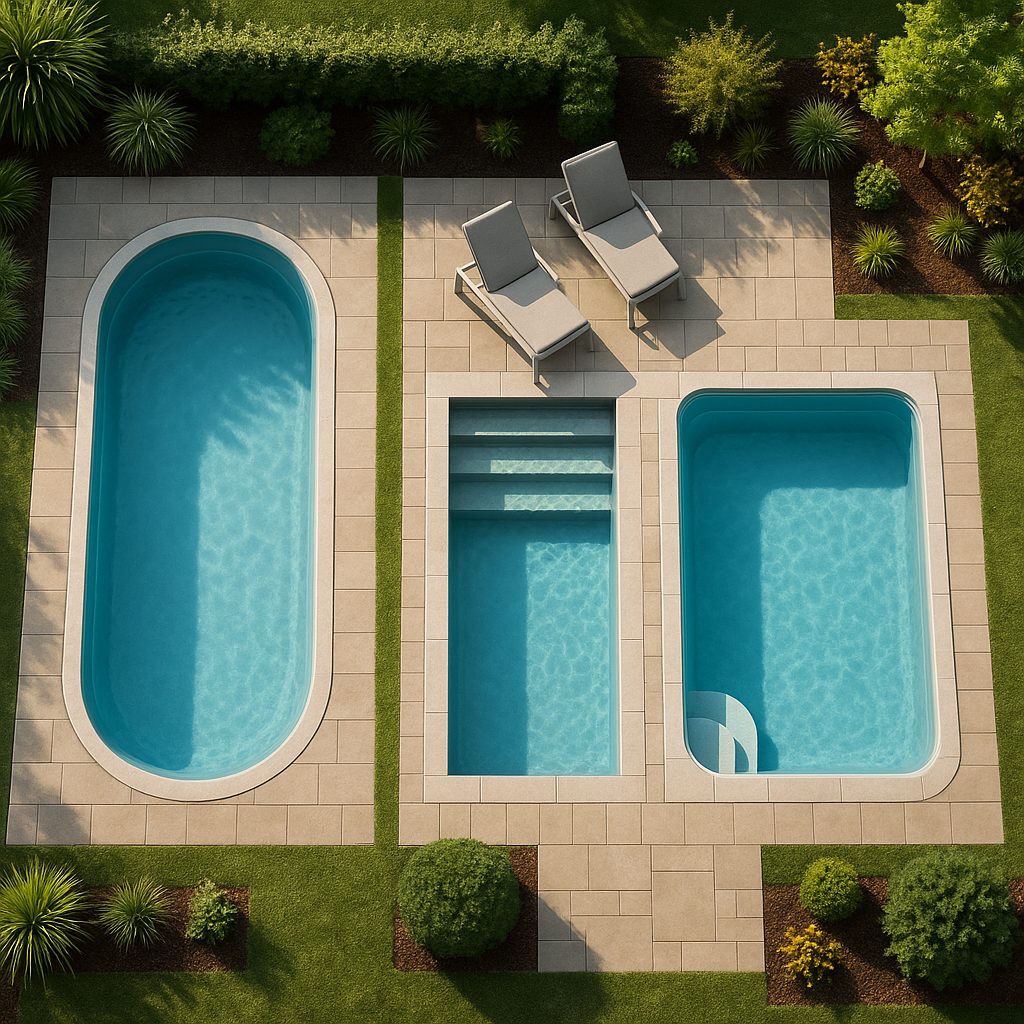
Choosing a pool is not just about deciding on a rectangle in the grass. The material, construction method, and options (heating, cover, finish) dictate a large part of the cost and durability. In practice, there are three main categories: polyester shell, kit pool (cinder block or modular panels), and sprayed or cast concrete pool.
Polyester shell
Quick to install — often a few days — the shell is attractive if you want a short timeline. The purchase price is contained but terrain adaptations (earthworks, bedding) and the quality of the shell affect the bill. Advantage: smooth and watertight surface; disadvantage: limited shapes and sizes, risk of uplift if the ground is poorly drained.
Concrete pool
The most flexible in terms of design, the concrete pool adapts to customized dimensions and finishes. The cost is higher and the work takes longer, but durability and the possibility to add integrated equipment (stairs, submerged beaches) often compensate for the initial investment.
Kit and panels
Intermediate between shell and concrete, the kit with metal or modular panels can reduce labor while offering varied shapes. It is a good compromise for those who want to involve a local craftsman without reaching concrete budgets.
Detailed budget: elements to consider
Rather than an abstract figure, let’s look at the details: earthworks, structure, technical equipment, coping, and exterior landscaping. Each of these items can double or triple the budget depending on the terrain configuration and the desired level of finish.
| Item | Price range | Remarks |
|---|---|---|
| Earthworks & foundations | €2,000 – €10,000 | Varies depending on accessibility and soil type |
| Structure (shell/kit/concrete) | €8,000 – €30,000 | High-end concrete > shell in cost |
| Technical room & filtration | €1,500 – €8,000 | Pump, filter, piping, electrical box |
| Equipment (heating, lighting, cover) | €1,000 – €15,000 | Solar heating or heat pump increase the bill |
| Finishes (copings, decks) | €1,000 – €10,000 | Outdoor spaces, including safety measures |
Concrete examples
A small 4×2.5 shell, well equipped, can be installed for around €15,000 turnkey if the land is accessible. A large custom concrete pool with heating and landscaped deck easily climbs beyond €50,000. The cost of earthworks is often the surprise element: rocky soils or the need for disposal multiply the expense.
Regulations and safety
The regulations aim at two objectives: ensuring people’s safety and controlling the landscape impact. Obligations vary depending on the municipality and the size of your project.
Permits and declarations
For an in-ground pool: if the basin surface exceeds 10 m², a prior declaration is generally required; beyond 100 m², a building permit is often necessary. These thresholds may vary according to the PLU (local urban plan): check with your town hall before any commitment.
Mandatory safety devices
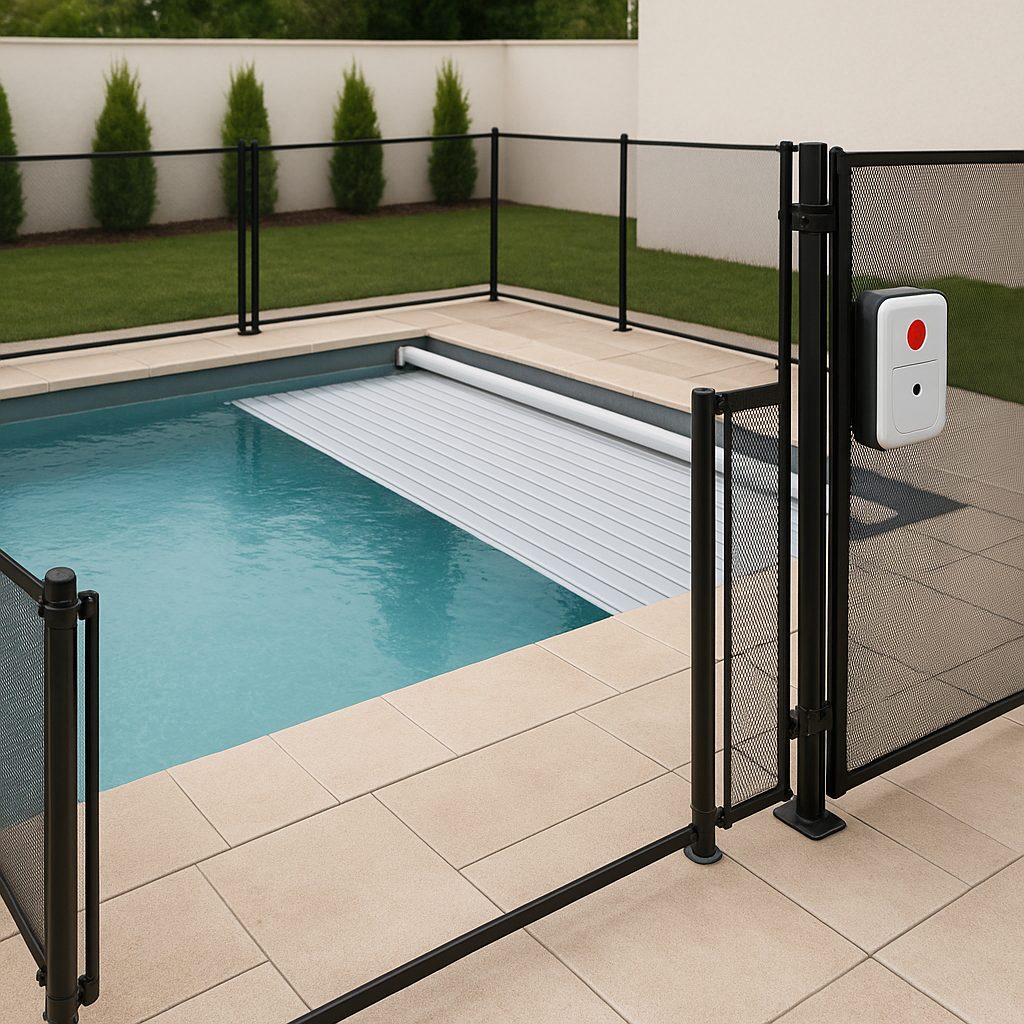
The law requires the owner to equip their pool with an approved protection device to prevent drownings: barrier, automatic cover, rolling shutter, or alarm. The choice depends on your configuration and the presence of children; compliance with NF P90‑306 to NF P90‑308 standards is a quality guarantee.
Do not entrust safety to just anything: a compliant installation significantly reduces risks and may be required by your home insurance.
Routine maintenance: routines and products
Keeping water clear and healthy relies on three pillars: filtration, chemical treatment, and water balance. The weekly effort is moderate if the installation is well designed; it is regularity that avoids heavy work later.
Filtration
The pump and filter often run 6 to 12 hours per day in season. A simple rule: filter the entire volume in 8 to 10 hours. Choose a variable speed drive if you want to reduce electricity consumption without sacrificing water quality.
Water treatment
Chlorine remains the most widespread treatment; bromine, active oxygen, and salt electrolysis treatment offer alternatives with different sensations for the skin and maintenance. Read the technical sheets: each solution requires monitoring pH, checking TAC (carbonate hardness), and regular analyses.
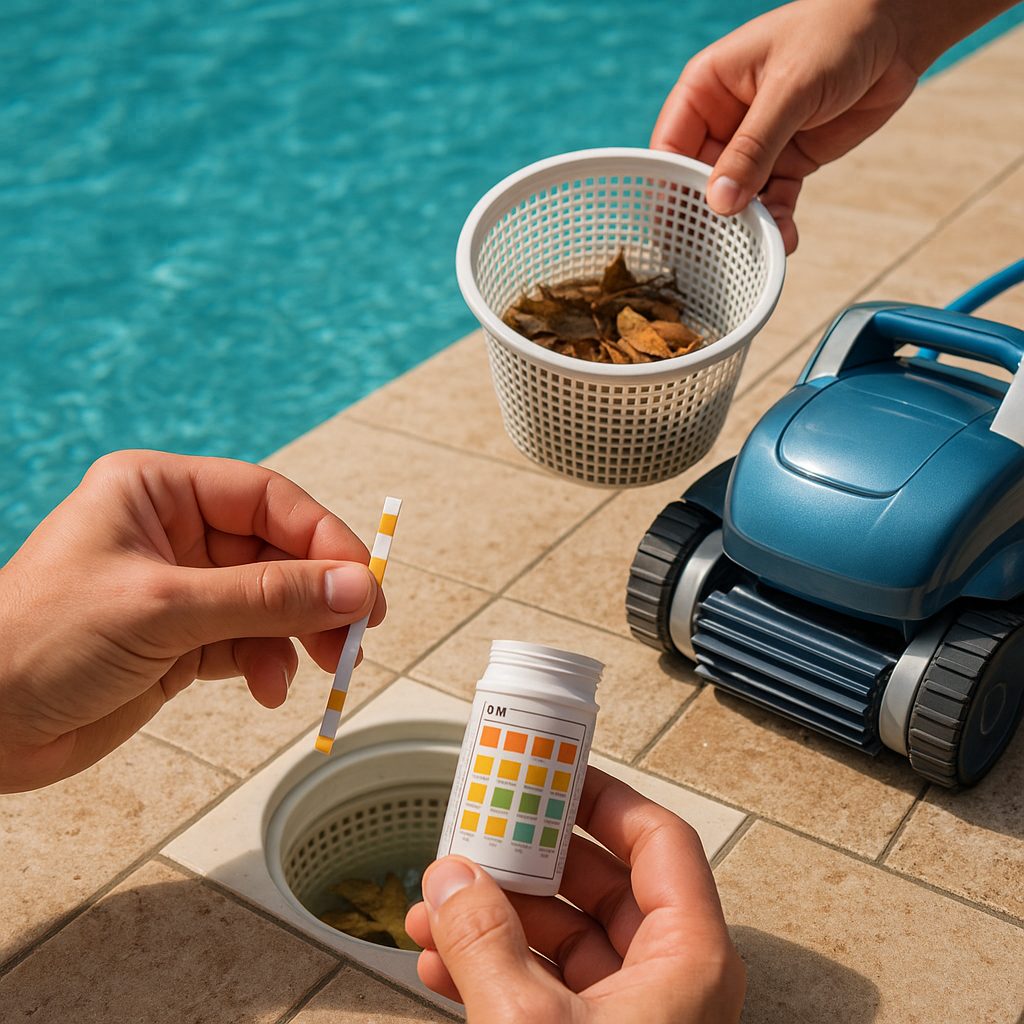
- Test pH and chlorine twice a week during the season.
- Clean the skimmer and empty the basket at least once a week.
- Vacuum and brush the walls depending on use and water condition.
Winterizing
Winterizing is a crucial step if you live in a cold region. There is active winterizing (reduced but maintained filtration) and passive winterizing (complete shutdown with winterizing products). Protections (floats, winter cover) prevent equipment from freezing and facilitate restarting in the spring.
Preventive Maintenance and Savings
Investing wisely in quality equipment pays off in the long run. A variable speed pump, an insulating cover, and an automatic pH regulation system reduce both the energy bill and the time spent on maintenance.
Annual Checklist
- Spring: complete cleaning, waterproofing check, and inspection of the technical room.
- Mid-season: purge pipes if necessary, check filtration.
- Autumn: winterizing, protection of outdoor equipment, restocking of products.
DIY or Professional: What to Choose?
If labor is tempting to save money, keep in mind that building a pool involves strict work regulations (waterproofing, electrical safety, compliance). Savings made on installation can become minimal if defects appear. For partial work (installation of coping stones, minor finishing), DIY is relevant; for the structure and waterproofing, prefer recognized specialists.
FAQ
What budget should be planned for annual maintenance?
Between €300 and €1,200 per year depending on the equipment (heating, automatic robot) and the chosen treatment. This estimate includes products, some consumables, and possible minor repairs.
Is it necessary to declare your pool to the insurance?
Yes: most contracts require the declaration of an in-ground pool. Some guarantees may change (liability, damages) depending on the safety devices installed.
How to reduce electricity consumption?
Installing a variable speed pump, reducing filtration time off-season, using a thermal cover, and optimizing heating management are effective measures to lower the bill.
What are the signs of unbalanced water?
Persistent chlorine odor, cloudy water, deposits on the walls, skin irritations: these are all signals that need to be corrected quickly by testing pH, chlorine level, and alkalinity.
Practical Conclusion
An in-ground pool represents a significant investment but quickly becomes a lifestyle asset if you anticipate the budget, comply with regulations, and adopt an effective maintenance routine. Plan, compare several quotes, and prioritize equipment that reduces time spent and energy consumption — this is often where the real savings lie.
{
“@context”: “https://schema.org”,
“@type”: “WebPage”,
“about”: {
“@type”: “Thing”,
“name”: “In-ground pool – budget and maintenance”
},
“keywords”: [“in-ground pool”, “pool budget”, “pool regulations”, “pool maintenance”, “winterizing”]
}