
Sommaire
Choosing a natural fertilizer for the vegetable garden is not just about opting for “organic”. It is above all about knowing the specific needs of your crops, the soil cycle, and the gardener’s constraints: available time, acceptable odors, local resources. In this article, I review the most reliable solutions — compost, manure, green manure, liquid fertilizers, ashes — giving clear uses, practical dosages, and precautions to take for each. The goal: to make your soil more alive and your vegetables gain in flavor and yield, without chemicals.
In brief
🟢 Compost = universal base: provides organic matter, microorganisms, and soil structure. Usable on the surface or lightly incorporated in spring.
🐄 Manure (well decomposed) provides nitrogen and nutrients over the long term; watch out for salting and nitrogen load depending on the source.
🌱 Green manure revitalizes the soil, limits erosion, and fixes nitrogen (legumes). Ideal in rotation or as winter cover.
💧 Compost tea and liquid fertilizers for quick boosts: foliar boost, microbial stimulation, but to be used with caution and appropriate dilution.
Why prefer a natural fertilizer for the vegetable garden?
One might think that the natural alternative is just a trend. In reality, organic fertilizers act on the quality of the soil as much as on the immediate nutrition of plants. Mineral granules give a temporary boost, but they do not improve structure, water retention, or microbial life. In the long term, a living soil resists diseases better, requires fewer inputs, and produces tastier vegetables. Another advantage: most natural solutions can be made on site, which reduces costs and carbon footprint.
The best natural fertilizers, one by one
Compost: the essential
Compost is the ideal compromise between practicality and agronomic richness. Obtained by controlled decomposition of green and brown waste, it provides organic matter, humus, mineral elements, and microorganisms. Use it as a heavy amendment in autumn (2–4 cm on the surface) or in spring mixed with planting soil (a handful per planting hole for tomatoes, for example).
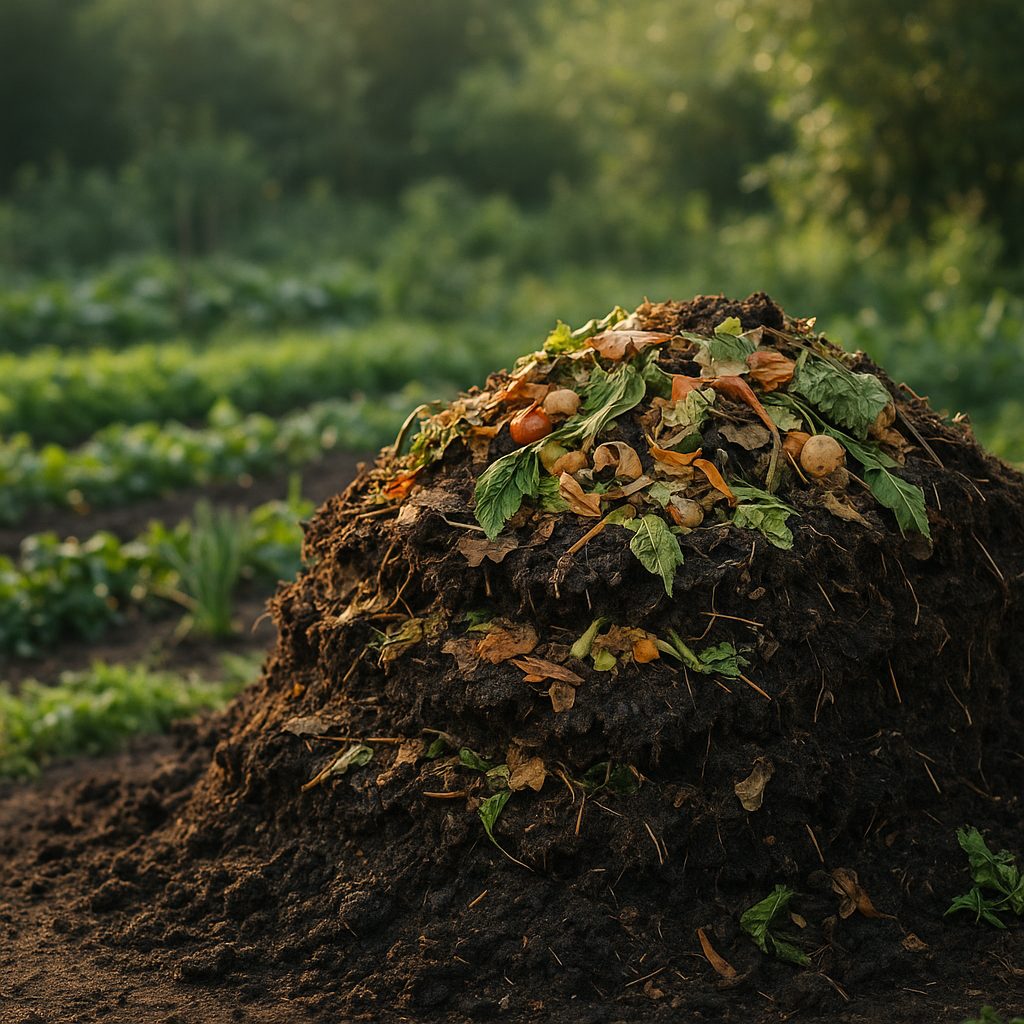
Practical tip: well-matured compost should not smell bad and should crumble under pressure. If it is still hot and acidic, let it mature; otherwise, it can “burn” young roots.
Manure: powerful but demanding
Farm manure (cow, horse, poultry) is rich in nitrogen and secondary elements. The key word here: decomposition. Fresh manure can be too “hot” and burn plants; prefer composted or well-aged manure. Indicative dose: 3–5 kg/m² incorporated in autumn for spring vegetables.
| Type | Advantages | Precautions |
|---|---|---|
| Cow manure | Moderate in nitrogen, good structure | Compost before use, risk of weed seeds |
| Poultry manure | Very rich in nitrogen | Low dosage, compost to avoid burns |
Do not underestimate variability: agronomic value depends on the animals’ diet and storage duration. The good reflex: analyze the soil if you spread regularly.
Green manures: working the soil without disturbing it
Green manures are plants sown to cover and improve the soil: mustard, fava bean, clover, rye. Their benefit is multiple: protection against erosion, biomass restitution, and for some species (legumes) atmospheric nitrogen fixation. Sow at the end of summer or in autumn depending on the following crop, then incorporate or mow at flowering to early flowering stage to maximize mineralization.
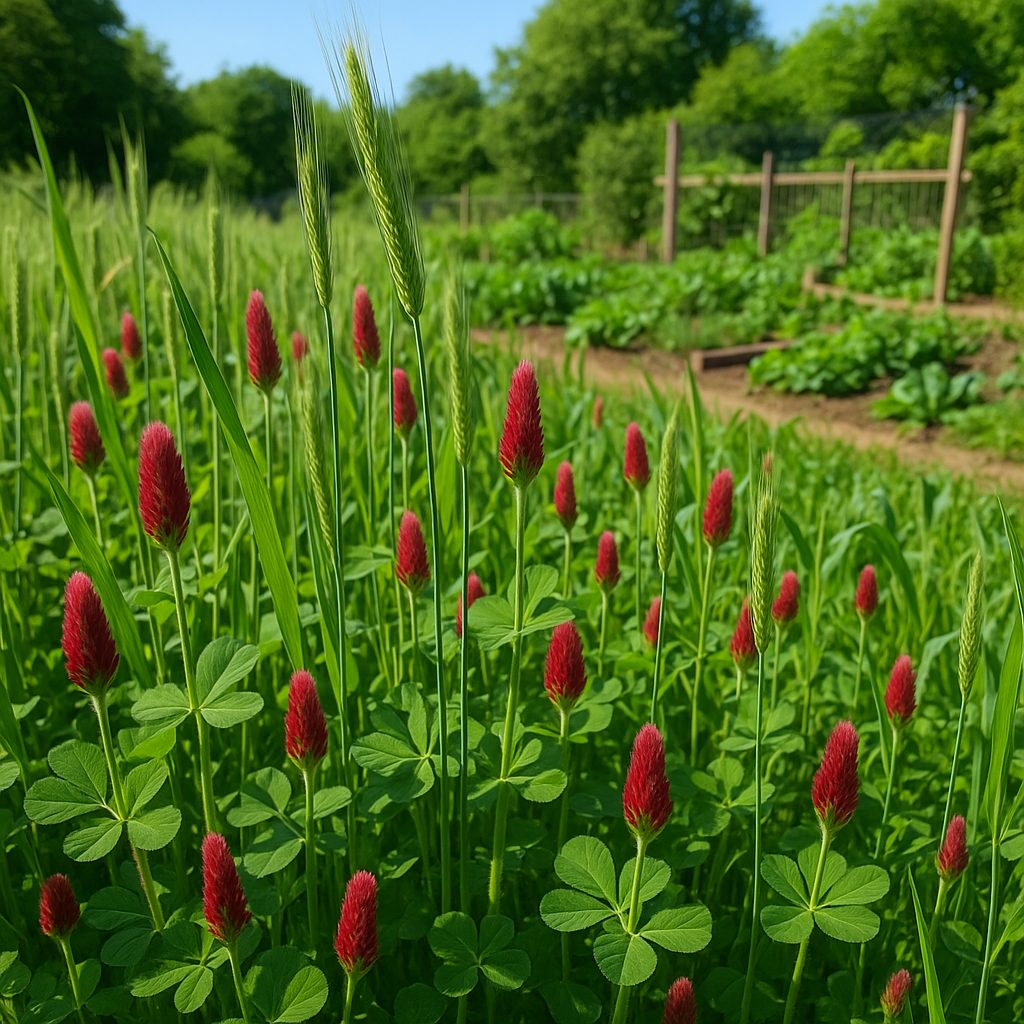
Small action plan: for a rotation, combine a legume (clover) then a grass (rye) to combine nitrogen and soil structure.
Compost tea and plant infusions: liquid solutions for a quick effect
Compost “tea” — aerated infusion of compost in water — spreads beneficial microorganisms and soluble nutrients. Nettle infusion is more of a nitrogen-rich appetizer and foliar stimulant. Common use: spray diluted (10–20%) during active growth periods. Caution: fermented extracts are very concentrated and can cause burns if not diluted.
Responsible use: test on a leaf before treating the entire vegetable garden, especially in hot weather.
Wood ash, shells and other mineral amendments
Ash is rich in potash and trace elements, it raises pH (liming effect). Use moderately and preferably after pH analysis. Crushed eggshells provide calcium but mineralize slowly; they are better used on the surface or composted first.
How to choose the right natural fertilizer?
- Soil analysis: pH, major elements, organic matter. Without this basis, you work blindly.
- Type of crop: leafy vegetables require more nitrogen, roots prefer loose soil and slightly less nitrogen.
- Work rhythm: if you lack time, a good annual compost compensates for many absences.
- Local resources: manure, fallen leaves, mulching — adapt according to what you can collect.
Quick comparison table (effect, speed, cost)
| Fertilizer | Main effect | Speed of action | Cost |
|---|---|---|---|
| Compost | Improves structure & slow nutrition | Slow | Low (if homemade) |
| Manure | Prolonged NPK supply | Moderate | Variable |
| Green manures | Nitrogen fixation, soil protection | Progressive | Low |
| Compost tea / infusion | Microbial & foliar stimulation | Fast | Very low |
| Ash | Potash, pH correction | Fast | Very low |
Good Practices and Common Mistakes
A natural fertilizer used improperly can be harmful: excess nitrogen causes lush leaves but poor fruits; unripe manure attracts flies and can burn. Follow these simple rules:
- Do not spread fresh manure just before harvest.
- Dilute infusions and teas and avoid spraying in full sun.
- Balance carbon/nitrogen: carbon-rich inputs (straw, leaves) promote good compost stability.
- Alternate rich amendments and mulching to retain moisture.
Practical Examples: Action Plans According to Your Needs
Beginner Vegetable Garden, Little Time
Apply 5–7 cm of compost over the entire surface in autumn, lightly incorporate in spring. Permanent mulching between rows. Sow a short green manure if you leave a plot fallow.
Tomato-Loving Vegetable Garden
Before planting: mix compost and a bit of well-decomposed manure at the bottom of each hole. During the season: apply compost tea every 3–4 weeks to stimulate roots and flowering.
FAQ
Can homemade compost be used for all plants?
Yes, provided it is mature. Young or sensitive plants will appreciate a sifted compost integrated in small quantities rather than a very rich and recent compost.
How often should manure be spread?
An application every 2–3 years is often sufficient to maintain fertility, alternating with annual compost and green manures.
Does nettle manure attract insects?
No, but it can temporarily change the smell of leaves. Use it diluted and avoid spraying late in the day to limit the odor.
How to naturally correct overly acidic soil?
Apply horticultural lime sparingly after analysis, or favor well-matured compost and small doses of ashes. The change is measured over several seasons.
Practical Summary for the Year
- Autumn: apply compost and composted manure, sow green manures.
- Winter: mulching and soil rest, pH adjustment if necessary.
- Spring: light incorporation of compost, preparation of planting holes.
- Summer: occasional spraying of compost tea, mulching to maintain moisture.
{
“@context”: “https://schema.org”,
“@type”: “WebPage”,
“about”: {
“@type”: “Thing”,
“name”: “natural fertilizers for vegetable garden”
},
“keywords”: [“organic fertilizers”, “compost”, “manure”, “compost tea”, “green manures”]
}