
Sommaire
Planting strawberries in pots transforms a balcony, terrace, or windowsill into a mini-orchard. It’s not complicated: with the right container, suitable substrate, and a few simple steps, you’ll go from flowering to sweet berries in a few weeks. This guide details each step, from choosing the variety to maintaining production over several seasons, including practical solutions to common problems.
In Brief
🍓 Suitable varieties: favor everbearing or wild strawberries for pots — they offer yield and compactness.
🧴 Optimal container: pot with 20–30 cm depth, good drainage, and breathable material to avoid root suffocation.
🌱 Rich but draining substrate: universal potting soil, mature compost, and perlite or coconut coir for air and water retention.
💧 Watering and exposure: full sun 6–8 hours/day and regular watering — monitor substrate moisture rather than the calendar.
1. Choosing the Right Variety
Not all strawberries are equal when gardening in pots. There are three main categories: June-bearing (a large harvest in June), everbearing (several waves of fruit), and alpine (smaller but flavorful). For limited spaces, everbearing and compact varieties are best: they produce over a long period and take up little space. If you prioritize flavor above all, add one or two alpine plants to the mix.
2. The Ideal Container
The pot does more than display the plant: it conditions roots, moisture, and exposure. A pot that is too small restricts root development and reduces the harvest; a pot that is too large can cause problematic stagnant moisture.
Dimensions and Capacity
For a single plant, aim for 20–25 cm in diameter and 20–30 cm deep. If you want to group 3 to 4 plants in a trough, choose a trough 40–60 cm long. The volume of substrate matters: 5–10 liters per plant is a good guideline.
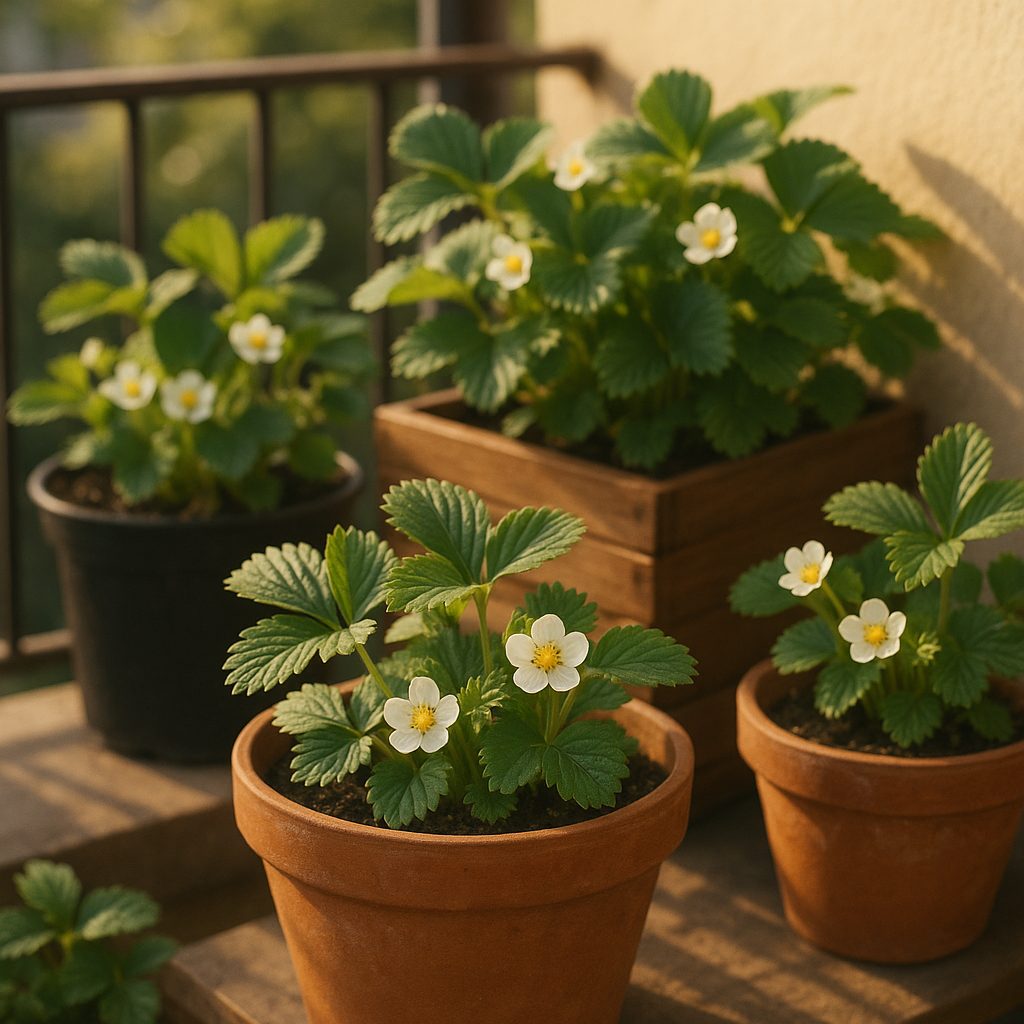
Materials
Terracotta regulates moisture and stays cool in summer but dries out faster. Plastic retains water and lightens handling. Wooden troughs insulate better in summer and winter. Choose according to your microclimate: terracotta for humid areas, plastic or wood for very sunny exposure.
3. Soil and Substrate: Recipe and pH
The substrate is the plant’s engine. The idea is simple: provide soil rich in nutrients but sufficiently aerated to avoid rot.
- Base: quality potting soil (not depleted).
- Amendment: mature compost or well-decomposed manure (20–30%).
- Aeration: perlite, vermiculite, or coconut fiber (10–20%).
- Target pH: between 5.5 and 6.5.
| Component | Proportion | Role |
|---|---|---|
| Potting soil | 50–60% | Structure, nutrient reserve |
| Compost | 20–30% | Supply of nutrients |
| Perlite / coconut | 10–20% | Drainage, aeration |
4. Step-by-step planting
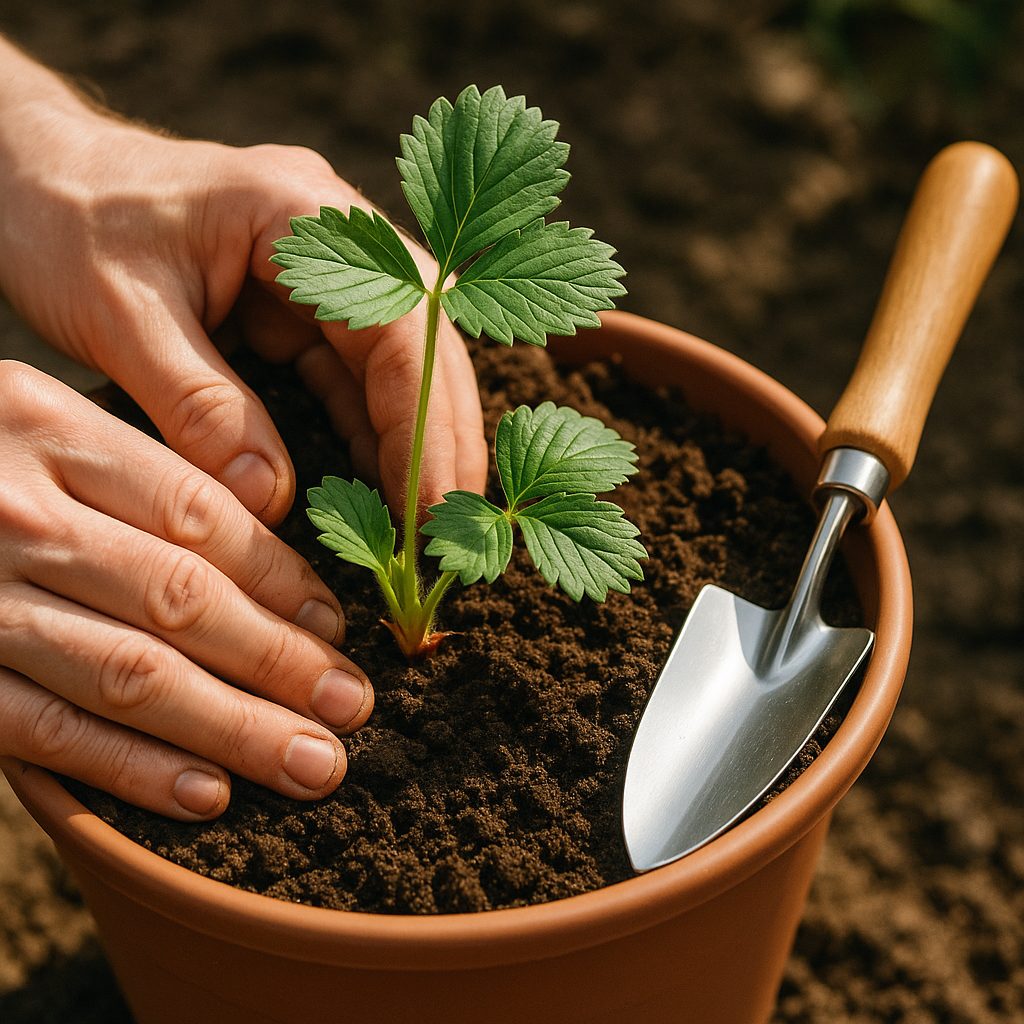
Planting a strawberry in a pot simply requires respecting the positioning of the crown (starting point of the leaves): it must remain at soil level, neither buried nor too exposed.
- Fill the pot to 2/3, lightly tamp down.
- Place the root ball in the center; fill with substrate while keeping the crown flush with the surface.
- Water generously to ensure substrate-root contact.
- Light mulching (fine straw, coconut fibers) retains moisture and protects the fruits from contact with the soil.
5. Exposure and watering
Exposure
Strawberries require 6 to 8 hours of sunlight daily to develop sugar and flavor. An east-west or south exposure works well. In partial shade, the plant survives but produces less and the fruits are less sweet.
Watering
Water when the surface layer of the substrate begins to dry: a dry finger of soil is a good indicator. Pots heat up quickly in the sun; favor watering in the morning to reduce evaporation and limit the risk of fungal diseases. Avoid splashing on leaves and fruits — drip irrigation or watering at the base remain preferable.
6. Routine maintenance
A little maintenance is better than a big emergency cleanup. Light fertilization every 4–6 weeks, removal of diseased leaves, and control of runners keep the plant productive.
- Fertilize with a balanced fertilizer (NPK 10-10-10) or a diluted organic fertilizer.
- Remove runners if you want to concentrate energy on fruit production.
- Replace the substrate every 2–3 years to avoid depletion and disease buildup.
Pruning and managing runners
Runners (the “babies”) are useful if you want to multiply your plants. To maximize harvest, eliminate most runners the first year: they drain energy. Leave one or two if you want to obtain new plants for the following year.
7. Harvest and tips to improve yield
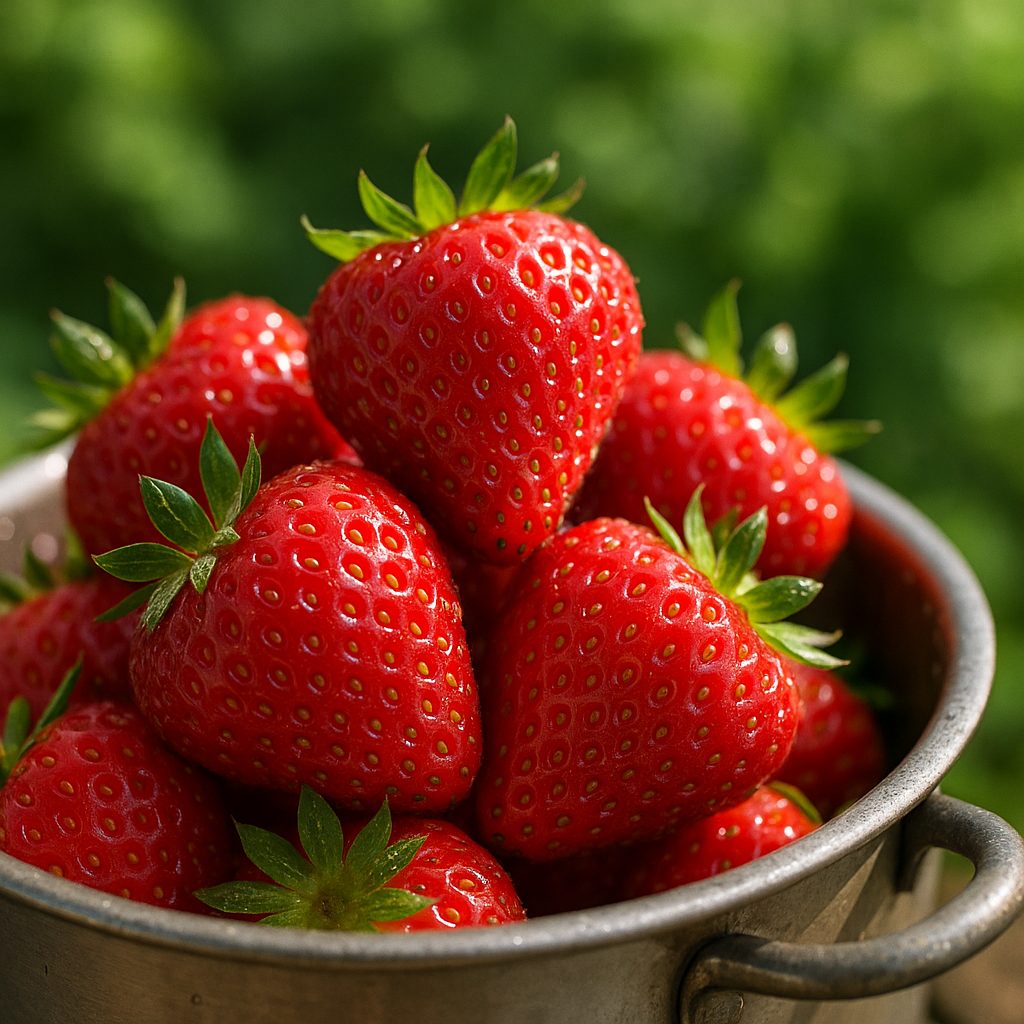
Pick strawberries at full ripeness: they must be evenly colored and slightly soft. Morning harvest preserves freshness and firmness. To increase yield:
- Test several varieties to stagger the harvest.
- Encourage pollination by attracting bees (companion flowers like borage).
- Protect with a fine net against birds as soon as fruits appear.
8. Common problems and practical solutions
Slugs, botrytis, powdery mildew, suffocated roots: most problems come from excess moisture, poor air circulation, or poor substrate.
| Problem | Symptom | Solution |
|---|---|---|
| Slugs | Gnawed fruits, holes in leaves | Beer traps, ash barriers, manual collection |
| Botrytis (gray mold) | Wet fruits, gray fuzz | Reduce humidity, remove affected fruits, improve air circulation |
| Aphids | Crumpled leaves, honeydew | Strong water jet, diluted black soap, beneficial insects (ladybugs) |
9. Wintering and Repotting
In temperate climates, strawberry plants withstand the cold but are more vulnerable in pots. For winter, place the pots against a sheltered wall, reduce watering, and protect the surface with thick mulch. The following spring, renew 20–30% of the substrate or repot completely if the pot is small and the substrate depleted.
FAQ
When to plant strawberries in pots?
In spring after the last frosts for seedlings, or in autumn in mild regions. In pots, flexibility is an advantage: you can adjust the location and more easily protect young plants.
How long before the first harvest?
Depending on the variety and planting season, expect 6–12 weeks if you plant in spring. Everbearing varieties can produce from the first year and offer staggered harvests.
Can strawberries be left in pots for several years?
Yes, but change the substrate every 2–3 years and divide clumps if necessary. Vigor naturally decreases; renewal improves overall health and production.
How to prevent fruits from touching the soil?
Place a clean mulch (fine straw, plastic grid) to prevent direct contact and reduce the risk of rot. Hanging pots or pocket planters are also an excellent option.
{
“@context”: “https://schema.org”,
“@type”: “WebPage”,
“about”: {
“@type”: “Thing”,
“name”: “strawberry cultivation in pots”
},
“keywords”: [“strawberries in pots”, “substrate”, “watering”, “variety”, “repotting”]
}