
Sommaire
A lock that refuses to obey quickly puts you in an uncomfortable situation: blocked door, partially broken key, inability to enter or exit. Before panicking or forcing it at the risk of worsening the situation, there is a series of simple, safe, and often quick interventions to implement. This guide explains how to diagnose the cause of a jammed lock, which methods to try depending on the symptom, and when to entrust the job to a professional to avoid heavier costs.
In brief
🔧 Quick diagnosis: Identify if the problem comes from the key (wear, deformation), the cylinder (dirt, freezing, broken components), or the strike plate/door alignment. A precise diagnosis avoids applying the right actions in the wrong place.
🛠️ Effective immediate actions: Lubricate with an appropriate product (graphite or silicone spray), try to maneuver the key without forcing, and test opening from the other side can resolve most blockages.
🔍 Serious signs: Broken key in the cylinder, torn metal parts, door deformation — here, the intervention of a locksmith is often more economical than the damage caused by a clumsy attempt.
♻️ Prevention: Lightly grease the lock once a year, avoid bent keys, and replace a monstrously worn key to significantly reduce the risk of jamming.
Why does a lock jam?
Lock blockage generally results from an imbalance between the key, the internal mechanism, and the door structure. Sometimes the reason is trivial — dust or freezing — other times it masks a deeper mechanical problem: worn pins, tired springs, or an unsuitable key profile. Exterior doors undergo temperature and humidity variations that cause wood swelling or slight frame displacement, compromising alignment between the strike plate and the latch. Conversely, old locks accumulate micro-debris that increase internal friction and eventually block the drum.
Recommended materials and tools
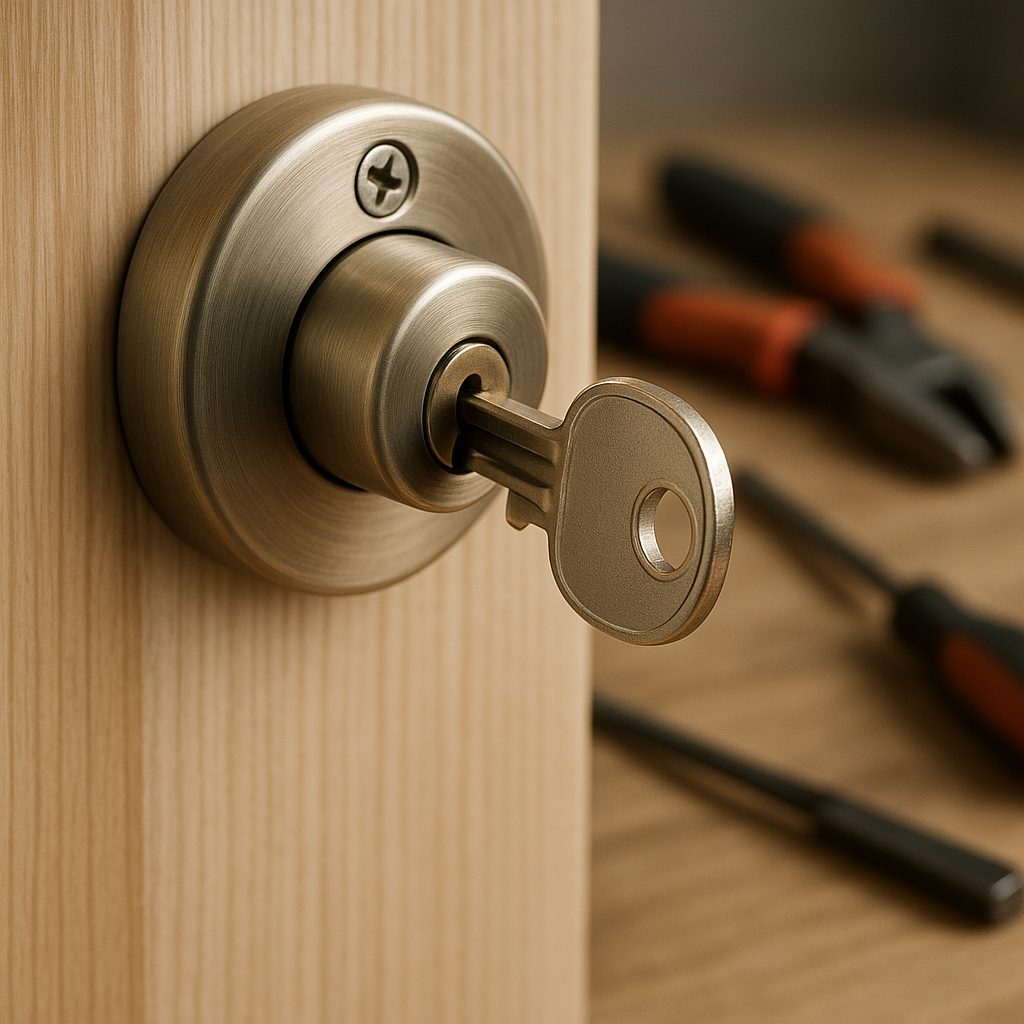
Before intervening, gather some simple but suitable tools. No need to buy a complete arsenal: a minimal kit suffices in most cases.
- Lubricant spray: powdered graphite or silicone spray (avoid white oil or oily lubricants that attract dust).
- Key extractor: small tool to remove a broken key.
- Fine pliers and fine screwdriver: to handle or disassemble covers.
- Headlamp: contrast and viewing angle help diagnose internal roughness.
- Spare keys: always test with a secondary, less worn key.
Diagnostic steps: how to locate the problem
Don’t rush. Start by observing and listening: does the key turn partially? Is there a metallic squeak, a clear blockage, or excessive play? Try the spare key to isolate whether the key is the source of the problem. Often, a clicking noise followed by progressive resistance indicates dirty pins. If the key does not fully enter, inspect the slot and the groove for debris or foreign objects. If the blockage appears only at certain key positions, an internal component is probably damaged.
Test the door alignment
A misaligned door can make any lock “stuck” by preventing the bolt from properly entering the strike plate. Open the door, close it gently while observing how the bolt engages the strike plate. Visible rubbing, catching, or localized resistance indicates a problem with play or hinges. Sometimes, tightening a hinge or adjusting the strike plate is enough to resolve the blockage.
Repair methods according to the symptom
Each symptom calls for a precise response. Here are the most frequent interventions, described step by step, to avoid breaking what still works.
1. Dirty or stuck lock
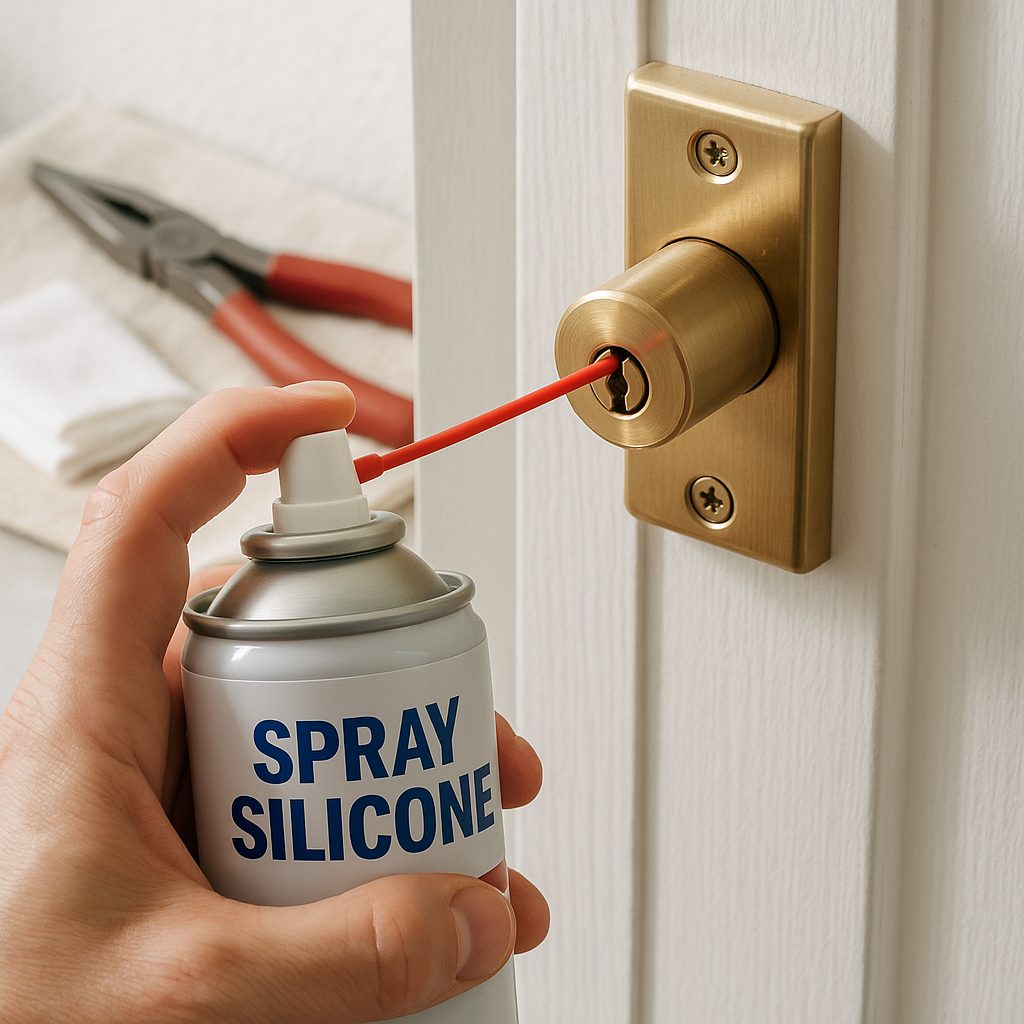
If the key turns with difficulty but without breaking, lubrication is the first reflex. Insert a few sprays of silicone spray or graphite powder into the cylinder, then turn the key several times to distribute the lubricant. The nuance here: graphite is dry and does not stick, so it is ideal for an internal lock; silicone is excellent for plastic components or combined mechanisms. Mineral oil or WD-40 can help temporarily but attract dust in the long term.
2. Bent or worn key
A worn key skips the notches and causes poor contact with the pins. Systematically test with a new key or a freshly cut copy. If the key is slightly bent, straighten it carefully: risk of breakage if the metal is fatigued. In case of pronounced wear, have a new key cut rather than machining the cylinder.

3. Broken key in the cylinder
A broken key is a classic problem. Do not force a partially stuck key: you risk pushing the fragment further in. First use a key extractor (hook tool) to catch the broken portion. If the extractor fails, apply a drop of lubricant to reduce adhesion then try again. As a last resort, disassembling the cylinder or controlled drilling by a professional may be necessary; this avoids damaging the door or trim.
4. Broken internal components or seized cylinder
When the internal mechanism is damaged (broken springs, crumbled pins), lubrication is no longer sufficient. Disassembling the cylinder allows identification of parts to replace: springs, pins, or sometimes the entire barrel. If you are unsure of the procedure, it is better to stop and call a locksmith. Poorly conducted disassembly can lead to the need to replace the entire lock, which costs more than professional repair.
Practical Table: Estimated Costs and Time
| Problem | Typical Solution | Estimated Time | Indicative Cost |
|---|---|---|---|
| Dirty lock | Lubrication (graphite/silicone) | 10–20 min | Materials: 5–15 € |
| Broken key | Extraction, possible disassembly | 30–90 min | 50–120 € (depending on complexity) |
| Damaged internal components | Replacement of the cylinder or repair | 30–120 min | 80–250 € (depending on lock) |
When to Call a Locksmith?
Certain signs should immediately direct you to a professional: key definitely stuck despite extractions, visible broken parts, old high-security lock, or any blockage causing fear of damaging the door. An experienced locksmith can not only unlock without damage but also offer a lasting solution (cylinder replacement, anti-picking, alignment improvement). Keep in mind that the cost of professional intervention should be weighed against the risk of worsening the situation by an improvised action.
Prevention to Avoid Future Breakdowns
Prevention is simple and effective: annual lubrication, use of keys in good condition, avoid adding heavy keychains that strain the barrel. Also check the door alignment after humid seasons: a maintenance log where lubrication and key change dates are noted can save you from unexpected breakdowns. Finally, opt for quality cylinders if you replace a lock — an investment that pays off over time.
FAQ
Can I use cooking oil to lubricate a lock?
No. Food oils oxidize and create sticky residues that attract dust. Prefer graphite or silicone, specially designed for locks.
What to do if the key turns but the door does not open?
Check the alignment of the latch with the strike plate, test the lock from the other side, and inspect the handle. If the alignment is good and the mechanism turns without properly actuating the latch, an internal component is probably defective.
Is it dangerous to drill a cylinder myself?
Drilling a cylinder without experience can destroy the lock and damage the door. It is a last-resort technique reserved for professionals when extraction becomes impossible.
How long does a standard lock last without maintenance?
Duration varies, but without maintenance, a regularly used lock may show signs of wear after 5 to 10 years. Minimal maintenance extends its life by several years.
{
“@context”: “https://schema.org”,
“@type”: “WebPage”,
“about”: {
“@type”: “Thing”,
“name”: “Stuck Lock Repair”
},
“keywords”: [“stuck lock”, “lock lubrication”, “key extraction”, “locksmith repair”, “locksmith”]
}