
Sommaire
Transforming a bare wall into a living element completely changes the atmosphere of a garden or balcony. Depending on the desired effect — dense curtain, generous flowering, fragrance, or total camouflage — certain climbing plants stand out. Here, we review the most reliable choices, clarify the technical constraints (fixings, exposure, support), and provide concrete advice for planting, guiding, and maintaining your greened wall in the long term.
In brief
🌷 Ivy: ideal for a dense and persistent covering, **shade tolerant**, low maintenance once established.
🌸 Clematis and climbing rose: perfect for **flowering** and color, require a **solid support** and regular pruning.
🌹 Wisteria: spectacular when well framed, demands **patience** and a sturdy framework.
🔧 Practical tip: install **metal trellises** or stainless steel cables, plan access for pruning and watering.
How to choose the right climbing plant
Before buying, start by observing the wall: orientation, height, material, and access. A south-facing wall will support more delicate varieties better than one facing north. The support — bricks, concrete, wood — also dictates the hanging technique: some plants cling by themselves thanks to hooks or adhesive roots, others require a trellis or wires to climb.
Criteria to consider
- Exposure: direct sun, partial shade, or almost permanent shade.
- Height and spread: some species can reach 10 m, others remain modest.
- Maintenance: annual pruning, sharpening supports, fertilization.
- Impact on the building: avoid plants that insert themselves into fragile joints or damage coatings.
- Desired effect: dense screen, seasonal flowering, fragrance, or simple veiling.
Top 7 recommended climbing plants
Here is a selection that covers most needs: persistent covering, flowering, fragrance, or rapid growth. For each plant, I detail the ideal use and points of attention.
Ivy (Hedera helix)

Ivy is the simplest solution for a screen throughout the year. It tolerates shade very well and clings by itself thanks to its adhesive roots. It is excellent for masking an ugly facade or wall, but beware: on some old structures, its roots can infiltrate weakened joints. In the city, it captures dust and improves the air quality around the wall.
Clematis (Clematis)
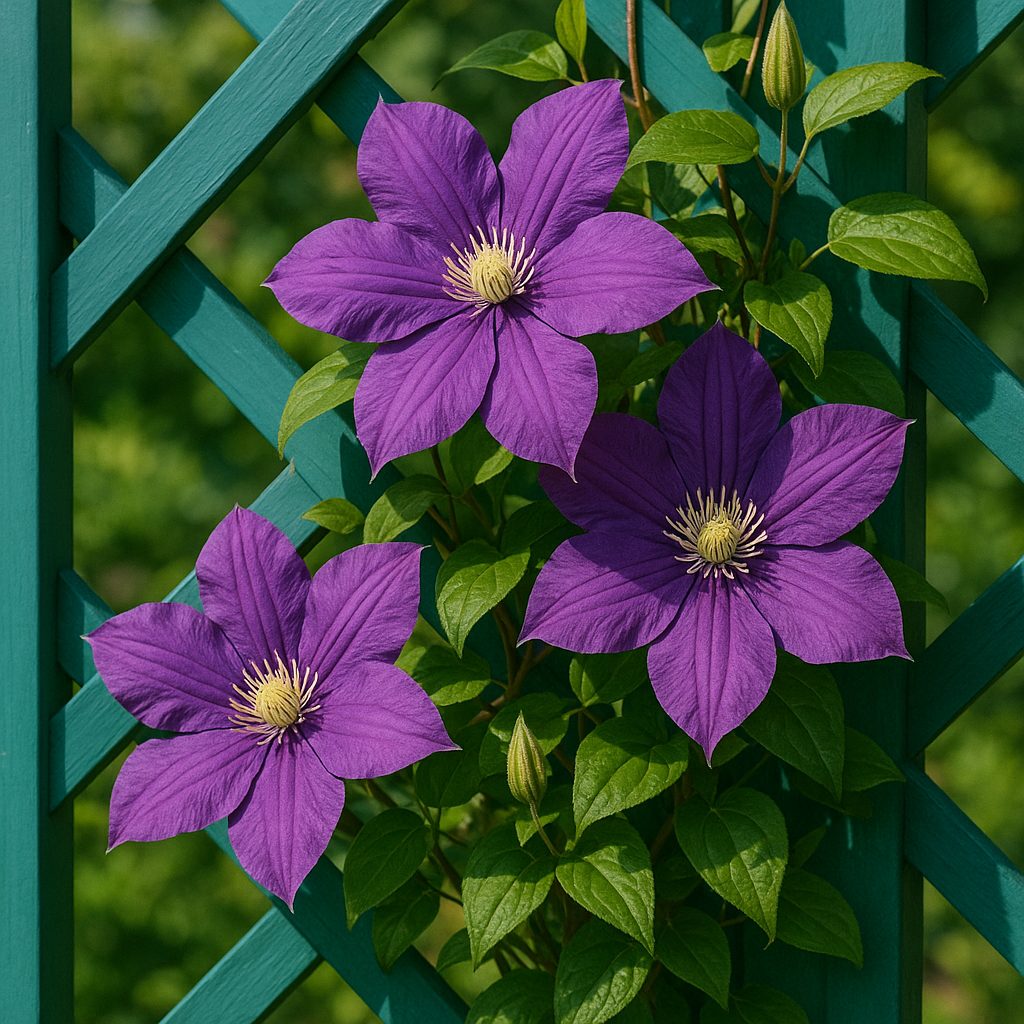
The clematis offers generous flowering and very varied colors. It likes to have its roots cool (mulching recommended) and its head in the sun; plant a low shrub or install mineral mulch to keep the base tempered. Choose the variety according to the flowering period: some bloom in spring, others in summer, which allows for spreading out the spectacular effect.
Wisteria (Wisteria)
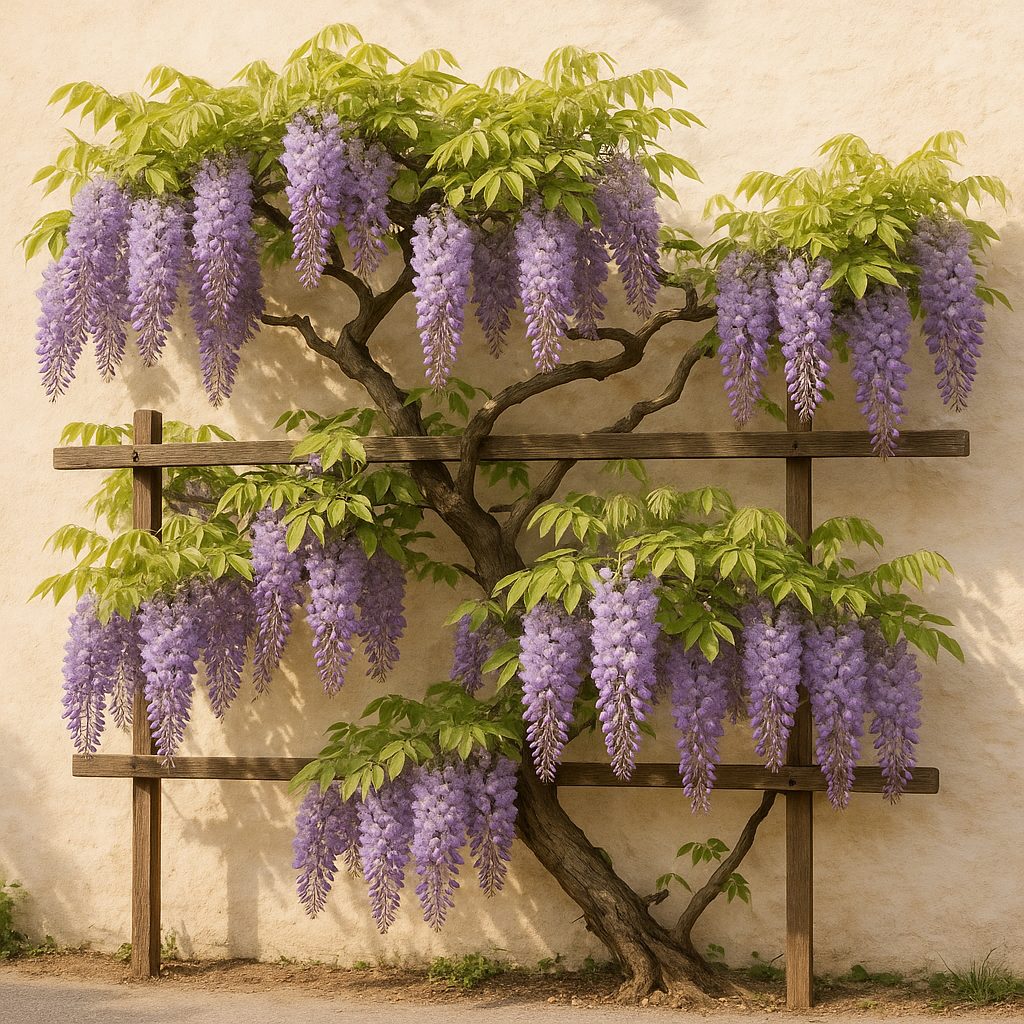
Wisteria is a show all by itself: hanging clusters, strong fragrance, and vigorous growth. It requires a sturdy structure — beams or steel trellis — because its branches thicken and can become very heavy. Plan for strict pruning: without it, flowering will be disorderly and the plant may invade adjacent supports.
Climbing Rose
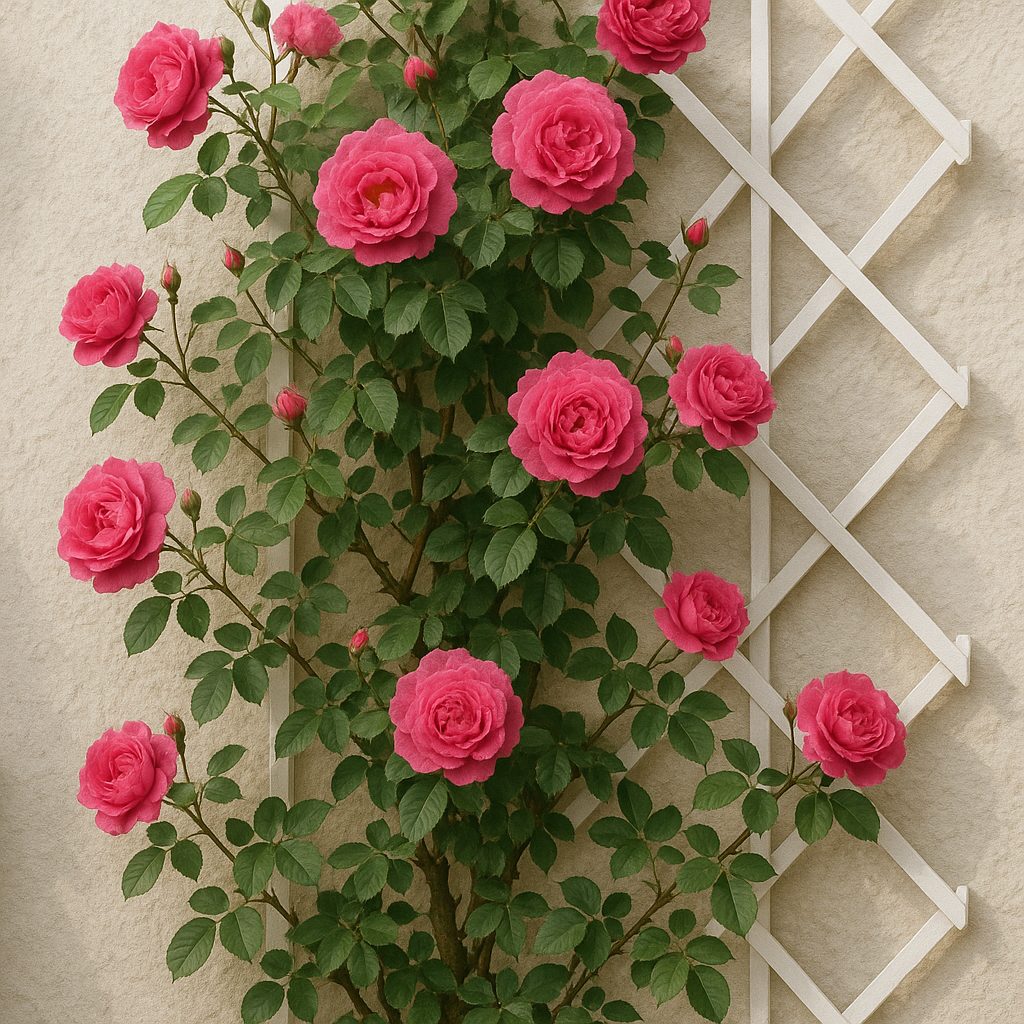
Climbing roses guarantee a fragrant and colorful wall. They require regular watering, well-drained but rich soil, and pruning to control their spread. Modern roses can be relatively disease-resistant, but choose varieties adapted to the local climate to limit treatments.
Honeysuckle (Lonicera)
Honeysuckle combines flowering and fragrance, highly appreciated near windows or passageways. It is a fast-growing climbing plant that adapts to different soils, but it can become invasive if allowed to grow without guidance.
Virginia Creeper (Parthenocissus)
Virginia creeper transforms the wall into a seasonal tableau: it adheres on its own and offers a red spectacle in autumn. Excellent for free planting, it is less suitable if you want to preserve moisture rises on an old wall, as it can maintain moisture in direct contact with the joints.
Quick Comparison Table
| Plant | Appearance | Exposure | Maintenance | Recommended Use |
|---|---|---|---|---|
| Ivy | Evergreen, dense | Shade to partial shade | Low | Screening, cover |
| Clematis | Colorful flowering | Sun to partial shade | Medium (mulching) | Trellis, pergola |
| Wisteria | Spectacular flowering | Full sun | High (pruning) | Large facade, pergola |
| Climbing rose | Flowers & fragrance | Sun | Medium to high | Exposed walls, entrance |
| Virginia creeper | Decorative foliage | All exposures | Low | Seasonal effect |
Installation and Maintenance Techniques
Planting a plant is not just digging a hole. You need to prepare the soil, choose the right support, and anticipate the future: the plant will grow, weigh, and sometimes press on the structures. Here are some proven best practices.
Prepare the Wall and Support
- Assess the solidity: for wisteria or a rose, reinforce the framework before planting.
- Favor non-permanent fixings on fragile facings: tensioned cables with cleats rather than permanent sealings.
- If the wall is old, consult a professional to avoid damaging the joints.
Planting and Initial Care
- Plant at the right time: autumn for good rooting, spring if you miss the season.
- Amendments: mix mature compost and soil, especially for roses and clematis which like richness.
- Watering: regular during the first year, then adapted to the species and climate.
Pruning and Training
Learn to prune the chosen plant according to its type: wisteria in summer to limit the branches, clematis according to its flowering groups, rose after the main bloom. Use soft ties to guide the stems without damaging them.
Common Mistakes to Avoid
It is often thought that a wall is enough to contain growth; in reality, a poor choice or lack of maintenance quickly turns a good intention into a problem: invasive plants, broken supports, or asymmetrical growth. Avoid planting invasive species without root barriers, do not let branches insert into cracks, and do not ignore annual pruning.
Examples of Relevant Combinations
Pairing a clematis with a climbing rose often gives excellent results: the rose provides volume and structure, the clematis fills the spaces with delicate flowers. For seasonal contrast, combine Virginia creeper (autumn foliage) with evergreen ivy.
FAQ
Which plant for a north-facing wall?
Ivy and certain varieties of clematis tolerate shade well. Virginia creeper also does quite well.Should humidity be feared with climbing plants?
If the wall is already damp, favor species that do not worsen the problem (avoid very dense adhesive roots), and improve drainage before planting.How long before a wisteria blooms?
Wisteria can take several years to produce abundant flowering — patience and proper pruning are key.Can a trellis be installed on an old wall?
Yes, with appropriate fixings and avoiding drilling into fragile structural elements; prefer self-supporting systems or light fixings.
Quick Maintenance Tips (Checklist)
- Check the condition of fixings every year and replace worn ties.
- Mulch the base of plants to retain moisture and limit weeds.
- Annual pruning adapted to the species to encourage flowering and limit invasion.
- Apply compost in spring for roses and clematis.
Sources of Inspiration and Practical Application
If you have a small balcony, turn to dwarf clematis and roses suitable for pots. For a large facade, combine trellises, pergolas, and layered planting (climbers + low shrubs). Finally, consider maintenance over five years: what seems appealing at first glance may require a lot of work later.
Detailed FAQ
Can a climbing plant be controlled without pruning?
Some species remain well-behaved, but most benefit from pruning to maintain shape, avoid excessive shading, and encourage flowering. Without pruning, you often get a wild look, sometimes aesthetic, but rarely controlled.
What cost should be expected?
Count the price of plants (variable depending on variety), supports (trellises, stainless steel cables), and possibly labor if height or structure requires a professional. A simple planting can remain affordable, but large installations cost more due to fixing materials.
{
“@context”: “https://schema.org”,
“@type”: “WebPage”,
“about”: {
“@type”: “Thing”,
“name”: “climbing plants for walls”
},
“keywords”: [“climbing plants”, “ivy”, “clematis”, “wisteria”, “rose”]
}