The toilet? Do you really believe it’s the dirtiest place in your home? Big mistake. Microbiological studies reveal an uncomfortable truth: your smartphone contains up to 400 times more bacteria than your toilet seat. Even your kitchen, supposed to be scrupulously clean, hosts microbial colonies rivaling those of sanitary facilities. Before comforting yourself by thinking your toilet is the worst domestic contamination hotspot, explore these 5 truly alarming places teeming with pathogenic germs invisible to the naked eye.
Sommaire
🔬 1. The kitchen sponge: the ultimate bacterial hotspot
You wash your hands, pick up that innocent chick yellow sponge, and wipe your countertop. What you don’t know? Your kitchen sponge contains more bacteria than a kilogram of feces. This scientific claim comes from studies conducted by renowned microbiologists who analyzed thousands of household sponges.
The sponge creates the perfect environment for microbial proliferation: constant moisture, abundant organic matter (food residues), stable ambient temperature. Pathogenic bacteria like E. coli, Salmonella, and Listeria reproduce exponentially there. A quarter cup of wet sponge potentially contains 134 billion bacteria. That’s more bacteria than humans on Earth, concentrated in an object you handle daily with your bare hands.
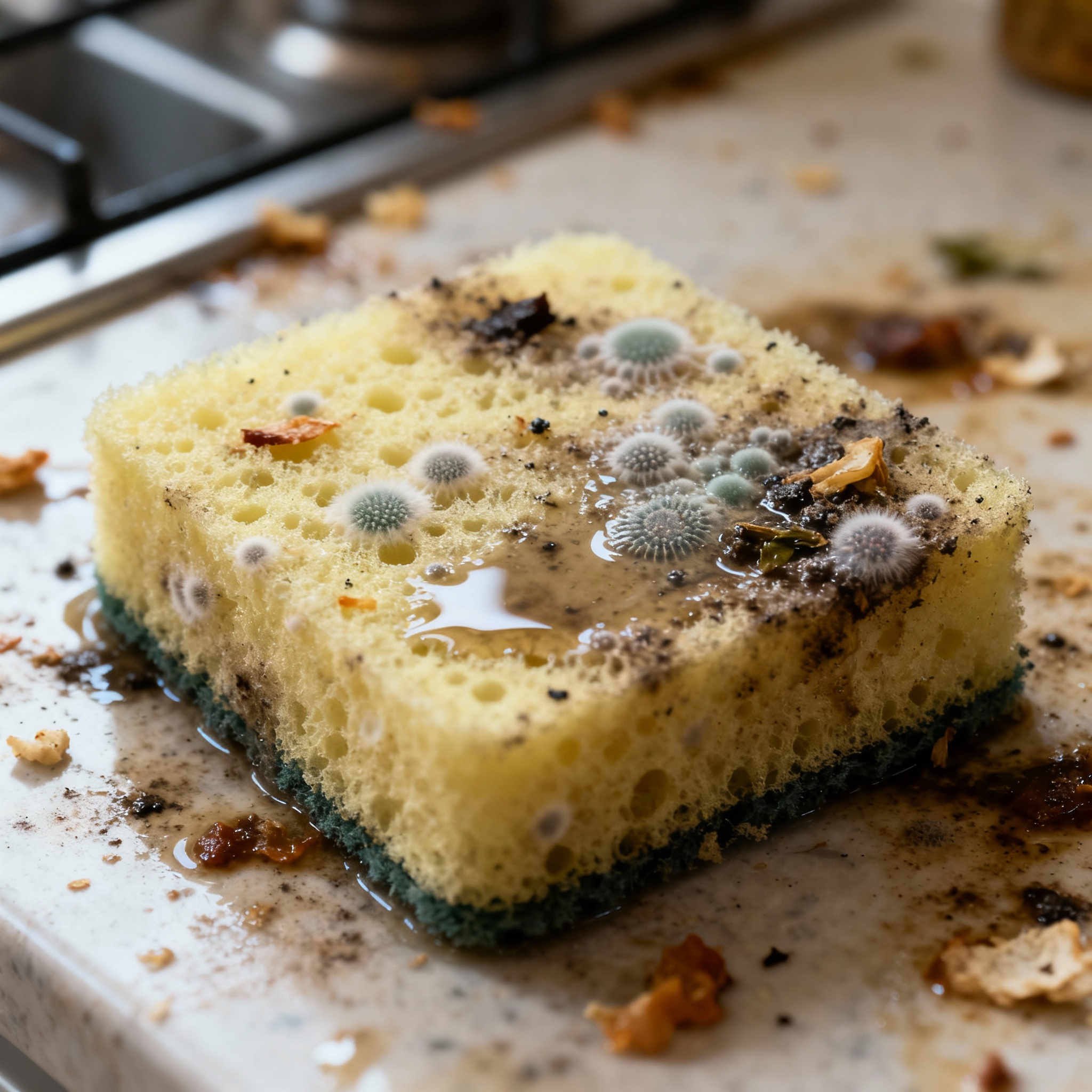
Researchers recommend replacing your sponge every 5-7 days or disinfecting it daily in the microwave (2 minutes at 100% power) or dishwasher (minimum 70°C). Leaving a sponge for more than a week is equivalent to intentionally cultivating a colony of pathogenic fungi in the heart of your kitchen. That’s why this place surpasses the toilet in terms of raw bacterial contamination.
📱 2. Your smartphone: the portable germ nest
Microbiological studies have revealed a mortifying secret: your smartphone harbors 400 times more bacteria than your toilet seat. This object you constantly bring to your face, which you touch between 150 and 300 times a day, accumulates pathogenic germs, viruses, and bacteria at a frightening rate.
Why? Your phone accompanies you everywhere: toilets (yes, 82% of people check their smartphone in the toilet), restaurants, public transport, contaminated door handles. You place it on every surface, rub it against your skin, occasionally share it. The touchscreen, particularly warm and moist after prolonged use, becomes an ideal breeding ground. Bacteria like Staphylococcus aureus (causing severe skin infections), Escherichia coli, and Candida thrive on this miniature surface.
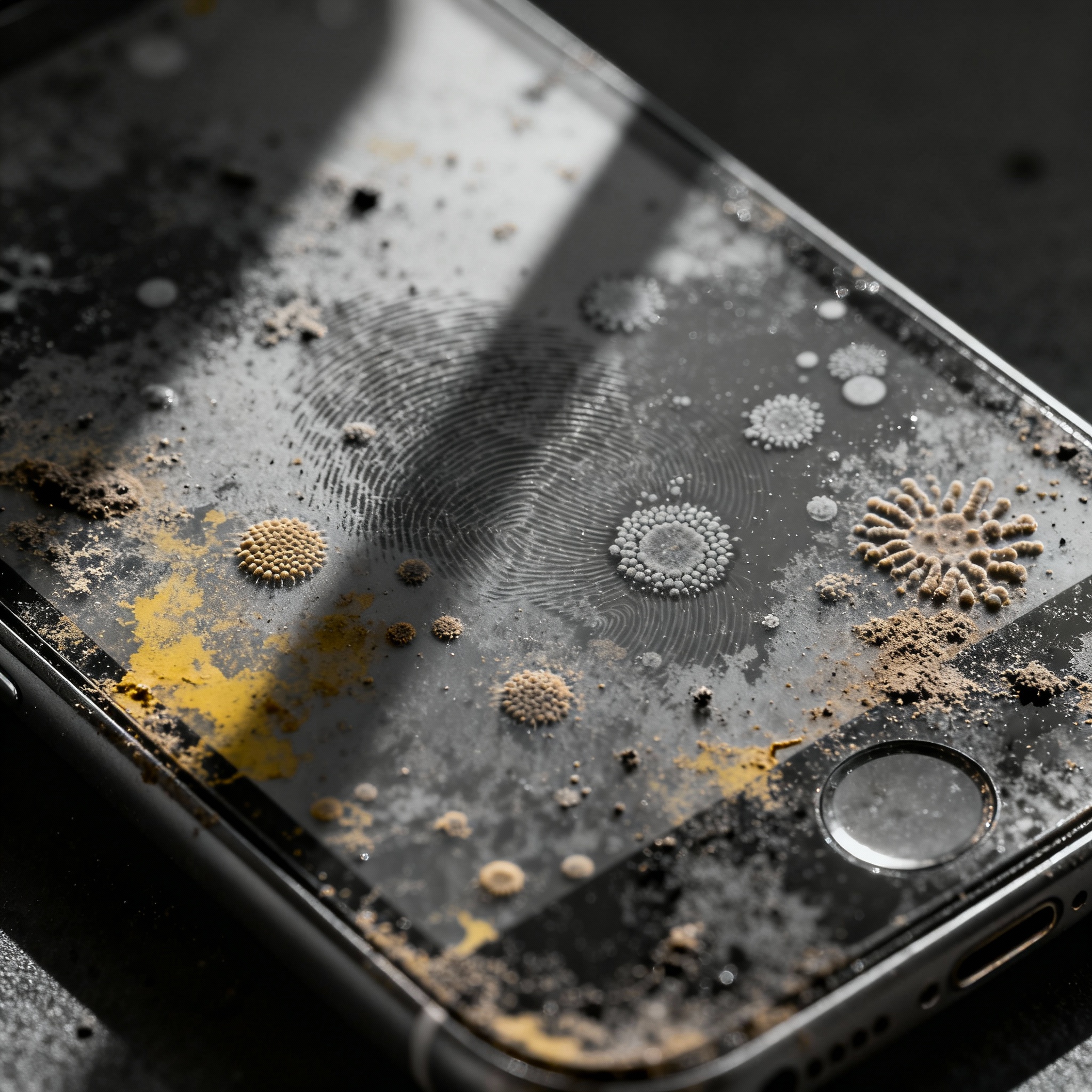
The solution? Clean your phone daily with antibacterial disinfectant wipes or a 70% isopropyl alcohol solution. Never place it directly on the toilet. Avoid touching it and then rubbing your face. Some experts recommend weekly UV decontamination. Your smartphone is literally dirtier than your toilet seat, making it a major transmission vector for domestic diseases.
🍲 3. The cutting board: the silent reservoir of pathogens
Your cutting board? A place that deserves a prime spot in this domestic horror ranking. Cutting boards, especially wooden or worn plastic ones, harbor dangerous pathogenic bacteria. Microscopic cracks accumulate food residues and moisture, creating perfect microhabitats for microbial colonies.
When you cut raw chicken or beef, the blood juice seeps into the board. Salmonella, Campylobacter, and Listeria monocytogenes find perfect conditions for survival and reproduction there. These bacteria can cause severe food poisoning, hemorrhagic diarrhea, septicemia. A single contaminated cutting board can contaminate all foods subsequently prepared on it.
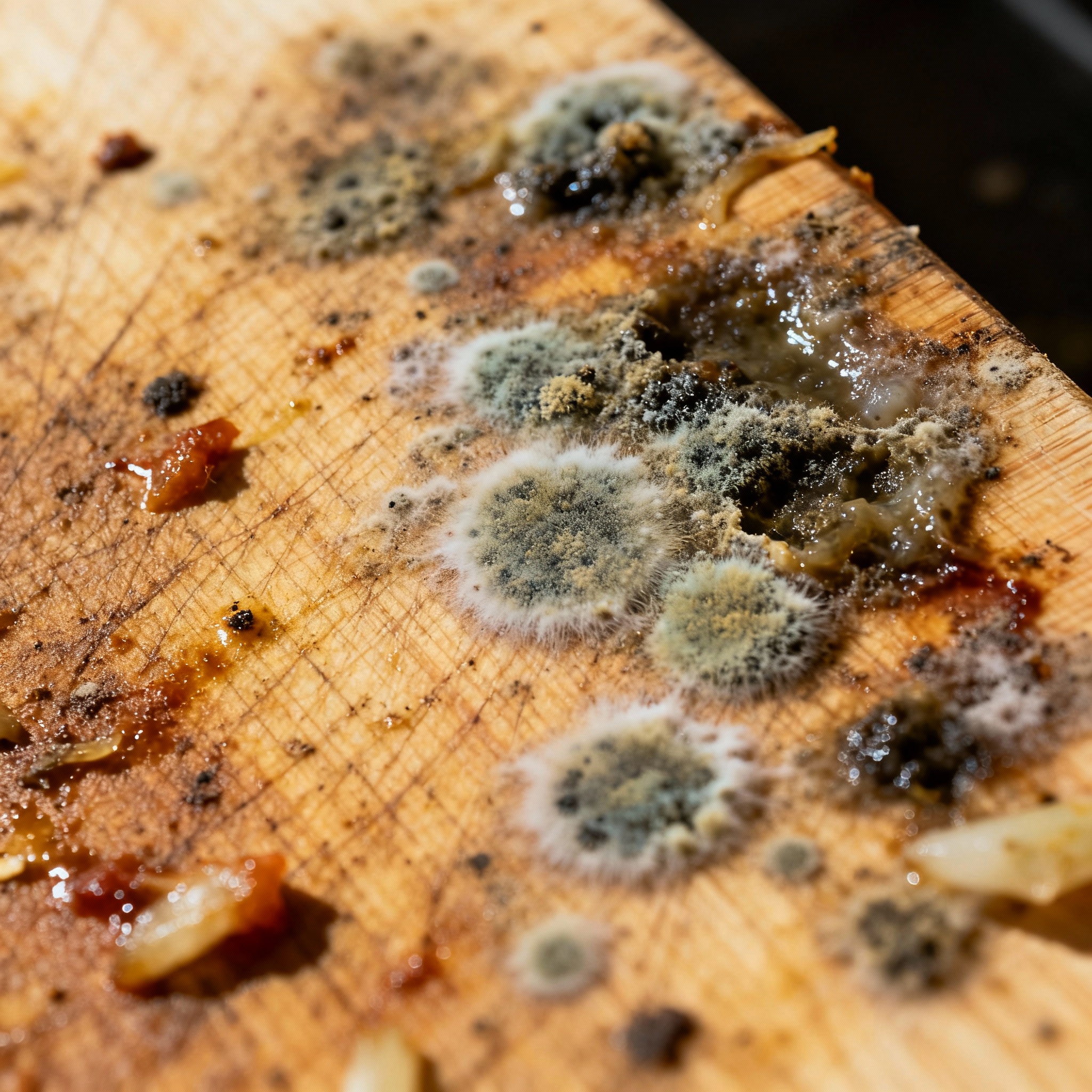
Avoid reusing the same board for raw meats and raw vegetables. Wash it immediately after use with hot soapy water. Disinfect it regularly by boiling (10 minutes) or dishwasher (minimum 70°C). Replace it every 5 years if it shows persistent cracks or discolorations. Your cutting board potentially contains more pathogenic bacteria than your toilet, hence its ranking in this alarming top 5.
📺 4. The remote control: the silent germ transmitter
You grab your TV remote with potentially soiled hands, use it, then your partner takes it without cleaning. That’s guaranteed germ circulation. Remote controls harbor up to 67,000 bacterial cells per cm², rivaling or surpassing toilets in terms of contamination.
Why? Remote controls receive constant handling, dust accumulation, deposits of sweat and body grease. Pressed buttons create tiny spaces where dirt and bacteria accumulate. People use them after eating, without washing them. They practically never get deep cleaning. Moreover, remotes remain at stable ambient temperature, hydrated by body sweat, creating an ideal environment for microbial growth.
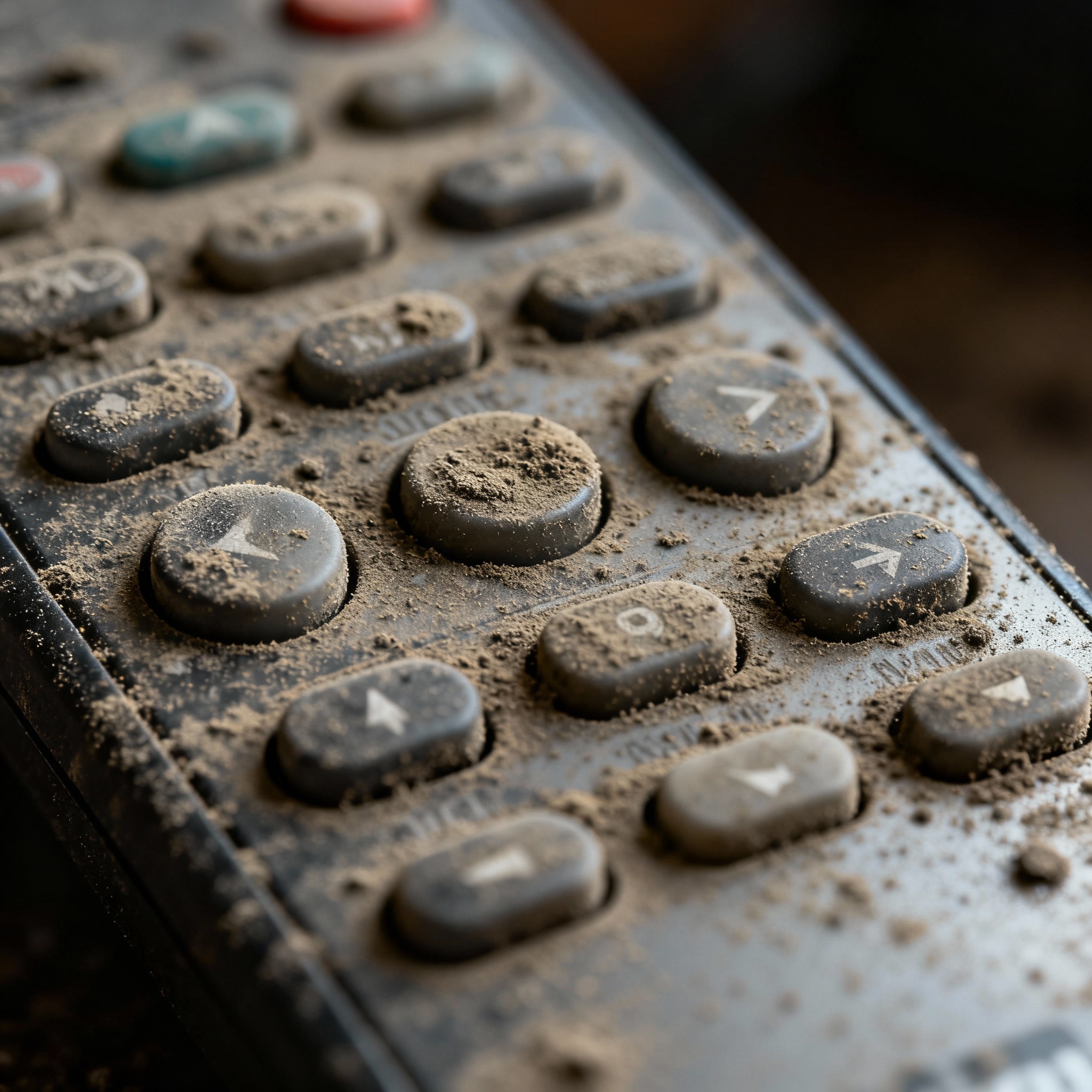
Clean your remote weekly with disinfectant wipes. Use a damp cotton swab to clean between buttons. Avoid eating while using it. Wash your hands after prolonged handling. Establish a family cleaning protocol where everyone cleans the remote after use. Your remote is a staggering bacterial transmission hotspot, far more problematic than your toilets in terms of overall infectious risk.
🚰 5. Sink drains: the empire of mold and bacteria
You pour your meal leftovers into the sink. You think water carries them away? Wrong. Sink drains are the dirtiest place in your kitchen, a universe of molds, anaerobic bacteria, and degrading biofilms. These pipes are simply out of sight, an invisible accumulation of decomposing organic debris.
The inside of drains remains perpetually moist, warm, and nutrient-rich. Molds thrive: Aspergillus, Penicillium, Candida abound. These fungi generate spores you inhale when the pipe vents, or that end up on your skin and hands. Anaerobic bacteria cause rot and fetid odors. A biofilm develops: a protective matrix where millions of microorganisms live in parasitic coexistence.
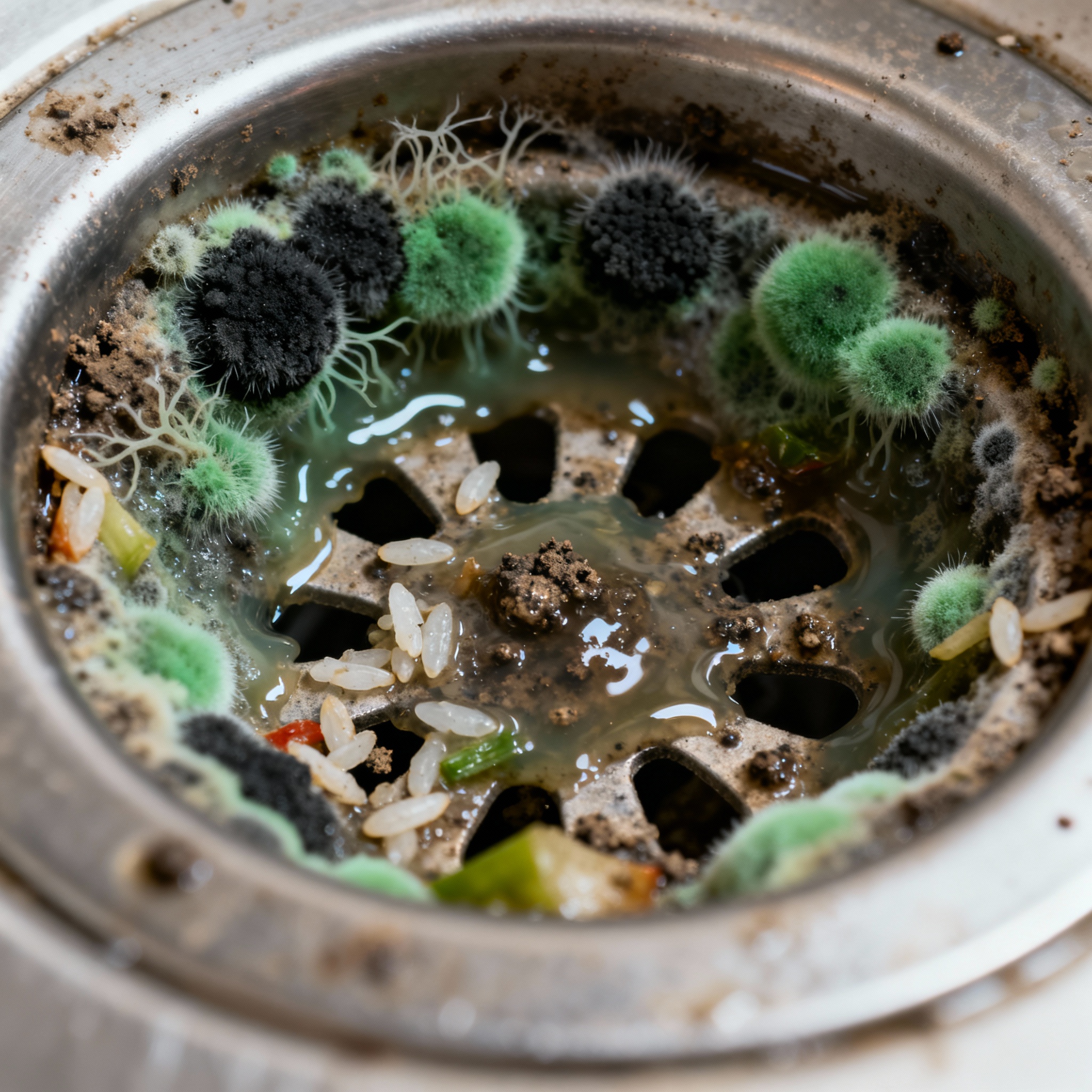
Regularly pour boiling water mixed with white vinegar or baking soda to kill molds. Use enzymatic drain cleaners monthly. Place a debris filter in the sink to limit accumulation. Consider annual professional cleaning. Sink drains contain a massive concentration of pathogenic bacteria and molds far surpassing the bacterial contamination of your toilets.
🧼 Understanding why these places surpass toilets
Toilets receive regular cleaning. You flush, water dilutes fecal matter, disinfectant kills bacteria. You consciously clean this space. In contrast, the kitchen sponge rarely receives deep cleaning, remaining continuously moist. Your smartphone is never cleaned. The remote? Never. The drains? Ignored.
Here lies the major scientific irony: we focus our hygiene phobia on toilets, this regularly disinfected place, while ignoring the true reservoirs of exponential bacterial contamination. Our hygiene attention is focused on the wrong place. The real microbiological dangers hide in everyday objects we handle unconsciously.
Fecal contamination of toilets? Controlled by disinfectants and regular flushing. Contamination of your smartphone? Invisible, constant, inevitable. That’s why these 5 places far surpass toilets in real terms of infectious risk and bacterial proliferation.
📋 Action plan: transform your home into a hygiene fortress
Daily cleaning (5 minutes)
Smartphone: antibacterial wipes after work, before meals, after transport. Remote control: wipe after dinner. Kitchen sponge: thorough rinsing after each use, maximum squeezing. Hands: systematic washing after handling raw food, before eating, after toilet use.
Weekly cleaning (30 minutes)
Sponge: complete replacement or microwave decontamination (2 minutes at 100%). Cutting boards: boiling 10 minutes or dishwasher cycle. Sink drains: pouring boiling water + white vinegar. Remote control: deep cleaning with wipes + cotton swab for buttons. Kitchen surfaces: disinfection with antibacterial spray.
Monthly cleaning (1 hour)
Drains: specialized enzymatic unblocker. Refrigerator: deep cleaning of seals. Small appliances: toaster, coffee maker (mold hotspots). Sink seals: anti-mold treatment with diluted bleach.
Annual cleaning (2-3 hours)
Drains: professional unblocking-disinfection intervention. Appliances: complete maintenance. Replacement of worn cutting boards: every 5 years if degraded. Complete inspection of silicone seals: replacement if persistent mold.
❓ FAQ: Domestic hygiene and bacterial contamination
Is a smartphone really 400 times dirtier than toilets?
Yes. The University of Arizona study demonstrated this statistic. Toilets receive regular disinfection, while smartphones are never systematically cleaned. The bacterial density per cm² on smartphones surpasses that of toilet seats by 400 times.
Is the kitchen sponge really dangerous?
Absolutely. It potentially concentrates 134 billion bacteria per quarter cup. Pathogenic bacteria like E. coli and Salmonella reproduce exponentially there. Replacing the sponge every 5-7 days or disinfecting it daily remains imperative.
What is the best way to disinfect a kitchen sponge?
Microwave for 2 minutes at 100% power (after rinsing with cold water) or dishwasher cycle at minimum 70°C. Both methods kill 99.99% of bacteria. However, replacement remains more effective than disinfection.
Why does my remote control accumulate more bacteria than toilets?
Constant handling, total absence of regular deep cleaning, body moisture, dust accumulation in button crevices. It remains at stable ambient temperature, creating a perfect habitat for bacterial proliferation.
Are molds in sink drains dangerous?
Yes. They generate spores inhaled causing respiratory problems, allergies, asthma. Immunocompromised or asthmatic people risk serious complications. Regular cleaning remains a priority.
How to properly clean a cutting board?
Immediate washing with hot soapy water, weekly boiling for 10 minutes, dishwasher at 70°C, or soaking in white vinegar for 1 hour. Use separate boards for raw meats and raw vegetables to avoid cross-contamination.
Can you really catch a disease from the remote control?
Yes. Staphylococcus aureus, Escherichia coli, and Candida on your remote can transmit infections. If someone sick in the household touches it, then you take it, infection is likely, notably rhinovirus responsible for colds.
How often should I replace my kitchen sponge?
Every 5-7 days. This is the maximum duration before exponential bacterial proliferation. Some experts recommend two sponges in rotation: one in use, the other disinfected daily in the microwave.
📊 Comparative table: bacterial density per cm²
| Place | Bacteria/cm² | Major pathogens | Health risk |
|---|---|---|---|
| Kitchen sponge | 134 billion (1/4 cup) | E. coli, Salmonella, Listeria | Critical |
| Smartphone | 400x > toilets (very high) | Staphylococcus aureus, Candida | Very high |
| Cutting board | 200-500 billion | Campylobacter, Salmonella | Critical |
| Remote control | 67,000 cells/cm² | E. coli, Rhinovirus | Very high |
| Sink drains | Exponential (billions) | Aspergillus, Penicillium, E. coli | Critical |
| Toilet seat | 50-60 bacteria/cm² | Norovirus, Campylobacter | Low (regularly cleaned) |
🎯 Verdict: transform domestic hygiene awareness
Toilets are not your worst hygiene enemy. This is a major awareness that this scientific truth imposes. Your kitchen sponge, your smartphone, your remote control, your sink drains—these places harbor bacterial proliferation far surpassing that of your regularly disinfected toilets.
The irony? We invest disproportionate hygiene energy on toilets, this place receives obsessive cleaning, while we ignore the true daily contamination hotspots. Here lies the major paradox of modern domestic hygiene: our attention focuses on the wrong place.
Start today. Replace your sponge, clean your smartphone, disinfect your remote. Pour boiling water into your drains. Change your habits. You will quickly discover that these 5 simple actions radically transform the hygienic quality of your domestic environment, much more effectively than any obsessive toilet purification.
{ “@context”: “https://schema.org”, “@type”: “Article”, “headline”: “5 places in the house dirtier than the toilet: shocking hygiene revealed”, “description”: “Discover the 5 dirtiest places in your home: kitchen sponge (134 billion bacteria), smartphone (400x more than toilets), cutting board, remote control, drains.”, “keywords”: “dirty places home, dirtier than toilets, domestic hygiene, home bacteria, smartphone germs, kitchen sponge bacteria, dirty remote control, mold drains”, “mainEntity”: { “@type”: “FAQPage”, “mainEntity”: [ { “@type”: “Question”, “name”: “Is a smartphone really 400 times dirtier than toilets?”, “acceptedAnswer”: { “@type”: “Answer”, “text”: “Yes, according to the University of Arizona study. The smartphone harbors 400 times more bacteria than the toilet seat because it never receives systematic cleaning and accumulates germs from all environments.” } }, { “@type”: “Question”, “name”: “How many bacteria does a kitchen sponge contain?”, “acceptedAnswer”: { “@type”: “Answer”, “text”: “A quarter cup of wet sponge potentially contains 134 billion bacteria, more than humans on Earth, including pathogenic E. coli and Salmonella.” } }, { “@type”: “Question”, “name”: “How often should the kitchen sponge be replaced?”, “acceptedAnswer”: { “@type”: “Answer”, “text”: “Every 5-7 days maximum. Beyond that, bacterial proliferation becomes exponential and dangerous for food safety.” } } ] } }“Science reveals that our hygiene phobia focuses on the potentially cleanest place in our home.”
Dr. Charles Gerba, microbiologist at the University of Arizona — Expert in domestic hygiene