Sommaire
A well-maintained wood stove is first and foremost a more efficient appliance, a controlled heating bill, and above all, a significantly reduced risk of fire or poisoning. Yet, sometimes the annual chimney sweep is neglected or ashes are forgotten to be removed, which in the long term harms the performance and durability of the installation. In this article, we detail each maintenance step: from daily cleaning to periodic checks, including the choice of suitable products. Whether you are a seasoned wood fire user or a beginner eager to learn the right habits, you will find precise advice, practical illustrations, and a maintenance schedule to keep your stove in perfect working order.
In Brief
🔥 Daily cleaning: remove ashes as soon as the stove is cold to maintain optimal draft and avoid soot buildup.
✨ Clear glass: a simple water-vinegar mixture and a soft cloth help limit soiling, ensuring a clear view of the fire.
🛠️ Gasket inspection: check the condition of the door and gaskets each season to avoid smoke and heat escaping.
📅 Annual chimney sweep: mandatory in France, it guarantees the safety and efficiency of your installation, with the issuance of a certificate.
Why Maintaining Your Wood Stove Is Essential
Beyond the aesthetic aspect, a poorly maintained wood stove loses efficiency and accumulates creosote deposits, a flammable residue that builds up on the walls of the flue. Creosote increases the risk of chimney fire and can obstruct the draft, causing incomplete combustion. Regular maintenance also preserves indoor air quality: a dirty appliance emits more fine particles, harmful to health.
Risks of Neglect
- Accumulation of soot and creosote, increasing the risk of fire.
- Reduced efficiency, leading to overconsumption of wood and higher costs.
- Emissions of carbon monoxide, toxic and undetectable without an efficient detector.
Key Steps for Optimal Maintenance
1. Regular Ash Cleaning
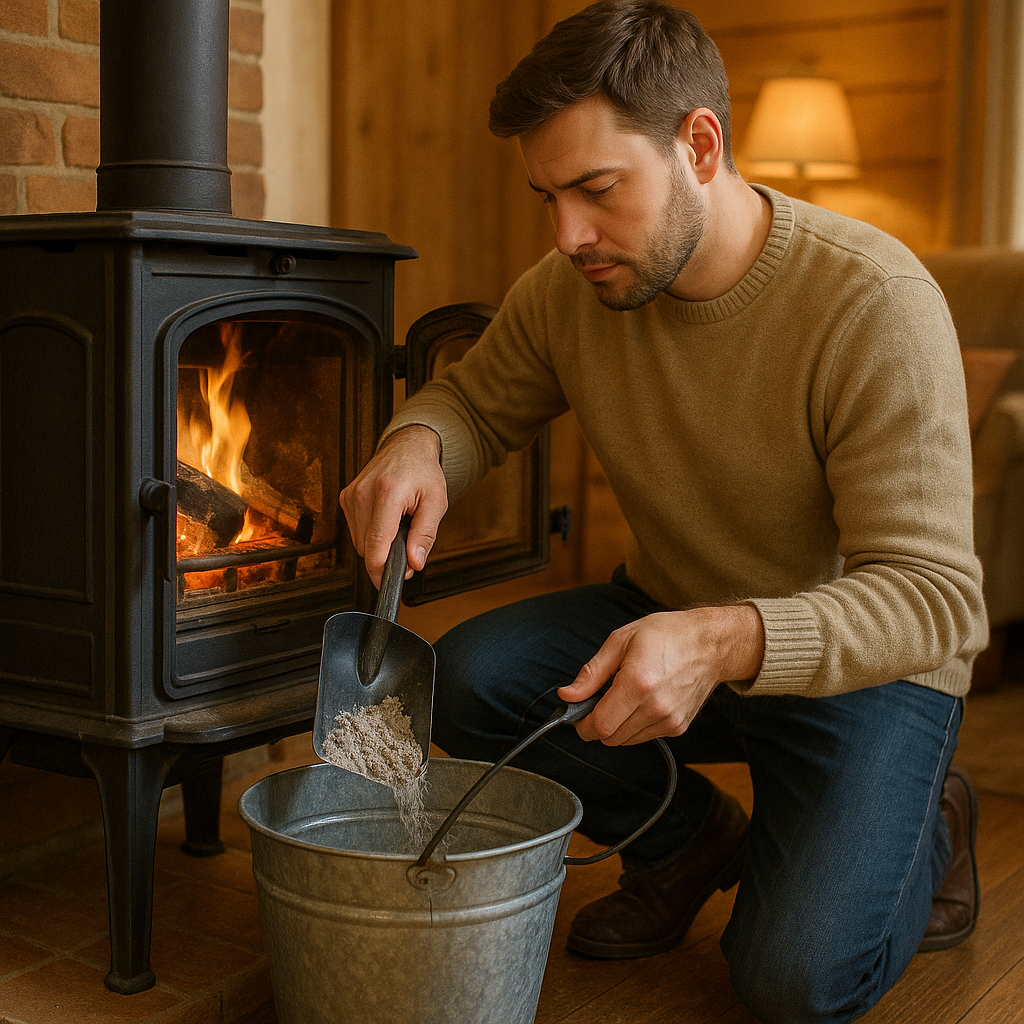
Wait until the stove is completely cold and use a dedicated shovel and container to remove ashes. The ideal? A ash vacuum cleaner equipped with a HEPA filter, which captures up to 99% of fine dust. By emptying daily, you prevent soot from rising and blackening the glass or clogging the ducts.
2. Dusting of Glass Walls
To restore the transparency of the glass, prepare a mixture of lukewarm water and white vinegar (3 parts water to 1 part vinegar). Soak a soft cloth and rub in circular motions. For stubborn stains, a little damp ash acts as a gentle cleaner without scratching the surface. Dry carefully to prevent streaks from forming.
3. Checking Seals and Tightness
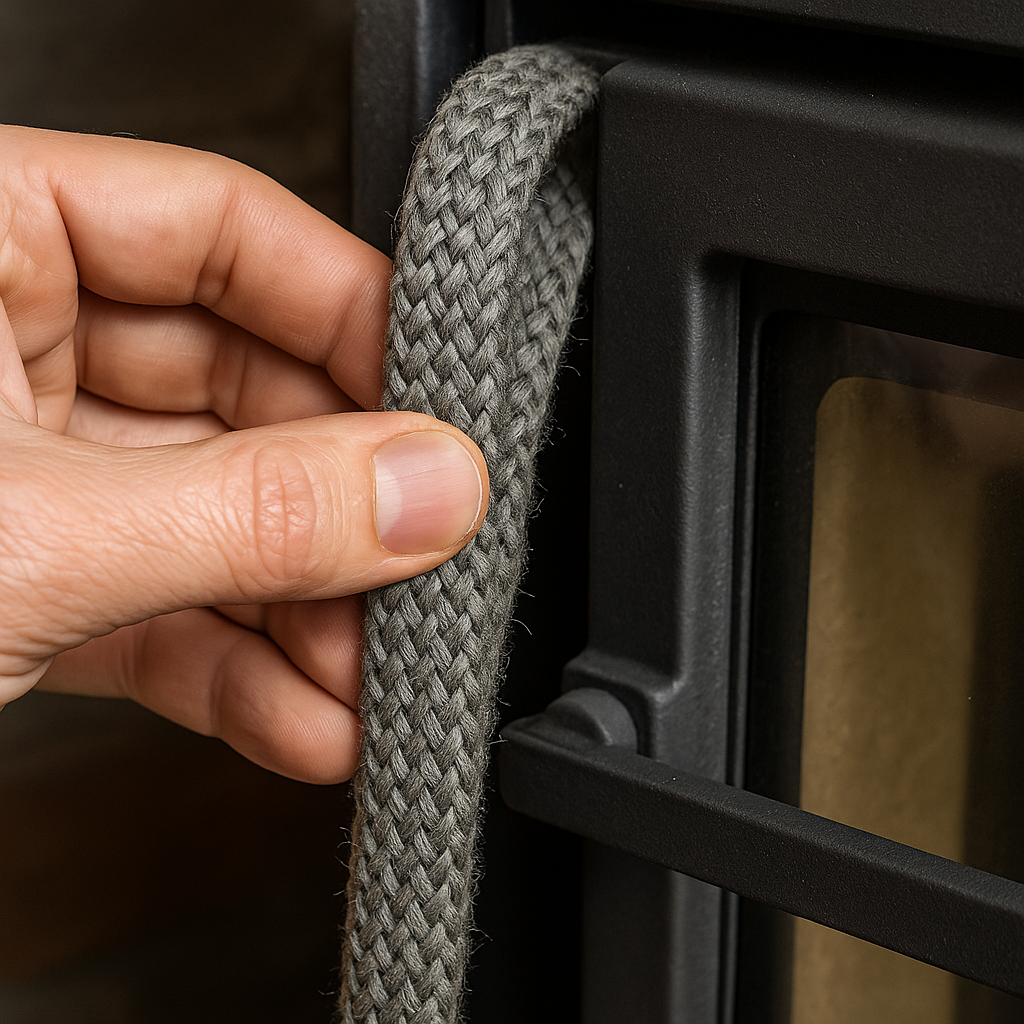
Door seals, often made of ceramic fiber, wear out with heat and handling. Run your hand along the perimeter to detect loose or frayed areas. As soon as a seal detaches or deteriorates, replace it: poor tightness lets smoke and heat escape, and disrupts the draft.
Chimney Sweeping: A Mandatory Step for Your Safety
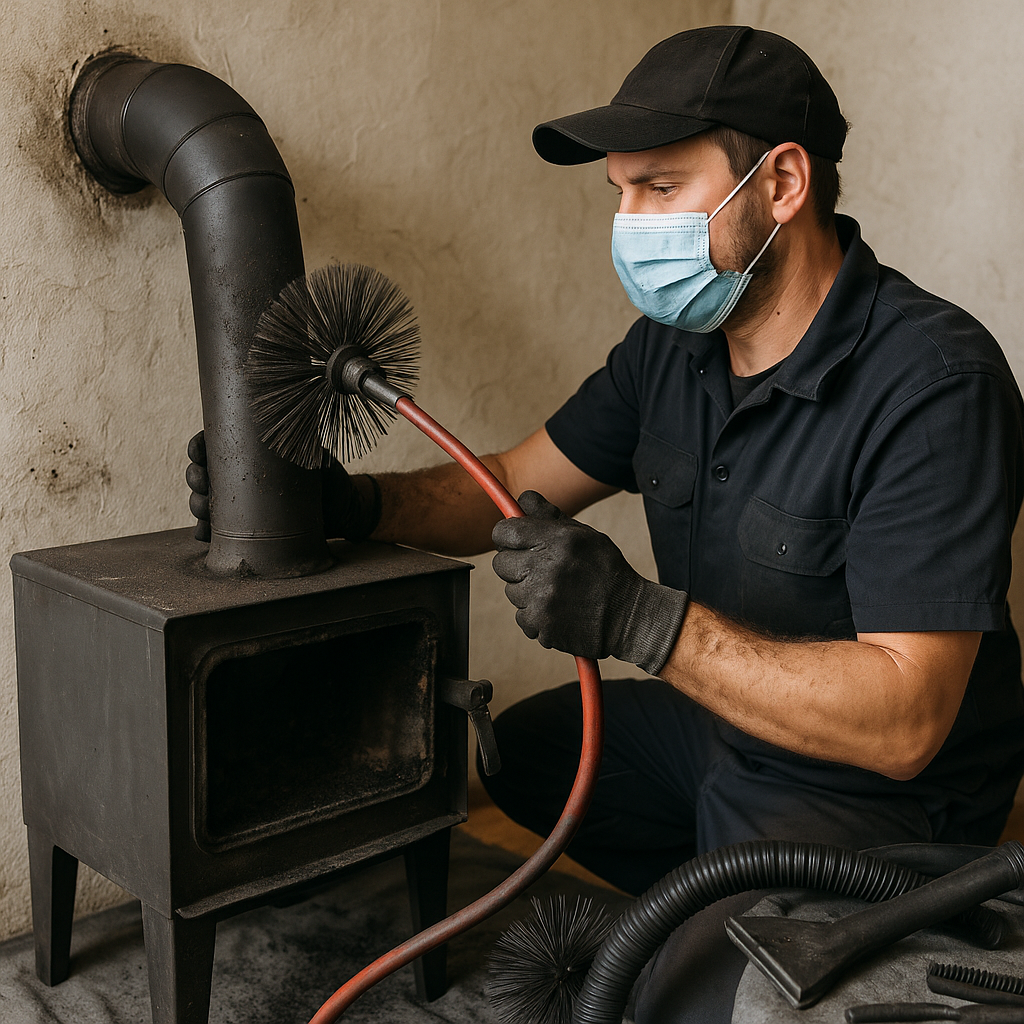
In France, chimney sweeping is regulated: it must be carried out at least once a year, sometimes twice depending on intensive use. Only a professional chimney sweep, holding insurance, can issue the official certificate. The cost ranges between €60 and €120, a negligible investment compared to the consequences of a fire. The chimney sweep uses metal or rotary brushes to dislodge soot, inspects the flue, and can detect cracks invisible to the naked eye.
Choice of Essential Products and Accessories
Maintaining a stove is not limited to the shovel and brush. Some accessories make the work easier:
- Ash vacuum cleaner with HEPA filter.
- Shovel, small broom, and metal or nylon brush.
- Squeegee or special glass sponge.
- High-temperature protective gloves.
For products, favor ecological cleaners, without bleach or harsh solvents, so as not to damage materials and to respect air quality.
Maintenance Schedule and Practical Sheet
| Frequency | Action | Advice |
|---|---|---|
| After each fire | Emptying ashes | Wait 24 hours to eliminate residual heat |
| Every month | Cleaning the glass | Use a soft cloth and gentle cleaner |
| Every season | Checking seals | Check integrity and replace if necessary |
| Once a year | Professional chimney sweeping | Keep the certificate for insurance |
In Case of Problem: Quick Diagnosis
Smoke Escapes into the Room
Check that the draft flap is open, that the flue is not blocked (bird’s nest, debris), and that the seals are tight. Poorly dried wood or too weak a draft encourages this problem.
The Glass Blackens Very Quickly
Several causes: wood too wet, insufficient primary air adjustment, or lack of draft. To remedy this, store your wood in a ventilated place for at least six months, adjust the air intake, and ensure the flue allows optimal smoke flow.
“A well-maintained stove is the guarantee of thermal comfort and a long lifespan”
FAQ
How Often Should You Sweep Your Wood Stove?
Once a year is the legal minimum, or twice if you heat intensively. Sweeping can be done from the inside (brush mounted on a pole) or from the roof.
Can you clean the glass with newspaper?
Yes, the wet newspaper technique works: rub the glass with a paper soaked in water, finish with a dry cloth. It is economical and ecological, with no risk to the glass.
How to spot worn door seals?
Smoke leakage, a whistling sound of air, or soot accumulating around the door are obvious signs. Touch and slightly bend the seal: if it cracks or does not return to shape, replace it.
Can a stove operate without maintenance?
Theoretically yes, but this greatly reduces its efficiency and increases risks (fire, poisoning). Insurance companies may even refuse to cover damage related to lack of maintenance.
What type of wood should be preferred to limit sooting?
Dry hardwood (oak, beech) with less than 20% moisture creates less creosote than resinous wood. To check the moisture content, a small device called a moisture meter is very useful.