Sommaire
| Key points | Details to remember |
|---|---|
| 🌽 | Identify the characteristics of succulent plants. |
| 💧 | Understand the water and substrate needs. |
| 🌞 | Optimize the light exposure for each variety. |
| 🎒 | Integrate succulents into various decor styles. |
| 🛠️ | Use appropriate tools for maintenance. |
| 🌱 | Appreciate the benefits for well-being and air quality. |
Decorating your interior with succulent plants is one of the most striking phenomena of recent years: a topic that raises as much enthusiasm as skepticism. For some, the desire to bring life to a minimalist living room results in a row of perfectly aligned succulents; elsewhere, it is dismissed as a fleeting trend, a mere ornament without depth. However, jotting down a few lines in a decor magazine is not enough to dispel doubt: if these plants are everywhere, it may be because they meet a real need. In this article, we examine why these mini-plants fascinate, what benefits they bring, and whether, ultimately, they represent a true green revolution in apartments.
What is a succulent plant?
The term “succulent plant” encompasses a group of plants capable of storing water in their leaves, stems, or roots. This includes cactaceae – generally spiny – and crassulaceae, often with a branching habit. This anatomical feature allows these plants to survive in arid environments without frequent watering. This internal reservoir makes them particularly suited to apartment life, provided some basic care principles are followed. One might think these species are all interchangeable, but in reality, each genus has its own temperament: some withstand scorching sun, others tolerate lower light exposure.
Real advantages
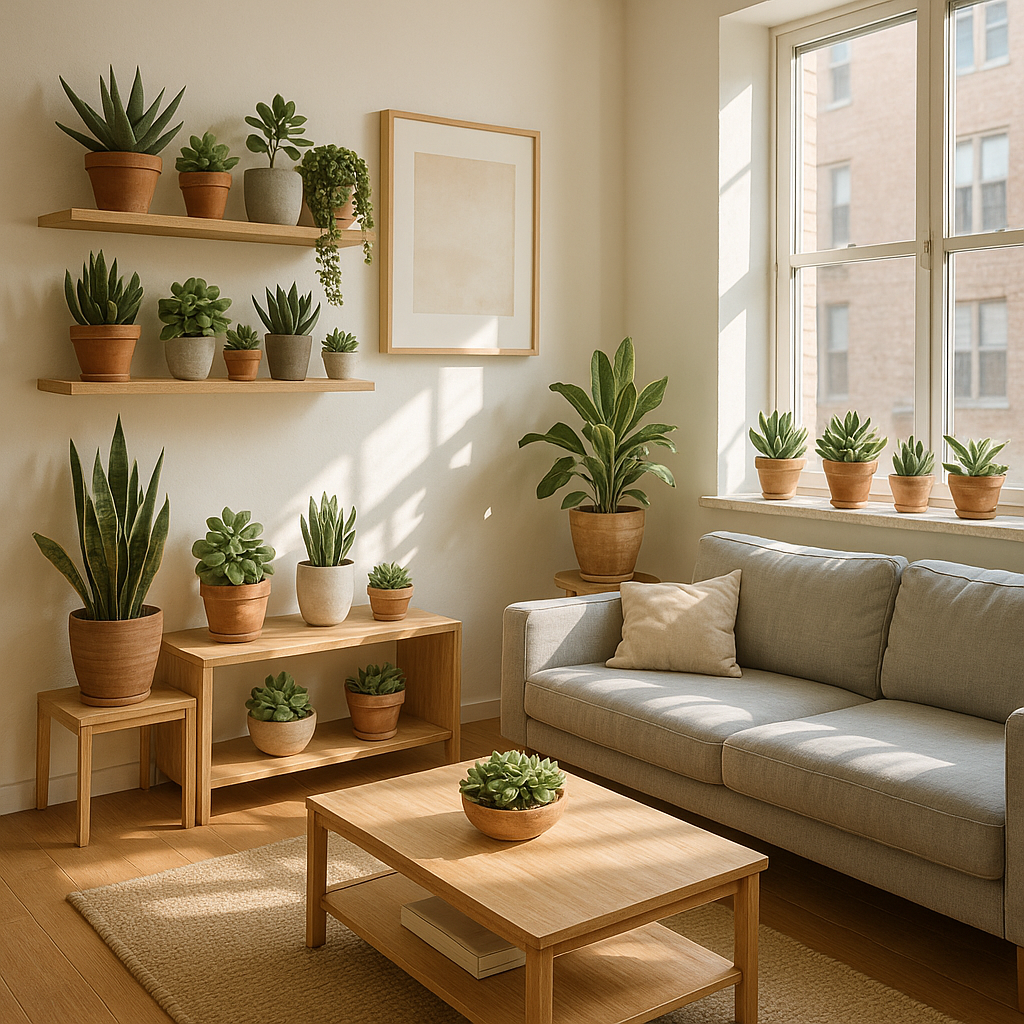
Beyond their often flattering aesthetics, these plants offer several benefits:
- Low maintenance for those looking to limit constraints.
- Easy propagation encouraging sharing or exchanging among enthusiasts.
- Varied textures, from the velvety Echeveria to the vertical Haworthia.
- Positive psychological impact, nurtured by proximity to the living world.
Air purification
Several studies suggest that some succulents absorb volatile compounds like formaldehyde and benzene. This phenomenon does not completely eliminate indoor pollution but contributes to a slight improvement in air quality. In an office or living room, even a small pot can participate in this process – provided species are varied and air circulation is maintained regularly.
Mindful effect and well-being
Caring for a succulent plant brings rhythm to the day. Observing growth, the tactile sensation of touching fleshy leaves, all can encourage a moment of pause. There is a real enthusiasm for what is called “greenkeeping”: cultivating the spirit of the urban gardener within, without turning over soil extensively. In confined spaces, this connection to nature proves all the more precious.
Care secrets and tips
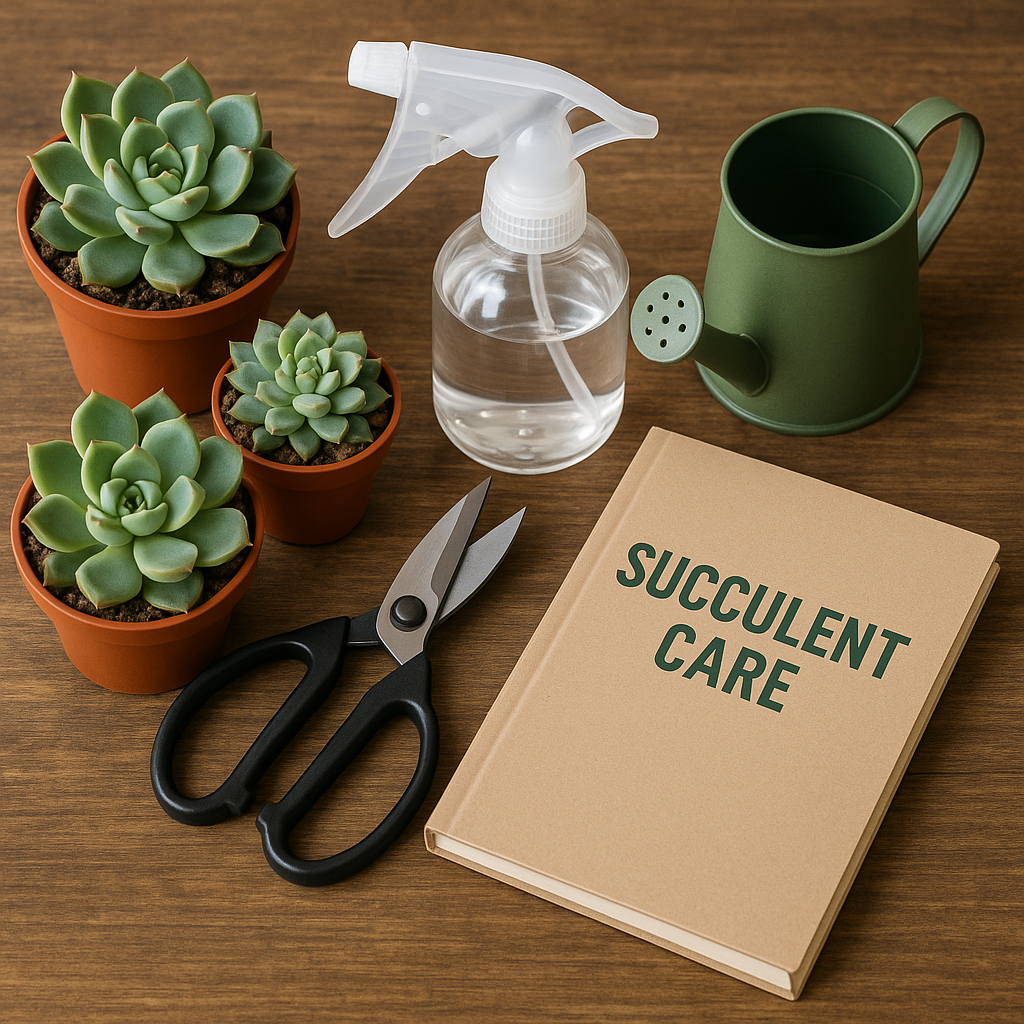
Varying watering and light is key. Missing a watering session is never dramatic, whereas the opposite can be fatal. Some tips to avoid common mistakes:
- Choose a pot with drainage holes to promote drainage.
- Apply light watering only once the substrate is dry.
- Place under indirect or filtered light, depending on the species.
- Fertilize in spring, preferably with a fertilizer special for succulents.
Watering rhythm
Generally, thirst is noticed by slightly wrinkled leaves. If the ideal frequency is unknown, it is better to start with monthly watering, then adjust according to ambient humidity and temperature. The volume should be moderate: a few centiliters for a small pot, enough to moisten the soil without saturating it.
Exposure and light
While full sun suits desert cactaceae, some crassulaceae fear direct exposure, which can burn their tissues. In an east-facing living room, morning light is often sufficient; in less bright spaces, varieties with low light requirements are preferred, such as Sansevieria cylindrica or Zamioculcas.
Decor integration and styles
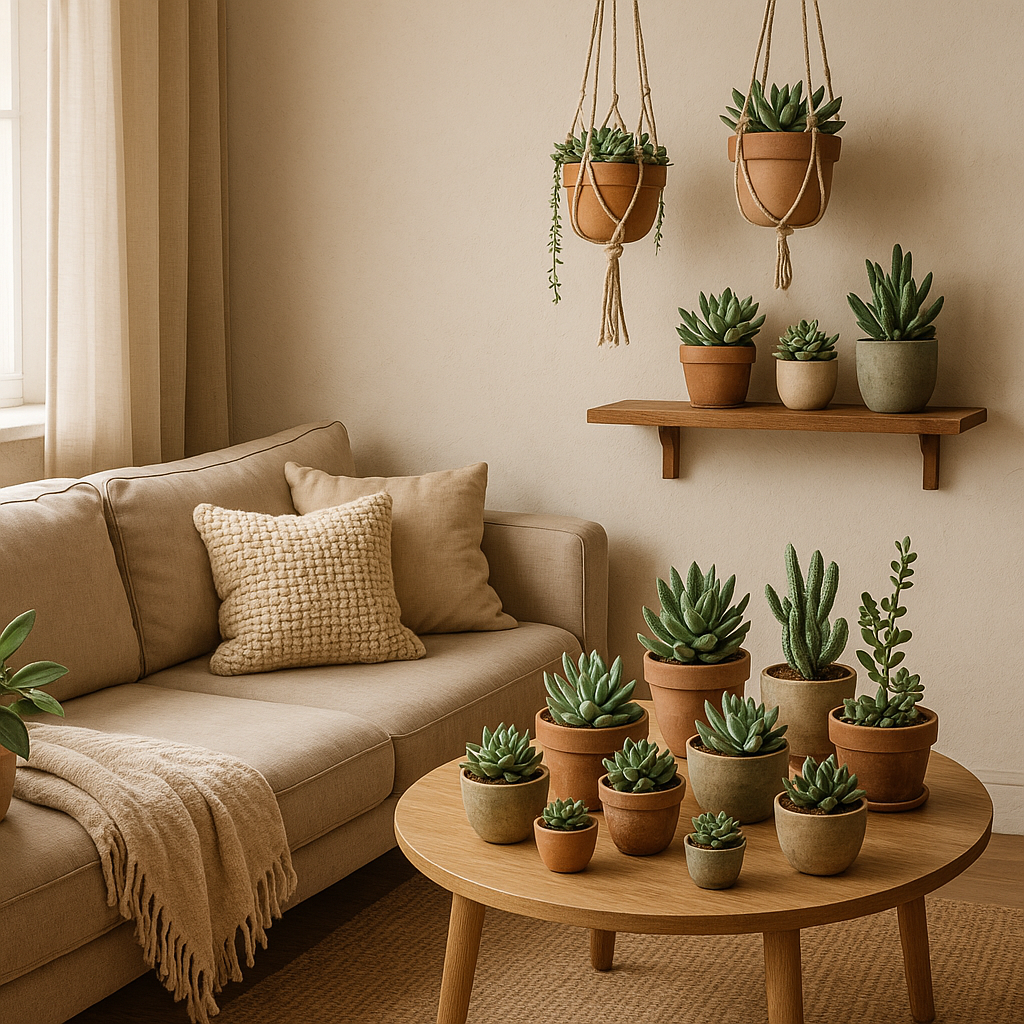
Depending on the desired atmosphere, these plants lend themselves to various arrangements:
- A minimalist green wall where succulents create a living carpet.
- Macramé hangings for a bohemian and airy effect.
- Geometric compositions in concrete or raw ceramic pots.
- A collection of mini-cacti displayed on a glass shelf for a cabinet of curiosities vibe.
This variety of possibilities partly explains their success: everyone can find a formula that suits their interior and lifestyle.
Green revolution or simple craze?
Sometimes the presence of succulents is reduced to a fashion phenomenon, a mirror effect at a time when succulent design is showcased on social networks. It is true their popularity has increased thanks to Instagram and Pinterest. However, if this visual flourish were purely superficial, there would not be so many collector associations, specialized shops, and dedicated blogs. The growing demand rather demonstrates a deep desire for accessible greenery, without facing the constraints of traditional gardening.
In an urban context where access to nature is becoming scarce, the ability to maintain a bit of green life becomes a meaningful act. Succulent plants offer a reassuring, guilt-free entry point to a broader practice of indoor botany. They will not replace a garden, but they invite placing a few strands of chlorophyll on one’s daily path.
FAQ
- How often should a succulent be watered in winter?
- Watering is reduced during the cold period: one session every 6 to 8 weeks is often sufficient, depending on lighting and ambient temperature.
- Can several varieties be planted in the same pot?
- Yes, provided they have similar water and light needs, and the pot offers good drainage.
- How to prevent root rot?
- Ensure a draining substrate, remove damaged parts, then let the root ball dry before repotting in a specific mix.
- Is a special fertilizer needed?
- A low-nitrogen fertilizer formulated for cacti and succulents, applied during the growth period, prevents too rapid and weak growth.