
Sommaire
Pruning a vine is not just about cutting shoots at random: it is about directing growth, regulating production, and protecting the plant from diseases. Whether you have a small plot for your own bunches or a few vines aligned along a trellis, this practical guide explains the main methods, timing according to the seasons, the tools to prioritize, and the techniques that truly change the quality of the harvest.
In brief
🍇 Main objective: control vigor and regulate yield to obtain more regular and perfectly ripe bunches.
✂️ Key methods: guyot, cordon, and spur pruning — choose according to the rootstock, exposure, and project (wine, table grapes).
📅 Practical calendar: winter pruning to structure, summer pruning to limit vigor and improve aeration.
🛠️ Essential tools: well-sharpened pruning shears, loppers for medium wood, and saw for thick wood.
Why prune the vine?
Pruning means making choices: deciding how many buds to keep, selecting bearing shoots, and removing unnecessary growth. The action aims at three measurable results — distributing sap, balancing foliage and production, and improving vine hygiene. Without pruning, the vine adopts a “proliferation” strategy, multiplying non-fruitful wood and making the harvest uneven and more prone to fungal diseases due to poor ventilation.
Direct effects on production
By limiting the number of buds, the assimilable matter load per remaining bunch increases: this results in berries more concentrated in sugar and more homogeneous bunches. Conversely, overly severe pruning reduces yield but can improve fruit quality. Finding the balance requires evaluating the vine’s vigor over several years.
Pruning methods explained
Each method has a name, logic, and purpose. The choice depends on space, equipment, and desired training style.
Simple and double Guyot
Guyot is the most used method in table grape vineyards and small vineyards. It consists of keeping one or two simple fruiting spurs per vine, with one or two replacement canes (the spur for the following year). It suits vigorous varieties and facilitates manual harvesting. The double guyot distributes production over two arms, useful for vigorous vines placed between narrow rows.
Royat cordon
The cordon carries a permanent horizontal line along the support; short spurs (rougeaux) are pruned there each year. This system adapts very well to mechanization and regular spacing on wire, and it offers clean foliage management. In practice, the cordon strongly controls vigor and simplifies summer interventions.
Goblet pruning and other free forms
For small plots or old varieties, goblet pruning keeps the vine low, without trellising, which limits installation costs. However, it requires more skilled labor because the structure is less standardized and productivity depends on the winemaker’s experience.
When to prune? Calendar and practical schedule
The timing of pruning depends on the goal sought. Traditionally, two periods are distinguished: winter pruning (structural) and summer pruning (corrective).
Winter pruning — structuring the plant
Winter pruning is done during dormancy, generally after leaf fall and before bud break, to prevent sap bleeding and promote healing. Its role is to shape the framework and define the number of fruiting buds for the upcoming season. A practical rule: intervene when temperatures remain near freezing but without prolonged intense frost.
Summer pruning — limiting and protecting
Summer pruning, done after flowering or during veraison depending on objectives, serves to thin foliage, cut unwanted shoots, and improve bunch exposure to the sun. It also reduces disease risks by improving air circulation.
For a more detailed calendar, adapt local dates to your region’s climate: the same variety can be pruned earlier in Mediterranean zones than in continental climates.
Tools and techniques: what you must have
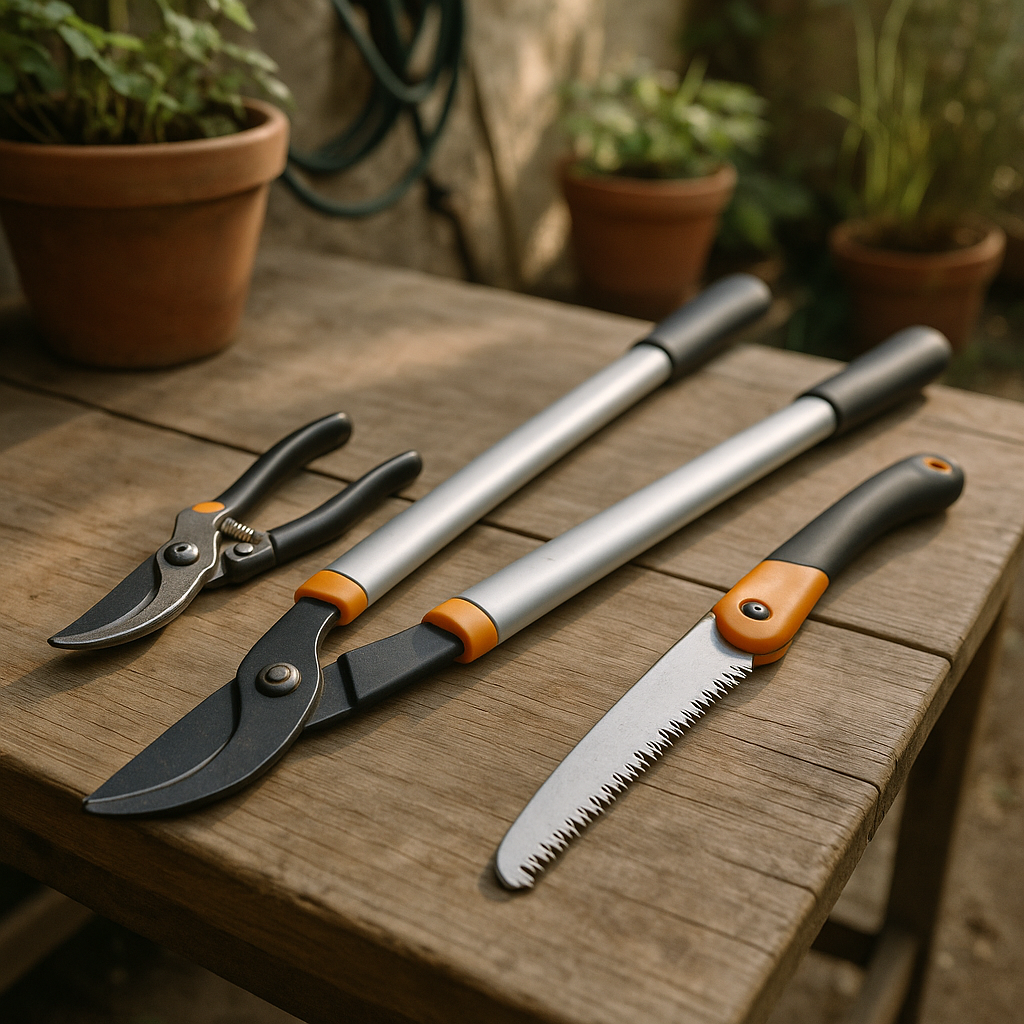
A precise action starts with suitable tools. You need a light and well-balanced pruning shear for fine pruning, loppers for intermediate diameters, and a saw for thick wood. Ergonomics and sharpening are crucial: a dull tool crushes the fiber instead of cutting cleanly, delaying healing and encouraging infections.
- Bypass pruning shears: cut up to 20 mm, ideal for flexible shoots.
- Loppers: for diameters between 20 and 40 mm; useful for return arms.
- Pruning saw: essential for dead or old wood over 40 mm.
- Gloves, wrist supports, and glasses: necessary protection, especially in winter pruning when wood is dry and brittle.
If you hesitate between pruning shears, loppers, or saw for certain cuts, always favor the cleanest cut to facilitate healing and limit exposed surfaces to pathogens.
Practical steps: how to proceed step by step
A reproducible protocol avoids hesitation in the field. Here is a reliable method for a vine trained in simple guyot:
- Identify the framework and remove dead or diseased wood.
- Choose the fruiting cane (last year’s wood) and keep the planned number of buds (often 6 to 10 depending on vigor).
- Keep a short replacement cane (2 to 3 buds) for the following year.
- Prune weak shoots and position the spurs on the trellis wire.
Note: a tip for healing
When the cut is clean and at an appropriate angle (slightly beveled to shed water), the vine heals faster. Avoid cutting the bark beyond the necessary thickness: a clean bevel is better than an irregular wound that leaves a vulnerable edge.

Comparative table of methods
| Method | Advantages | Disadvantages | Recommended use |
|---|---|---|---|
| Guyot | Flexible, simple to manage, good yield/quality compromise | Requires annual follow-up | Small plots, table grapes |
| Cordon | Adapts to mechanization, regular | More demanding installation | Vineyard in rows, mechanized harvesting |
| Goblet | Low installation cost, aesthetic | Less productive, skilled labor required | Rustic varieties, small areas |
Diseases, treatments and cutting hygiene
Pruning directly influences vine health. Poor cuts favor rot entry and fungal spread. After each intervention, clean your tools and disinfect between diseased and healthy vines — hygiene prevents turning pruning into a contamination vector.
Managing main risks
- Grey rot: improve aeration and remove affected bunches rather than leaving contaminated tissue.
- Esca and wood diseases: recognize symptoms (brown wood, decline) and reduce vigor to limit progression.
- Spring frost: limit early radical pruning if your plot is exposed to late frosts.
Rejuvenation of old vines
When a vine declines, renovation is not done in one pruning: it sometimes takes 2 to 3 years to restructure a vine while keeping part of the production. Proceed in stages: remove diseased sections, install replacement wood, and gradually reduce the load. Sometimes, total replacement is more cost-effective long term.
Common mistakes to avoid
- Pruning too short on a low vigor vine: risk of weakening and low production.
- Poorly sharpened tools: irregular wounds and slow healing.
- Waiting too long after identifying diseased wood: increased contagion.
- Over-pruning in search of quality without considering the plant’s reserves: sharp yield drop in following years.
Additional care after pruning
After pruning, monitor irrigation — sap will flow to the remaining buds, and water stress can compromise bud break. Mulching at the foot stabilizes moisture and limits weed competition. Finally, fertilization should be moderate: favor organic inputs and moderate nitrogen if the vine is already very vigorous.

FAQ
Should the vine be pruned every year?
Yes: annual pruning is key to maintaining production balance, avoiding overgrowth, and controlling diseases. Without annual pruning, management becomes unpredictable.
Can the vine be pruned in summer?
Some summer interventions are recommended: bud removal, topping, or thinning. They optimize ripening and limit diseases. However, avoid massively removing exposed foliage during periods of high heat.
What is the best system for beginners?
For amateurs, simple guyot offers a good compromise between ease and control. The cordon is relevant if you plan mechanical training or more intensive exploitation.
Practical tips to get started well
- Observe your vines over 3 years to define actual vigor.
- Invest in quality pruning shears and maintain them.
- Document each year the number of buds kept and the yield harvested — this reveals the trend on vine vigor.
- Don’t be afraid to experiment on a few vines before applying a method to the whole vineyard.
{
“@context”: “https://schema.org”,
“@type”: “WebPage”,
“about”: {
“@type”: “Thing”,
“name”: “Maintenance and pruning of the vine”
},
“keywords”: [“vine pruning”, “guyot”, “cordon”, “pruning shears”, “calendar”]
}