
Sommaire
Installing an air-to-water heat pump transforms a conventional boiler into an efficient system that captures calories from the air to heat your home and domestic hot water. This guide breaks down, step by step, what to check before purchase, how the installation takes place — hydraulic, electrical, and regulatory — and what performance to expect daily. The approach remains pragmatic: we avoid unnecessary jargon and explain the concrete choices that will influence the bill, comfort, and durability of the equipment.
In Brief
🔧 Sizing: an oversized pump is expensive and performs poorly; one that is too small does not meet demand. Aim for a calculation by a professional who takes into account the heat loss and the type of emitters (radiators or underfloor heating).
💶 Cost & aids: installation generally between €8,000 and €18,000 depending on power and complexity; public aids can reduce the initial effort, check the conditions.
🏠 Location & nuisances: plan for a ventilated, stable, and accessible outdoor space for the heat pump; pay attention to the noise level and local installation rules.
🛠️ Maintenance: annual check recommended, hydraulic bleeding, electrical control, and belts/valves; good professional maintenance maintains efficiency and longevity.
Why Choose an Air-to-Water Heat Pump?
The air-to-water heat pump captures calories from the air and delivers them via a hydraulic circuit to supply radiators, underfloor heating, or hot water tanks. Unlike combustion boilers, it does not emit CO2 on site and can offer an attractive coefficient of performance (COP) during temperate seasons. This choice becomes relevant as soon as the house is properly insulated and the emitters are compatible: an old high-temperature radiator can reduce efficiency while a low-temperature underfloor heating system maximizes gains.
Preparing the Installation: Diagnostics and Constraints
Energy Assessment of the Building
First of all, carry out or have a simple thermal diagnosis done: wall insulation, glazing, floor, and inertia. The pump will not work miracles in a poorly insulated house: you risk an oversized system or high operating costs. The calculation of heating needs (kW) is based on heat loss, expressed in watts per square meter or in kilowatts, and directly influences the size of the heat pump.
Compatibility of emitters
The departure temperature required by your emitters determines the actual efficiency. Underfloor heating works ideally around 35 °C, at which heat pumps achieve a high COP. Old radiators often require 60–70 °C, which greatly reduces efficiency; in this case, compensation is made with a more powerful heat pump or the emitters are reviewed.
Location constraints
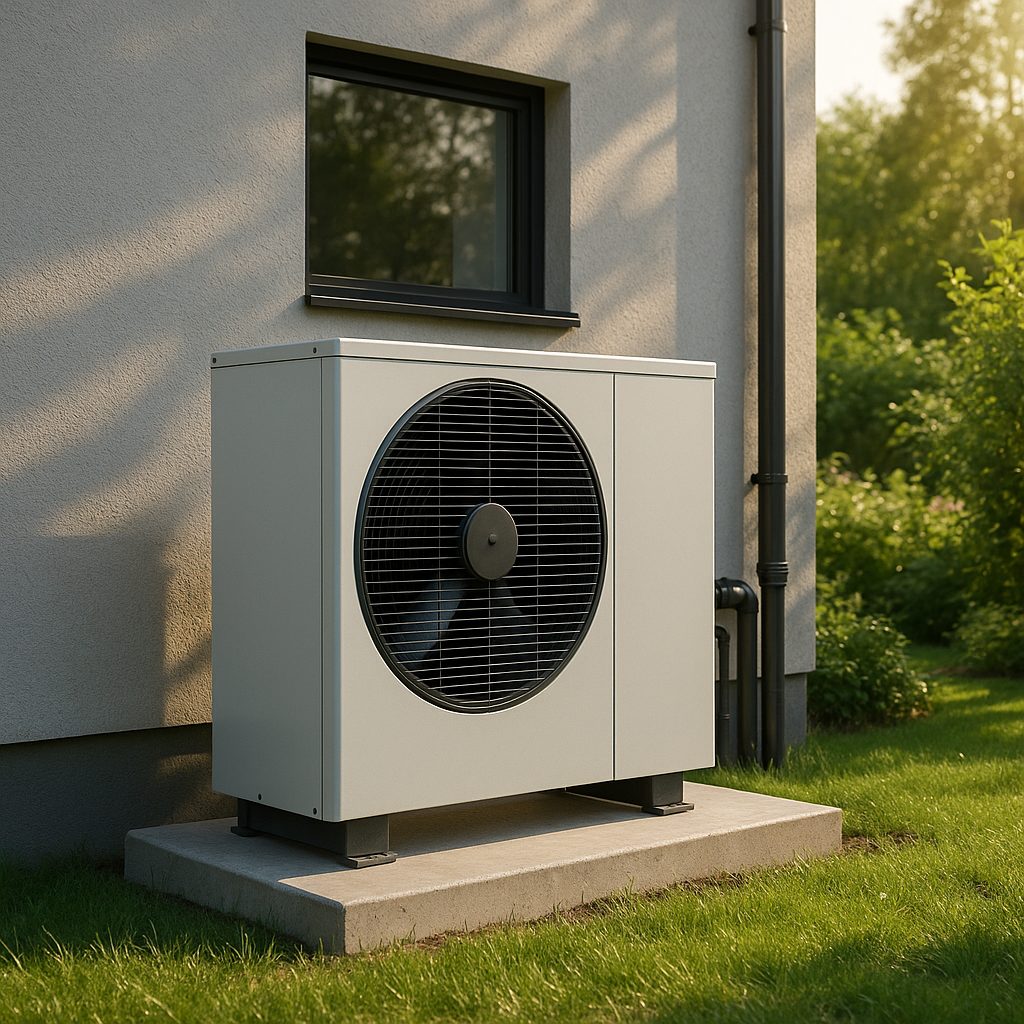
The outdoor unit needs space for incoming and outgoing air, a stable base, and sufficient distance to limit noise perceived by neighbors. Local regulations (PLU, thermal regulations) and co-ownership rules may impose constraints: check before purchasing. Also plan for an accessible location for maintenance and, if possible, a location sheltered from prevailing winds.
Detailed installation steps
1. Sizing and device selection
Sizing involves determining the nominal power (kW) and the COP at actual operating temperatures. Models vary by operating range (e.g. -20 °C to +35 °C), noise level, and compatibility with domestic hot water heaters. Keep in mind that the modulation range and regulation (inverter) affect comfort stability and consumption.
2. Site preparation
The site begins with creating a solid base for the outdoor unit — concrete slab or antivibration pads — and setting up a path for hydraulic pipes and the electrical cable. The installer must provide protections against frost and infiltration, and possibly a drain for seasonal defrosting.
3. Hydraulic connection
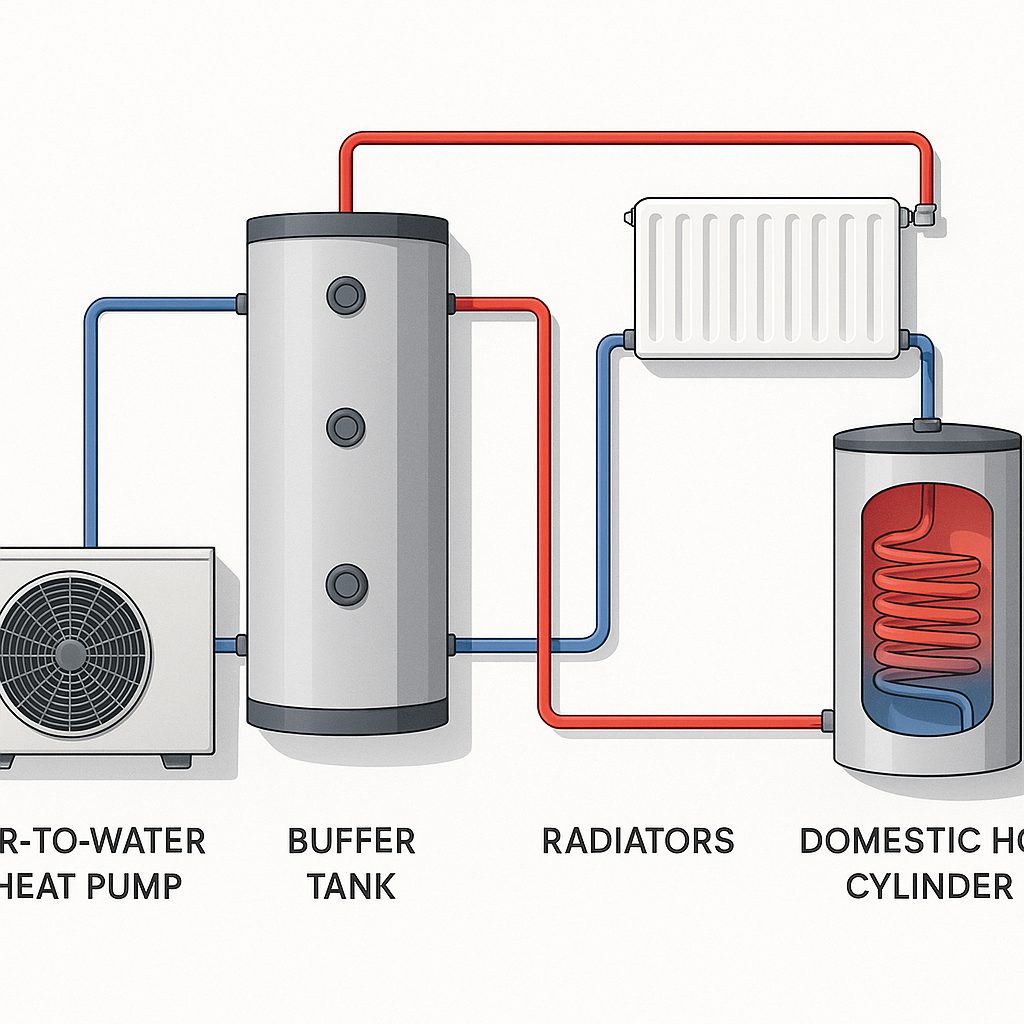
The circuit includes the connection between the heat pump, the safety group, the hot water tank, and the emitters. Isolation valves, a suitable expansion vessel, and automatic vents are installed. The assembly direction and the quality of welds or threaded fittings are essential to avoid leaks. After connection, a complete purge of the circuit ensures the absence of air bubbles that degrade performance.
4. Electrical connection and safety
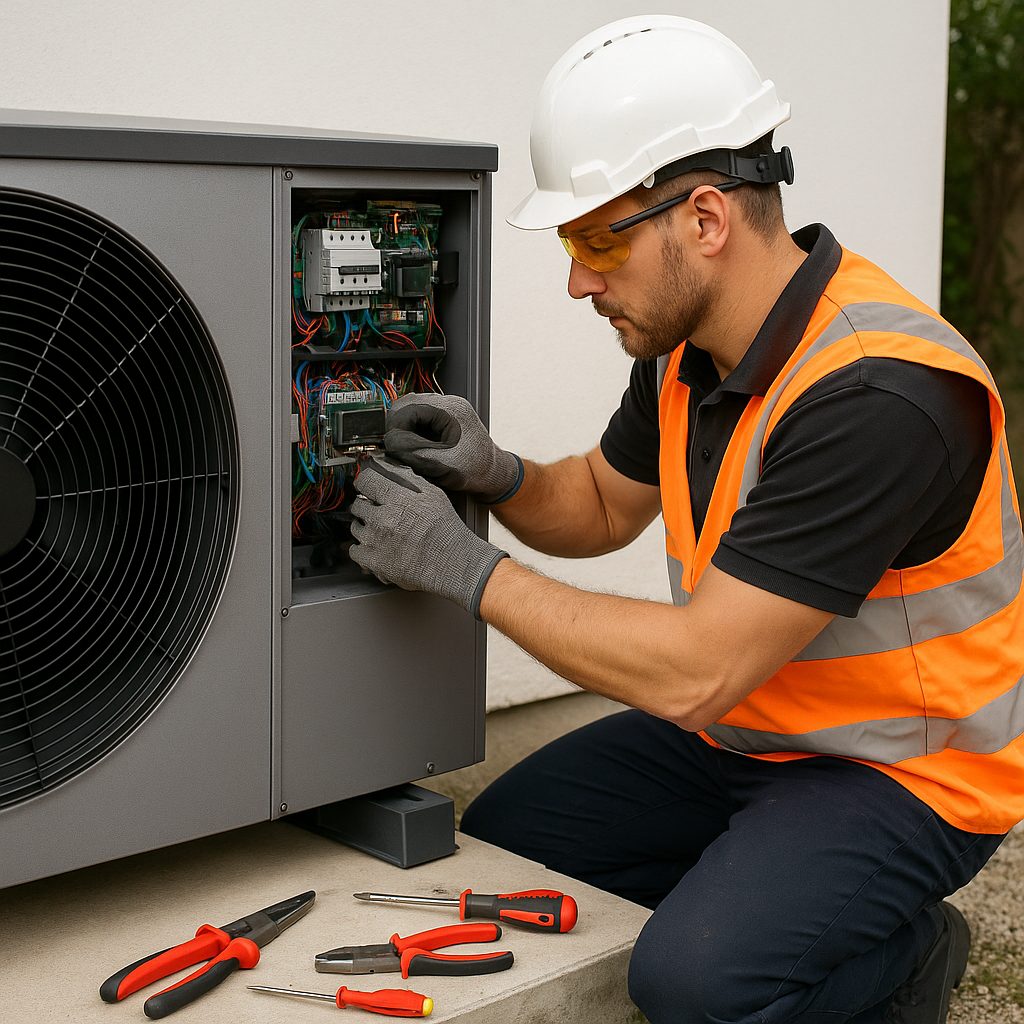
The heat pump requires a dedicated power supply and appropriate protection (circuit breaker, differential switches). Modern models integrate protections and controllers, but the connection must comply with electrical standards and, if applicable, provide a specific grounding. Compliance of the panel and coordination with the energy supplier (if paired with an electric water heater or tank) must be anticipated.
5. Commissioning and adjustments
Commissioning by a professional includes degassing the circuit, checking pressures, leak testing, initializing the regulation, and a verification sequence at different outdoor temperatures. Heating curves are adjusted to align outdoor temperature and departure temperature. An initial performance record serves as a reference for annual monitoring.
Costs, savings, and available aids
The budget for an air-water heat pump varies according to power, brand, site complexity, and preparatory work (insulation, emitter replacement). In France, a common range is between €8,000 and €18,000 installed. The return on investment depends on the energy price and installation quality: a well-sized heat pump significantly reduces the heating bill over several seasons.
| Item | Indicative range |
|---|---|
| Equipment (heat pump) | €4,000 – €10,000 |
| Installation and connection | €2,000 – €6,000 |
| Additional work (insulation, emitters) | variable |
- Check public aids (energy bonuses, energy saving certificates, local aids) which depend on income and device performance.
- Compare the overall cost: quotes, warranty duration, maintenance network, and availability of parts.
Maintenance and longevity
Annual maintenance by a qualified professional extends the lifespan and preserves efficiency. Routine operations include cleaning the exchangers, checking the refrigerant fluid level, verifying electrical safety, and hydraulic bleeding. The average lifespan of a well-maintained heat pump exceeds 15 years, but electronic components and the compressor may require occasional interventions.
Points of caution and common mistakes
- Avoid systematic oversizing: it increases cost and reduces efficiency in short cycles.
- Do not neglect insulation before installing the heat pump: an energy-consuming house will multiply costly cycles.
- Consider noise and aesthetic aspects for neighborhood agreement and resale.
FAQ
What efficiency can be expected from an air-to-water heat pump?
In temperate conditions, a typical COP ranges between 3 and 4, meaning 1 kW of electricity for 3 to 4 kW of heat output. The COP drops in very cold weather; the model’s operating range and the presence of an electric backup influence overall performance.
Is it necessary to replace radiators to install a heat pump?
Not necessarily. If your radiators can operate at low temperature, you can keep the installation. If the radiators are old and designed for high-temperature supply, replacement or supplementation with underfloor heating can be considered to optimize the heat pump.
How long does the installation take?
For a standard house without additional work, installation and commissioning generally take 2 to 5 days. If masonry work, emitter renovation, or insulation is needed, the schedule is extended.
Does the heat pump work when it is very cold?
Yes, most modern models handle negative outdoor temperatures and switch to a backup system if necessary. Performance decreases with cold, but the heat pump often remains more economical than a direct electric resistance.
Practical conclusion
Installing an air-to-water heat pump is a technical and strategic operation: it requires precise diagnosis, appropriate sizing, and careful interventions on hydraulics and electricity. By choosing a competent installer and ensuring good insulation, you get an economical and durable system that reduces your dependence on fossil fuels. Do not hesitate to request multiple quotes and check installation references before signing.
{
“@context”: “https://schema.org”,
“@type”: “FAQPage”,
“mainEntity”: [
{
“@type”: “Question”,
“name”: “What performance can be expected from an air-to-water heat pump?”,
“acceptedAnswer”: {
“@type”: “Answer”,
“text”: “In temperate conditions, a typical COP is between 3 and 4. The COP decreases in very cold weather; the operating range and the presence of an electric backup influence performance.”
}
},
{
“@type”: “Question”,
“name”: “Is it necessary to replace radiators to install a heat pump?”,
“acceptedAnswer”: {
“@type”: “Answer”,
“text”: “Not systematically. If the radiators can handle lower supply temperatures, they can be kept. Otherwise, consider replacing them or installing underfloor heating.”
}
},
{
“@type”: “Question”,
“name”: “How long does the installation take?”,
“acceptedAnswer”: {
“@type”: “Answer”,
“text”: “For a standard house without additional work, installation and commissioning generally take 2 to 5 days. Insulation work or replacement of emitters extends the duration.”
}
}
]
}
{
“@context”: “https://schema.org”,
“@type”: “WebPage”,
“about”: {
“@type”: “Thing”,
“name”: “Air-to-water heat pump installation”
},
“keywords”: [“heat pump”,”air-to-water”,”installation”,”maintenance”,”cost”]
}