
Sommaire
| Key Points | Details to Remember |
|---|---|
| 🍽️ Definition | Compare the Thermomix TM7 to similar machines based on features and usage. |
| ⚙️ Functions | Analyze cooking, blending, integrated weighing, and connectivity. |
| 💶 Price | Measure the initial cost, subscriptions, and long-term value. |
| 🔌 Ecosystem | Check the recipe platform, updates, and available accessories. |
| 🧾 Real use | Estimate if the device replaces enough utensils to justify the purchase. |
| 🔁 Resale | Consider depreciation and the second-hand market. |
The question comes up every year: faced with new generations of machines, does the Thermomix TM7 justify its price in 2025? This guide calmly compares the technical, financial, and practical arguments — without unnecessary jargon — to help you decide if this purchase deserves a real investment or if it’s better to aim for a less expensive alternative. We move from the concrete (time saved, quality of dishes) to the pragmatic (maintenance, subscriptions), avoiding empty marketing promises.
What the TM7 really brings
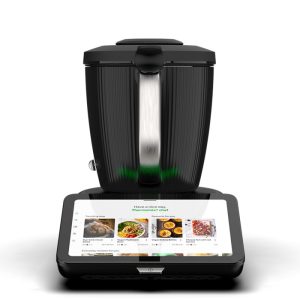
Thermomix built its reputation on the ability to replace several devices: blender, cooker, dough kneader, scale… The TM7 maintains this ambition but, in 2025, the battle is fought on two fronts: user experience (interface, guided recipes) and the final quality of dishes. For a household preparing daily meals, the interest of a TM7 is not limited to power or number of programs; it mainly lies in the coherence between ergonomics, speed, and reproducible results.
Interface and ecosystem
Guided recipes, connectivity, and updates strongly influence usage. A rich platform transforms the device into a culinary assistant: you follow step-by-step, the integrated scale adjusts automatically, and the app offers you variations. If you like experimenting, this ecosystem accelerates learning. Conversely, someone who follows paper recipes or is bothered by a subscription will see less added value.
Performance and versatility
For tasks like emulsifying, low-temperature cooking, or kneading, consistency matters more than raw power. Competing robots in 2025 aim for the same versatility, but the difference often lies in details: stable temperature, blade quality, scale precision, noise, and bowl ergonomics. For ultra-smooth purees or sauces with precise texture, fine adjustments and the responsiveness of the heating system become decisive.
Credible alternatives in 2025
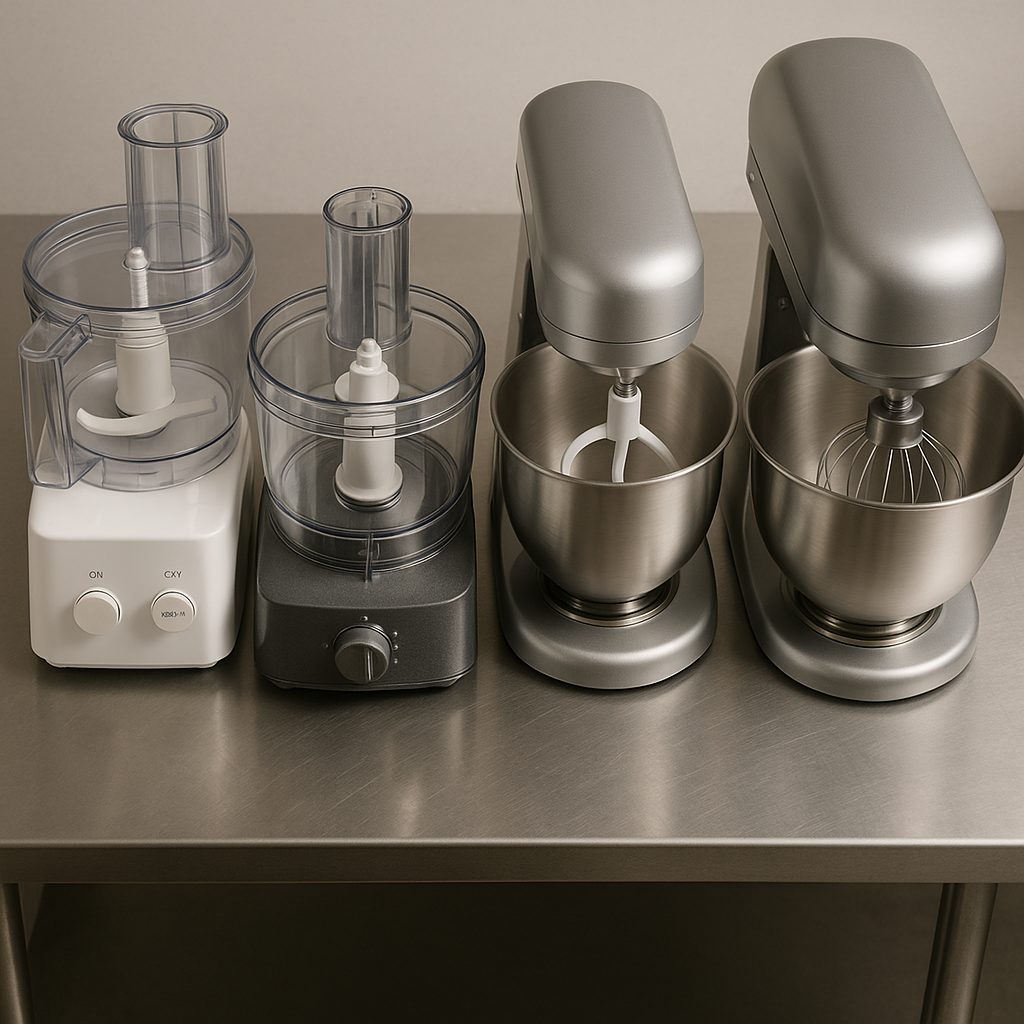
There is no shortage of options. Some machines focus on an aggressive quality/price ratio, others on modularity or compact design. Rather than listing brands, it’s better to classify alternatives according to four user profiles:
- The tight budget: looking for a multi-use machine without subscription and accepts compromises on ergonomics.
- The semi-pro: wants power and a large bowl, ready to tinker to optimize performance.
- The connected: demands guided recipes, mobile synchronization, and regular updates.
- The minimalist: prefers a dedicated device (for example a good blender + a steam cooker) rather than an expensive all-in-one.
Functional comparison
On balance, a Thermomix (TM7 or other) often wins on user experience: integrated weighing and recipe-to-machine flow. But on price, alternatives offer larger bowls, accessories priced separately, or better power for cooking in volume. If you prepare for 1 to 4 people, the TM7 is often sufficient; for large families or small caterers, a robot with a bigger bowl and more robust motor may be more cost-effective.
Real cost: what must be added up
The purchase is only the first line of the balance sheet. To assess if the TM7 is worth the investment, calculate:
- the initial purchase price,
- necessary accessories (varoma, basket, replacement knives),
- possible recipe subscriptions,
- maintenance and parts cost,
- potential resale value after a few years.
An expensive but durable and well-maintained device can cost less to use than a cheap model replaced after two years. Conversely, if you use only 20% of the functions, you pay for unused capabilities.
Subscriptions and platforms
In 2025, recipe platforms become a friction point: they add value but may require a subscription. Analyze your dependence on these services. If you mainly cook from your own recipes, the subscription becomes superfluous. If you love trying new recipes every week, it can be a real accelerator.
Ergonomics, maintenance, and durability
Nothing tests patience more than a bowl hard to clean or a composite that ages poorly. Materials, ease of disassembly, and availability of spare parts influence durability. A robot that can be easily repaired retains its value and limits total cost of ownership. Also consider noise and weight — elements often underestimated when you take it out of the cupboard every day.
| Criterion | TM7 | Typical alternatives |
|---|---|---|
| Versatility | Very high | Variable depending on model |
| Purchase price | High | Low to medium |
| Recipe ecosystem | Strong if subscription activated | Sometimes absent |
| Repairability | Average to good | Variable (some are very modular) |
| Suitable for | Daily use, experimenters | Large volume, limited budgets |
For whom is the TM7 a good investment?
If you recognize one of the following situations, the TM7 may be worth the investment:
- you cook daily and want to save time without sacrificing quality;
- you appreciate guided recipes and the connected experience;
- you live in a household of 1 to 4 people where versatility takes precedence over volume;
- you are willing to accept a high purchase price for a consolidated device, supported by a network of users and accessories.
On the other hand, if you rarely cook, have a tight budget, or need a large bowl to prepare big quantities, a cheaper alternative or a mix of dedicated devices will probably be more relevant.
Video: practical test (to watch)
Here is a field test illustrating daily handling, noise, and texture restitution — useful to complement the reading with visuals.
Verdict: buy or wait?
The choice depends on concrete factors: cooking frequency, sensitivity to time saved, budget, and taste for the connected ecosystem. For an active household, the TM7 can be a real game-changer: it standardizes results, speeds up preparation, and simplifies daily life. For occasional use, the investment is hard to justify. In 2025, competition has tightened the market; therefore, it is important to carefully weigh actual usage rather than be seduced by the promise of an all-in-one device.
FAQ
Does the TM7 really replace all utensils?
In most domestic uses, yes: it can blend, cook, knead, and weigh. However, some baking enthusiasts or those cooking in very large quantities will prefer dedicated appliances.Is the cost justified over 5 years?
If you use it daily, the cost per use becomes reasonable. Subscriptions and accessories must be included for a complete estimate.Are the alternatives reliable?
Yes, several offer excellent value for money, sometimes with larger bowls or better power. The compromise often concerns the ecosystem and ease of use.What is the main criterion when choosing?
Ask yourself: how many times per week will you use the device and for what types of preparations? This is the best indicator of real value.
Practical advice before purchase
- test the interface in store if possible to judge ergonomics;
- check the availability and price of accessories useful for your use;
- compare the total cost (purchase + subscriptions + accessories) over 3 to 5 years;
- consider resale: a well-maintained device retains part of its price.