
Sommaire
| Key points | Details to remember |
|---|---|
| 🌼 Definition | White flowers that bloom without frequent care |
| 💡 Benefits | Visual calm and increased brightness |
| ⚙️ Criteria | Resistance to drought and cold |
| 🌷 Varieties | 5 plants presented with strengths and flowering periods |
| 📃 Maintenance | Minimal pruning and poor soil tolerated |
| 🎬 Combinations | Possible pairings with colorful foliage |
Do you dream of a garden without chores but rich in atmosphere? White flowers play this role perfectly: they brighten flower beds, visually enlarge the space, and often require less watering than their colorful counterparts. Here, we explore a proven selection to help you compose a radiant décor without dedicating your weekend to it.
Why choose low-maintenance white flowers?
The pure brightness that enhances any décor
One might think that only bright colors enliven a garden. In fact, white offers a neutral backdrop that highlights volumes and rivals the light stones of a path. This shade reflects the twilight light, extending the softness of summer evenings. Needless to say, white, far from going unnoticed, becomes the star of your outdoor space.
Less watering, more resistance
White blooms are often linked to hardy species, capable of adapting to poor soil or warm climates. This limits the need for regular watering and phytosanitary treatments. By choosing the right seeds or plants, the garden largely self-manages, leaving you free to enjoy the view rather than the hoe.
Selection criteria for minimal maintenance plants
- Hardiness: withstand frost and heatwaves.
- Long flowering: attract pollinators from spring to autumn.
- Autonomy: light fertilization, moderate pruning.
- Compact habit: limit weeding.
Soil appreciation
In a “no-maintenance” garden, no need to aim for heath soil: better to choose a plant tolerant of dry or calcareous soils. Thus, you won’t have to adjust pH or add compost every year.
Pest and disease management
If plant health is crucial, prefer cultivars known for their natural robustness. Varieties less sensitive to powdery mildew or rust will save you treatments and unnecessary stress.
Top 5 ultra-resistant white flowers
| Species | Height | Flowering period | Requirements |
|---|---|---|---|
| Vinca minor ‘Alba’ | 10–15 cm | April to June | Light soil, partial shade |
| Iberis sempervirens | 20–30 cm | April to May | Well-drained soil, full sun |
| Gypsophila paniculata | 50–90 cm | June to August | Poor soil, full sun |
| Cerastium tomentosum | 15–20 cm | May to July | Dry soil, full sun |
| Phlox subulata ‘White Delight’ | 10–15 cm | April to June | Drained soil, full sun |
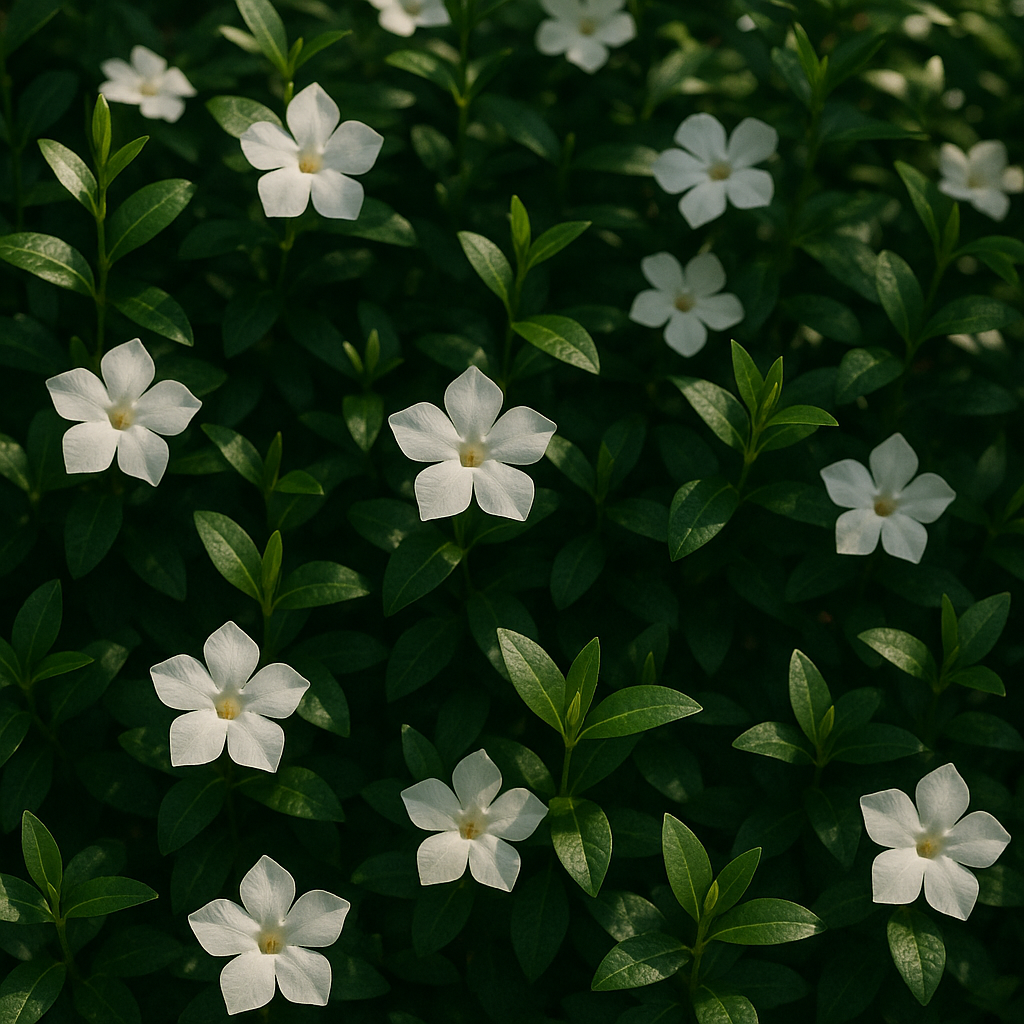
1. Vinca minor ‘Alba’ (White periwinkle)
This semi-evergreen groundcover produces abundant white flowers from spring. Its asset? A spreading habit that inhibits weeds. Moreover, it tolerates shrub shade, perfect to fill a shaded corner with little effort.
2. Iberis sempervirens (Candytuft)
Its dark green foliage contrasts nicely with the white clusters. Compact, it requires light pruning after flowering to maintain its shape. It tolerates occasional drought and brightens borders with its star-shaped flowers.
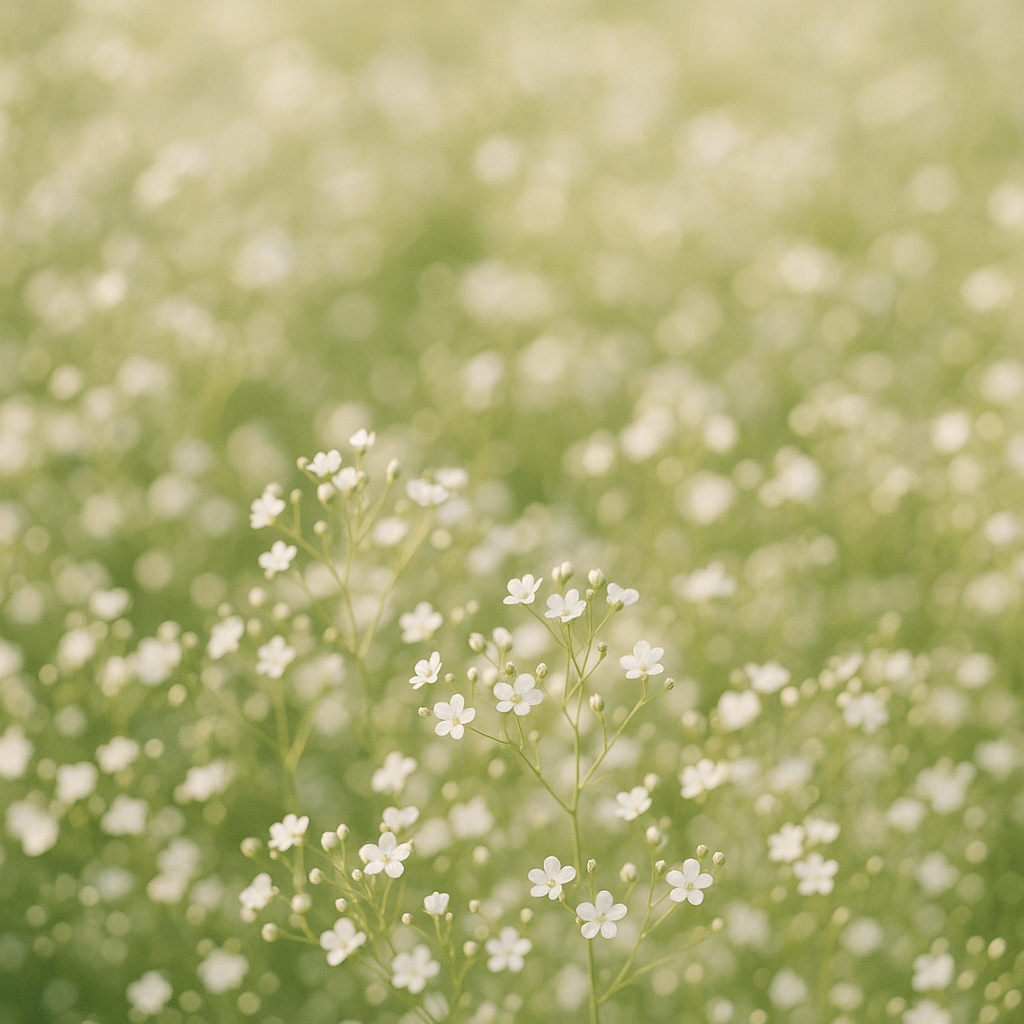
3. Gypsophila paniculata (Baby’s breath)
Dream of a cloud of fine white flowers borne on slender stems. This herbaceous plant loves full sun and tolerates almost rocky soil. Perfect to compose an airy flower bed, it also attracts butterflies, enhancing the summer atmosphere.
4. Cerastium tomentosum (Snow-in-summer)
This silvery carpet is covered with small white flowers with a subtle scent. It thrives on dry soil, creeping between paving stones of a path or in rock gardens. Once established, it only needs a little water during heatwaves.
5. Phlox subulata ‘White Delight’ (Moss phlox)
A cousin of traditional phlox, this one forms a compact, flowering cushion as soon as the weather warms. It offers dense, flowering coverage and is a natural insect repellent. It’s a safe choice to structure slopes without spending hours.
Practical tips for minimal maintenance
“I planted these five varieties, and I hardly ever watered during the first summer” – testimony of a passionate person with no time to waste.
- Install a light mulch to limit the growth of unwanted weeds.
- Remove faded flowers from Iberis and Phlox to prolong flowering.
- Prefer well-drained soil, otherwise add sand or gravel.
- Limit fertilization to an annual organic input in spring.
FAQ
- Can these flowers be combined with other colors?
- Absolutely. White matches almost everything. Silver foliage or touches of mauve (lavender, sage) create a refined contrast.
- What to do in case of prolonged drought?
- Even hardy plants appreciate deep watering every two to three weeks. A mineral mulch will limit evaporation.
- Is it possible to grow these varieties in pots?
- Yes, provided you choose a large pot and well-draining soil. Make sure water does not stagnate.
- How to manage pruning after flowering?
- For Iberis and Phlox, cut half of the flowering stems with shears. Other species only need simple cleaning in autumn.