Sommaire
Energy renovation remains one of the major concerns to reduce bills and improve the comfort of one’s home. In 2025, the schemes evolve, sometimes overlap, and require some organization to make the most of them. This article breaks down the available aids, clarifies work priorities, and proposes a step-by-step method to build an effective file, whether you are an owner-occupier, landlord, or co-owner.
In brief
🔎 MaPrimeRénov’
💸 Energy Savings Certificates (CEE) and supplier bonuses complement the financing and can significantly reduce the remaining out-of-pocket expense.
🏠 Priority to structural actions: attic insulation, wall renovation, and heating system improvement remain the most effective levers in the long term.
🛠️ Before signing: carry out an audit or technical visit, compare cumulative aids, and anticipate processing times to avoid refusals or unnecessary cash advances.
Overview of main aids in 2025
Several mechanisms coexist: national aids, bonuses paid by energy suppliers, local schemes, and tax exemptions. National schemes aim to accelerate the transition and remain a priority in most serious renovations. Added to this is an advisory and support offer often provided by local authorities or accredited operators.
MaPrimeRénov’
MaPrimeRénov’ remains the best-known public aid. It is designed to support work aimed at improving the energy performance of the home (insulation, replacement of heating equipment, ventilation, etc.). The amount is adjusted according to the household’s income level and the nature of the work. It is worth checking the applicable income category and the list of eligible works before requesting quotes: this avoids disappointments related to refusals for non-compliant work.

Energy Savings Certificates (CEE) and supplier bonuses
CEEs require energy suppliers to finance energy-saving operations. Concretely, this results in so-called “boost” bonuses that add to public aids. They are often pragmatic: conditioned on work carried out by RGE-qualified companies (Recognized Environmental Guarantor). Their value depends on the nature of the work and the supplier; comparing several offers remains a worthwhile reflex.
Anah Aid and Programs for Low-Income Households
The National Housing Agency (Anah) offers specific schemes often targeted at households with modest or very modest incomes. These aids cover a significant portion of the work but impose a number of conditions (occupant or landlord, income ceiling, obligation to keep the property rented under conditions for landlords). Targeting these aids requires verifying your precise situation, the ceilings, and the nature of the work before incurring expenses.
Zero-Interest Eco-Loan (eco-PTZ) and Taxation
The zero-interest loan for energy renovation facilitates the advance of financing without interest for eligible work. It can be combined with direct aids, allowing the remaining balance to be spread out. Furthermore, certain operations may benefit from a reduced VAT rate. These mechanisms reduce the overall cost and make some projects economically viable, but they require coordination: several administrative procedures and supporting documents will be requested.
Technical Priorities: Which Work to Choose?
One might think that replacing the boiler is enough, but the reality is more nuanced: the performance of new equipment strongly depends on the quality of insulation. Here is the recommended order of interventions, based on the actual energy impact.
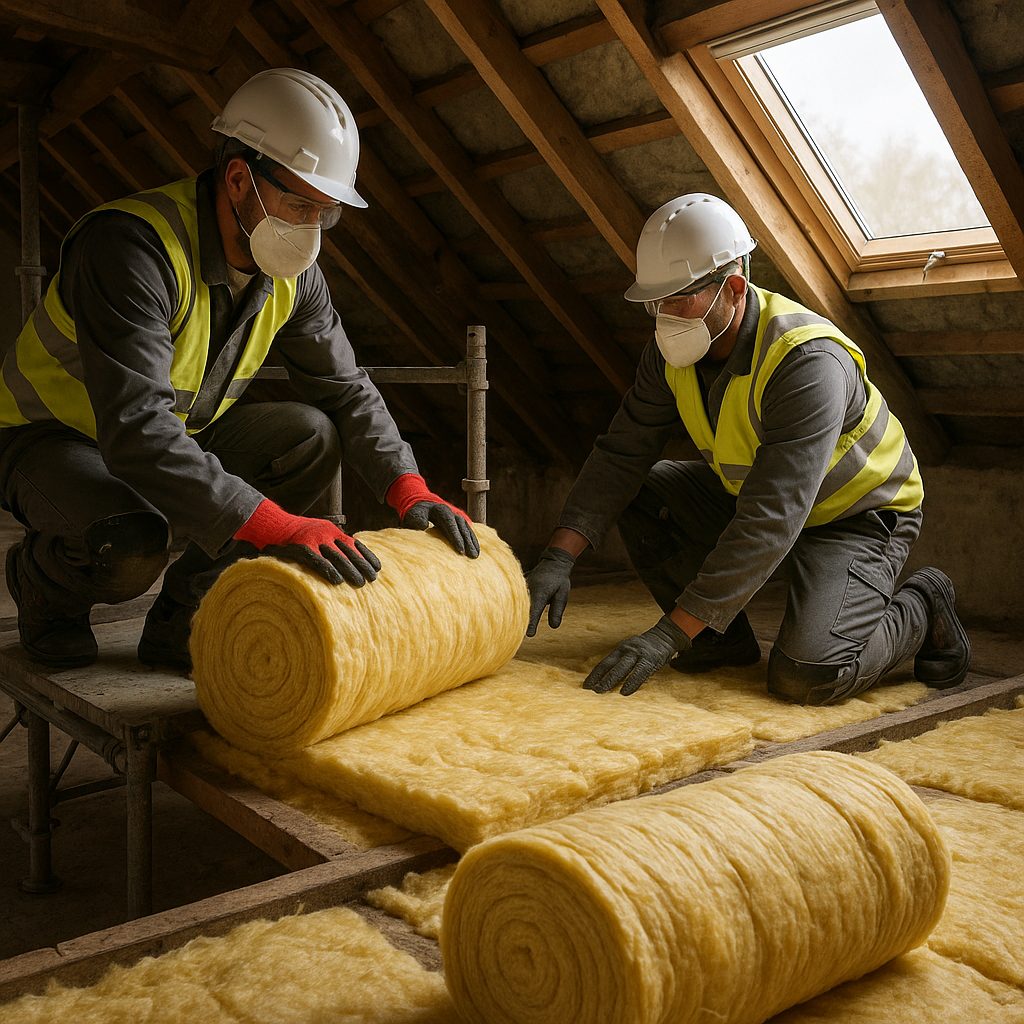
- Exterior insulation or attic insulation: reduces the most significant losses and improves comfort all year round.
- Air tightness and ventilation: prevents heat loss and protects the home against humidity.
- Replacement of the heating system with a more efficient solution (heat pump, condensing boiler), once the building envelope is controlled.
- Optimization of installations: regulation, thermostats, solar panels for hot water when relevant.

Energy Audit: For Whom and Why?
The audit allows prioritizing work according to the energy profile of the dwelling and estimating potential savings. It quickly becomes cost-effective for older homes or when the project includes several work items. Some schemes require a prior audit to access major aids: it is a safety step that avoids ineffective technical choices.
How to Prepare Your File Step by Step
The success of a renovation rarely happens by chance: planning, coherent quotes, and supporting documents make the difference. Here is a concise but complete method.
- Establish an initial diagnosis (audit or technical visit) to define priorities.
- Collect several quotes from RGE-certified craftsmen to compare prices, solutions, and deadlines.
- Check eligibility for each aid (income ceilings, work conditions, deadlines).
- Prepare your files before starting the work: some aids only reimburse upon submission of supporting documents after prior approval.
- Keep all invoices and RGE certificates: they will be requested when the bonuses are paid.
Synthetic Comparison Table
| Scheme | Target audience | Type of work | Notable condition |
|---|---|---|---|
| MaPrimeRénov’ | Owner-occupiers, landlords | Insulation, heating, ventilation | Amount adjusted according to income |
| CEE / Energy bonuses | All households | Wide range of operations | Work carried out by RGE professionals |
| Anah | Low-income households | Structural and comfort work | Income ceilings and residency conditions |
| Eco-PTZ | Owners | Set of energy renovations | No interest, conditions on work |
Common mistakes and how to avoid them
Among recurring mistakes: starting work before obtaining approval for aid, favoring solutions poorly compatible with the building, or working with unqualified providers. To limit risks, require RGE qualification, verify the technical consistency of quotes (for example, insulation first, then equipment), and request a clear payment schedule linked to the different stages.
Practical cases: two typical paths
For an owner-occupier of an old house, the most rational itinerary is often: audit → attic insulation → wall insulation → replacement of a very old boiler with a heat pump, ensuring the accumulation of bonuses. For a landlord, the priority may focus on work ensuring a better quick energy rating and a return on investment through revalued rents and reduced vacancy; the financial setup integrating aid and eco-PTZ can then improve profitability.
FAQ
Who can benefit from MaPrimeRénov’?
Owner-occupiers and landlords can apply, but amounts and eligibility depend on income and the nature of the work. Specific conditions apply according to income categories.
Can multiple aids be combined?
Yes, in many cases. For example, MaPrimeRénov’ can be supplemented by a CEE bonus and an eco-PTZ. However, be careful with the stacking rules specific to each scheme and the conditions on the work schedule.
What does RGE mean and why require it?
RGE means “Recognized Environmental Guarantor.” This qualification certifies skills and conditions access to several aids. Requiring an RGE craftsman reduces the risk of poorly executed work and secures financing.
Is it necessary to advance the money for the work?
Often yes: some aids reimburse after completion and receipt of invoices. The eco-PTZ can help smooth the burden. Plan a cash flow or negotiate payment stages with the craftsman.
Practical advice to optimize your file
- Group relevant work to increase energy impact and the attractiveness of aids.
- Anticipate administrative delays: some aids require prior validation.
- Keep a digital and paper copy of all documents: audits, quotes, invoices, RGE certificates.
- Encourage competition for quotes, but prioritize technical quality rather than the lowest price.
{
“@context”: “https://schema.org”,
“@type”: “FAQPage”,
“mainEntity”: [
{
“@type”: “Question”,
“name”: “Who can benefit from MaPrimeRénov’?”,
“acceptedAnswer”: {
“@type”: “Answer”,
“text”: “Owner-occupiers and landlords can apply, subject to income conditions and depending on the nature of the work.”
}
},
{
“@type”: “Question”,
“name”: “Can multiple aids be combined?”,
“acceptedAnswer”: {
“@type”: “Answer”,
“text”: “Yes, subject to the specific combination rules of each scheme; MaPrimeRénov’ and CEE bonuses are often combinable.”
}
},
{
“@type”: “Question”,
“name”: “What does RGE mean and why require it?”,
“acceptedAnswer”: {
“@type”: “Answer”,
“text”: “RGE means Recognized Guarantor of the Environment; this qualification is often required to access aid and certifies the skills of the craftsman.”
}
}
]
}
{
“@context”: “https://schema.org”,
“@type”: “WebPage”,
“about”: {
“@type”: “Thing”,
“name”: “Energy renovation — aids and bonuses 2025”
},
“keywords”: [“energy renovation”, “aids 2025”, “energy bonus”, “MaPrimeRénov'”]
}