| Key points | Details to remember |
|---|---|
| 🧪 Definition | Non-selective systemic herbicide, often at 360–450 g/L (IPA/K salts), professional use in Spain. |
| 📜 Regulation | Authorized in EU until 2033, national conditions in Spain (training, register, authorization). |
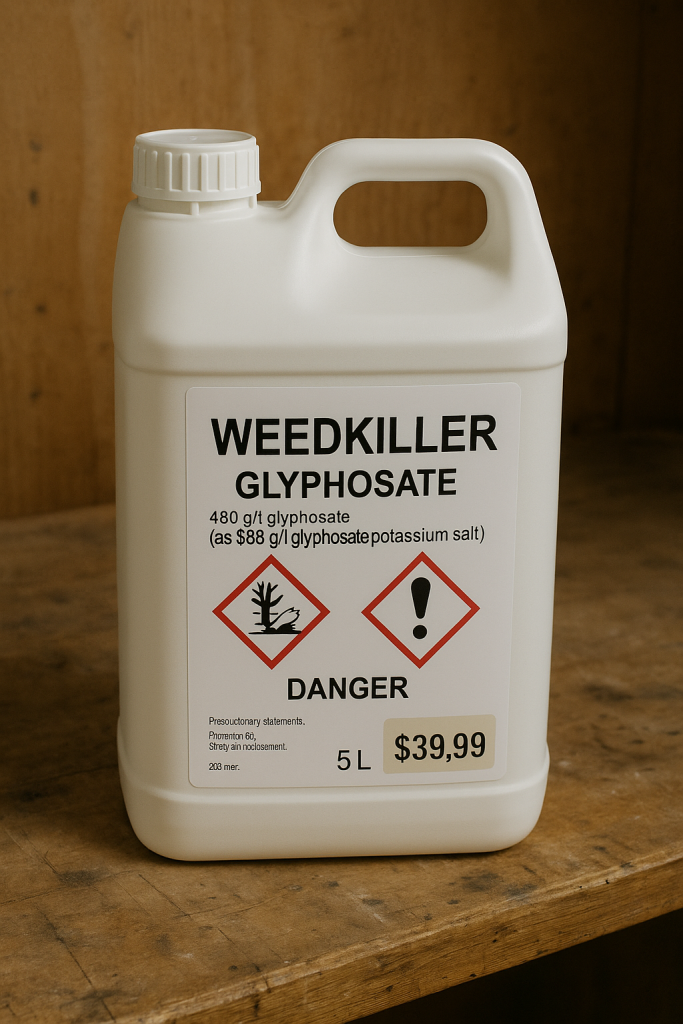
| 💶 5L Price | 5L range in Spain: 45–110 € depending on concentration and formulation. |
| 🚚 Import to France | Prohibited for individuals for products not authorized in France. Risk of seizure. |
| 🧰 Alternatives | Pelargonic acid, hot water/thermal, mechanical and mulching as glyphosate-free options. |
| 🔍 Practical choice | Check authorization number, salt and dosage, co-formulants, safety label and authorized use. |
Need to quickly understand the status of 5L glyphosate in Spain, how much it costs, and whether it can be brought into France? Here is a clear and factual guide. We review the 2025 European framework, Spanish rules (license, authorization, restrictions), realistic price ranges, a comparison of typical offers, and effective alternatives for gardens and pathways. You will thus have what you need to decide, informed, without legal surprises or field disappointments.
Glyphosate Spain 5L: what you need to know
Quick verdict and methodology (2025 guide)
Express summary, rating and recommended profile
5L glyphosate in Spain remains accessible for professional use under strict conditions, with a competitive cost per liter. For a private individual in France, import is not legal when the product is not nationally authorized. Overall rating: 7.5/10 (pro only). Recommended for: trained operators and contractors seeking an economical systemic weed control on large mineral surfaces or inter-rows outside sensitive crops, respecting no-treatment zones and drift.
What we liked / limitations to know
- Cost/ha: systemic efficacy, competitive dose/ha.
- Availability: wide Spanish pro network, usual 5L formats.
- Regulatory clarity: renewed EU framework, known guidelines.
- Restrictions: limited pre-harvest use, drift to control.
- Import FR: prohibited for individuals, customs risks.
- Public image: ongoing health/environment controversy.
Methodology of this guide
We consolidated 2023–2025 information on EU regulation (renewal until 2033), Spanish professional access rules (training, register), and price ranges observed from Spanish pro/retail distributors. 6 criteria: legal framework, formulation (360 vs 450 g/L), co-formulants (POEA-free), logistics, price/L comparison, alternatives. Limits: catalog heterogeneity, seasonal promotions, local differences in authorizations and no-treatment zones (ZNT).
Spanish regulation 2025
What the European Union says
The EU renewed the active substance until December 15, 2033 via an implementing act in 2023. According to EFSA (2023), the review did not identify “critical areas of concern” for the evaluated uses, while noting missing data and the need to mitigate drift and non-target exposure. The classification by ECHA (2022) maintains main risks at the level of serious eye damage and chronic toxicity for aquatic environments, without CMR classification for cancer or mutagenicity.
“The 2023 conclusion indicates the absence of critical areas of concern for the proposed uses, while recalling uncertainties and the need for mitigation measures to reduce exposure of non-target organisms.”
EFSA — Peer review on glyphosate, 2023
Spain specifics: who can buy and use?
In Spain, purchase and use of concentrated formulations (e.g. 5L at 360–450 g/L) generally fall under the professional segment. The user must hold the manipulator and applicator card (certification), register treatments, and comply with the label. Products carry a national authorization number and specific conditions (doses, ZNT water, wind, pre-harvest). For the general public, the offer is more oriented towards non-selective herbicides based on fatty acids (pelargonic) or ready-to-use formulas.
“In Spain, the sale and use of professional phytosanitary products require applicator certification, an intervention register, and strict compliance with label conditions.”
MAPA (Ministry of Agriculture) — Sustainable use of phytosanitary products, 2023
Technical points to check on the label
- Glyphosate salt: isopropylamine 360 g/L vs potassium 450 g/L (more concentrated).
- Co-formulants: without POEA (banned in EU), alternative surfactants.
- Authorization: national number, authorized crops/soils, ZNT water/fauna.
- Restrictions: no pre-harvest desiccation use if not authorized.
- PPE: goggles, nitrile gloves, coveralls, mixing precautions.
“The risk assessment committee confirmed in 2022 the classification for serious eye damage and chronic aquatic toxicity, but did not recommend carcinogenic or mutagenic classification for glyphosate based on current data.”
ECHA, Committee for Risk Assessment (RAC), 2022
Average prices of 5L containers
Realistic ranges 2024–2025
In Spain, 5L canisters generally range between 45 € and 110 € depending on concentration, brand, and distribution channel. Generics at 360 g/L (IPA) occupy the lower end, while 450 g/L (K) formulations or those with premium surfactants are higher. Seasonal promotions, availability, and rising logistics costs can vary the price by ±15%.
| Formulation type | Concentration | 5L Price (indicative) |
|---|---|---|
| Generic IPA | 360 g/L | 45–75 € |
| Concentrated K salt | 450 g/L | 65–95 € |
| Premium formula | ≥ 450 g/L + adjuvants | 85–110 € |
Factors influencing price
Three main levers: active ingredient per liter (higher concentration means higher bottle cost but possibly lower cost/ha), quality of co-formulants (wetting agents, penetrants), and sales channel (agricultural cooperatives vs marketplaces). Transport costs and quantities (pallet vs unit) also weigh in. In practice, calculate the cost per gram of substance and per treated area rather than the face price of the 5L.
Reasoned buying tip
Always compare the price per g of active ingredient and the dose per hectare indicated on the label. A 450 g/L product that is more expensive may be less costly per m² treated. Avoid opaque formulas on surfactants. Favor sellers clearly displaying the Spanish authorization number.
Brand comparison (Racetools, Massó, others)
Pragmatic market overview
The Spanish market is divided between generic 360 g/L, concentrated formulations 450 g/L, and ready-to-use non-glyphosate solutions for amateurs. Distribution includes agricultural cooperatives, specialized “suministros agrarios” sites, and gardening stores. Massó (garden and agro segment) offers weed control references in Spain, including non-glyphosate for private users. Tool brands like Racetools exist online for DIYers, but herbicide offers vary and must comply with national authorizations.
How to compare without mistakes
- Authorization / label: readable number, uses, ZNT, delays.
- Salt & dosage: 360 IPA vs 450 K, dose per liter of water.
- Co-formulants: without POEA, quality of wetting agents.
- Traceability: batch, manufacturer, expiration date.
- Channel: authorized distributor, real invoice and after-sales service.
Positioning examples
A “generic 360 g/L” reference targets minimal cost per liter on hard surfaces. The “450 g/L” reduce volume to handle and may improve apparent speed of action with good adjuvants. Garden segments (e.g. Massó Garden) favor alternatives like pelargonic acid for amateurs. For general tool stores like Racetools, check if the herbicide offer complies with national regulations and favor complete technical documentation.
“Before buying, I first read the authorization, then the exact composition and density. The rest (brand, promo) comes after. You buy a label and proof of approval, not marketing.”
Agronomist consultant — 12 years herbicide trials, technical communication 2024
Import to France: legal or not?
French framework explained simply
In France, only products with an ANSES authorization and authorized use can be marketed and used. Sales of concentrated glyphosate to private individuals have been prohibited since the entry into force of the “phytosanitary products for amateurs” framework. Individual import from another country, even within the EU, of a product not authorized in France constitutes an offense (possible seizure, fine). Professionals must also be certified (Certiphyto) and register their interventions.
Ordering from Spain to France
Delivery of 5L containing a classified and regulated substance is tightly controlled. Serious sellers refuse to ship to countries where the product authorization does not exist. Carriers impose ADR/UN rules. In practice, for a French individual, ordering a 5L glyphosate from Spain is to be avoided. If your need is strictly legal, turn to authorized solutions in France or weed control services by certified contractors.
For those seeking a country-by-country overview on legal glyphosate purchase in Europe in 2025, it is useful to cross-check local regulations and real availability.
Legal points to remember
- EU: active substance approved until 2033, regulated use.
- FR: sale of concentrated glyphosate to individuals not authorized.
- Import: no “right to parcel” for non-authorized products.
- Pro: Certiphyto, register, strict label compliance.
“IARC 2A classification (2015) concerns intrinsic hazard. Regulatory authorities assess risk under real use conditions, hence different conclusions on authorization with mitigation measures.”
IARC Monograph 112 (2015) & Risk management principles, academic summary
Alternatives (total herbicide, hot water, pelargonic acid)
Pelargonic acid and organic acids
Formulations based on pelargonic acid act by contact burning aerial parts. They offer a rapid visual effect (24–48 h) and are available to the general public. Limits: no systemic action, frequent regrowth, lower efficacy on deeply rooted perennials. It is a useful tool for paving joints, pathways, and young regrowth, with a good biodegradability profile.
Hot water and thermal weed control
Treatment with boiling water (or steam) shocks weed tissues. It is relevant in mineral zones and around edges. The cost is mainly in energy and time. Gas thermal carts or lances exist: good pace for small areas, but carbon footprint and safety must be considered. Major asset: no residues and no authorization to manage.
Mechanical, mulching and strategy
The combination of hoe, weed brush, mulching (bark, hemp, wood chips), and covering with fabrics greatly reduces weed pressure. On stabilized paths, a rotary mechanical weeder is formidable. The key is frequency of passes and prevention (soil cover, nitrogen input reduction on edges).
What cost per m²?
- Pelargonic: moderate cost/m², repeated interventions.
- Hot water: high energy cost, simple equipment.
- Mechanical: initial investment, low operating cost.
In practice, a mix of “prevention + action” gives the best ratio. In public or condominium contexts, it is often relevant to require an alternative weed control plan and trials over a season to decide on the best combination.
FAQ — Frequently Asked Questions
Glyphosate 5L Spain delivery to France?
Most serious Spanish sellers do not ship 5L glyphosate to France when the product lacks national authorization. ADR constraints, seller liability, and seizure risk on arrival make the operation unrealistic for an individual, even if the site accepts the initial order.
Is it legal to order?
No for a private individual in France, as long as the product is not authorized by ANSES. Ordering within the EU does not exempt from French marketing rules. Parcels may be seized and sanctions applied. Professionals must hold certifications and comply with the label.
What is the price of a 5L in Spain?
In 2024–2025, expect about 45–75 € for 5L at 360 g/L (IPA) and 65–110 € for 450 g/L (K) depending on brand, co-formulants and channel (cooperative, pro site). Compare cost per gram of substance and dose/hectare rather than gross bottle price.
Difference between 360 g/L and 450 g/L?
450 g/L (potassium salt) is more concentrated: less volume to transport and store, sometimes faster dissolution. Cost per liter is higher, but cost per m² treated may be lower at equivalent concentration. Wetting agent quality remains decisive.
Can it be used on paths and gravel?
Pro formulations are often authorized on non-cultivated surfaces and paths, with ZNT and drift restrictions. Read the label for doses, weather, and distances to water points. In domestic zones, favor authorized alternatives for the public.
Does pelargonic replace glyphosate?
It acts quickly but only by contact. On young annuals, it is quite effective. On perennials or deep stumps, regrowth is frequent, requiring multiple passes. Good supplementary tool for paths and edges with low weed pressure.
What about health and environmental risks?
ECHA RAC (2022) did not classify glyphosate as carcinogenic but maintained risks of serious eye damage and chronic aquatic toxicity. EFSA (2023) found no critical areas for evaluated uses, while noting uncertainties and mitigation needs.
What is the shelf life of a 5L?
Generally 2 to 5 years depending on formulation, protected from frost and heat, in the original sealed packaging. Check expiry date and batch number on the label. Any phase separation or abnormal deposit should lead to disposal via a dedicated channel.
Are there effective biocontrol products?
For total weed control, few biocontrol options have comparable efficacy. Fatty acids and oils can help by contact. The most robust approach remains mechanical, thermal, and mulching combination, adapted to site and maintenance rhythm.
Can treatment be done before sowing or planting?
According to label, pre-sowing/planting treatments are sometimes authorized with specific delays. The EU strictly regulates pre-harvest uses. Respect return intervals, ZNT, and weather conditions to limit drift.
Are co-formulants (POEA) still used?
Polyethoxylated tallow amines (POEA) have been removed from authorized EU formulas. Current labels mention other surfactants. Check composition and favor detailed safety data sheets to assess the product profile.
Can a contractor intervene at a private home?
Yes, a certified contractor can intervene respecting local regulations, product authorization, and ZNT. Request certificate, intervention plan, and favor alternatives when relevant to limit herbicide use to the strict necessary.
Disclaimer: this guide is informative, does not replace reading the label and decisions compliant with local laws. Use of phytopharmaceutical products involves PPE, waste management, and respect for ZNT.
{ “@context”: “https://schema.org”, “@type”: “Article”, “headline”: “Glyphosate Spain 5L: regulation, price, alternatives”, “description”: “2025 framework in Spain, realistic prices of 5L containers, offer comparison, import to France and effective alternatives (pelargonic acid, hot water, mechanical).”, “keywords”: [“glyphosate 5L”, “buy glyphosate Spain”, “herbicide 5L”, “pelargonic acid”, “EU regulation 2033”], “mainEntity”: { “@type”: “FAQPage”, “mainEntity”: [ { “@type”: “Question”, “name”: “Glyphosate 5L Spain delivery France?”, “acceptedAnswer”: { “@type”: “Answer”, “text”: “Sellers rarely ship to France if the product lacks French authorization. Between ADR, liability and possible seizures, the operation is not viable for an individual.” } }, { “@type”: “Question”, “name”: “Is it legal to order?”, “acceptedAnswer”: { “@type”: “Answer”, “text”: “No for a French individual if the product is not authorized by ANSES. Buying within the EU does not exempt national regulations.” } }, { “@type”: “Question”, “name”: “What is the price of a 5L in Spain?”, “acceptedAnswer”: { “@type”: “Answer”, “text”: “About 45–75 € for 360 g/L and 65–110 € for 450 g/L depending on brand, formulation and channel.” } }, { “@type”: “Question”, “name”: “Difference 360 g/L vs 450 g/L?”, “acceptedAnswer”: { “@type”: “Answer”, “text”: “450 g/L is more concentrated, less volume and sometimes better cost per m².” } }, { “@type”: “Question”, “name”: “Can paths and gravel be treated?”, “acceptedAnswer”: { “@type”: “Answer”, “text”: “Yes if the label authorizes it. In domestic zones, favor alternatives.” } }, { “@type”: “Question”, “name”: “Does pelargonic replace glyphosate?”, “acceptedAnswer”: { “@type”: “Answer”, “text”: “Rapid contact effect but frequent regrowth on perennials.” } }, { “@type”: “Question”, “name”: “Health/environment risks?”, “acceptedAnswer”: { “@type”: “Answer”, “text”: “ECHA 2022: serious eye damage, aquatic toxicity. EFSA 2023: no critical areas.” } }, { “@type”: “Question”, “name”: “Shelf life of a 5L?”, “acceptedAnswer”: { “@type”: “Answer”, “text”: “2 to 5 years protected from frost and heat.” } }, { “@type”: “Question”, “name”: “Effective biocontrols?”, “acceptedAnswer”: { “@type”: “Answer”, “text”: “No systemic equivalent. Fatty acids give rapid effect.” } }, { “@type”: “Question”, “name”: “Can a contractor treat?”, “acceptedAnswer”: { “@type”: “Answer”, “text”: “Yes if certified and respects ZNT/authorization.” } } ] } } { “@context”: “https://schema.org”, “@type”: “WebPage”, “about”: { “@type”: “Thing”, “name”: “Glyphosate 5L in Spain: rules, prices and alternatives in 2025” }, “keywords”: [“glyphosate 5L”, “buy glyphosate Spain”, “herbicide 5L”, “pelargonic acid”, “EU regulation 2033”] }