
Sommaire
Slip between fresh sheets, feel the softness of a duvet cover against your cheek, and every evening rediscover that textile cocoon that accompanies sleep… bed linen sketches an intimate geography. The materials tell sensory stories. Cotton whispers its freshness, linen breathes with the skin, silk caresses like a breeze. Choosing your bedding is like composing a nocturnal tableau where comfort and quality converse with your desires for rest.
Choose premium bed linen suited to your bedroom
A complete set includes several pieces: the duvet cover dresses the volume, the fitted sheet hugs the mattress, the pillowcases extend the harmony, the flat sheet adds an extra layer. Composing your bed requires observing the dimensions of the bedding, the desired drop on the sides, and the fabric’s hold around the mattress. Couples and families favor generous sizes to avoid nighttime exposure and ensure peaceful sleep.
The material and weave shape the feel against the skin. A tight cotton slips differently than airy linen, a long fiber provides a different sensation than a short fiber. Before purchasing, keep your priorities in mind: are you looking for freshness, warmth, ease of care, or longevity? To visualize references of materials and weaves, you can for example consult the bed linen on Le Jacquard Français which presents different options. Comparing textures and finishes will help refine your choice without getting lost in commercial promises.
Which material for bed linen according to your needs and the seasons?
Answering the question “which material for bed linen” starts by establishing your priorities. Do you prefer enveloping warmth or breathable freshness? Are you seeking immediate softness or durability through washes? Should maintenance remain simple or do you accept delicate ironing? These criteria guide the focus toward the major fiber families. Cotton reigns among natural materials because it:
- Absorbs moisture;
- Breathes with the body;
- Is easy to wash.
Linen seduces with its rustic texture and its ability to regulate temperature, ideal for warm bedrooms. Silk wraps you in silky softness, glides on the skin, but requires careful maintenance. Blends combine several fibers to balance comfort and practicality.
Each material suits concrete situations. A cool bedroom calls for thick cotton or a plush blend. A south-facing room demands airy linen or light cotton. The washing frequency also matters, as families with children favor robust sheets, easy to maintain. The weave then plays a decisive role in distinguishing between two sheets announced in the same fiber.
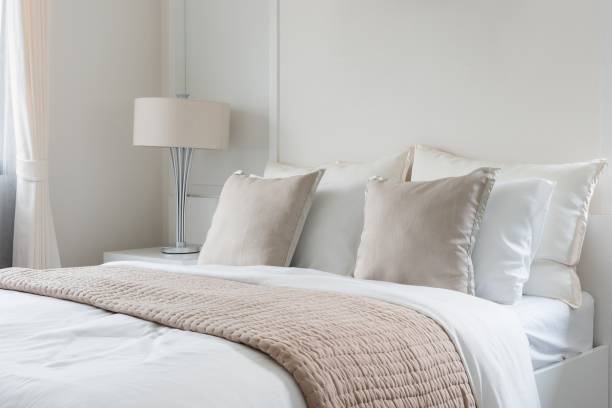
Cotton, percale, satin, simple markers to choose well
Understanding the difference between fiber and weave clarifies the choice. Fiber refers to the raw material — cotton, linen, silk —, the weave describes how the threads interlace. Two cotton sheets can offer opposite sensations depending on their weave. Percale weaves threads tightly in a plain weave, giving a matte, slightly crisp surface that breathes and resists wrinkles. Cotton satin weaves threads differently, creating a smooth, shiny face, slippery to the touch, softer but less breathable.
Recognizing these differences involves concrete markers:
| Criterion | Percale | Satin |
|---|---|---|
| Touch | Matte, slightly crisp | Smooth, silky |
| Noise | Light rustling | Glides silently |
| Breathability | Allows air circulation | Retains heat |
| Wrinkle resistance | Wrinkles little | Marks more |
Verifiable criteria guide the purchase without falling into excessive promises. Observe the quality of the yarn, the regularity of the weave, and the seam finishes. The declared density gives an indication, without making it absolute: an irregular weave degrades comfort even with high density. Touching the fabric, crumpling it, holding it up to the light reveals its structure. These simple gestures also prepare reading care instructions to preserve the feel and color over time.
Care for your sheets to maintain comfort and shape over time
Simple care rules suit most materials:
- Sort laundry by color and fiber type;
- Choose an appropriate cycle;
- Measure detergent without excess;
- Favor gentle drying;
- Iron if necessary to restore softness.
These habits preserve the quality of the fabric and extend the life of your set. Points of vigilance vary depending on the fabrics. Repeated friction promotes pilling on certain fibers, excessive drying heat weakens threads, and harsh detergents dull colors. Linen poorly tolerates too hot a drum, silk requires delicate washing, and cotton percale resists intensive cycles better than satin.
Adopting useful habits facilitates laundry management. Rotate several sets to distribute wear, protect the mattress with a suitable cover, treat stains quickly, and store sheets in a dry place. These daily gestures transform maintenance into a smooth routine. A good material choice is also judged by actual use, night after night. Initial comfort must endure, the fabric must age gracefully, quality must withstand time.
Choosing your bed linen is about composing a renewed sensory experience every night. Materials speak to the skin, the weave sculpts the touch, care preserves the textile’s beauty. Listen to your sensations, compare fibers, feel the weaves: your bed deserves this attention. Rest is also built in these textile details that transform the bedroom into a refuge.