
Sommaire
Food Moths in the Kitchen: Finding the Nest and Preventing Their Return
To find the nest of food moths in the kitchen, first inspect the dry goods, then isolate and discard the contaminated products. Vacuum the corners of the cupboards, clean the surfaces, and transfer stored food into airtight containers. A pheromone trap then helps monitor remaining activity but does not replace sorting.
The presence of an adult moth does not necessarily mean the entire kitchen is infested, but it justifies a methodical inspection. Larvae, silky threads, and cocoons can remain hidden inside a package of flour, rice, cereals, or in a furniture crevice.
In Brief
🔎 Inspect dry foods before only looking for moths: flour, rice, pasta, cereals, nuts, dried fruits, and pet food should be checked first.
🗑️ Discard any product showing larvae, threads, cocoons, insects, or serious doubt, then seal the bag before removing it from the kitchen.
🧹 Vacuum grooves, holes, hinges, and undersides of shelves. Pheromone traps mainly serve to detect adult males and monitor the problem’s progress.
🔒 Store remaining food in airtight containers and monitor the cupboards for several weeks.
How to Recognize a Food Moth Infestation?
A food moth is a small moth that mainly develops in dry goods, unlike the clothes moth, which is associated with textiles. An adult visible in the kitchen may indicate the presence of larvae or cocoons hidden inside packaging, even if no food appears altered yet.
Signs to Look for in the Kitchen
Adults are generally small moths with grayish or brownish hues, which can be seen near cupboards, ceilings, or windows. Their appearance may vary depending on the species and development stage.
Silky threads and larvae are often more revealing than the adult moth. Whitish larvae, clusters, cocoons, or sticky material can be found inside the food itself, under a flap, or at the bottom of a package.
- Small beige-gray moths around storage areas.
- Whitish larvae or small worms in dry foods.
- Silky threads, cocoons, or unusual clumps.
- Pierced, folded, swollen packaging or packaging with unusual dust.
- Unusual smell or appearance of a product, even without visible insects.
Products showing these signs are unfit for consumption. This conclusion does not mean food moths are systematically harmful to health, but food contaminated by larvae, droppings, or threads should not be kept.
Food Moths or Clothes Moths: The Differences
| Criterion | Food Moths | Clothes Moths |
|---|---|---|
| Main Location | Cabinets, pantry, storage areas | Wardrobes, drawers, and textiles |
| Targeted Foods or Materials | Flour, rice, pasta, cereals, nuts, and dried fruits | Textiles and animal-origin materials depending on species |
| Typical Signs | Larvae, threads, cocoons, and contaminated packages | Holes, worn areas, or damage on clothing |
Where to Find the Nest of Food Moths in the Kitchen?
The source is usually found inside a dry product or very close to a storage area. To find the nest of food moths, empty one cupboard at a time, examine each package under light, and extend the search to nearby reserves, pet food, and furniture corners.
Foods to Prioritize for Inspection
Food moths often enter the home with a product already contaminated at the time of purchase. An apparently intact package is therefore not always enough to rule out the risk, especially when it involves paper, cardboard, or flexible plastic.
- Flour, semolina, rice, pasta, cereals, biscuits, and breadcrumbs.
- Dried fruits, nuts, seeds, and chocolate.
- Opened or rarely used packages.
- Products bought in large quantities or stored for a long time.
- Food for dogs, cats, birds, or other animals.
Examine the seals, folds, bottom, and corners of each package. A moth in the flour or a moth in the rice can go unnoticed before the appearance of silk threads or larvae, especially when the food is stored in an opaque package.
Often Forgotten Hiding Places
Larvae can leave the food to look for a place to transform into a cocoon. Corners, grooves, peg holes, hinges, the underside of shelves, and furniture slots therefore deserve a separate inspection.
Also check cardboard boxes stored outside the kitchen, paper bags, distant storage areas, and appliances placed near dry goods. A localized infestation in a single package may have left cocoons in several areas of the furniture.
The Cupboard-by-Cupboard Inspection Method
- Choose an area. Work on one cupboard or drawer at a time to avoid mixing inspected products with suspicious ones.
- Remove the goods. Place the food on a clean surface and examine the packaging under sufficient light.
- Isolate the doubt. Immediately place suspicious products in a sealed bag, without carrying them open through the kitchen.
- Inspect the furniture. Check grooves, holes, hinges, and the underside of shelves.
- Note the inspected products. This list prevents accidentally returning a forgotten package to the cleaned area.
Which Foods to Throw Away to Eliminate Food Moths Without Spreading Them?
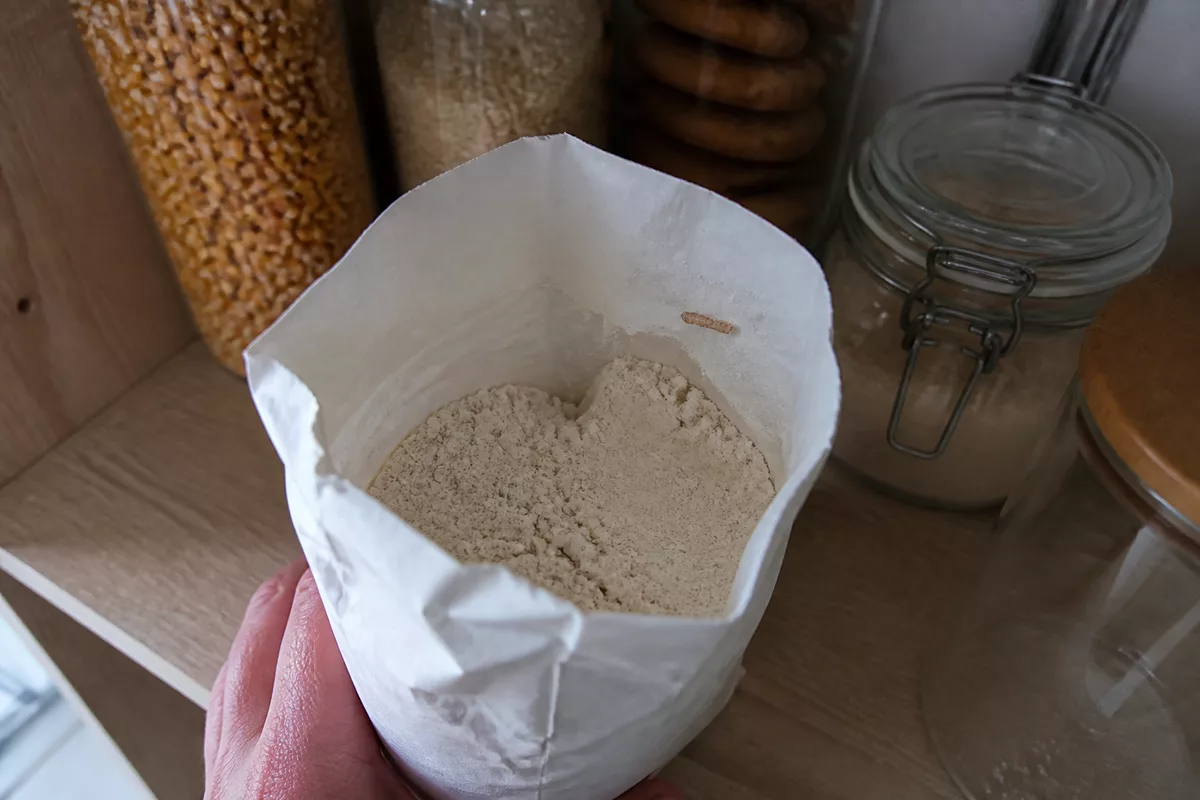
Throw away any food containing larvae, threads, cocoons, insects, or suspicious traces. Seal the product in a bag before removing it from the kitchen, then clean the trash bin or its container. The absence of adult moths is not enough to declare a package safe.
Foods to Throw Away Without Hesitation
Contaminated food should not be salvaged by removing only the visible part. Larvae and eggs can be hidden inside the food or in the folds of the packaging.
- Products containing larvae, silky threads, cocoons, or insects.
- Perforated packages or those showing unusual dust.
- Opened goods whose contamination source cannot be verified.
- Neighboring products made of paper, cardboard, or flexible plastic when doubt persists.
A suspicious product does not become safe simply because no adult moth is visible.
The safest action is to immediately bag suspicious products before disposal. This precaution limits the spread of larvae or cocoons to other cupboards and prevents contaminating the open trash bin.
Can a Non-Suspicious Food Be Saved?
An intact and uninfested product can be isolated as a precaution; consult the manufacturer’s instructions or an official source before freezing.
Freezing should not be used to salvage visibly contaminated food. Cooking, heat, or a homemade recipe does not automatically make an infested food safe to eat.
Sorting food and cleaning the cupboard are priorities; a one-time treatment does not replace these two actions.
How to clean the cupboard after finding the infestation?
A useful cleaning starts with completely emptying the affected area. You need to vacuum the gaps where larvae or cocoons may remain, then wipe the surfaces with a product compatible with food storage and dry them before putting back the inspected foodstuffs.
Cleaning in four steps
- Remove. Remove all foodstuffs, packaging, and crumbs from the area.
- Vacuum. Vacuum the corners, grooves, holes, baseboards, hinges, and undersides of shelves.
- Wipe. Clean the surfaces and remove residues with a product suitable for the intended use.
- Dry and protect. Immediately empty the vacuum bag or container into a sealed bag, then put back only the inspected foods.
White vinegar, essential oils, lavender, mint, or herbs are sometimes presented as repellents, but they should not be considered a proven treatment for an infestation. Never spray a household product or insecticide on food.
Errors that encourage recurrence
- Cleaning only visible surfaces and forgetting the grooves.
- Putting products back into their original flexible packaging.
- Forgetting pet food or reserves located in another room.
- Leaving the vacuum bag in the kitchen after cleaning.
- Applying an insecticide on a foodstuff or a surface in direct contact with food.
Neighboring cupboards must be inspected even if the first infestation site seems clearly identified. Adults may come from another storage, and cocoons can be located at a distance from the food where the larva fed.
Which pheromone traps to use to monitor the infestation?
A pheromone trap for food moths is mainly used to detect and monitor adult males. The device can confirm persistent activity or help locate an area to inspect, but it does not eliminate eggs, larvae, or cocoons hidden in the foodstuffs.
What traps really allow you to know
A catch after cleaning indicates that activity persists or that a site was forgotten. Conversely, an empty trap does not prove that the infestation is over, because females, immature stages, and cocoons are not targeted in the same way.
| Method | Main target | Role | Limit |
|---|---|---|---|
| Sorting and removal | Contaminated foodstuffs | Remove the visible source | Does not treat corners alone |
| Vacuuming and cleaning | Accessible larvae and cocoons | Reduce residues in the furniture | Inaccessible areas remain to be checked |
| Pheromone trap | Mostly adult males | Detect and monitor activity | Does not replace sorting or cleaning |
| Freezing | Certain unopened suspicious products | Precautionary option depending on the product | Does not recover already infested food |
| Professional | Persistent or extensive infestations | Assess an appropriate treatment | Cost and precautions to verify |
Follow the manufacturer’s instructions for placement, number of traps, and installation duration. Biocidal or insecticidal products also require strict adherence to the label, usage precautions, and any waiting period before reusing the kitchen.
When to ask for professional help?
Seek professional advice if moths persist despite several inspections and cleanings, if the infestation site is inaccessible, or if multiple rooms are affected. Intervention is also preferable when a chemical treatment must be considered in a food storage area.
How to prevent the return of food moths?
Prevention relies on three reflexes: controlling new purchases, protecting dry foodstuffs, and maintaining regular monitoring. Storing in airtight containers made of glass, metal, or rigid plastic reduces the risk of spread when an original packaging is contaminated.
Protecting Food After Opening
Transfer flour, rice, pasta, cereals, and dried fruits into clean containers with reliable closures. Label the contents and the opening date to more easily identify forgotten products.
Original packaging made of paper, cardboard, or flexible plastic does not always provide sufficient protection. Check the container’s closure and immediately clean up any crumbs or spilled food.
Establish a Monitoring Routine
- Check new packages before storing them.
- Rotate stock and avoid accumulating large quantities.
- Prioritize inspecting rarely used products.
- Periodically check for larvae, threads, cocoons, and moths.
- React at the first sign instead of waiting for a visible infestation throughout the kitchen.
The development cycle includes four stages — egg, larva, cocoon or pupa, then adult — and its speed varies with conditions, especially temperature. Monitoring over several weeks is therefore safer than a single check the day after cleaning.
To limit the return of moths, combine the removal of suspect goods, thorough cleaning of cupboards, monitoring, and airtight storage.
Key Takeaways
- 🔎 Inspect dry goods before treating visible moths.
- 🗑️ Discard foods showing larvae, threads, cocoons, or suspicious signs.
- 🧹 Vacuum grooves, hinges, holes, and undersides of shelves.
- 🪤 Use pheromone traps for monitoring, not as a substitute for cleaning.
- 🔒 Store inspected foods in airtight containers.
Frequently Asked Questions About Food Moths
How to Find the Nest of Food Moths in a Kitchen?
Inspect opened, old, or paper- and cardboard-stored dry foods. Then check corners, grooves, hinges, peg holes, and neighboring cupboards, not forgetting pet food.
Which Foods Should Be Discarded in Case of Food Moths?
Discard products containing larvae, threads, cocoons, insects, or suspicious traces. Nearby packaging that is flexible or not perfectly sealed should also be evaluated carefully.
Can an Infested Package of Flour or Rice Be Saved?
A package showing signs of infestation should not be recovered. An intact and non-infested product can be isolated as a precaution; consult the manufacturer’s instructions or an official source before freezing.
Do Pheromone Traps Eliminate Food Moths?
No. The traps mainly attract adult male moths and are primarily used to detect or monitor activity. Sorting food, cleaning cupboards, and airtight storage remain necessary.
How Long Should Monitoring Continue After Cleaning and How to Prevent Return?
Regularly inspect reserves for several weeks and react immediately to any new signs. To prevent return, check purchases, rotate stock, and use airtight containers.