
Sommaire
| Key Points | Details to Remember |
|---|---|
| 🪰 Definition | Identify the type of gnat (fruit fly, drosophila, fungus gnat). |
| 🍎 Main Factors | Spot the source: ripe fruits, compost, moist soil, drains. |
| 🧪 Natural Methods | Use vinegar traps, soap, essential oils, and ultrasound. |
| 🧼 Prevention | Adopt strict hygiene: store food properly, empty trash bins, dry out plant soil. |
| 🗺️ Action Plan | Follow a 7–14 day routine: locate, eradicate, prevent. |
| 🔁 Expected Result | Eliminate the visible population within 1–2 weeks, reduce risk of recurrence. |
Gnats seem tiny, but they quickly give the impression of an invasion. You start by seeing them around a forgotten fruit, then they colonize the trash bin, plant soil, and even the kitchen. This guide goes beyond DIY tips: it explains how to identify the source, apply natural solutions, and establish a prevention routine to stop any reappearance. It includes simple methods to implement, a 14-day action plan, and advice tailored to each situation — kitchen, compost, houseplants, or drains.
How to Recognize Gnats — Who Is Really Responsible?
Gnats, fruit flies (drosophilas), and fungus gnats are often confused. Drosophilas are attracted to fruits and fermented liquids; they are small (2–4 mm), beige to reddish-brown. Fungus gnats prefer moist soil and hover around flower pots. There are also flies linked to drains, tougher because they live in organic matter that accumulates in pipes. Knowing which type you are dealing with changes everything: the solution for an infested plant won’t necessarily work for a fermented food source.
Natural Methods and Effective Traps
Vinegar Traps and Attractive Liquids
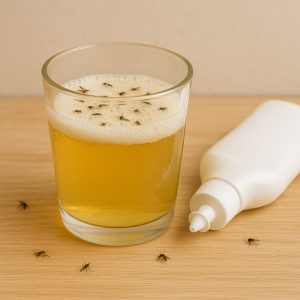
The classic trap — a glass with apple cider vinegar and a drop of dish soap — works surprisingly well on drosophilas. The vinegar attracts them, the soap breaks surface tension and prevents them from escaping. To increase attraction, add a piece of very ripe fruit at the bottom. Place several traps at hotspots (near the trash bin, compost, on the countertop) and renew the mixture every 48 hours.
Sticky traps and UV lamps
Sticky strips attract fungus gnats and are well suited for fungus gnats on plants. UV lamps are more suitable for extreme situations: powerful, they attract and then kill, but beware of the impact on other beneficial insects if used outdoors. Indoors, prefer targeted models and place them away from open windows where they could attract more insects.
Home remedies based on soap, essential oil, and baking soda
A soapy water spray applied to the surface of potting soil limits the females’ ability to lay eggs; repeat once a week. Essential oils (such as peppermint or eucalyptus) work as repellents: dilute 10–15 drops in 500 ml of water and spray around contaminated areas. Baking soda combined with vinegar can unclog and lightly disinfect pipes where larvae reside.
Targeted eradication according to the source
If the source is the kitchen or fruit
- Throw away overripe fruit or store it in the refrigerator.
- Wash sugary containers, dry the edges, and avoid juice puddles.
- Set up several vinegar traps around the areas of appearance.
For a kitchen infestation, quick action — 48 to 72 hours — drastically reduces the population. Also remember to inspect cupboards for forgotten fermented foods.
If the source is compost or organic waste
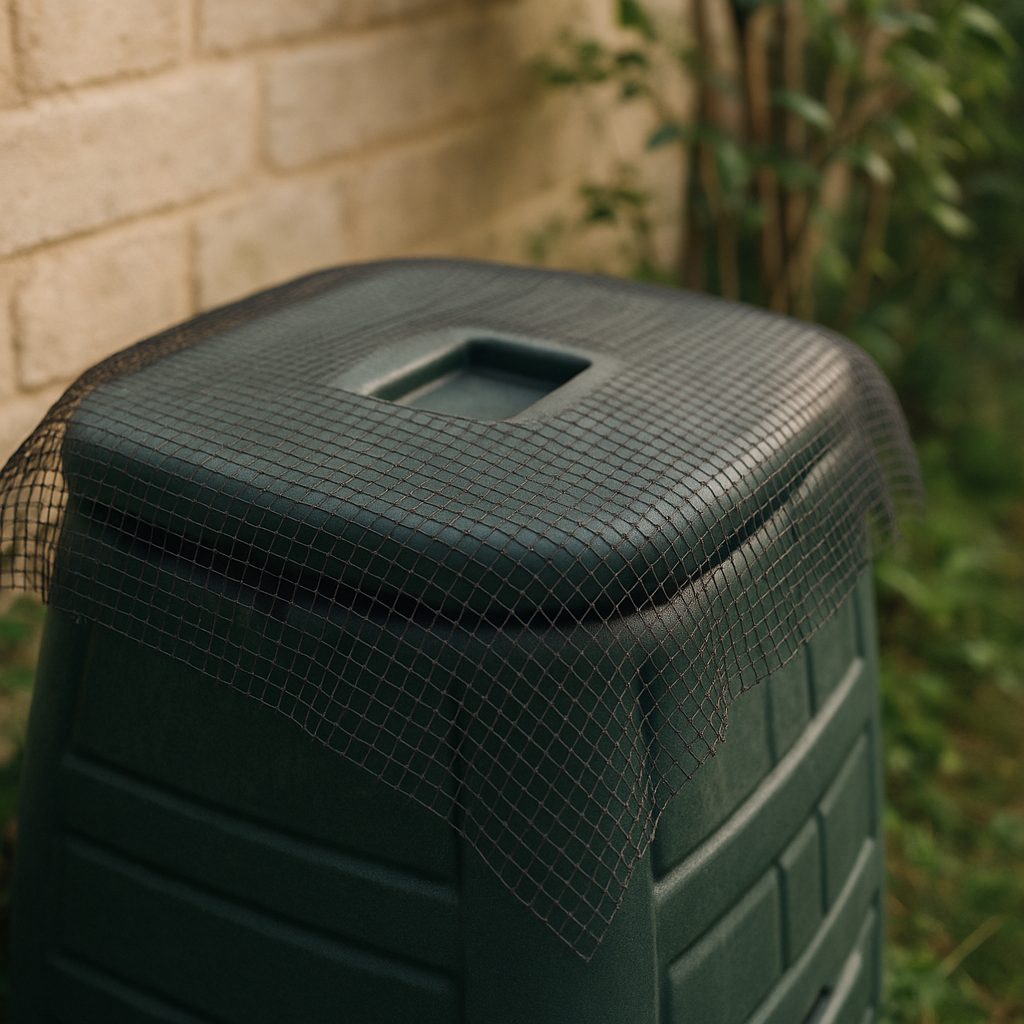
Maturing compost attracts fungus gnats. Cover fresh waste with a layer of dry material (leaves, paper), close bins tightly, and move the bin away from house openings. A very fine mesh on the bin prevents female entry while allowing the compost to breathe.
If the source is indoor plant soil
For fungus gnats, two approaches: dry out the soil and eliminate larvae. Let the surface dry more deeply between waterings, replace the top layer of soil with sand, or use a perlite mix to reduce retained moisture. If the infestation is advanced, repot with fresh soil and soak the roots in a weak black soap solution before repotting.
Sustainable prevention — making your home unwelcoming
Prevention changes everything: rather than continuously fighting adults, it is better to eliminate the conditions that allow them to reproduce. This involves a daily routine and some material improvements.
Daily routine and good practices
- Empty the trash regularly and clean container edges.
- Store ripe fruits and vegetables in the refrigerator.
- Dry wet surfaces quickly and do not leave standing water.
- Ventilate, especially after cooking, to avoid accumulation of fermented odors.
Simple improvements
- Install fine mosquito nets on compost bins or open windows.
- Use airtight lids for kitchen trash bins.
- Replace outdoor lamps with models less attractive to insects when possible.
Concrete 14-day action plan
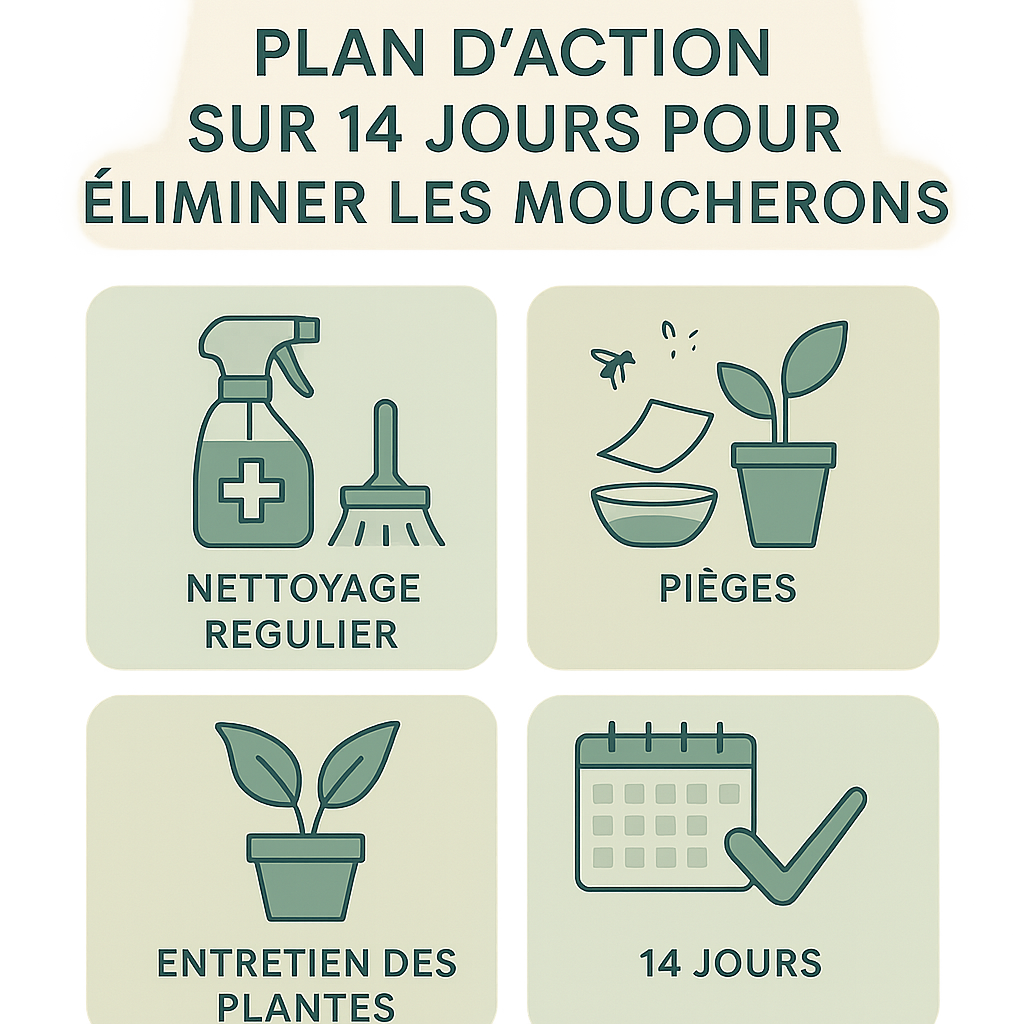
Here is a step-by-step protocol: follow it, you will see the population drop quickly and only return if favorable conditions reappear.
| Day | Action |
|---|---|
| Day 1 | Identify the source, visibly clean the area, place 3 vinegar traps. |
| Days 2–4 | Renew traps, remove all ripe fruit, empty trash bins, cover compost. |
| Days 5–7 | Treat plants (dry out/keep surface soil dry), apply sticky strips. |
| Days 8–10 | Assess population decrease, repot if necessary, check pipes. |
| Days 11–14 | Maintain routine, replace traps as needed, seal entry points. |
When to consider chemical or professional solutions?
Insecticides are not the first option: their effectiveness on adult fungus gnats is often temporary and they do not reach eggs or larvae in the soil or pipes. Indoors, favor targeted treatments (granules for plant soil, specific treatments for pipes) and strictly follow usage recommendations. For persistent and widespread infestation, a professional service can diagnose the exact source and use targeted interventions, limiting health and environmental impact.
Practical advice and mistakes to avoid
- Do not ignore an obvious source: a single forgotten fruit is enough to feed hundreds of fungus gnats.
- Avoid spraying products not intended for domestic use: this can contaminate food and surfaces.
- Do not rely solely on a single trap: integrated control (cleaning + traps + prevention) is key.
Explanatory video
A short video can help visualize trap preparation and prevention actions. Here is a useful video box for a step-by-step tutorial:
FAQ
Can fungus gnats transmit diseases?
They are not as dangerous as house flies, but since they can land on food, they pose a risk of secondary microbial contamination. Avoid prolonged contact with foodstuffs.
How long does it take to really get rid of them?
By rigorously following the 7–14 day plan, the visible population often disappears within one to two weeks. Prevention prevents reinfestation.
Will plants suffer if I water less to fight fungus gnats?
Moderate deep watering rather than frequency: favor less frequent but more controlled watering and check root health during repotting if necessary.
Do ultrasonic devices work?
The evidence is mixed. Some devices offer local reduction, but they do not replace controlling moisture sources and removing attractive organic waste.
{
“@context”: “https://schema.org”,
“@type”: “WebPage”,
“about”: {
“@type”: “Thing”,
“name”: “getting rid of fungus gnats”
},
“keywords”: [“fungus gnats”, “prevention”, “traps”, “compost”, “fruits”]
}