
The French metric system is the foundation of all modern measurements in France: kilometers on signs, kilograms at the market, liters at the pump. Born during the Revolution, it replaced a mosaic of old units with a coherent set based on the decimal system. Today, it largely overlaps with the International System of Units (SI), but its history, principles, and practical uses remain typically French.
Sommaire
Summary and Verdict: The French Metric System at a Glance
The French metric system receives an overall score of 9/10. It is recommended for anyone living, traveling, studying, or working in France, as well as for those needing to understand the SI in a scientific or technical context. Its decimal logic, connection to physical constants, and worldwide diffusion make it a robust tool, even if some sectors remain attached to Anglo-Saxon units.
| Pros | Cons |
|---|---|
| Simple decimal logic to explain and use. Worldwide compatibility via the International System of Units. Definitions based on physical constants, stable over time. Uniform use in education, industry, and daily life. | Coexistence with imperial units in some sectors. More abstract derived units for the general public. Historical complexity to understand all developments. Adaptation needed for visitors accustomed to other systems. |
Score: 9/10 | Recommended for: travelers, students, teachers, technical professionals, and anyone wishing to master measurement units in France.
Strengths of the Metric System
- Decimal logic: everything is based on multiples of 10 (centi-, milli-, kilo-), simplifying conversions and mental calculations.
- Scientific universality: it is the basis of the International System of Units, used in almost all scientific publications.
- Rational origin: units were initially defined by the Earth (meter) or water (liter, kilogram).
- Clarity in daily life: same units for school, roads, commerce, and industry.
- Scalability: definitions have been modernized (linked to the speed of light, quantum constants, etc.).
Weaknesses and Limitations
- Coexistence with imperial units: for aviation, international trade, or some online content, one must juggle miles, inches, gallons.
- Complexity of derived units: beyond basic units, some derived units (pascal, joule, watt) remain abstract for the general public.
- Historical legacy: the transition period with old measures was long and confusing, still fueling some old expressions (toise, livre, arpent).
Methodology of This Guide
This guide synthesizes French institutional sources (LNE – French metrology, National Archives, UNESCO documents) and international ones (BIPM, scientific publications on the 2018 SI revision). It targets curious readers – travelers, students, professionals – who want a reliable, concrete, and pleasant-to-read text.
Contents were selected based on several criteria: pedagogical clarity, historical accuracy, consistency with the International System of Units, everyday applicability, and scientific rigor. Definitions and examples are regularly cross-checked against official recommendations and recent metrology documents.
During the Revolution, French scholars wanted to break with old local units, sometimes differing from one city to another, to establish a unique, rational, and universal system. This project, driven by science, was also meant to symbolize the end of privileges in the trade of weights and measures. Summary of revolutionary archives and LNE works, 1790–1799
How Was the French Metric System Born?
A Chaos of Measures Before the Revolution
Before 1789, France used several hundred different units: toise, foot, inch, line for lengths, pound, ounce for mass, setier, bushel, pint for volumes. Values varied from one province to another, complicating trade, taxation, and justice. Enlightenment philosophers denounced this disorder, but no major reform took place.
The Revolutionary Decision: Rebuild Everything
In 1790, the Constituent Assembly tasked the Academy of Sciences with proposing a unified system applicable throughout the Republic. Scholars chose to define the meter as the ten-millionth part of the quarter meridian of the Earth passing through Paris. This definition anchored length in Earth’s geometry, with both scientific and political ambition: a measure valid for all peoples.
The law of 18 Germinal Year III (April 7, 1795) officially established the decimal metric system, with the meter as the base unit, the gram for mass, the liter for volume, and the are/hectare for surfaces.
Platinum Standards: Archive Meter and Kilogram
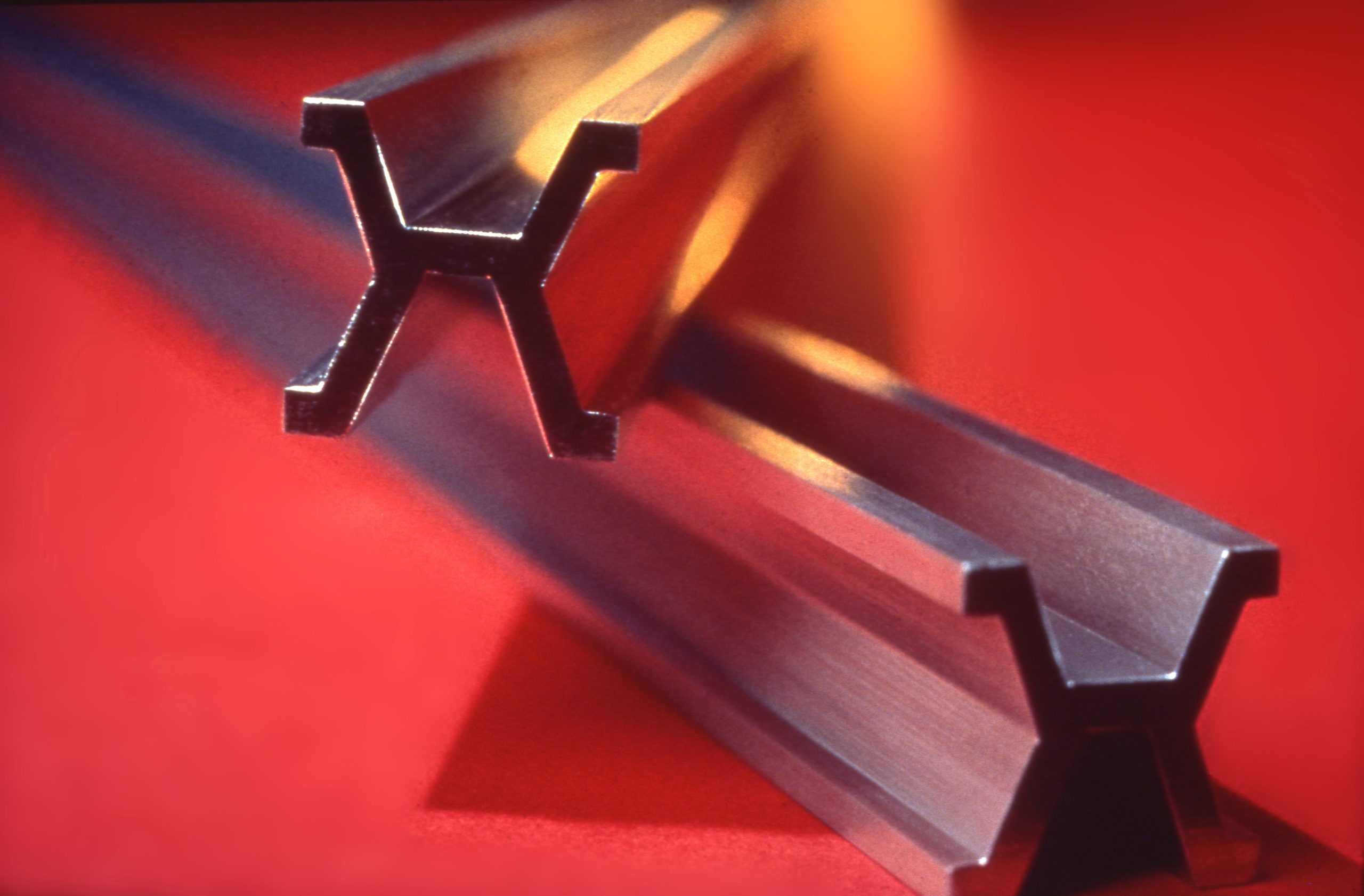
To move from theoretical definitions to practice, material standards were made. In 1799, a platinum bar, the Archive meter, and a platinum cylinder, the Archive kilogram, were deposited at the Republic Archives. These objects served as references to reproduce copies for administrations and laboratories.
In the 19th century, France played a central role in the Meter Convention (1875), which created the International Bureau of Weights and Measures (BIPM) near Paris. It was at this occasion that the international prototype kilogram (IPK) and platinum-iridium meter bars appeared, international standards until the 20th century.
The origins of the metric system in France and the 1875 Meter Convention paved the way for the modern International System of Units, revised in 2018 to rely exclusively on natural constants. Suzanne Débarbat & Terry Quinn, metrology review, 2019
Main Units of the French Metric System
In France, the original metric system and the SI largely overlap. For daily life, a few key units stand out.
| Quantity | Base Unit | Symbol | French Example |
|---|---|---|---|
| Length | meter | m | Speed limit at 50 km/h in town, sign at 10 km. |
| Mass | kilogram | kg | Cheese sold at €24 per kg at a market. |
| Volume | liter | L | Fuel displayed in €/L, 1.5 L water bottle. |
| Surface | square meter | m² | Apartment of 65 m², park of 3 hectares. |
| Temperature | degree Celsius | °C | Weather at 22 °C, fridge setting at 4 °C. |
The Meter and Its Multiples
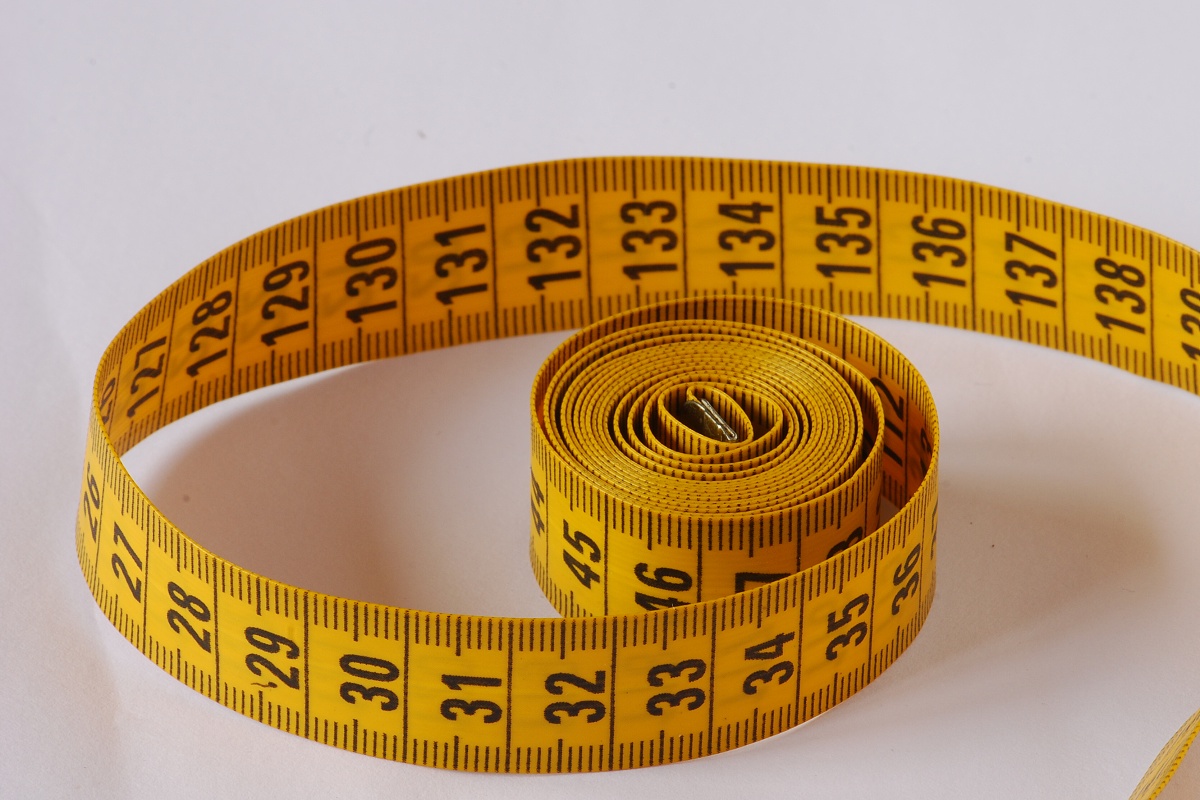
The meter remains the reference unit. It is used directly for rooms, plans, building heights. Multiples are omnipresent: centimeter (cm) for a person’s height, millimeter (mm) in DIY, kilometer (km) for road or rail distances. The modern definition of the meter relies on the speed of light in a vacuum, fixed once and for all.
The Kilogram and the End of the “Big K”
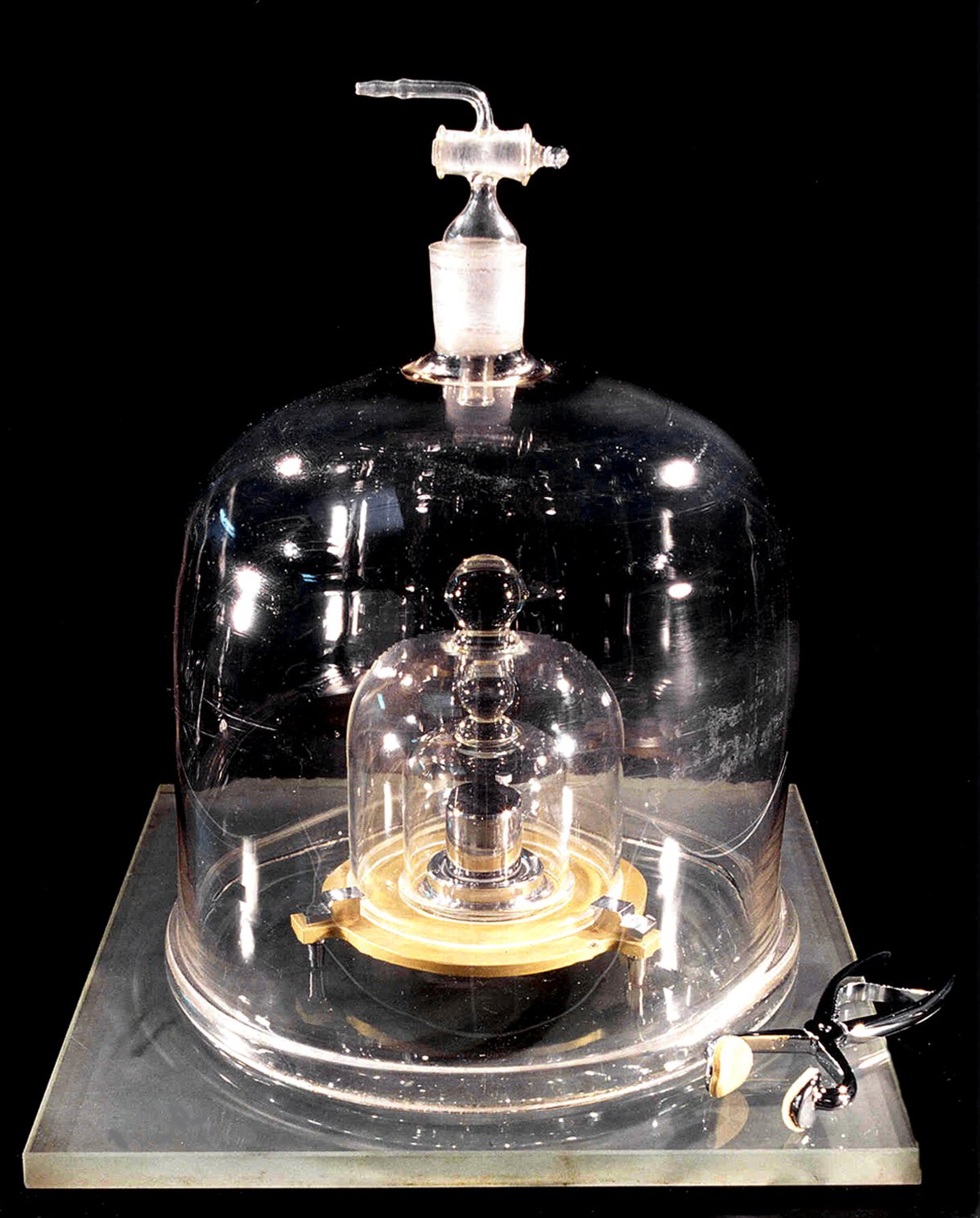
The kilogram was initially defined as the mass of a volume of one liter of water at a given temperature, then by the famous platinum-iridium cylinder kept in Sèvres, nicknamed the “Big K” or international prototype kilogram. Since 2019, the definition is based on Planck’s constant rather than a physical object, ensuring perfect stability in the long term. For more details, you can consult our dossier on the history of the kilogram.
The Liter: A More Subtle Unit Than It Seems
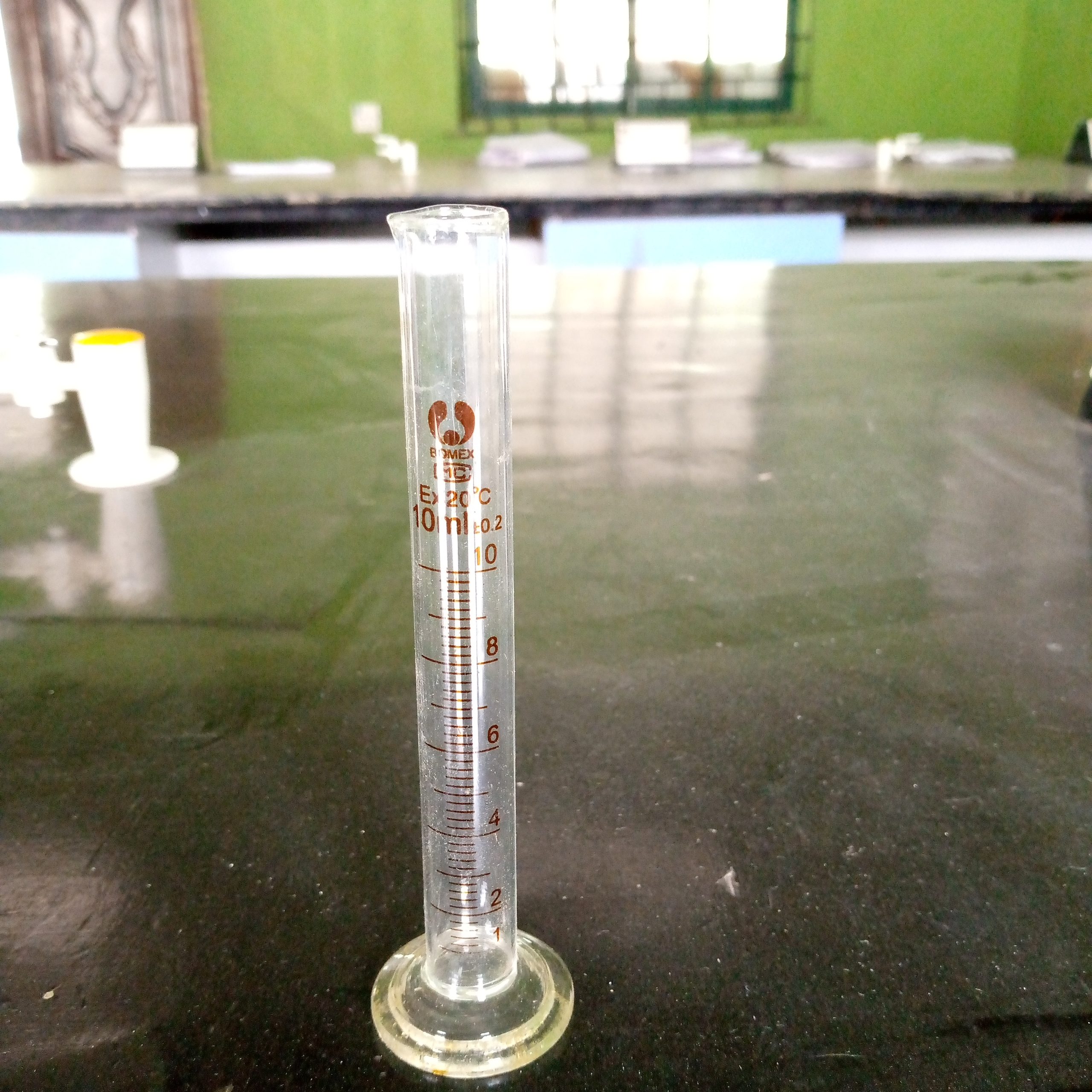
The liter is today defined as a special name for the cubic decimeter (dm³), a cube 10 cm on each side. Historically, this unit had several definitions and even several names (pint, cadil), before stabilizing in the 20th century. The definition of the liter nicely illustrates the balance sought between simplicity for the general public and precision for laboratories.
Decimal Prefixes: A Universal Language
The genius of the metric system lies in a handful of standardized prefixes: milli- (10⁻³), centi- (10⁻²), kilo- (10³), mega- (10⁶), etc. The same prefixes combine with different units: a millimeter, a milligram, a milliliter all refer to the same factor 10⁻³. This common vocabulary makes conversions predictable and easy to memorize.
In class, converting units (mm, cm, m, km) teaches students to handle powers of 10. This mental exercise is a lasting investment: it becomes useful later in science, computing, or economics. Comment from a mathematics teacher, Paris academy, 2023
From the French Metric System to the International System of Units (SI)
From France to the Whole World
What began as a national reform gradually became an international measurement language. In the 19th century, many countries adopted the metric system or partially converted to it. The Meter Convention (1875), signed in Paris by 17 states, institutionalized this cooperation and prepared the future SI.
Birth of the SI and Role of the BIPM
In 1960, the General Conference on Weights and Measures (CGPM) officially adopted the International System of Units, formalizing seven base units (meter, kilogram, second, ampere, kelvin, mole, candela) and their derived units. The BIPM, located at the Pavillon de Breteuil in Sèvres, coordinates this system, in close dialogue with national laboratories (in France, the LNE).
The Major Revision of 2018–2019
In 2018–2019, several units, including the kilogram, kelvin, and mole, were redefined based on fundamental constants (Planck constant, Boltzmann constant, Avogadro number). The system remains metric and decimal but is no longer dependent on physical objects that could degrade (like the “Big K”).
The redefinition of units changes nothing for daily use: a kilogram of apples still weighs a kilogram. It simply guarantees that this kilogram can be reproduced with the same accuracy in any laboratory worldwide, today or in a century. Educational note from the BIPM on the SI revision, 2018
Using the French Metric System Daily
Some Essential Conversions
For everyday life, a few reflexes suffice:
- Length: 1 km = 1,000 m; 1 m = 100 cm; 1 cm = 10 mm.
- Mass: 1 kg = 1,000 g; 1 g = 1,000 mg.
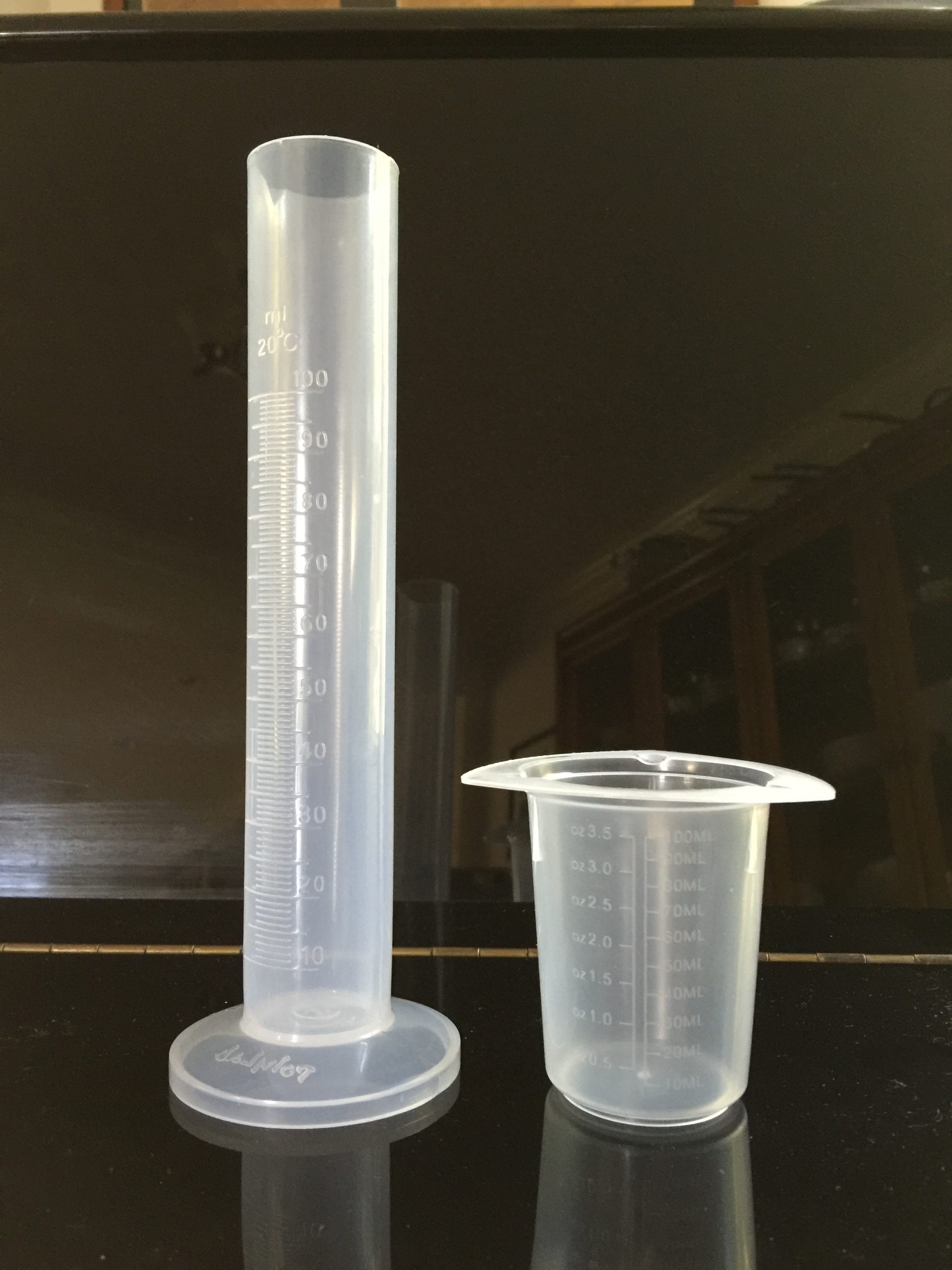
- Volume: 1 L = 1,000 mL = 1 dm³; 1 m³ = 1,000 L. For everyday uses in cooking or drinks, you can use our practical conversion table from mL to cL.
- Surface: 1 m² = 10,000 cm²; 1 hectare = 10,000 m².
To convert to imperial units, one often uses approximate equivalences: 1 inch ≈ 2.54 cm; 1 mile ≈ 1.609 km; 1 pound ≈ 0.45 kg; 1 US gallon ≈ 3.785 L.
Concrete Examples for a Visitor in France
- On the road: speed limits are in km/h (130 km/h on highways, 80 km/h on roads, 50 km/h in towns).
- At the supermarket: fresh products display prices per kg or per 100 g; drinks are sold in L or cL.
- At the hotel: room size is indicated in m², useful for comparing offers.
- On a hike: guidebooks indicate distances in km and elevation changes in meters.
How to Simply Explain the Metric System to a Child
A very effective approach is to start with the 30 cm ruler and everyday objects: a meter corresponds to a big step, a kilometer to about a thousand big steps, a liter to a large water bottle. Then introduce prefixes: milli- for one-thousandth (like a thin slice), kilo- for a thousand times more (like a thousand 1 € coins).
Key Takeaways: Our Opinion on the French Metric System
✅ What We Liked
- A very coherent decimal logic that simplifies conversions and mental calculation.
- Worldwide adoption via the SI, essential for science and international trade.
- Units anchored in physical reality (Earth, water, fundamental constants).
- Readability for the general public: same units at school, work, and daily life.
- Regularly revised definitions to stay at the forefront of metrology.
- Compatibility with the digital world (data, sensors, connected objects).
- A rich and well-documented history, useful for education and general culture.
⚠️ Points to Know
- Coexistence with imperial units in some sectors (aviation, marine, international trade).
- Derived units sometimes abstract (pascal, joule, watt) for the general public.
- Long historical transition leaving habits and old expressions.
- Mental conversions still difficult for visitors used to miles and inches.
- Advanced SI concepts (quantum constants, etc.) not easily accessible without scientific background.
- Uneven educational materials depending on curricula and countries.
- Possible confusion around some “non-SI but accepted” units like the liter.
What to Remember and How to Put It into Practice
The French metric system was designed to be simple, decimal, and universal. It gradually transformed into the International System of Units, grounded in the laws of physics but still readable for the general public. For most daily uses, a few units (m, kg, L, °C) and prefixes (milli-, centi-, kilo-) suffice to get oriented.
To go further in an actionable way:
- If you are preparing a trip to France: get used to reading distances in kilometers and temperatures in °C, and convert a few examples before departure.
- If you teach: anchor each unit in concrete situations (recipes, routes, simple experiments) so the concept does not remain abstract.
- If you work internationally: keep some conversion factors between metric and imperial units handy, while continuing to think in metric.
Once these reflexes are acquired, the French metric system becomes a true common language, linking the history of the Revolution, the needs of commerce, and the demands of modern science.
💡 The information in this guide is provided for educational purposes. It relies on recognized institutional sources but does not replace official regulatory texts.
FAQ: Frequently Asked Questions About the French Metric System
Is the French Metric System the Same as the SI?
The historical metric system is the direct ancestor of the SI. In France, the SI is now used, which extends the metric system by specifying seven base units and many derived units. In everyday life, the difference is practically invisible: people still talk about meters, kilograms, and liters.
Why Did France Adopt the Metric System?
The decision came from the French Revolution, which wanted to end the disorder of local units and privileges linked to weights and measures. A unique, decimal, and science-based system was meant to facilitate trade, taxation, and education.
Is the French Metric System Mandatory in France?
Yes, essentially: regulations require the use of units compatible with the International System for commerce, official documents, and safety (road signs, medication leaflets, etc.). Some exceptions remain in specialized fields (aeronautics, marine, historical uses).
How to Quickly Convert Miles to Kilometers?
A practical rule is to multiply miles by 1.6. Thus, 10 miles ≈ 16 km. For an inverse approximation, divide kilometers by 1.6: 100 km ≈ 62 miles.
Why Use Degrees Celsius and Not Fahrenheit in France?
France, like most countries using the metric system, adopted the Celsius scale, consistent with the SI. 0 °C corresponds to ice melting and 100 °C to water boiling at normal pressure, making the scale intuitive for climate and cooking.
Are Old French Units Still Used?
Some persist in everyday language or heritage (toise, league, arpent, livre), but they no longer have legal value. They may be encountered in old texts, museums, or guided tours, sometimes accompanied by their metric unit equivalents.
Is the Liter an Official SI Unit?
The liter is considered a “non-SI but accepted” unit because it exactly corresponds to a cubic decimeter. Scientific documents often use the symbol L or l, while in daily life people speak interchangeably of milliliters, centiliters, or liters.
Why Redefine Units If It Changes Nothing for the Public?
Redefinitions (like that of the kilogram in 2019) serve to guarantee absolute stability of units over the long term. Metrology laboratories must be able to reproduce the same values with extreme precision, independent of an object that could get dirty, wear out, or lose a few micrograms.
Is the Metric System Really Simpler Than Other Systems?
For conversions, yes: switching from one unit to another is done by factors of 10, limiting errors and easing learning. However, some derived units (pascal, joule) require scientific initiation, like their equivalents in other systems.
How to Practice Using Metric Units?
The most effective way is to rely on real situations: check labels in g and kg at the supermarket, estimate distances in m and km during trips, measure volumes in L in cooking or laboratory. These exercises make the French metric system concrete and memorable.