
Sommaire
Gnats in the sink: how to get rid of them step by step
| 📌 | Target problem: GNATS are flying around the drain, overflow, or siphon. |
| 🧪 | Common cause: a mixture of moisture, greasy deposits, and food residues in the pipe. |
| 🛠️ | Effective method: mechanical brushing, internal cleaning, drying, then monitoring for several days. |
| ⏱️ | Realistic timeframe: improvement is often seen in 3 to 7 days if the source is indeed the sink. |
| ⚠️ | Common mistake: spraying a product on the surface without removing the stuck material under the drain. |
| 🏠 | When to broaden the search: if the GNATS also come from fruit, the trash bin, plants, or a hidden leak. |
GNATS that keep coming back around the sink often give the impression that cleaning is useless: the countertop is clean, but a few hours later, they are still there. The real problem is not always visible on the surface, as it often lodges in the drain, overflow, or pipe. By understanding where they come from and treating the source in the right order, you can usually reduce the presence of these insects within a few days, without multiplying ineffective actions.
Gnats in the sink: what exactly are we talking about?
When we talk about GNATS in the sink, we mainly refer to small insects attracted by moisture and organic matter present around the drain and inside the pipes. The distinction is important: if the insects concentrate near the sink, the treatment must target the pipe; if they circulate throughout the kitchen, the source may be broader.
In a kitchen, these insects are often visible at dawn, after washing dishes, or when water has run several times in the evening. This behavior is not accidental: wet surfaces, greasy films, and food residues create a discreet but favorable environment. This is also why a visually clean sink can remain the main source.
Signs pointing to the sink as the main source
Some clues help avoid mistakes. GNATS mainly gather near the drain, overflow, or around the siphon. They return quickly even after emptying the trash and cleaning the countertop. Finally, their presence often increases just after using water, indicating that the wet area and pipe play a direct role.
- More noticeable presence in the morning or after washing dishes
- Insects visible within 20 to 50 cm of the drain
- Quick return despite a spotless sink surface
- Light odor of moisture or slow drainage alongside
Field observations show that many households first think of fruit or the trash bin. However, when GNATS remain concentrated around the stainless steel and the drain hole, the sink is very often the real source. The common factor is almost always the same: stuck organic matter, invisible at first glance.
Why are there gnats in the sink?
GNATS appear in the sink because the drain and pipe retain moisture, grease, and small food scraps. This mixture creates a refuge and breeding zone. As long as this stuck material is not removed, the insects return, even if the surface seems clean.
The mechanism is simple: water alone does not completely clean the internal walls. Over days, a deposit forms under the grid, around the flap, in the overflow, or lower in the siphon. This layer can hold particles of coffee, sauce, grease, or rinse liquid. In practice, this is often where GNATS find what they need to stay.
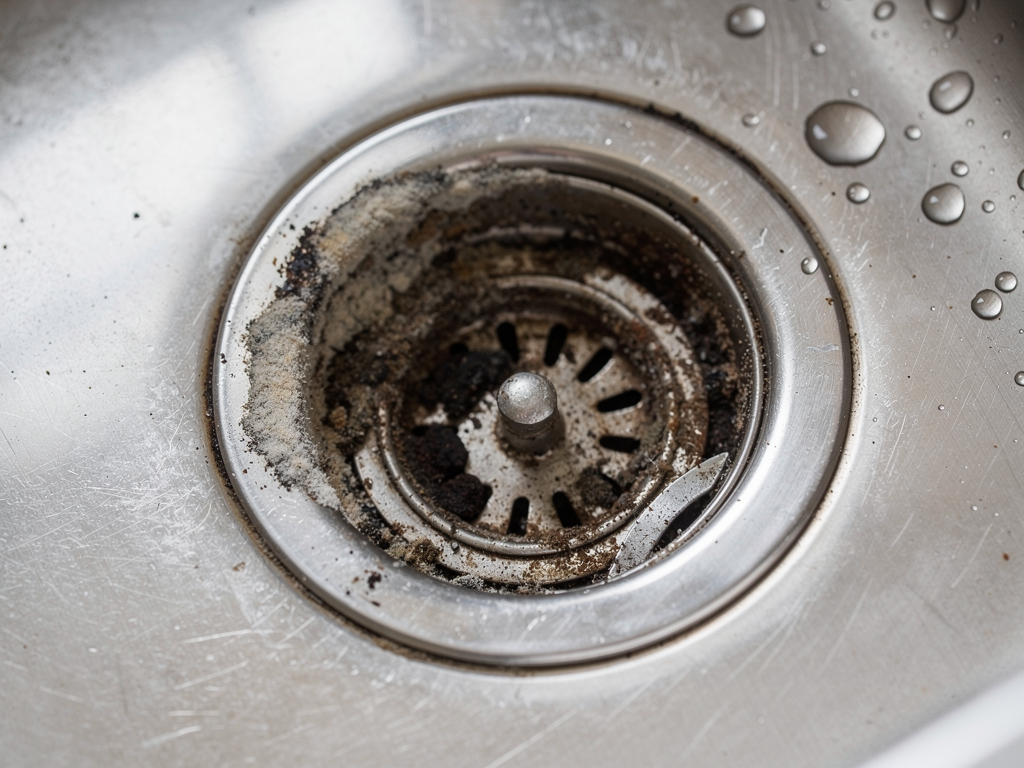
According to the ANSES, humidity and hygiene in domestic areas play a major role in the presence of small pests in the home. Meanwhile, the ADEME reminds us of the importance of limiting food leftovers, including the barely visible residues that linger in a kitchen. In other words, the sink becomes problematic when it accumulates water, ambient heat, and organic matter.
The most common causes in a kitchen sink
The most common cases are quite ordinary: cooking grease, coffee grounds, dairy products, crumbs rinsed into the sink, leftover sauces, or poorly emptied strainer. A slower drainage further promotes the phenomenon, as the water remains in contact with the walls longer. If the underside of the strainer has not been scrubbed for several weeks, it can harbor a very fine but sufficient deposit.
Special cases not to forget
You should also consider less obvious situations: a secondary sink rarely used, dishwasher connection that retains residues, slightly detached seal, small leak under the cabinet, or overflow never cleaned. If you have a broader doubt in the room, the guide on gnats in the kitchen helps distinguish a localized source from a more diffuse problem.
How to get rid of gnats in the sink step by step?
To eliminate GNATS from the sink, you need to treat the source and not just the visible insects: remove deposits around the drain, clean the inside of the pipe, dry the area, then repeat the operation for several days. Consistency matters as much as the product used.
The proper method is based on a logical order. First, remove the accessible matter. Only then clean the inside of the pipe. Finally, reduce what attracts insects again: humidity, food residues, and stagnation. Skipping the first step often leaves the treatment superficial.
Step 1: clean the drain and accessible parts
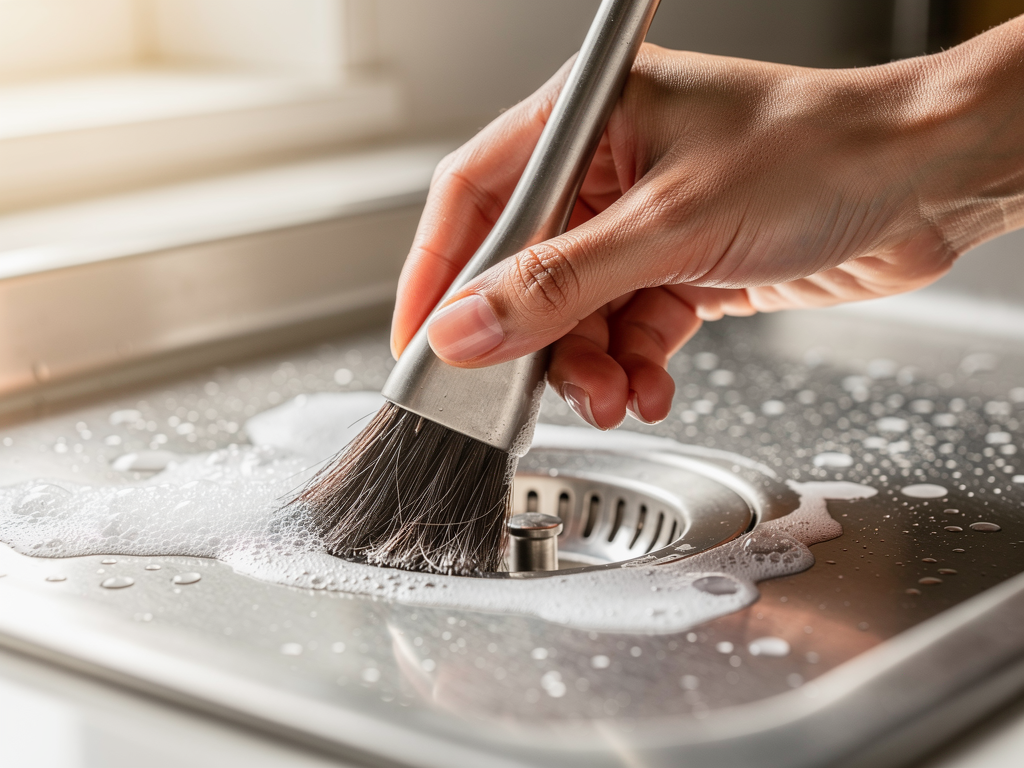
Remove the strainer or basket, remove visible waste, then scrub around the drain with a small brush. Focus on the flap, the underside of the strainer, and the overflow if your sink has one. A fine brush of 20 to 30 cm is useful to reach the first centimeters of the pipe. Then wipe splashes and wet areas around the sink.
Step 2: treat the inside of the pipe
Once the visible area is clean, move to the inside of the pipe. In a typical domestic installation, very hot water is often used, generally around 60 to 70 °C, if the pipe material allows it. You can complement with a suitable maintenance solution or a gentle method intended to loosen residues. Let it act for 15 to 30 minutes, then rinse thoroughly. If you are looking for an additional trapping method, the file on the vinegar gnat trap helps understand what it can do… and especially what it does not replace.
A maintenance agent notes that kitchens where fats are regularly poured into the sink almost always require prior brushing. In these cases, a simple cleaning liquid sometimes masks the odor but does not detach the film stuck on the internal walls.
Step 3: Dry and Limit Attraction
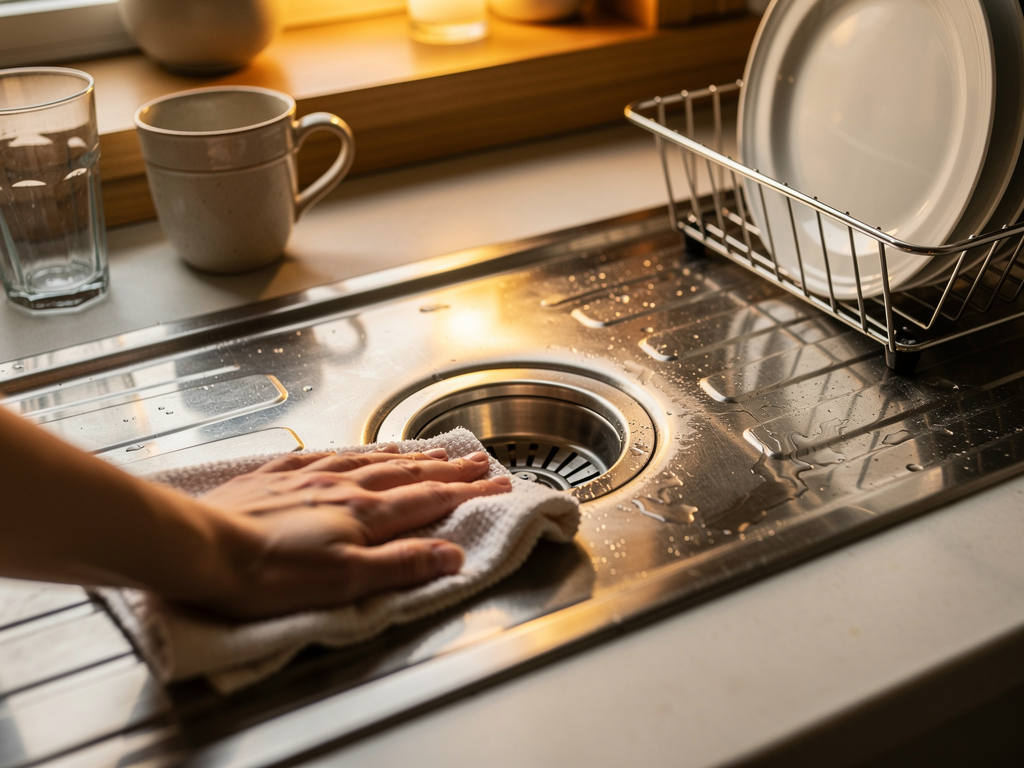
Dry the sink after the last use of the evening, empty the strainer, and do not leave a soaked sponge or food scraps at the bottom. Also check the cabinet under the sink: a slow leak maintains favorable humidity. In homes where the problem extends to several rooms, an article on gnats in the house helps identify other hidden sources, notably plants or forgotten damp areas.
Step 4: Monitor for 3 to 7 Days
Monitor the area around the drain, especially in the morning. If a few individuals persist, repeat brushing and hot rinsing for several consecutive days. A gradual decrease is normal; however, if the number remains stable after a week, you should expand the inspection to the trap, the cabinet under the sink, the trash bin, or the plants. For urgent situations, the advice to eliminate gnats within 24 hours can be helpful as a supplement, but it does not replace treating the drain.
What Mistakes Really Prevent Eliminating Gnats in the Sink?
The most common mistake is killing the VISIBLE GNATS without cleaning the area where they reside. A surface spray, a drain deodorizer, or a single hot water rinse do not permanently eliminate a colony established in the drain or trap.
The first mistake is therefore confusing apparent disinfection with problem elimination. If residues remain under the grate or in the overflow, the insects can return very quickly. The second mistake is stopping too soon: a single cleaning sometimes improves the situation for 24 hours, then the cycle restarts.
The Most Common Counterproductive Habits
Among the false good gestures are using a drain fragrance, quick rinsing without brushing, or treating only the shiny surface of the stainless steel. It is also important to avoid confusing other sources. Similar insects can come from overripe fruit, a damp trash bin, or moist potting soil; on this point, the FAQ dedicated to gnats in plants can be useful if you have pots near the kitchen.
When GNATS return despite a “clean” sink, the problem is generally not a lack of product, but a lack of mechanical action on hidden deposits.
Concrete Examples: What to Do Depending on Your Sink’s Situation?
The right answer is not always the same depending on the sink’s condition. A slow draining pipe, a persistent odor, or humidity under the cabinet do not point to the same priority actions. It is better to adapt the treatment to the context rather than repeat a standard routine.
Sink That Smells Bad and Drains Slowly
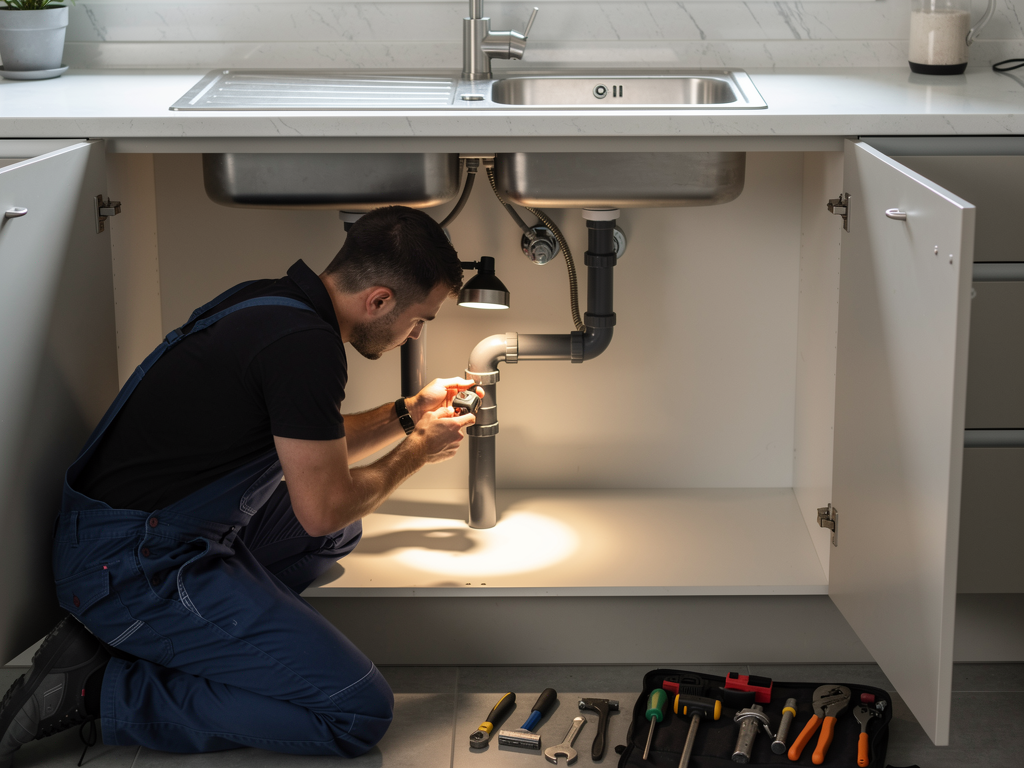
Here, the priority is clear: mechanical cleaning followed by trap inspection. A bad odor combined with slower flow often signals a thicker deposit. Disassembling the trap can become useful if you are comfortable with this operation. An improvement in odor within 24 to 48 hours is generally a good sign that you are treating the right source.
Sink clean in appearance but persistent fruit flies
In this case, look at what is often forgotten: overflow, seals, underside of the drain, dishwasher connections, and moisture under the sink. In small kitchens, a few repeated drops are enough to maintain a favorable micro-environment. If everything seems clean on top but the insects return after each use of water, it is often the hidden area that causes the problem.
Fruit flies mostly visible at night or after washing dishes
The useful reflex is to leave nothing in the strainer before going to bed, to wipe the drain, and to treat the pipe while the residues are still fresh. This setup is common when the sink is used intensively in the evening. It indicates less a “massive invasion” than a well-fed breeding ground each day by small amounts of organic matter.
If despite everything the situation does not change, the possibility of a deeper clog or a leak in the cabinet must be taken seriously. The site Service-Public.fr also reminds of the importance of regular home maintenance and prompt reporting of humidity-related issues, especially in rental properties. In case of doubt about a leak, a quick check avoids unnecessarily prolonging the problem.
FAQ about fruit flies in the sink
Can fruit flies come from the siphon?
Yes, this is even a common hypothesis when the drainage is slow or an odor persists. The siphon naturally retains water, and if it also accumulates organic deposits, it becomes a maintenance point for FRUIT FLIES. Disassembly may be relevant if cleaning from above is not enough.
How long does it take to see improvement?
In many kitchens, a visible decrease appears in 48 to 72 hours, then is confirmed over 3 to 7 days. The key point is repetition: a single treatment rarely gives a lasting result if residues remain in the pipe.
Is white vinegar sufficient on its own?
Not always. Vinegar can help with maintenance or trapping depending on the case, but it does not replace the mechanical removal of stuck materials. If the drain and overflow are clogged, brushing remains the decisive step.
Should boiling water be used?
It is better to be cautious. For domestic installations, very hot water around 60 to 70 °C is recommended if the pipe can withstand it. Excessive heat may be unsuitable for certain materials or joints.
When should a professional be called?
If the FRUIT FLIES return after a week of serious treatment, if the sink drains poorly despite cleaning, or if you suspect a leak, a deep clog, or a damaged pipe, it is reasonable to request an intervention. The professional can check invisible areas without dismantling at random.