
Sommaire
Spring is the season when an awakened lawn demands more than just a mow: it’s a gradual reshaping. Between dead leaves, residual thatch, and the first shoots, your lawn needs a simple but tailored protocol depending on soil condition and your usage. This article describes step-by-step the actions to take, when to do them, and why they have a lasting impact on the density, color, and resilience of the lawn against summer heat.
In brief
🌱 Cleaning and diagnosis: remove leaves and debris, then assess compaction, moss, and sparse spots to decide on scarification or aeration.
✂️ Progressive mowing: start high (6–7 cm) and reduce in several passes; regular cutting promotes density and keeps weeds away.
💧 Targeted watering: low frequency but deep to develop the root system; best timing: early morning.
⚠️ Fertilization and monitoring: balanced input in spring, then follow-up according to soil texture and lawn color — avoid excess nitrogen.
Assessing the lawn after winter
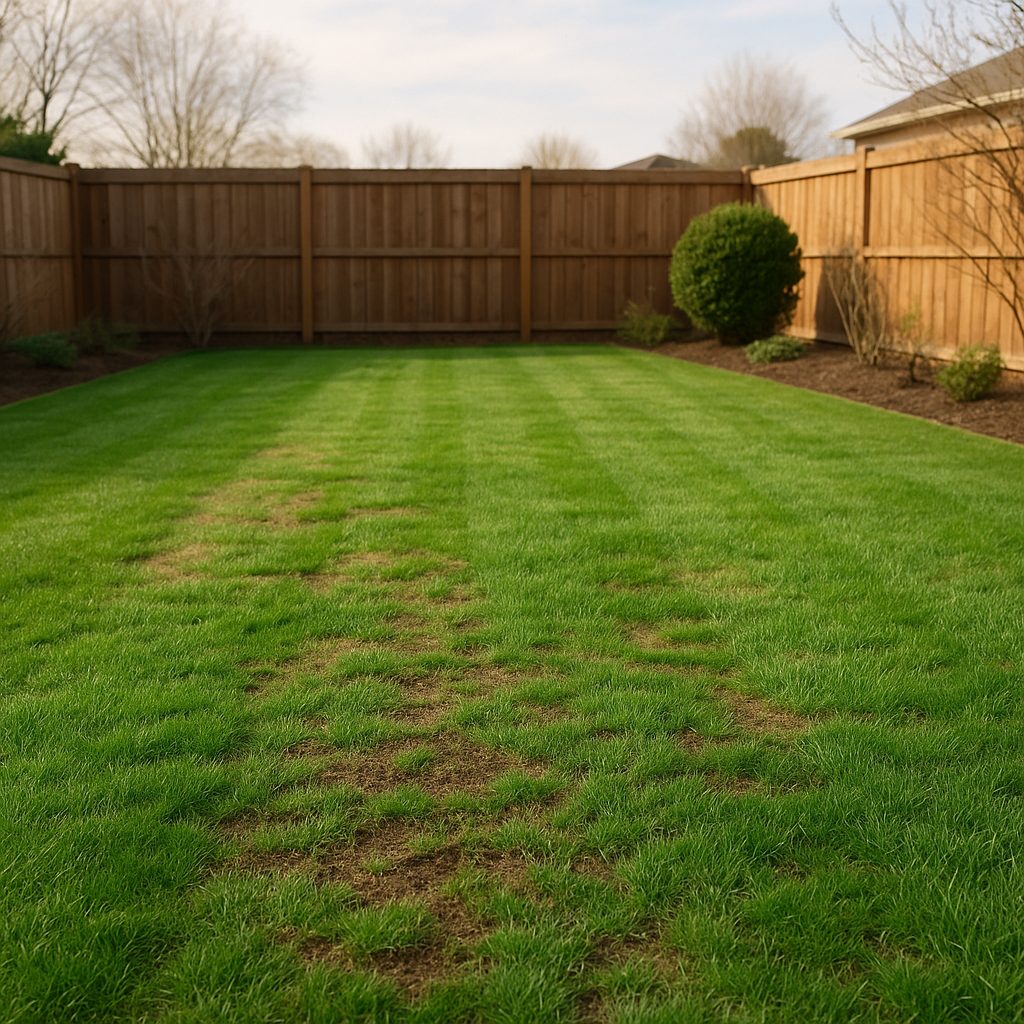
The first inspection at spring awakening helps prioritize interventions. Look for compacted areas where water pools, yellowed or bare patches, presence of moss, and the general condition of the thatch. In clay soils, compaction is more frequent; in sandy soils, nutrient deficiencies and drying occur quickly. A small shovel or light coring is enough to judge root depth: short roots = need to improve aeration and fertilization.
When to act?
The right time is not a fixed date but a combination of soil temperature and moisture: aim for days when soil temperature exceeds 8–10 °C and the soil is not waterlogged. Too early, and interventions compact the lawn; too late, and rapid growth makes some actions (scarification for example) less effective.
Cleaning, scarification, and aeration
These three operations may seem similar but address different issues. Cleaning removes debris, scarification removes thatch and moss that suffocate the lawn, while aeration relieves compaction and promotes water and air infiltration into the root zone.
Cleaning: the essential step
Start with a stiff rake or, for large areas, a light scarifier in collection mode. Remove branches, stones, and plant clumps that retain moisture. This cleaning facilitates tool access and limits areas where diseases and fungi can settle.
Scarification: how and why
Scarification is useful if the thatch exceeds 1 cm or if moss covers significant areas. For a small garden, a manual scarifier is sufficient; for a larger area, prefer a motorized device with depth adjustment. Scarify in two crossed passes: the first to loosen, the second to extract. Afterwards, don’t panic if the lawn looks sparse: this is normal, it will regenerate with good seeding and nutrient supply.
Aeration: when compaction slows the lawn
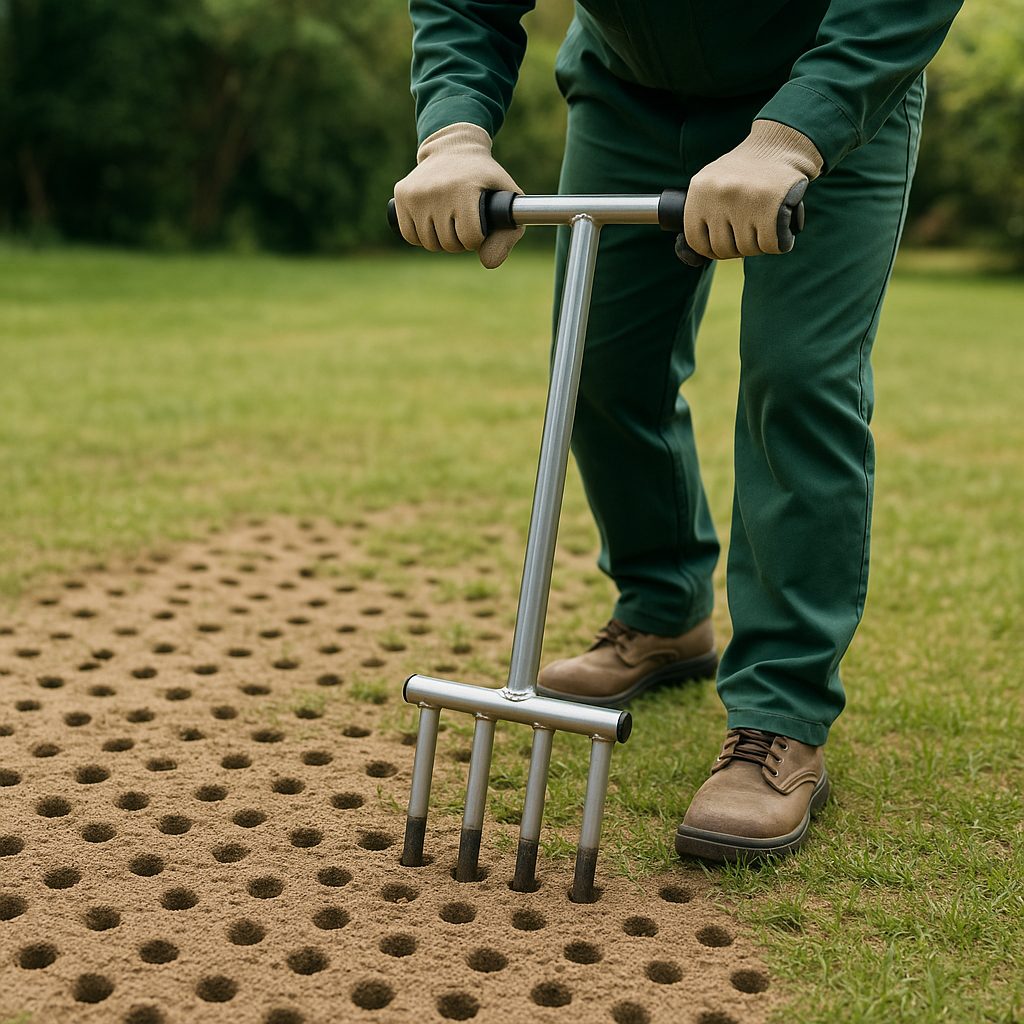
If your soil shows signs of compaction — frequent trampling, water stagnation, shallow roots — aeration is the solution. Techniques vary: fork-spade for small areas, spike or core aerator for larger grounds. The goal is to reach 5–10 cm depth to allow roots to stretch. After aeration, apply a light top dressing (a mix of potting soil and sand depending on soil texture) to fill the holes and improve structure.
Mowing: method and frequency
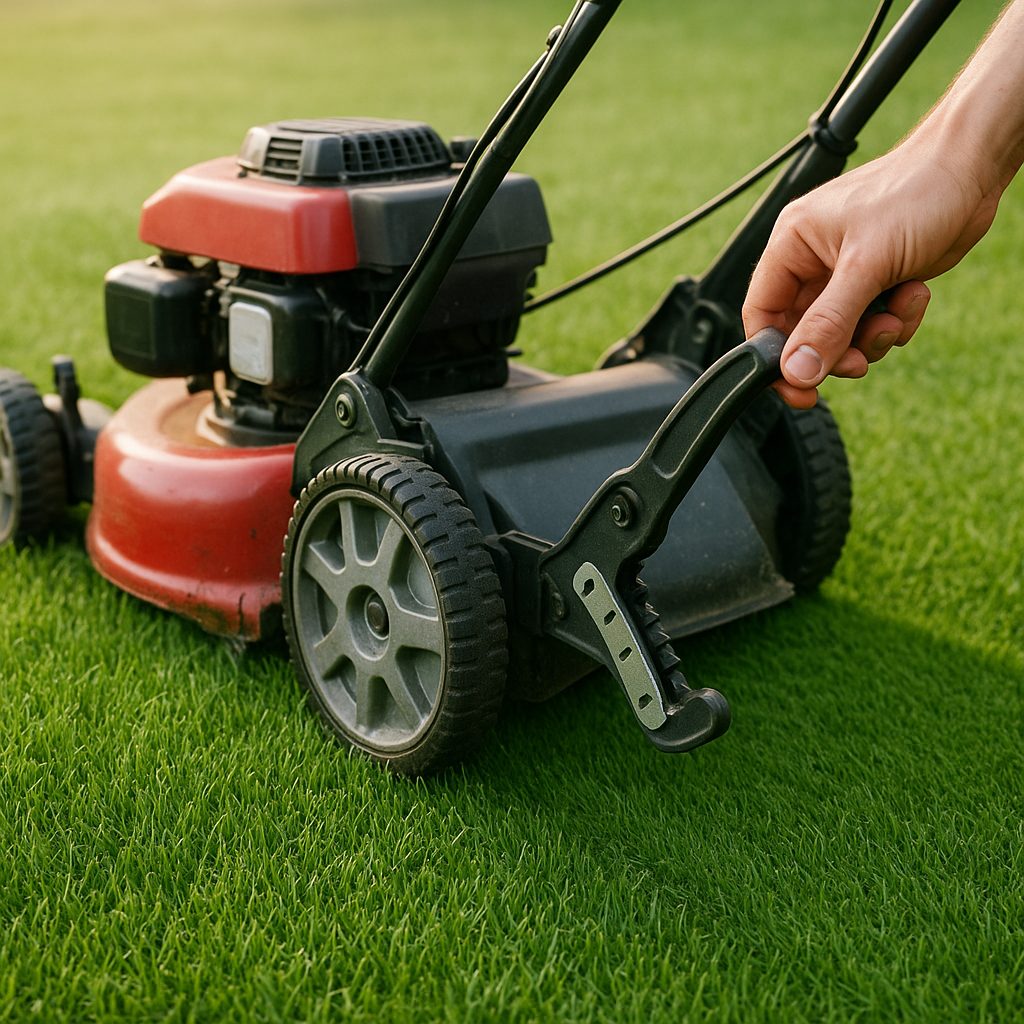
Mowing is not a simple mechanical action; it is a way to control the vigor of the grass. In spring, the idea is to avoid stress by cutting progressively. Cutting more than one-third of the height at once weakens the plants. Favor well-sharpened blades: a clean cut heals better and reduces the risk of diseases.
Recommended heights
| Type of grass | Mowing height (cm) | Frequency |
|---|---|---|
| High mowing (ornamental lawns) | 6–7 | every 10–14 days |
| Sports grass / intensive use | 3–4 | every 4–7 days |
| Multipurpose grass | 4–5 | every 7–10 days |
Adjust the frequency to growth: during active growth periods, short but regular mowing promotes higher density. Conversely, when drought is expected, increase the height to protect the grass collar and retain soil moisture.
Watering: depth rather than frequency
Spring watering aims to encourage deep rooting. Rather than watering superficially every day, recommend less frequent but longer watering sessions. Morning watering reduces evaporation and limits the risk of foliar diseases. Check the infiltration depth: a simple rule is to water enough to moisten up to 10–15 cm deep.
- Morning: ideal period to avoid nighttime stagnation.
- Quantity: 10–15 mm per watering for average soil.
- Frequency: once a week in the absence of rain, more if sandy soil.
Fertilization and overseeding
Spring is the time to provide nourishment, but the nuance is crucial: a fertilizer rich in nitrogen stimulates leaf growth quickly, useful for regrowth, but too much nitrogen predisposes to yellowing and weakens drought resistance. Rather choose a balanced fertilizer (NPK) with controlled release for gradual supply.
Typical schedule
| Period | Action | Objective |
|---|---|---|
| Early spring | Light application of balanced fertilizer | Restart growth without excess |
| Mid spring | Localized sowing on bare areas | Strengthen density |
| Late spring | Organo-mineral fertilization if needed | Prepare the lawn for summer |
For overseeding, choose a seed mix adapted to the climate and exposure (shade, full sun). Lightly thin the area, sow at the recommended rate, then protect with an anti-evaporation cover and keep the soil moist until germination.
Weed and moss control
Weeds often take advantage of lawn weaknesses: thin, sparse, or poorly nourished. Rather than chemically weeding everything, combine cultural actions (strengthen density by sowing, adjust pH if necessary, fertilize) and targeted interventions. Moss is often an indicator of soil acidity, excessive shading, or compaction: scarification, aeration, and possibly a pH corrector may suffice.
Products and alternatives
Selective treatments exist, but their use must be reasonable. Prefer certified products and strictly follow dosages. Some natural solutions, such as adding ash (with caution) or applying lime to correct overly acidic soil, have a gradual but reliable effect.
Routine maintenance: spring checklist
- Inspect the lawn and locate problematic areas.
- Clean debris and rakes, scarify if thatch is significant.
- Aerate compacted soils and apply top dressing if necessary.
- Make a first application of balanced fertilizer.
- Sow in sparse areas and protect the seed.
- Start progressive mowing at a high height.
- Set up deep and spaced watering.
Advice according to soil type
Clay soil retains water and requires special attention to drain: prioritize aeration and adding organic matter. Sandy soil quickly loses fertility and water: increase the frequency of organo-mineral applications and adjust watering. Loamy soils are often well balanced but can compact; regular addition of organic matter maintains their structure.
Common mistakes to avoid
- Cutting too low in spring: stress for plants.
- Watering superficially every day: roots remain on the surface.
- Applying a nitrogen-rich fertilizer just before a dry period.
- Scarifying or aerating on waterlogged soil: worsens compaction.
FAQ
When should I start mowing in spring?
As soon as the grass reaches 6–7 cm and the soil is walkable without leaving deep footprints. Start high and gradually reduce the height over several mowings.
Is scarification necessary every year?
No. Scarify depending on the level of thatch and moss. On a healthy lawn, scarification every 2–3 years is generally sufficient; in case of heavy accumulation, do it every spring.
How much should I water?
Aim for 10–15 mm per session for average soil, once a week in the absence of rain. Adjust according to soil texture: more frequent for sandy soils, less for clay soils.
Which fertilizer to choose in spring?
A balanced fertilizer (for example 10-10-10 or similar) with slow release is often ideal. Avoid large applications of nitrogen alone to prevent promoting weak growth.
{
“@context”: “https://schema.org”,
“@type”: “FAQPage”,
“mainEntity”: [
{
“@type”: “Question”,
“name”: “When should I start mowing in the spring?”,
“acceptedAnswer”: {
“@type”: “Answer”,
“text”: “As soon as the grass reaches 6–7 cm and the ground is passable without leaving deep footprints. Start high and gradually reduce the height over several mowings.”
}
},
{
“@type”: “Question”,
“name”: “Is scarification necessary every year?”,
“acceptedAnswer”: {
“@type”: “Answer”,
“text”: “No. Scarify depending on the level of thatch and moss. On a healthy lawn, scarifying every 2–3 years is generally sufficient; in case of heavy accumulation, do it every spring.”
}
},
{
“@type”: “Question”,
“name”: “How much should I water?”,
“acceptedAnswer”: {
“@type”: “Answer”,
“text”: “Aim for 10–15 mm per session for average soil, once a week in the absence of rain. Adjust according to soil texture: more frequent for sandy soils, less for clay soils.”
}
}
]
}
{
“@context”: “https://schema.org”,
“@type”: “WebPage”,
“about”: {
“@type”: “Thing”,
“name”: “Lawn care in spring”
},
“keywords”: [“lawn care”, “scarification”, “watering”, “mowing”, “fertilizer”]
}