
Sommaire
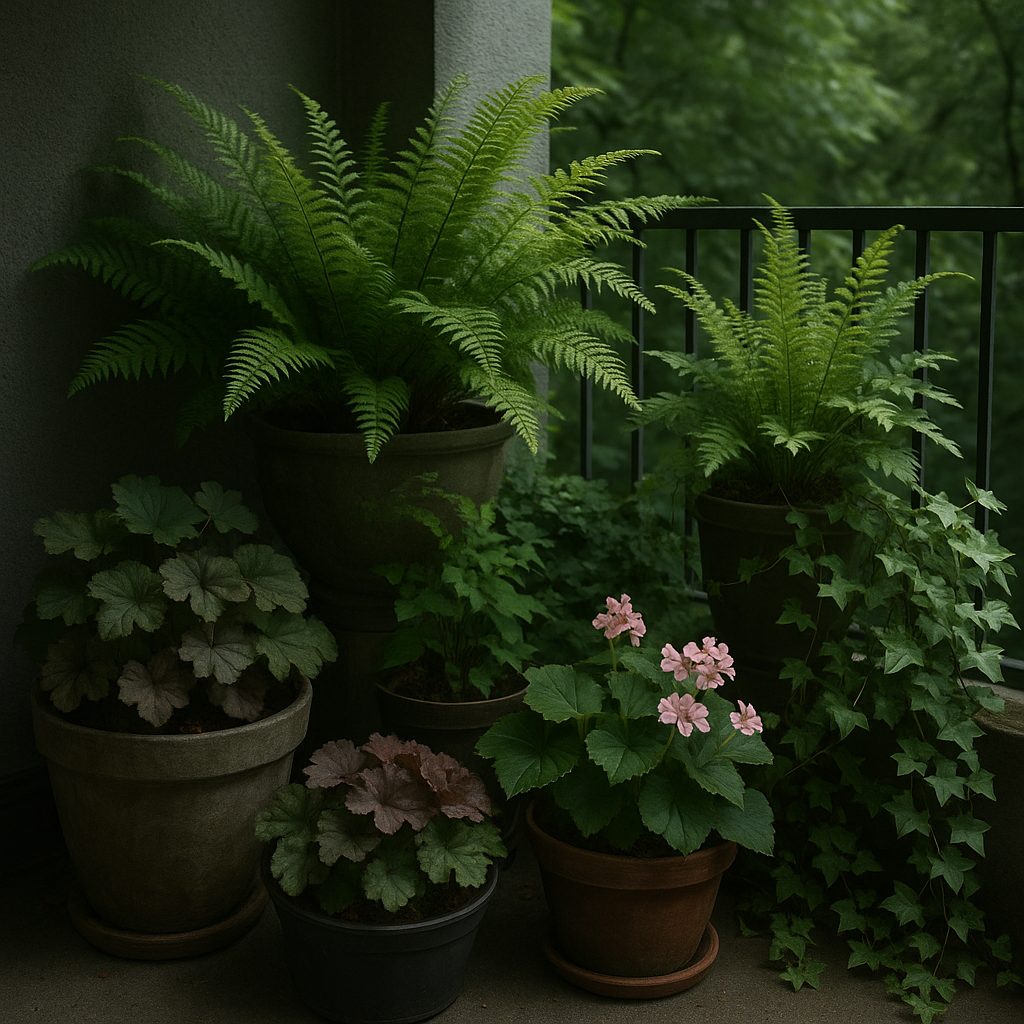
A north-facing balcony is not a landscaping failure: it is an invitation to play with textures, foliage, and subtle greens. Where direct light is lacking, other qualities take over — draped in freshness, higher relative humidity, soft shadows that highlight contrasts. This article gathers reliable plants, cultivation tips, and layout ideas to transform your shaded balcony into a functional and charming little plant lounge.
In brief
🌷 Practical choice: favor **ferns**, **heucheras**, **begonias**, and **impatiens** — these species tolerate shade very well and add character without requiring full sun.
🧴 Substrate & watering: use a light potting soil rich in organic matter, keep **regular but moderate watering**, and prefer pots with drainage.
🎗 Smart layout: play with height (shelves, hanging pots), contrasting foliage, and light-colored walls to capture available light and create depth.
❄️ Winter & survival: some plants pay off by being hardy (hosta, cyclamen), others require protection or moving indoors to get through the cold season.
Why a north-facing balcony can be better than it seems
Sun and plant success are often associated, but the reality is more nuanced: the diffuse light of a north-facing balcony is soft, constant, and less stressful for many species. Delicate leaves grow larger, colors remain more saturated, and evaporation decreases — which simplifies water management. Moreover, the light tones of walls and furniture can reflect light and partially compensate for the absence of direct sun.
Recommended plants for north-facing balcony
Here is a proven selection, classified by use and temperament. Each has been chosen for its shade tolerance, ease in pots, and aesthetic interest.
Luxuriant and structuring foliage
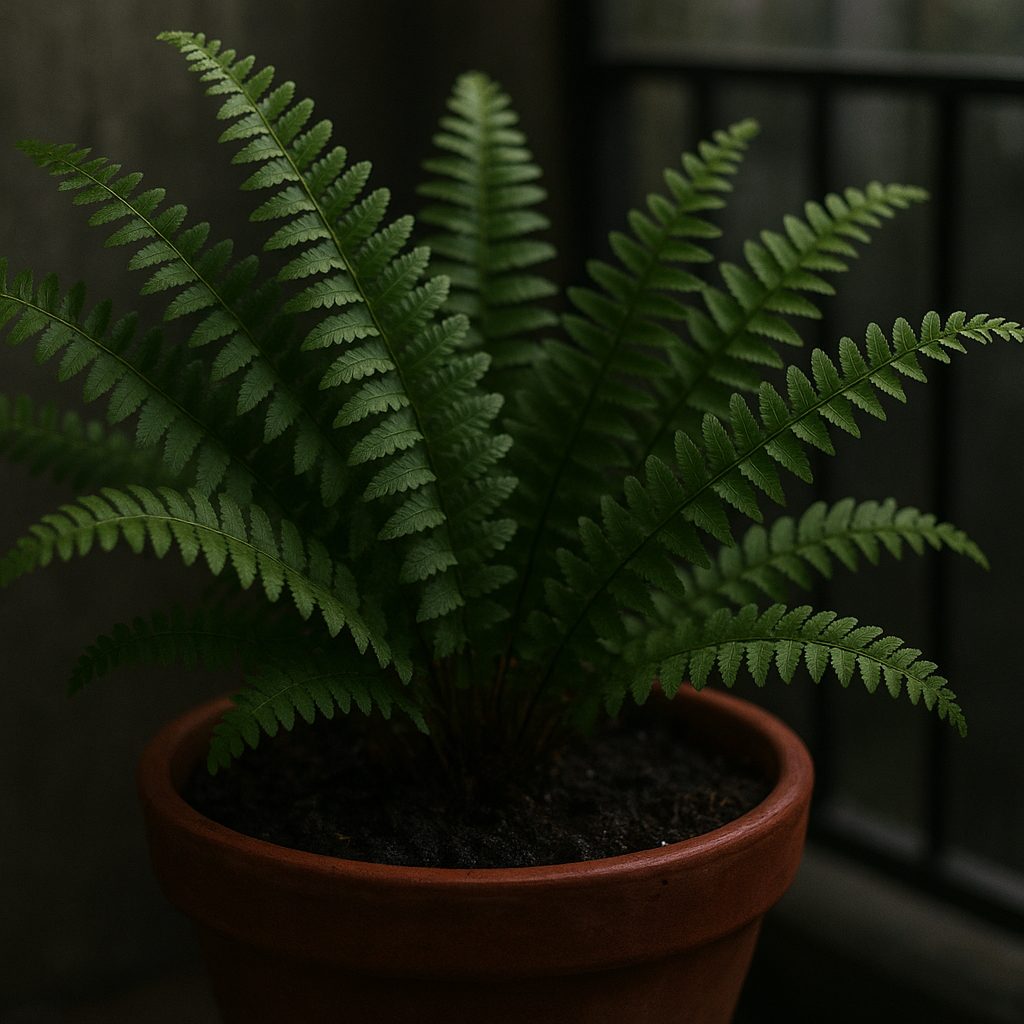
- Ferns (Nephrolepis, Athyrium): ideal for humid and shaded corners, they bring an airy silhouette and constant movement.
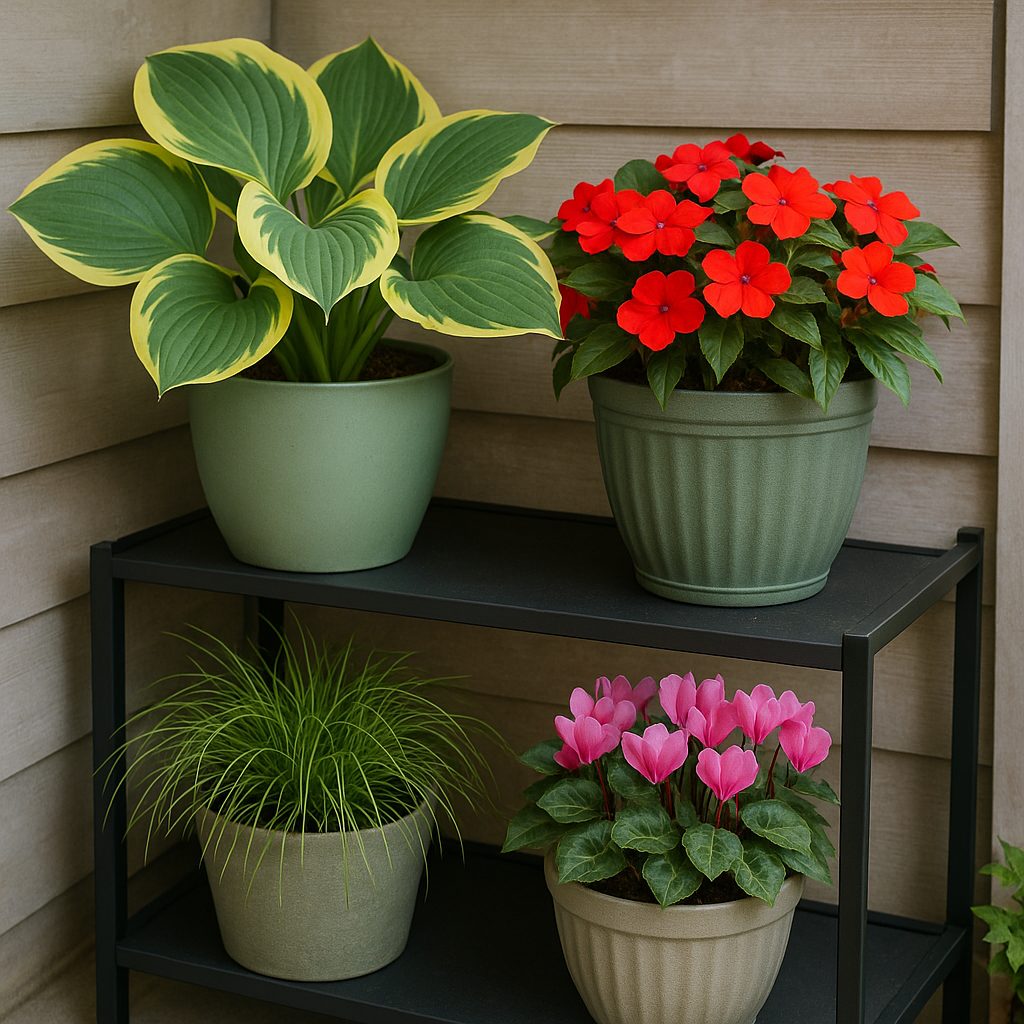
- Hosta: great in pots for its large and contrasting leaves; watch out for hardiness in pots depending on your climate.
- Carex oshimensis: a decorative grass, often variegated, that structures and adds verticality.
Colors and Blooming in the Shade
- Bégonias rex: spectacular foliage and sometimes discreet flowering; perfect for brightening up a dark corner.
- Impatiens (New Guinea and classic): regular flowers all summer, excellent for hanging baskets and containers.
- Cyclamen coum: ground cover for winter and early spring, very useful for varying seasonality.
Climbers and Ground Covers
- Ivy (Hedera helix): vigorous, practical in pots or hanging baskets to hide a dull facade.
- Epimedium: low plant, tolerates very well dry shade and flowers discreetly in spring.
Comparison Table: Practical Characteristics
| Plant | Exposure | Watering | Height in pot | Seasonal Interest |
|---|---|---|---|---|
| Fern (Nephrolepis) | diffuse shade | high, moist substrate | 30–80 cm | foliage all season |
| Heuchera | shade to partial shade | moderate | 20–40 cm | colored foliage, light flowers |
| Impatiens | shade | regular | 20–50 cm | abundant summer flowers |
| Bégonia rex | shade | moderate | 15–45 cm | decorative leaves |
| Carex oshimensis | shade | moderate | 20–50 cm | structure and movement |
| Cyclamen coum | bright shade | low in summer, moderate in autumn | 10–20 cm | blooms late autumn/winter |
Soil, Containers and Watering: The Rules of the Game
A soil rich in organic matter but well-draining will prevent roots from stagnating. Mix well-decomposed compost, coconut fiber or perlite to lighten and retain moisture without suffocating. Deep containers are suitable for hostas and hydrangeas, hanging baskets and small pots for impatiens and begonias. Always drill holes in the bottom and place a layer of gravel or clay pellets to improve drainage.
Practical Tips
- Water in the morning to limit fungal problems in the evening.
- Use an organic mulch — it retains moisture and nourishes gradually.
- Fertilize moderately in spring and early summer with a balanced fertilizer; avoid excess nitrogen which promotes overly tender and vulnerable foliage.
Arrangement and Aesthetics — Playing with Space
On a north-facing balcony, favor verticality: shelves, trellises and hanging baskets multiply viewing planes. Variegated foliage (carex, variegated hosta, heuchera) creates focal points; combine them with fine textures (ferns) for a soothing contrast. Light walls and light-colored pots reflect available light, while metal or wood elements bring a warm counterpoint.
Tip: a small water source (clay dish filled with water) increases local humidity and makes life easier for ferns and begonias without creating a swamp.
Common Problems and Solutions
Yellow or soft leaves: often a sign of stagnant moisture or a pot that is too large. Adjust drainage and reduce watering. Burnt leaves: if they appear despite north exposure, check for reflections from very bright surfaces or a low winter sun that can be surprising.
Pests & Diseases
- Slugs and snails love hostas and young ferns: set traps or physical barriers.
- Powdery mildew and botrytis: promote air circulation, avoid watering the foliage in the evening.
- Aphids: remove them by hand or with a water jet, or use a mild insecticidal soap.
Plants to Avoid or Handle Carefully
Some species labeled “easy” require a lot of light to bloom properly (Mediterranean plants, cacti, pelargoniums). Large-growing shrubs can quickly clutter a small balcony and require very large pots and substantial watering. If you want a hydrangea or a camellia, choose compact varieties and accept the regular repotting work.
Checklist Before Purchase
- Measure the light at different times to know if the shade is total or partial.
- Choose containers according to the species (depth for hostas, lightness for hanging plants).
- Prepare an appropriate soil: drainage + organic matter.
- Think about winter maintenance: protection, bringing plants indoors, or mulching.
FAQ
How often should I water a north-facing balcony?
Generally, watering every 3 to 7 days is sufficient in the warm season, but it all depends on the pot size and species. Check the moisture of the substrate with your finger: if it is dry 2–3 cm deep, water.
Should I move my plants in winter?
Some are hardy (hosta left in place, cyclamen depending on exposure), others will suffer from the cold in pots. If you are in a mild urban area, good mulching and shelter from the wind may suffice; otherwise, bringing sensitive pots indoors is preferable.
Can plants bloom in the shade?
Yes, impatiens, begonias, and cyclamens bloom very well in the shade. However, expect less flamboyant blooms than in full sun: the idea is often to accept decorative foliage as the main attraction.
Do light-colored walls really improve brightness?
Yes. Light surfaces reflect available light and brighten the space, which benefits plants with fine leaves or young seedlings.
Which pots are best for a north-facing balcony?
Breathable material pots (terracotta) are suitable because they evacuate excess moisture. Plastic retains water longer, useful for lightweight pottery or during dry periods. Whatever the material, drainage is crucial.
{
“@context”: “https://schema.org”,
“@type”: “FAQPage”,
“mainEntity”: [
{
“@type”: “Question”,
“name”: “What watering frequency for a north-facing balcony?”,
“acceptedAnswer”: {
“@type”: “Answer”,
“text”: “Generally, watering every 3 to 7 days is enough during the warm season, but it all depends on the pot volume and species. Check the moisture of the substrate with your finger: if it is dry for 2–3 cm, water.”
}
},
{
“@type”: “Question”,
“name”: “Should I move my plants in winter?”,
“acceptedAnswer”: {
“@type”: “Answer”,
“text”: “Some are hardy (hosta, cyclamen), others will suffer from the cold in pots. Good mulching and shelter from the wind may suffice, otherwise bring sensitive pots indoors.”
}
},
{
“@type”: “Question”,
“name”: “Can plants bloom in the shade?”,
“acceptedAnswer”: {
“@type”: “Answer”,
“text”: “Yes: impatiens, begonias, and cyclamens bloom well in the shade. However, expect less vivid blooms than in full sun.”
}
}
]
}
{
“@context”: “https://schema.org”,
“@type”: “WebPage”,
“about”: {
“@type”: “Thing”,
“name”: “shade plants for north-facing balcony”
},
“keywords”: [“shade plants”, “north balcony”, “ferns”, “potted plants”]
}