
Sommaire
Why Do I Have Fruit Flies in the Kitchen? Common Causes and Effective Solutions
| 📌 | Definition: fruit flies in the kitchen are often drosophilids or small flies attracted by moisture and organic matter. |
| 🧪 | Most common cause: overripe fruits, sugary drinks, a damp trash can, or clogged drain are enough to start a small invasion. |
| 🚰 | Critical area: the sink, drain, siphon, and overflow concentrate a moist biofilm where certain species develop. |
| 🍎 | Warning sign: if the insects hover around the fruit bowl, the source is often food-related rather than linked to the drains. |
| ⏱️ | Reactivity: at kitchen temperature, around 20 to 25 °C, a reproductive cycle can complete in one to two weeks. |
| ✅ | Long-term solution: the real lever is not just the trap, but the precise cleaning of the laying area and invisible residues. |
FRUIT FLIES rarely appear by chance in a kitchen. A forgotten juice residue, a clogged drain, a trash can retaining moisture, or a few overripe fruits can be enough to attract these small insects within a few days. The most puzzling thing is that a kitchen can seem clean while harboring an invisible source. By understanding where fruit flies in the kitchen really come from, you can act faster, avoid false remedies, and permanently eliminate the breeding site instead of just chasing the adults you see flying around.
What exactly is meant by “fruit flies in the kitchen”?
In everyday language, “fruit flies” refers to almost all small flying insects of 2 to 4 mm that hover around the sink, fruit bowl, or trash can. However, they do not all behave the same way. The kitchen constantly combines three very attractive factors: water, warmth, and organic matter. It is an ideal environment for species seeking either fermenting food or moist deposits to lay eggs.
The most common profiles in the kitchen
The most classic case is that of drosophilids, sometimes called fruit flies. They are attracted by very ripe fruits, opened compotes, juices, wine, beer, bottle bottoms, or any sweet residue fermenting. They do not come only from visible fruits: a sticky drip under a jar or a coffee maker can be enough.
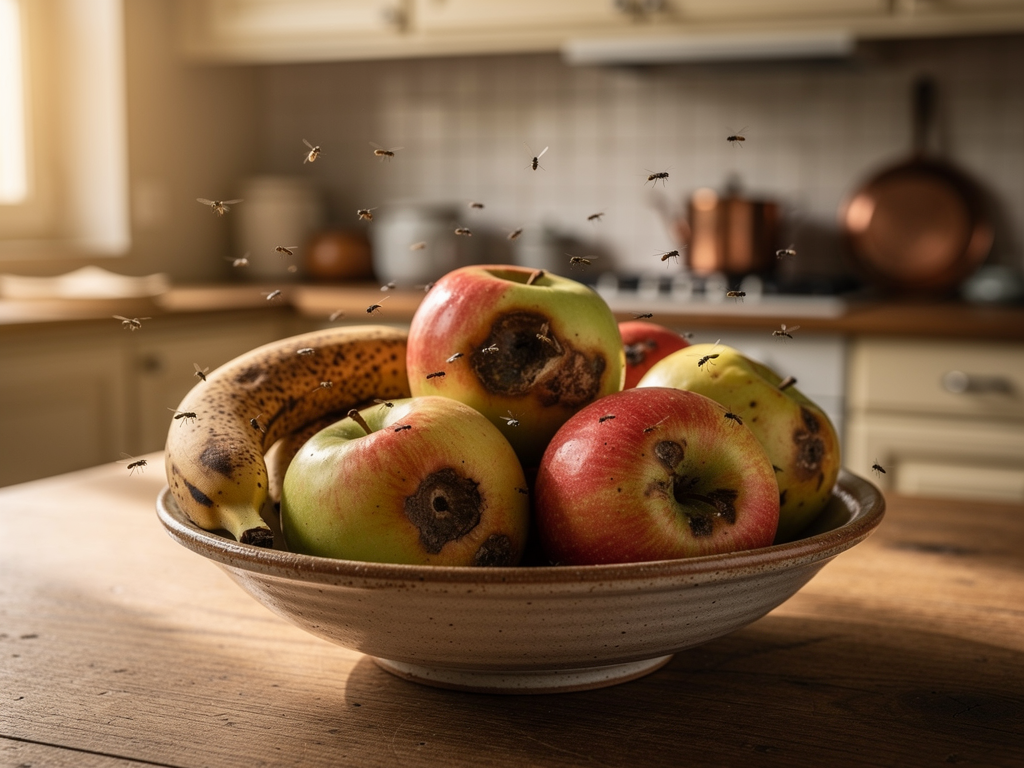
Another frequent scenario: drain flies, sometimes hairier and slower, which develop in the greasy and organic film stuck to the inner walls of the pipes. This biofilm forms with fats, micro food debris, soap, and persistent moisture. Even if water flows normally, the drain or overflow can harbor larvae.
Other small insects can also be mistaken for fruit flies: those linked to a poorly cleaned trash can, a damp mop, under a dish rack, a refrigerator drip tray, or a clogged small appliance. If you also have pots near a window, it may be useful to check if the problem partly comes from plants; the topic is detailed in this FAQ on plant fruit flies.
Why do I have fruit flies in the kitchen?
The presence of fruit flies does not necessarily indicate a visibly dirty kitchen. It mainly reveals a favorable micro-source: a place where the insects find both food and a place to reproduce. A few forgotten drops in the right spot can sometimes have more effect than an overall clean countertop. That is why infestations often return after a simple wipe or after setting up an improvised trap.
The most common causes
The primary cause remains food fermentation. An overripe banana, damaged tomatoes, potatoes beginning to spoil, leftover smoothie, wine, or syrup can emit enough odors to attract adults. Depending on the temperature, fruit flies can complete their cycle in about 7 to 10 days in a heated indoor environment, which explains the sensation of sudden appearance.
The second very common cause is the trash bin, particularly the organic waste bin. Since the generalization of organic waste sorting on January 1, 2024, as reminded by the ADEME on organic waste sorting, many kitchens now keep more fermentable materials inside. If the lid, the bottom of the bin, or the underside of the bag remain damp for 2 to 3 days, fruit flies find an ideal environment.
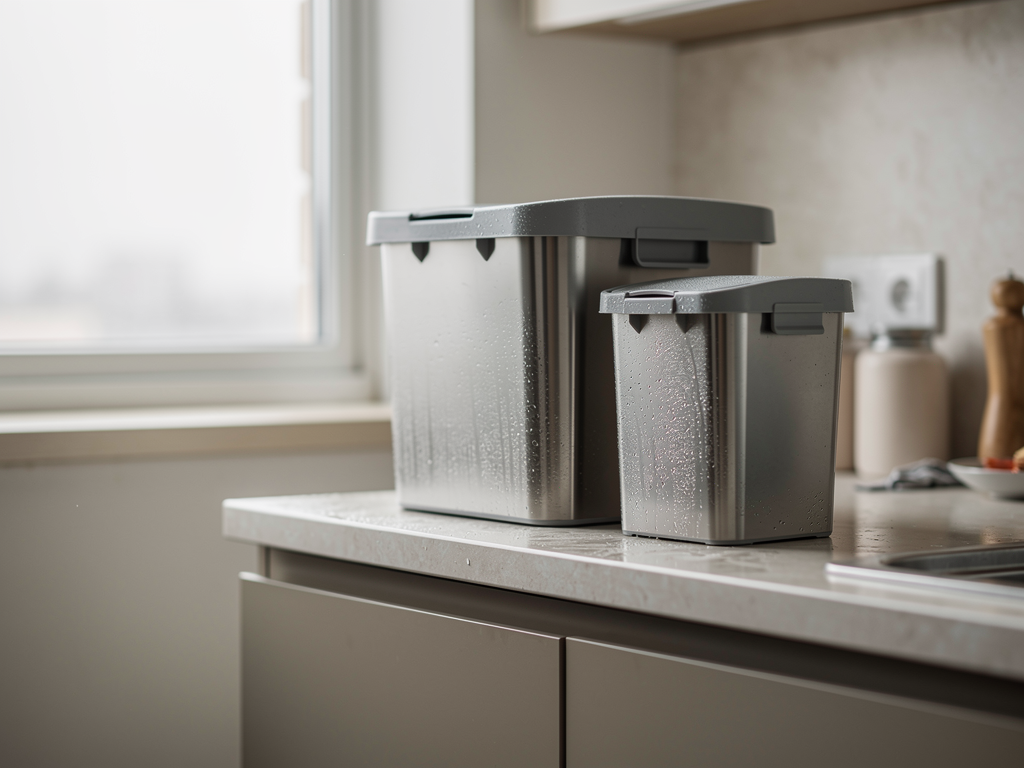
The third major cause is persistent moisture. Sink flies take advantage of the biofilm in drains, but also of wet seals, under the dish rack, the receptacle of a coffee machine, stagnant water in a bin, or a sponge kept damp for several days. In practice, this is often where the source nests when the fruits have already been removed.
Finally, forgotten corners maintain the infestation: behind a toaster, under a coffee maker, under a tray, behind a microwave, or in the drip tray of a refrigerator. Field observations show that very well-kept kitchens on the surface sometimes harbor a few milliliters of invisible sugary liquid, enough to feed several generations of fruit flies.
How to quickly find the real source in the kitchen?
The best method is not to start with the trap, but with spotting. Fruit flies often follow a simple pattern: they circle around their main attraction point and then disperse throughout the rest of the room. If you only look where you see them most during the day, you risk missing the real origin. The most useful time is often early in the morning, when kitchen activity has not yet stirred up the insects.
5-Point Verification Method
- Examine the sink: drain, grate, overflow, seals, underside of the rim, and accessible siphon. If the insects fly away when you approach with your hand, the lead is serious.
- Inspect the trash bin: inside the container, bottom, lid, under the bag, drips on the floor, and organic sorting bin.
- Check the supplies: fruit basket, potatoes, onions, garlic, dried fruits, opened bottles, cans, and sticky jars.
- Move small appliances: coffee maker, toaster, kettle, food processor, capsule tray, underneath the espresso machine.
- Check damp textiles: sponge, dishcloth, mop, sink mat, under the drainer, or poorly dried bucket.
If the concentration is around the sink, the most likely source is related to the plumbing. In this case, a guide focused on gnats in the sink can help you treat the problem step by step. Conversely, if the insects gather near a fruit bowl or bottles, the food source clearly dominates.
Effective Solutions According to the Origin of the Gnats
To permanently eliminate gnats, you must treat the breeding area, not just the visible adults. A spray or trap temporarily reduces the number of insects, but if the source remains active, the population quickly returns. The right strategy is therefore to combine targeted cleaning, drying, and removal of the organic source.
If the Gnats Come from the Sink
Start by removing everything accessible in the drain: food residues, grease, dark deposits, and viscous film. Then brush the visible internal walls, not forgetting the overflow if there is one. The goal is not to perfume the plumbing but to physically detach the biofilm where the larvae develop. Repeated cleaning over 2 to 3 days is often more effective than a single massive intervention.
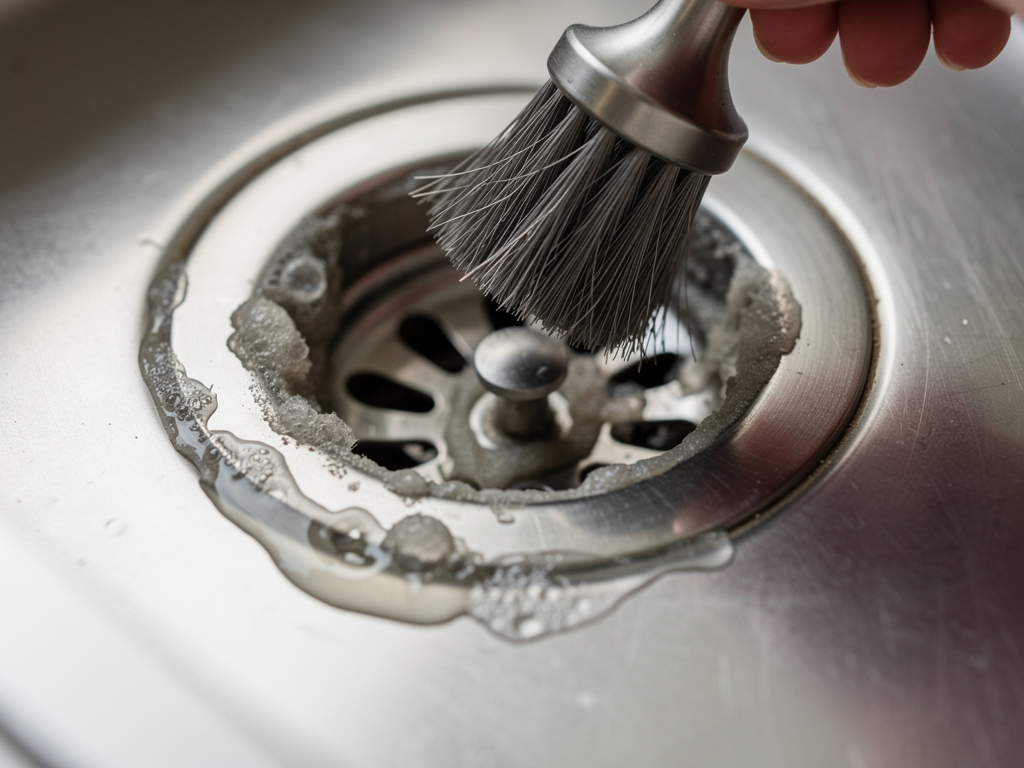
Disassemble the siphon if it is simple and safe in your installation, then wash it thoroughly. Also dry around the faucet, seals, and underside of the dish soap dispenser. If the sink remains the main hotspot, you can supplement with targeted methods described in this dossier on eliminating gnats in 24 hours, provided you do not forget deep cleaning.
If They Come from the Trash or Waste
Empty the container immediately, wash it thoroughly, then dry it before putting a new bag in. This is often overlooked: a clean but still damp bin always attracts. Also clean the lid, hinges, bottom of the cabinet, and floor around it. If you store bio-waste, it is better to have a closed container emptied very regularly, especially in summer or in a hot kitchen.
In a small kitchen, the frequency of emptying matters almost as much as washing. Between 24 and 48 hours of organic waste kept at room temperature can be enough to renew attractiveness. The issue goes beyond the kitchen alone: if you see insects moving from one room to another, it may be useful to consult this guide on gnats in the house to check other possible sources.
If They Come from Fruits, Drinks, or Storage
Remove overripe products, wash the basket, wipe the shelf, and check nearby containers. Fruit flies especially like the bottoms of bottles, vinegar, juice, beer or wine, as well as soiled coffee capsules and sticky spouts. Store fragile fruits in a cool place when possible, especially those with thin skin or that have started to open.
Vinegar traps can help capture some of the adults, but they do not solve the infestation on their own. If you are unsure about their real effectiveness, compare their use in this guide on the vinegar fruit fly trap. In practice, they mainly serve as a supplement while you eliminate the source.
A trap can clear the air of some adults in one evening. A kitchen truly free of fruit flies is almost always won with a brush, a cloth, and good detection.
Concrete Examples of Common Situations in the Kitchen
Fruit fly invasions often follow very ordinary scenarios. This is precisely what makes them annoying: the cause seems minor, but it repeats every day. Two situations occur particularly often in family kitchens or small apartments, especially when the preparation and storage space is concentrated in a few square meters.
Case No. 1: Small Infestation Despite a Visibly Clean Kitchen
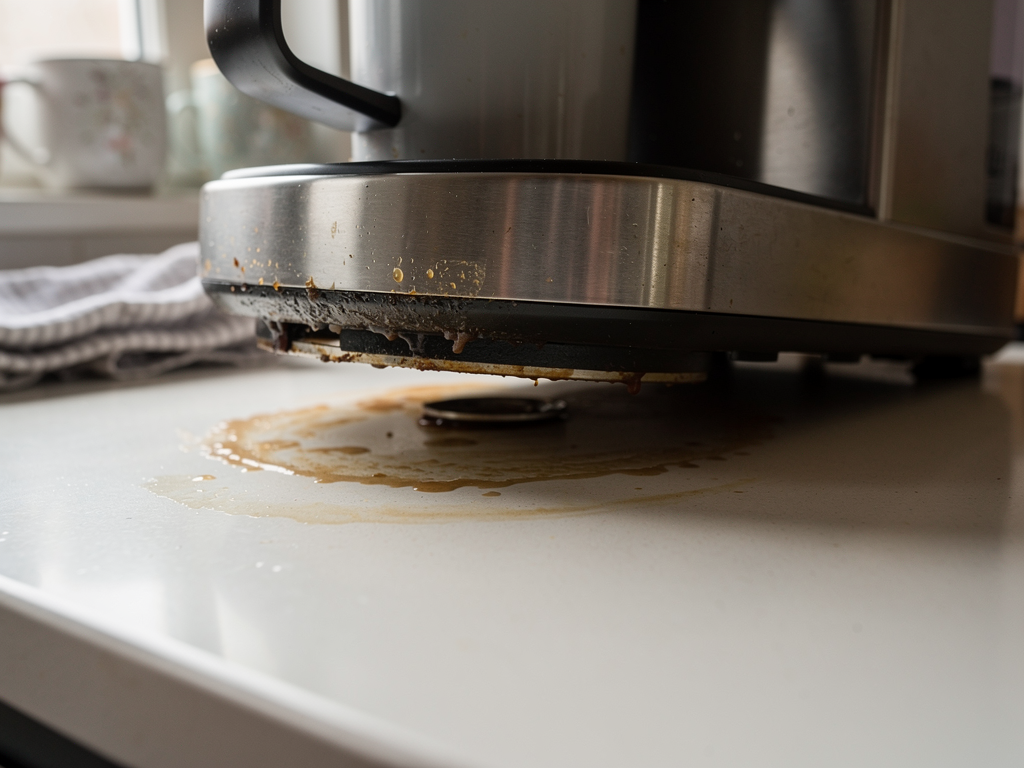
Here, the infestation often hides under an appliance or in a forgotten container. For example, a family recounts having searched around the fruits and trash bin for several days before discovering a sugary deposit under a coffee machine and a water collection tray that was rarely emptied. A few liquid residues were enough to attract adults and sustain the cycle. This is typically the kind of problem that persists because it is invisible at eye level.
Case No. 2: Fruit Flies Mainly in the Evening or After Cooking
In this case, heat, steam, and odors make the source more attractive. Sticky surfaces around sweet preparations, damp dish towels, the dish rack, or drips near a bottle become more “readable” for insects. A kitchen can therefore seem calm in the morning, then fill with fruit flies after a meal. This behavior often points to a nearby food or moisture source, not necessarily a generalized problem throughout the dwelling.
How to Prevent Fruit Flies from Returning to the Kitchen?
Once the infestation is eliminated, the real challenge is to prevent recolonization. Fruit flies take advantage of the slightest opportunity: a fruit forgotten over a weekend, a drain left damp for several days, an organic bin closed without being dried. Sustainable prevention therefore relies on short but repeated actions, more effective than a thorough cleaning done once a month.
Good habits to adopt
- Rinse and dry the sink, the drainer, and the countertop every evening, especially around the drain and the seals.
- Take out or quickly empty perishable waste, ideally before it stays several days at room temperature.
- Check ripe fruits every 1 to 2 days and immediately wash the basket if there is any leakage.
- Wash and dry the sponge, the dish towel, the underside of the drainer, the bucket, and the water collection bins.
- Occasionally move small appliances to eliminate hidden residues under the coffee maker, kettle, or toaster.
These habits align with the general principles of domestic hygiene recalled by the ANSES on controlling humidity and pests, as well as by the French administration via Service-Public.fr when it comes to home maintenance. If you have a kitchen composter like a Bokashi or a food sorting bin, ensuring the container is sealed and dry should become a central habit.
FAQ about fruit flies in the kitchen
How long does it take to get rid of fruit flies?
If the source is well identified and cleaned, a clear decrease often appears within 24 to 72 hours. However, it sometimes takes a week or more to completely eliminate the remaining adults, especially if the reproduction cycle had already started.
Why do they come back after a vinegar trap?
Because the trap captures adults, not eggs or larvae. If the drain, the trash bin, a sticky bottle, or a damp area remain active, new fruit flies emerge and the feeling of failure quickly returns.
Can they come from a plant placed in the kitchen?
Yes, especially if the soil remains very damp. Plant fruit flies do not behave exactly like fruit drosophila, but in a kitchen they can visually mix and complicate the diagnosis.
When should multiple sources be suspected at the same time?
When insects are present near the sink, the fruit basket, and the trash bin at the same time, or when they persist despite cleaning only one area. This is common in compact kitchens where several micro-sources coexist less than 2 or 3 meters apart.
Are fruit flies more numerous in summer?
Often yes, because heat accelerates the fermentation of waste and the development of larvae. In a kitchen that regularly exceeds 25 °C, cycles shorten and infestations become visible much faster.
Should an insecticide be used?
Not as a first option. In most cases, eliminating the source, scrubbing damp areas, and drying are sufficient. An insecticide can temporarily reduce adults, but it never replaces cleaning the source.