
Sommaire
MOSQUITOES: understanding, preventing, and choosing truly effective solutions
| 🦟 | Definition: mosquitoes are insects whose females alone bite, especially when seeking a blood meal before laying eggs. |
| 💧 | Main cause: a few millimeters of stagnant water are enough to start a larval cycle near a dwelling. |
| ⏱️ | Key moment: in warm periods, the transition from egg to adult can take 7 to 10 days, sometimes faster depending on the temperature. |
| 🏠 | Priority prevention: eliminating larval breeding sites and installing physical barriers is generally more reliable than gadgets. |
| 🌙 | Most useful protection: indoors, the combination of mosquito net + ventilation + evening routine yields the best results. |
| ⚠️ | Real risk: most bites are benign, but vigilance increases in areas where dengue, chikungunya, or Zika circulate. |
A simple forgotten plant saucer on a balcony can be enough to restart a MOSQUITO invasion in a few days. The subject seems trivial, but it mixes biology, domestic habits, public health, and very variable effectiveness of solutions sold commercially. To avoid wasting time and money, it is necessary to understand what really attracts mosquitoes, know where they develop, and distinguish useful protections from marketing promises.
Understanding mosquitoes: species, life cycle, and behaviors to know
Speaking of mosquitoes in the singular is misleading. In France, several species coexist, with different activity times, egg-laying sites, and nuisance levels. This distinction changes everything: a mosquito active at dusk is not managed exactly like a tiger mosquito present during the day near inhabited areas. The life cycle is just as important, as the most effective control often begins before adults appear.
Main species and their particularities
The common mosquito of the genus Culex is often associated with nighttime nuisances. It is commonly found near larger stagnant waters, ditches, poorly maintained rainwater collectors, or certain stormwater networks. The tiger mosquito, Aedes albopictus, behaves differently: it bites more willingly during the day, especially in the morning and late afternoon, and exploits very small volumes of water around dwellings. This explains its frequent presence on terraces, patios, and urban gardens.
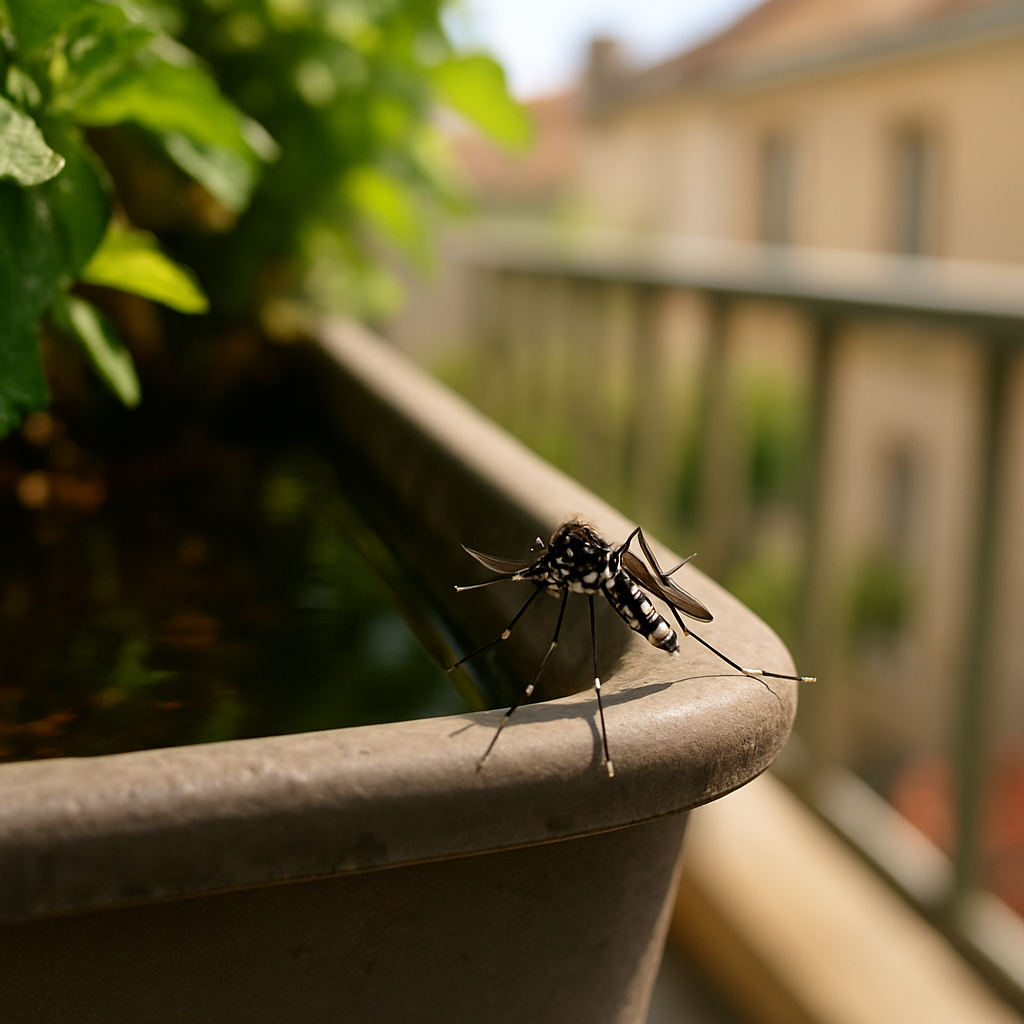
Their range of action also varies. For the tiger mosquito, a limited movement is often noted, sometimes on the order of a few dozen to a hundred meters around the larval site. In short, if you are heavily bitten in your garden, the problem is often at your home or very close by. This is why local measures, repeated weekly during the season, have a much more concrete effect than a one-time treatment without investigating the cause.
Why mosquitoes proliferate near dwellings
The most favorable combination remains simple: stagnant water + heat + shaded resting areas. A saucer, a forgotten watering can, a poorly stretched tarp, a clogged gutter, or a child’s toy left outside can become larval breeding sites. Added to this are dense vegetation, persistent humidity, and proximity to humans, who provide warmth, carbon dioxide, and body odors.
According to ANSES on the tiger mosquito, prevention is primarily based on reducing domestic stagnant water. Meanwhile, the Ministry of Health reminds us that the most effective control takes place around homes, where the species finds its micro-breeding reservoirs. In other words, mosquito biology already explains much of the strategy to be adopted.
Why do mosquitoes bite and what risks should we really watch out for?
The bite is not a whim of the insect but a mechanism linked to reproduction. Males feed on nectar, while females sometimes seek a blood meal before laying eggs. This detail helps correct several misconceptions: no, mosquitoes do not choose their victims based on the “quality of the blood,” and yes, body odor, sweat, or physical activity often play a more concrete role than the color of a light bulb.
What promotes bites on a daily basis
The first signal is the carbon dioxide we exhale. Mosquitoes are sensitive to it, as well as to skin heat and certain compounds present in sweat. After exertion, during a meal on a terrace, or in a poorly ventilated room, you mechanically become more detectable. Dark clothing, thin fabrics, and periods of high activity of local species also increase exposure. For tiger mosquitoes, the nuisance can be strong during the day; for other species, the peak is more at sunset and nighttime.
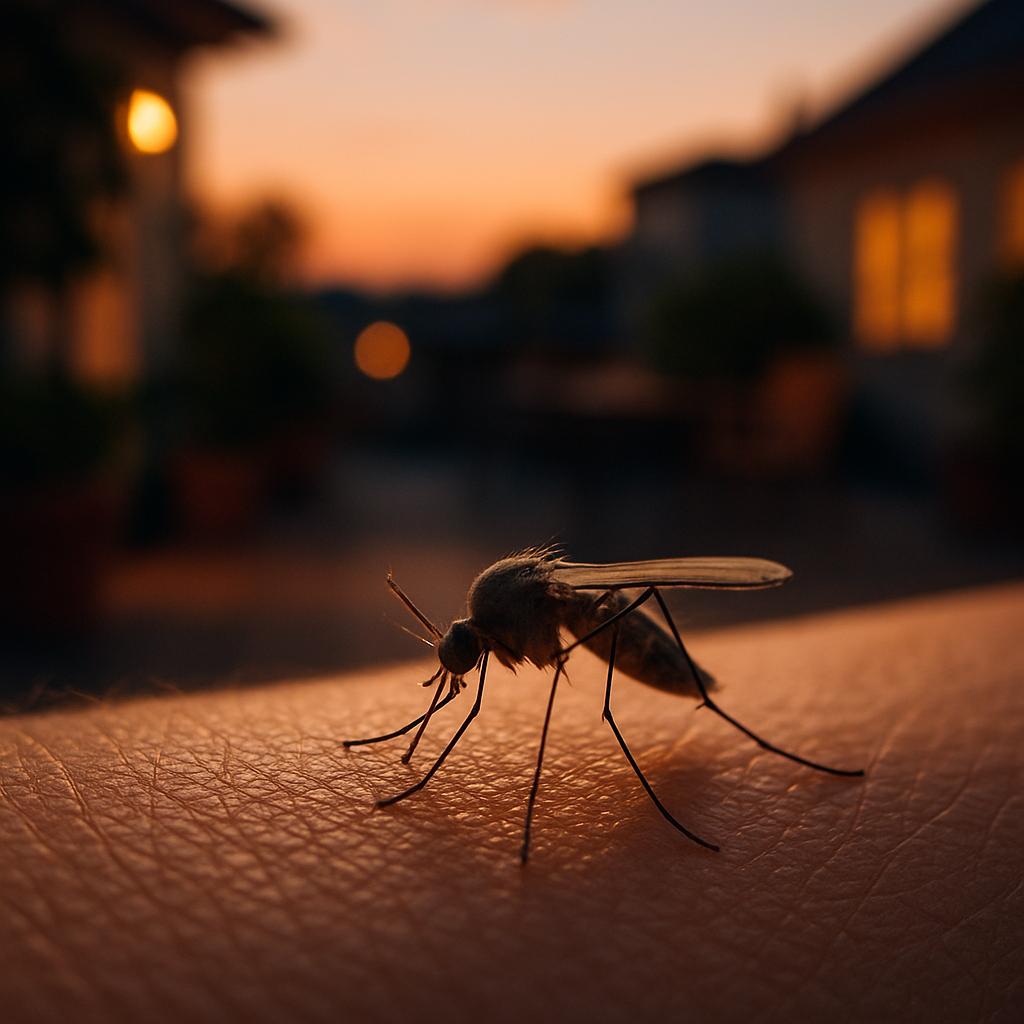
Light, on the other hand, has a more nuanced role than commonly believed. It can attract certain flying insects, but it alone does not explain why mosquitoes enter a room. Entry points, the absence of mosquito nets, and the presence of inhabitants are often the main factors. If this concerns you, the guide on mosquitoes entering the house allows you to explore the concrete causes further.
Simple bites or health risk: making the distinction
Most bites cause a local reaction: redness, itching, a small papule that subsides in a few hours or days. This is nothing unusual. More attention should be paid to very extensive reactions, significant swelling, signs of infection related to scratching, or, more rarely, a marked allergic reaction. The health risk mainly varies according to the geographical area and the circulation of vector-borne diseases.
In mainland France, vigilance particularly concerns episodes of dengue, chikungunya, or Zika when the tiger mosquito is established and a virus is locally introduced. Monitoring is done at the territorial level, notably by Santé publique France on the tiger mosquito. It is therefore necessary to avoid two extremes: systematically trivializing mosquitoes, or conversely believing that every bite hides a serious danger. The right reflex is to adapt your level of alert to the local context and the health news.
How to prevent mosquitoes around the house and in the garden?
Outdoor prevention works when it becomes a habit, not an exceptional action after the first bites. The real lever is to look for larval breeding sites within a very close radius: balcony, terrace, garden, shelter, roof, drainage points, pool edges, vegetable garden corner. A 10 to 15-minute weekly check is often enough to eliminate most domestic breeding sites.
Priority actions against stagnant water
Start by emptying or covering everything that holds water. Saucers under pots are classics, but you should also think about buckets, wheelbarrows, parasol stands, children’s toys, air conditioner drip trays, tarps, and gutters. A water collector can remain useful if it is firmly covered or equipped with appropriate protections. A partially clogged drain, a dirty gutter, or a poorly drained inspection chamber can also become problematic after a rain episode.

- Empty saucers, buckets, and mobile containers after rain.
- Cover water reserves with a properly fitted device.
- Clean gutters and drains to avoid water retention.
- Stretch tarps correctly to avoid water pockets.
- Check forgotten areas: under terraces, sheds, flat roofs, drains.
Good reflexes to limit their presence around the house
Once breeding sites are reduced, the environment must be made less welcoming. A very dense garden, watered in the evening, with humid shaded areas near windows, favors the resting of adult mosquitoes. Slightly trimming some shrubs, avoiding excessive late watering, and moving relaxation areas away from overly damp corners can noticeably improve comfort. This is not a promise of total absence, but often a perceptible reduction in pressure.
Plants should not be seen as a miracle solution. Some fragrant varieties can contribute to a less favorable atmosphere, especially if integrated into a global strategy, but they do not replace the elimination of stagnant water or physical protections. If you hesitate on this point, the comparison dedicated to effective anti-mosquito plants helps distinguish useful use from mere decoration.
Against mosquitoes, the most cost-effective logic is rarely technological: efficiency is first gained by eliminating causes, then by adding targeted protections.
Which mosquito control solutions are truly effective indoors?
The home calls for a simple hierarchy. First, prevent entry. Next, make flying and landing more difficult. Finally, if necessary, complement with a product suited to the situation. This approach avoids the common mistake of buying a diffuser or gadget without addressing entry points, the bedroom, or evening habits.
The most reliable protections for the home
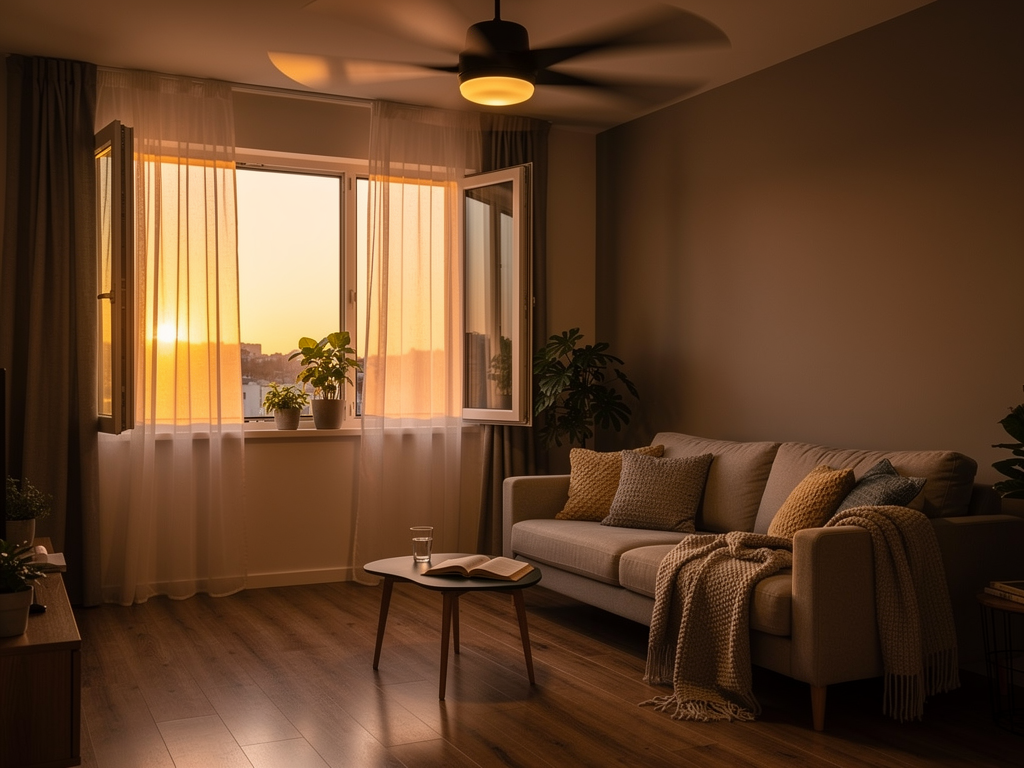
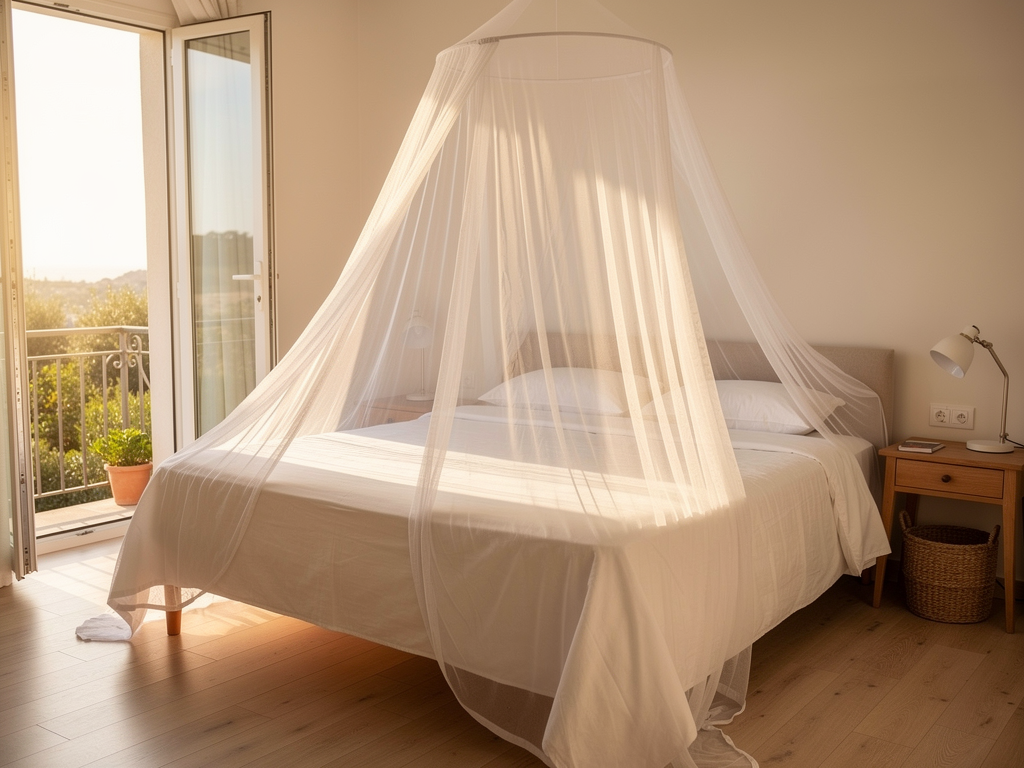
The window mosquito net remains the practical reference, especially in rooms aired at dusk or at night. A bed mosquito net becomes particularly useful in cases of heavy nuisance, when traveling, or in a room difficult to protect otherwise. The fan provides a double interesting effect: it disrupts mosquito flight, as they are weak fliers, and it locally dilutes bodily signals such as heat and certain odors. In a small room, an airflow directed toward the sleeping area can already significantly improve comfort.

Skin repellents maintain a useful place, but rather as a complement. Their benefit is clear when exposure cannot be avoided: evening outdoors, temporary housing, heavily infested area, travel. Instructions regarding age, frequency, and duration of application must then be followed. For the night, physical protection often remains the priority. If your main goal is sleep, the guide on sleeping without mosquitoes in summer details the most realistic routine for a bedroom.
Solutions with variable or limited effectiveness
Potted plants, bracelets, scented stickers, or ultrasonic devices are appealing because they seem simple. The problem is that their actual effectiveness is often inconsistent, difficult to measure, or insufficient alone in situations of heavy nuisance. UV lamps, for their part, mainly attract other flying insects. Mosquitoes seeking a human respond primarily to CO2, heat, and body odors: light is not their main target.
Domestic traps can help in certain contexts, especially if they use credible attractants and fit into an overall strategy. However, they do not replace the elimination of breeding sites nor the installation of mosquito nets. To compare simple options, you can consult these homemade mosquito trap solutions, keeping in mind that an isolated trap does not extinguish a breeding source located a few meters away.
| Solution | Usual Effectiveness | Ideal Use | Main Limitation |
|---|---|---|---|
| Window mosquito net | High | Bedroom, living room, kitchen | Requires proper installation |
| Bed mosquito net | High | Sleep, travel, heavy nuisance | Comfort varies depending on the room |
| Fan | Medium to good | Bedroom, office, living room | Does not eliminate the source |
| Skin repellent | Good as a complement | Terrace, travel, vacation | Limited duration, usage precautions |
| UV / ultrasonic lamp | Low or variable | Very specific cases | Often disappointing alone |
Choosing the right strategy according to situations: bedroom, living room, terrace or vacation
There is no universal solution against mosquitoes, but combinations adapted to each context. In a bedroom, the priority is protecting sleep. On a terrace, the goal is to reduce the attractiveness of the place and protect exposed people. On vacation or in highly infested areas, the level of precaution is increased according to the destination, season, and the profile of the occupants.
Sleeping without mosquitoes in summer
The bedroom is the place where the demand for results is the highest. Opening the window at the wrong time, turning on a light while leaving a sash open, then going to bed without a physical barrier is enough to ruin the night. The most effective routine often remains the same: airing out before the activity peak, closing or protecting the window at the right time, using a fan, then checking the room before falling asleep. In highly exposed homes, the bed mosquito net provides an additional simple and lasting security.
Terrace, balcony and garden: reducing nuisance in the evening
Outside, the goal is not eradication, but a noticeable reduction of annoyance. Covering but lightweight clothing, ventilated seating areas, staying away from damp corners, and good management of stagnant water around the terrace often yield better results than a single sprayed product. If you stay outside during the peak activity time of local species, a well-chosen repellent can complement the setup, especially on ankles and forearms, which are frequently targeted.
When traveling or in highly exposed areas
The level of protection must be raised according to the destination. In mainland France, the strategy often focuses on comfort and local prevention. When traveling, especially in areas where vector-borne diseases circulate, the combination covering clothing + appropriate repellent + mosquito net + protected accommodation becomes much more important. For children, pregnant women, or prolonged use, the product usage conditions must be checked precisely. Service-Public.fr also reminds that practical recommendations depend on the exposure context and the concerned public.
In practice, a family returning from a summer stay often says that the best gain comes less from the number of products taken than from the coherence of actions: mosquito net actually used, correct application of repellent, and reducing openings during the hours most favorable to mosquitoes. This combination logic also applies at home.
Practical FAQ on mosquitoes and mistakes to avoid
Why do mosquitoes enter the house even when the light is off?
Because they are not only looking for a light bulb. Mosquitoes mainly detect CO2, heat, humidity, and easy access. A window slightly open without a mosquito net at the activity peak is often enough to explain their presence inside.
Are mosquito-repellent plants enough to protect a terrace?
No, not on their own. They can contribute to a slightly less favorable environment, but they do not replace the elimination of stagnant water, covering clothing, or occasional use of repellents. On a very exposed terrace, their effect is generally limited.
What trap can help at home without replacing prevention?
A domestic trap can be useful if it is properly sized for the room or immediate outdoor area, and if the breeding source has already been treated. Without eliminating breeding sites, its effectiveness is likely to be disappointing, as new mosquitoes will continue to appear.
Why do some people seem to get bitten more than others?
Mosquitoes react differently depending on exhaled CO2, body heat, sweat, and certain skin odors. After exertion, in hot weather, or when wearing light clothing, exposure can increase significantly. So it’s not just a matter of “blood.”
What is the most common mistake against mosquitoes?
Relying on a single solution. Buying a gadget, placing a plant, or plugging in a diffuser without checking saucers, gutters, or entry points often means treating the symptoms rather than the cause. That’s why results rarely last.
When should health vigilance be increased?
When health authorities report circulation of dengue, chikungunya, or Zika in an area where the tiger mosquito is established, or before traveling to a more exposed territory. To complement common practices, you can also consult this page on frequently asked questions about mosquitoes, useful for clarifying everyday reflexes.