
Sommaire
How to Eliminate Fruit Flies in 24 Hours: 10 Quick Solutions That Work
| 📌 | Realistic goal: achieve a visible reduction of fruit flies within a few hours, then break the cycle within 24 hours. |
| ⚡ | Priority action: remove the source of attraction even before setting a trap. |
| 🧪 | Fastest solution: vinegar + dish soap, in several small dishes near hotspots. |
| 💧 | Critical point: damp areas like sinks, saucers, sponges, or the bottom of trash bins reignite the infestation. |
| 🪴 | Common case: if fruit flies come from plants, overly wet soil must be treated separately. |
| 🚫 | Common mistake: relying on a single trap without removing overripe fruit, fermented waste, or stagnant water. |
FRUIT FLIES often seem to appear suddenly, while they almost always take advantage of a trivial detail: an overripe banana, a sticky bottle bottom, a water saucer, or a trash bin left damp. The good news is that a clear decrease is often possible within the first few hours if you act in the right order. The real challenge is not just catching a few, but cutting off both the source and the reproduction.
In practice, eliminating fruit flies in 24 hours does not always mean complete disappearance, especially if several hotspots coexist in the kitchen, near plants, or around the sink. However, it is often possible to drastically reduce their numbers in one day with a simple, quick, and combinable method. Here is the action plan that works best, followed by 10 concrete solutions to apply immediately.
How to eliminate fruit flies in 24 hours: what is really achievable
The essential point is to aim for a visible drop within the first hours, not an instant miracle. Adult fruit flies are easy to trap, but if eggs or larvae remain in soaked soil, the bottom of a trash bin, or a clogged drain, the problem quickly restarts. In a heated home, a damp environment rich in organic matter can restart activity within 24 to 48 hours, which explains the quick returns the same evening or the next day.
To act quickly, you must therefore treat two levels in parallel: on one side the visible adults near windows, fruit, or lamps; on the other the hidden hotspots. This distinction changes everything. A simple trap can catch several dozen individuals in a few hours, but it is not enough if a forgotten dish, a compost bag, or a constantly wet sponge continues to attract new insects. If you want a broader view of fruit flies in the home, it is useful to distinguish emergency treatment from sustainable prevention.
The level of infestation also matters. If you see fewer than 10 to 20 fruit flies in a room, a well-executed action is often enough to regain control the same day. Beyond that, it is better to multiply the dishes, vacuum visible clusters, and methodically inspect each damp source. In other words, the right reflex is not to look for “the best product,” but the best combination of immediate actions.
The express action plan for the first 24 hours
Within the first hour
Start by isolating the most affected area. In most cases, this is the kitchen, a dining corner, or an indoor plant. Immediately remove everything that attracts fruit flies: overripe fruit, organic waste, coffee grounds left exposed, opened bottles, cans, glasses of juice, kitchen compost, stagnant water. The trash bin must be closed or taken out immediately, then the bottom of the bin washed and dried.
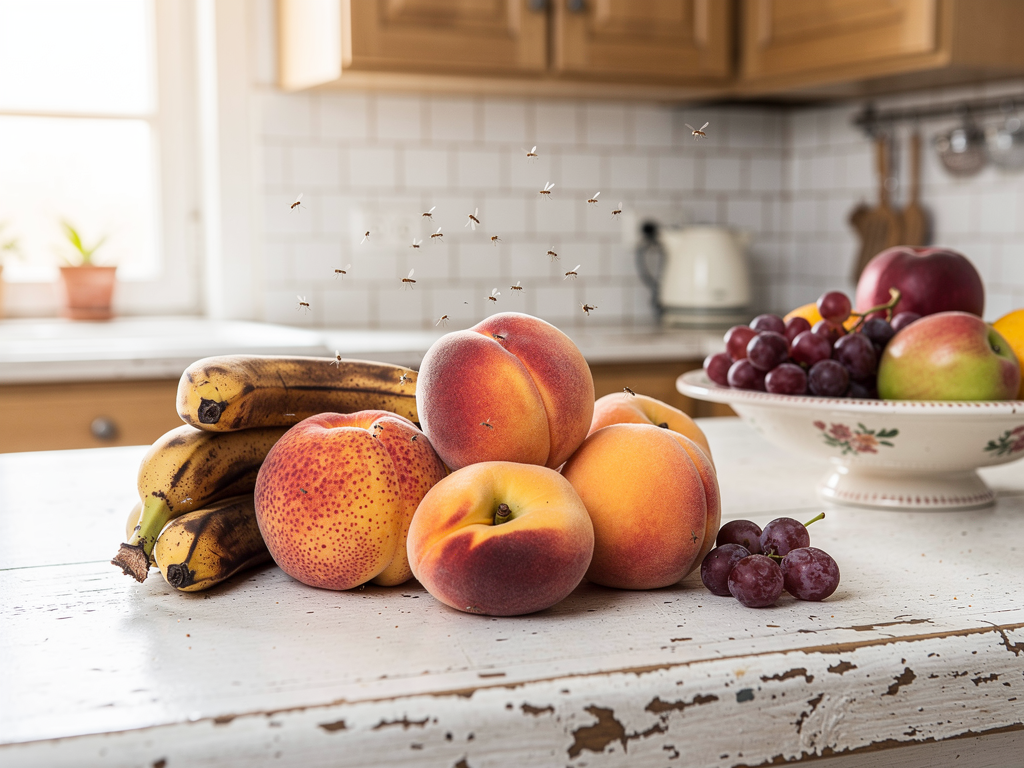
Then carry out targeted cleaning on critical surfaces: countertop, underneath the drainer, sticky jar handle, sink edge, coffee maker, juicer, sorting area. A wipe or a damp sponge is not always enough: residues must be removed and then dried. This is often where the most time is saved. If the activity is concentrated around the bin, the causes and priority actions are very similar to those described for fruit flies in the kitchen.
Between 2 and 12 hours
Once the source is reduced, place traps in each active area instead of centralizing everything in the middle of the room. A dish with 2 to 3 cm of apple cider vinegar and 1 to 2 drops of dish soap often works well. The vinegar attracts, the dish soap breaks the surface tension and prevents the insects from flying away. In an open kitchen or a large room, it is better to provide 2 to 4 traps spaced apart rather than relying on a single container.
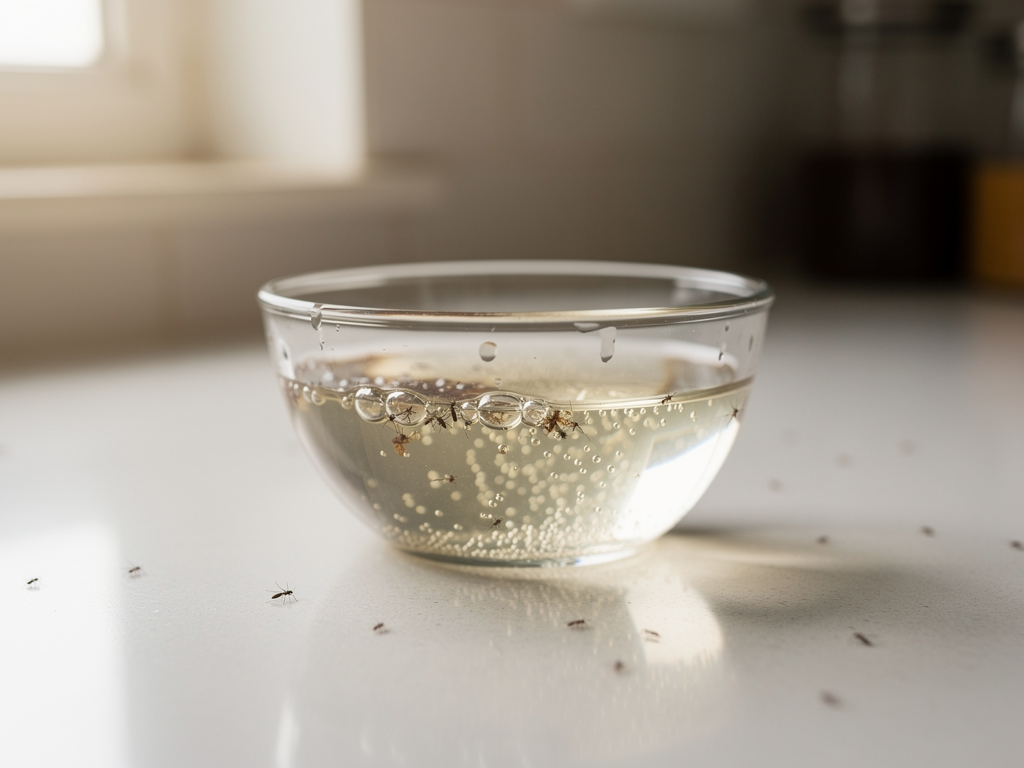
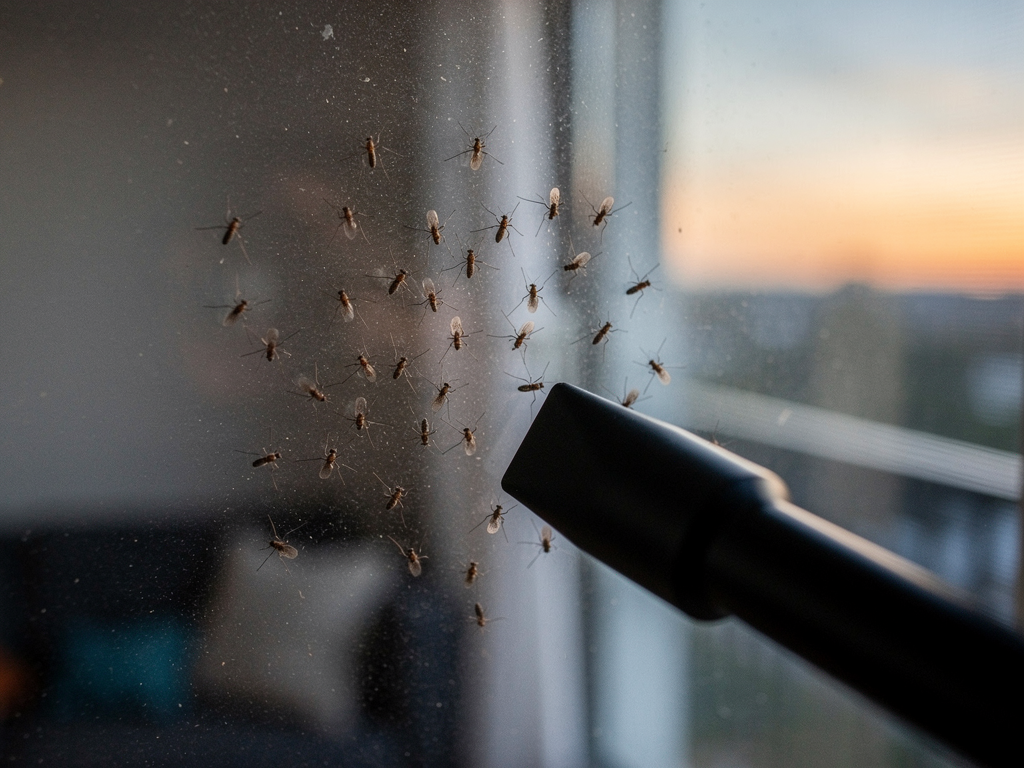
Vacuum visible clusters near windows, lamps, or the ceiling. This is a very simple method but extremely useful to reduce the number of adults in a few minutes. Renew the baits if activity remains strong after a few hours. If you are unsure about the actual effectiveness of this method, the file dedicated to the vinegar fruit fly trap details its limits and best practices.
Before the end of 24 hours
At the end of the day, perform a complete check again. Look under bags, behind fruit baskets, around sorting areas, near plants, at the bottom of the sink, and in places where water remains for several hours. Remove saturated traps, replace them if necessary, then check if a forgotten source is still maintaining the infestation. This is often when the “small detail” preventing rapid elimination is identified.
If fruit flies remain stuck around the drain or come back after use, the problem may partly come from the pipes. In this case, the wet area must be treated more precisely, as explained in this guide on fruit flies in the sink, because traps placed on the countertop are not always sufficient.
10 quick solutions that really work against fruit flies
These solutions are most useful when combined. A light infestation can be resolved with three or four well-chosen actions. A more significant infestation often requires applying six or seven in parallel over a full day.
1. Immediately throw away fermented or overripe foods
A split fruit, a soft tomato, or forgotten sugary leftovers act as a buffet. Removing this attractant cuts off the lure. If you cannot throw them away, at least place the foods in the refrigerator for 24 hours. It is a simple action but often more effective than any spray.
2. Clean and dry the trash bin
Changing the bag is not enough if the bottom of the bin remains wet. Wash the inside, focus on the corners, then dry before putting in a clean bag. Perishable waste should ideally be taken out within 12 to 24 hours in warm periods, especially in a poorly ventilated kitchen.
3. Wipe away all sugary and sticky residues
Syrup, juice, beer, jam, compote, wine, soda: fruit flies also exploit very small traces. Check the caps, necks, undersides of jars, and open cans. A few forgotten drops on a surface can maintain a low but persistent presence.
4. Set up several vinegar traps
The homemade trap remains a benchmark because it is quick, inexpensive, and easy to renew. Place it near the suspected source and not randomly. In a medium-sized room, 2 or 3 small dishes give better results than a single large one. However, avoid leaving them unchecked for several days: the bait loses effectiveness and itself becomes an attractant if it gets loaded.
5. Vacuum visible adults
Near a window, fruit flies often gather at the end of the day. A well-targeted vacuuming immediately reduces the pressure. This is especially useful after setting traps, when survivors move toward the light. Then discard the contents or empty the tank to avoid any recontamination.
6. Disinfect sponges, cloths, and mops
A damp sponge loaded with food residues becomes a discreet but very active breeding ground. Wash it, replace it if necessary, then let it dry completely. The same logic applies to cloths and mops. In a heavily used kitchen, this detail explains part of the “returns” despite a spotless countertop.
7. Rinse then dry underneath dish racks, trays, and sink edges
Fruit flies like areas that are both damp and dirty. The underside of dish racks and small trays are often neglected. Cleaning followed by real drying, not just rinsing, changes the situation. The precautionary recommendations of the ANSES on domestic biocides go in the same direction: it is better to first act on hygiene and humidity before multiplying chemical products.
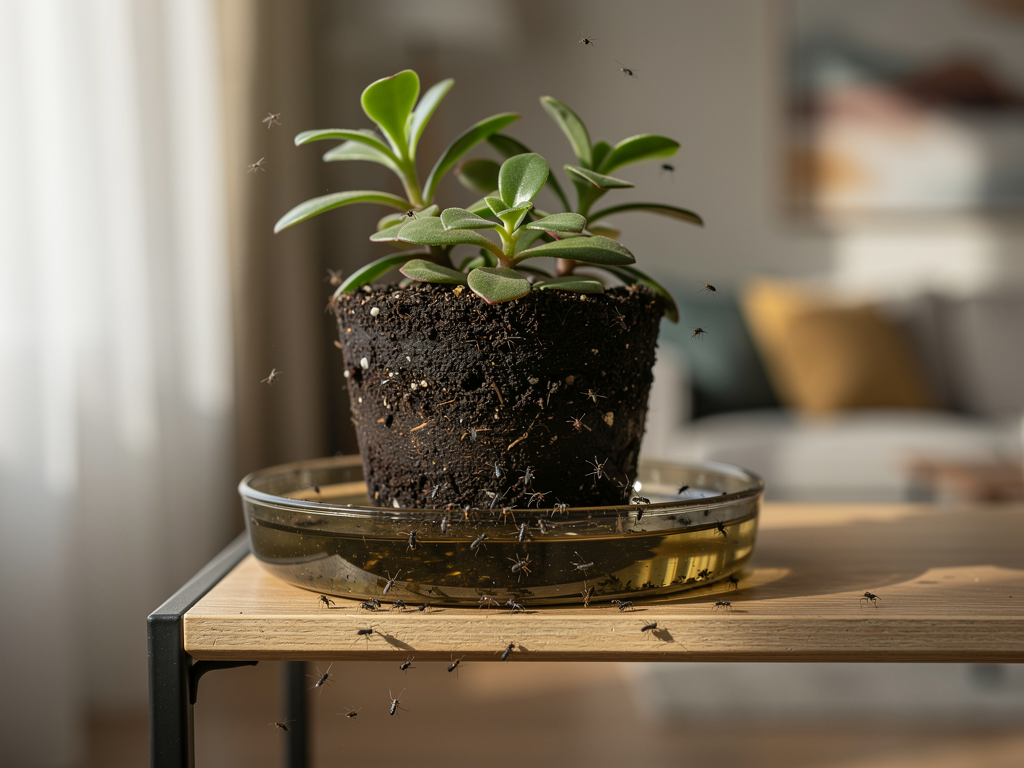
8. Treat plant saucers and soggy soil
When insects come from pots, you need to let the top 2 to 4 centimeters of soil dry out, empty the saucers, and remove dead leaves. Temporarily isolating the most affected pot helps confirm the source. If you suspect this origin, the resource dedicated to fruit flies in plants helps avoid confusion with other small soil insects.
9. Store fruits and vegetables in the fridge or under a cover
For 24 hours, eliminate all chances of return. Place fragile fruits in the refrigerator, close containers, and avoid leaving bread, peelings, or open drinks exposed to air. The ADEME reminds on food waste that better management of foodstuffs also involves appropriate storage; here, it also helps cut the attraction of fruit flies.
10. Air briefly then keep surfaces dry
Brief airing helps renew the air, but it does not replace drying. The real lever is to keep surfaces clean and dry between uses. In homes where a lot of cooking is done, this simple maintenance throughout a full day often makes the difference between an average result and a sharp drop in activity.
Which solutions to choose depending on where the fruit flies appear?
Kitchen and countertop
The kitchen concentrates the majority of cases, simply because it combines sugar, moisture, and organic waste. First treat the fruit basket, the trash bin, open bottles, and sticky surfaces. Traps should be placed near active zones, not in the center of the room. Also think about small forgotten containers: cans, syrup bottles, bowls of dried fruits, capsule trays, coffee machine reservoirs.
Around plants
If the fruit flies rise from the pot when you move the plant, the origin is probably the substrate. Reduce watering, empty the saucers, aerate the surface, and remove plant debris. In a mild case, improvement is often visible within 24 to 72 hours, but recurrence remains possible if the soil stays constantly soggy.
Trash bin and recycling area
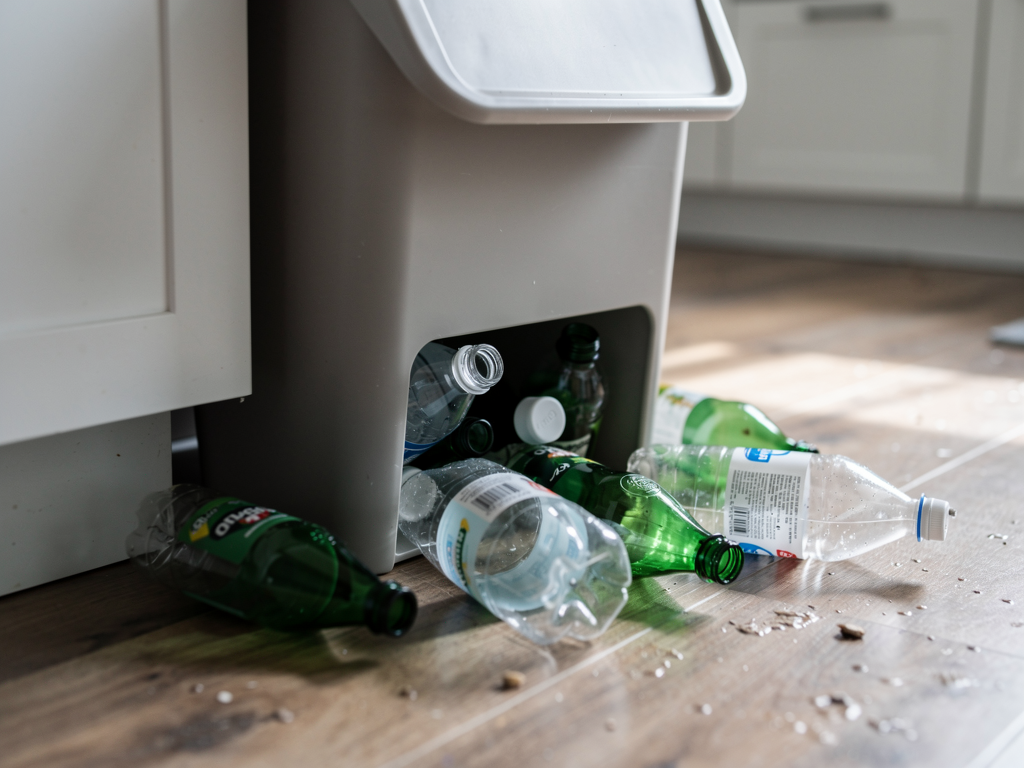
This is a greatly underestimated hotspot. The right action is not just to take out the trash, but to wash the bin thoroughly focusing on the bottom, edges, and lid, then dry it completely. Beverage packaging, beer bottles, or juice cartons must be rinsed before storage. A closed but sticky recycling area continues to attract fruit flies.
The best “anti-fruit fly product” often remains a simple routine: less exposed organic matter, less stagnant moisture, and several actions carried out immediately, not the next day.
Errors that prevent eliminating fruit flies in 24h
The first mistake is to settle for a single trap in a large room. The second classic mistake is to believe that a few catches mean the problem is solved. In reality, if a hidden source remains, you will have only reduced the visible part of the infestation. The effect may seem good for a few hours, then the fruit flies return by evening.
Another frequent mistake: cleaning without drying. A quick rinse of the bin, sink, or saucer leaves moisture favorable to egg-laying. Likewise, leaving fruits, grounds, or organic waste outside overnight often cancels part of the day’s efforts. Finally, excessive use of insecticides is not the most relevant response in a common domestic case. Hygiene, trapping, and source removal approaches are generally more useful at the start, and more compatible with public agency safety advice.
Quick FAQ: how to eliminate fruit flies in 24h?
Can you really get rid of fruit flies in one day?
Yes, to strongly reduce their visible presence, it is often realistic. For total disappearance, it all depends on the number of hotspots and their nature: a small infestation linked to a fruit basket yields quickly, whereas damp soil or a clogged sink area sometimes require more than 24 hours.
What is the fastest method?
The fastest is to remove the source then immediately set several traps, while vacuuming visible adults. This trio often gives the best results within the first hours, especially if you add cleaning and drying of damp spots.
Why do gnats come back the same evening?
Most often, a forgotten source continues to attract them: bottom of the trash can, open bottle, plant saucer, damp cloth, or dirty drain. Traps alone are not enough if the main source remains accessible.
What to do if nothing works after 24 hours?
You need to look for a less visible secondary source and inspect point by point again. Check especially the sink, pots, recycling area, and stored foodstuffs. If you identify a specific origin, adapt the treatment to that spot instead of treating the whole house randomly.
Does white vinegar work as well as apple cider vinegar?
Apple cider vinegar often attracts gnats better thanks to its more fermented smell. White vinegar can help in a pinch, but it is generally a bit less effective as a pure bait. In both cases, 1 to 2 drops of dish soap significantly improve the trap.
Should the lights be turned off at night?
Turning off the lights can limit gatherings around lamps, but it is not the main lever. The real priority remains the removal of organic sources and damp areas, otherwise gnats come back as soon as a new attractive odor appears.